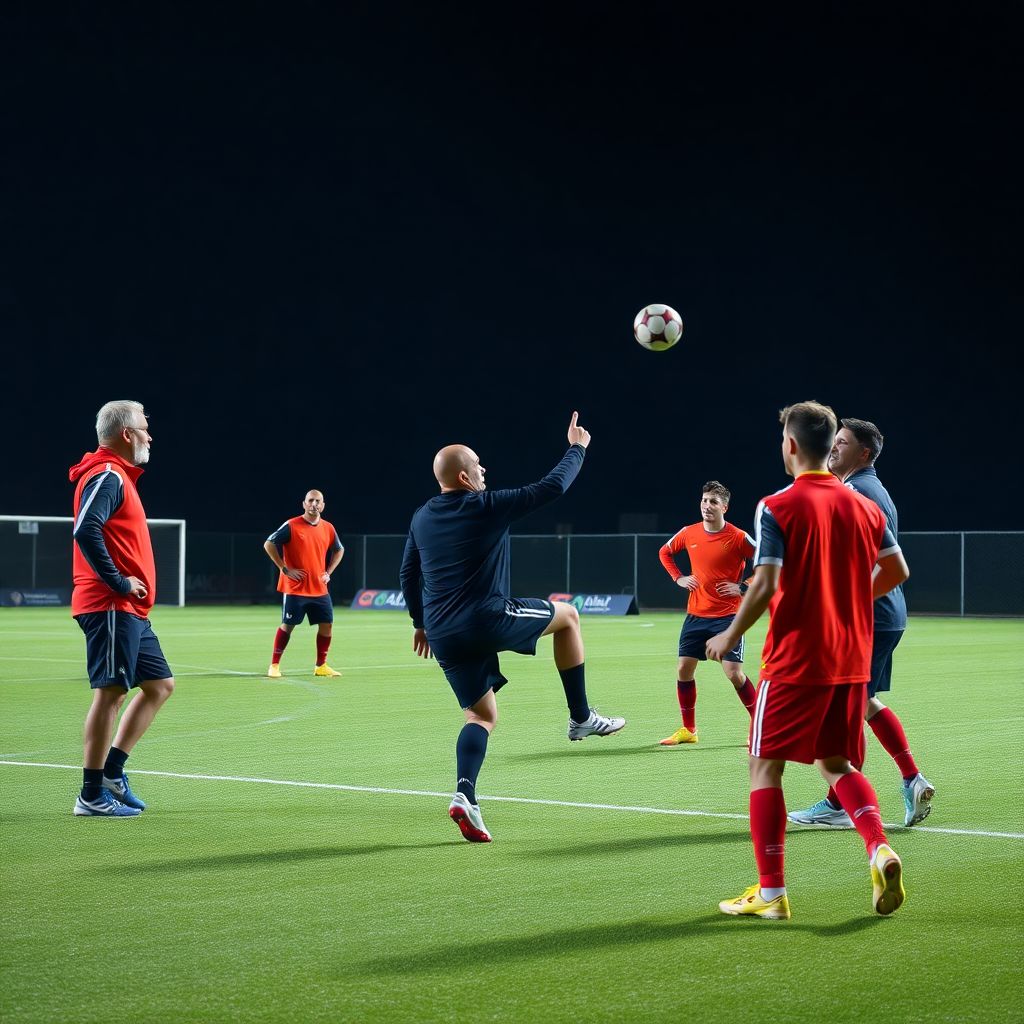
Set-piece mastery in the Süper Lig means building 3-5 repeatable corner and free-kick routines tailored to your squad, anchored in opponent analysis and clear roles. Focus on delivery zones, screens, second balls, and safety coverage, then refine via short, high-intensity drills and matchday signals that players can execute under pressure.
Set-Piece Essentials: Outcomes, Roles, and Priorities
- Define your main outcomes: direct shot, first-contact header, second-ball shot, or short restart to control tempo.
- Assign fixed roles: primary taker, secondary taker, main blockers, main runners, screeners, and safety players.
- Base routines on current turkish super lig set piece analysis, not generic European trends.
- Use Süper Lig-specific physicality: strong aerial players, aggressive near-post attacks, and crowd-influenced momentum swings.
- Limit the playbook: 3 corners + 3 free-kick patterns per phase of the season, with clear names and hand signals.
- Protect transitions: always keep rest-defence structure ready for counters from cleared balls.
Süper Lig Patterns: Opponent Analysis and Zone Targeting
This approach suits staff who can access regular video, basic tracking tools, and are willing to repeat a small number of patterns. It is less suitable if you change line-ups constantly, lack set-piece continuity, or cannot guarantee at least 15 minutes per session for dead-ball work.
- Collect 3-5 recent matches for each opponent; tag all corners and free kicks around the box.
- Note defensive schemes:
- Full zonal, mixed, or mostly man-marking.
- How many players they leave upfield for counters.
- Who defends near post, far post, and six-yard line.
- Identify weak zones:
- Defender who loses aerial duels or reacts late.
- Space between the tallest and shortest defender.
- Gap between the penalty spot and far post on outswingers.
- Cross-check with your own strengths:
- Best headers (centre-backs, target 9, late-arriving 8).
- Left/right-footed takers and their preferred trajectories.
- Players comfortable with blocking and screening duels.
- Translate patterns into zones:
- Zone 1: front zone (near post, six-yard line).
- Zone 2: central (penalty spot area).
- Zone 3: back zone (far post and beyond).
- Align with super lig free kick goals statistics where available: note whether your league tends to score more from direct shots or second phases and bias your training accordingly.
- Feed insights into super lig match predictions corners and free kicks models or staff reports, so everyone shares the same risk-reward expectations.
Corner Routine Designs: Player Roles, Blocking, and Delivery
Before designing detailed routines, ensure you have the following resources and conditions.
- Video access:
- Full-match footage of your games and at least highlights of future opponents.
- Simple tagging tool or shared spreadsheet for patterns.
- Pitch time:
- Minimum two set-piece blocks per week (15-25 minutes each).
- Ability to work both full-pitch and in smaller areas for walk-throughs.
- Staff allocation:
- One coach owning football coaching set piece routines super lig wide: planning, clips, and feedback.
- Analyst or assistant to prepare opposition corner and free-kick reports.
- Squad commitments:
- Fixed primary takers on each side; backups clearly named.
- A core group of 6-8 players for attacking set pieces, briefed every matchday.
- Communication system:
- Hand signals or simple code words per routine.
- Pre-agreed protocol for late tactical changes from the bench.
- Data and betting context:
- Awareness that super lig corner kick betting tips often rely on shot and corner volumes; use this to benchmark your own output, not to chase gambling outcomes.
For corner designs themselves, work with three core categories:
- Front-post attacks (flick-ons, near-post runs, near-post blocks).
- Crowded central zones (screens on keeper, penalty-spot runs, lay-offs for edge shots).
- Far-post overloads (late blindside runs, back-post knockdowns, cut-backs from beyond far post).
Free-Kick Systems: Direct Threats, Short Options, and Walls
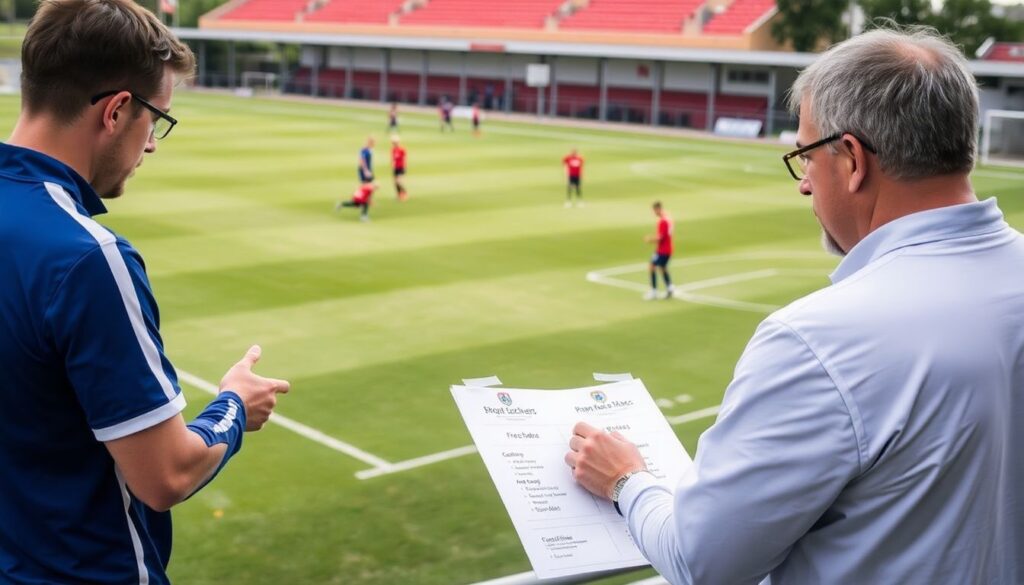
Quick prep-checklist before teaching free-kick systems:
- Confirm 2-3 main direct takers (left, right, central) plus one disguised passer.
- Mark your "green light" zones for direct shots on a pitch map (distance and angle).
- Agree team rule: if wall or distance is wrong, automatically switch to a rehearsed short option.
- Prepare a short clip reel (max 6 actions) of successful free kicks to show players the target shapes.
- Assign a defender to control rest defence and mark starting positions before every restart.
-
Map your free-kick zones and decision rules
Divide the attacking half into 3-4 simple zones that guide shot vs cross vs short routine choices.
- Central close: best for direct shots by your strongest taker.
- Wide deep: best for clipped crosses to penalty-spot or far post.
- Half-space: flexible, used for rehearsed short combinations.
-
Standardise the direct-shot routine
Create one "default" shooting pattern that all players understand, including rebounds and rest defence.
- Two runners attacking any rebounds: one central, one wide.
- At least two players staying back in cover plus a screening midfielder.
- Clear signal from taker to avoid last-second confusion about whether it is a shot or a cross.
-
Install a short free-kick combination
Design at least one safe short routine per side that can exploit over-aggressive walls or poor distances.
- Example structure:
- Short pass to a supporting player on the angle.
- Immediate set-back or disguised through ball into the half-space.
- Cross or cut-back aimed at a pre-agreed zone, not a specific player.
- Ensure the ball is always positioned to allow recovery if the move breaks down.
- Example structure:
-
Coordinate wall placement and blocking when defending
While this guide focuses on attacking, align your attacking routines with how opponents build walls and react defensively.
- Observe who jumps and who charges out of the wall; build feints and fake shots accordingly.
- Use a decoy runner across the wall to disrupt the keeper's view legally.
- Pre-assign who presses the second ball to prevent counters from cleared free kicks.
-
Rehearse timing, disguises, and safety
Run each free-kick pattern at game speed with emphasis on safe distances and collision avoidance.
- Practice clear verbal cues and visual signals to avoid two players attacking the same ball.
- Stop and reset if players are off-balance or unsighted; safety is prioritised over theatrics.
- Finish with 2-3 "pressure reps" where players have limited time to set up, simulating match stress.
Drill Progressions and 15-25 Minute Practice Checklists
Use this block-format plan to structure short, efficient set-piece sessions.
- Start with 5 minutes of "shadow runs" for corners: no ball, focus on safe running lines and collision-free paths.
- Add 5 minutes of unopposed delivery: takers target zones with 5-10 repetitions each, measuring landing areas.
- Progress to 5-10 minutes of semi-opposed routines: mannequins or 3-4 defenders only, no full contact.
- Include 5 minutes of second-ball finishes: coach feeds clearances to edge-of-box shooters and arriving midfielders.
- Allocate 5-10 minutes for free-kick walk-throughs: both direct shots and short combinations, at match distances.
- End each block with 3 "match scenarios": coach calls a scenario (e.g., "80th minute, need a goal") and players choose a rehearsed routine.
- Record or at least note which routines feel natural and which cause confusion, adjusting the next session accordingly.
- Keep intensity high but body contact controlled; avoid crowded penalty areas in training that might cause injuries.
Matchday Protocols: Signals, Timing, Substitutions and Risk Control
Common mistakes to avoid when applying these routines in real Süper Lig matches:
- Overcomplicating signals so taker and runners disagree on the chosen routine under noise and pressure.
- Changing takers late due to substitutions without reminding new players of preferred zones and patterns.
- Leaving too few players in rest defence because "we really need a goal," leading to dangerous counters.
- Ignoring weather and pitch: using floated crosses into strong wind or skidding low balls on heavy, uneven surfaces.
- Allowing players to improvise corners that have never been trained, only because an opponent seems disorganised.
- Failing to adapt to refereeing: persisting with heavy blocking when the referee has already warned or penalised you.
- Not updating plans even after noticing in-game that opponents changed from zonal to mixed marking on corners.
- Rushing late free kicks without rest defence set because the clock is running, often giving away transitions.
- Creating predictable patterns that analysts – and even super lig corner kick betting tips providers – can easily anticipate.
Measuring Success: KPI Table, Video Cues and Rapid Adjustments
If full tactical overhauls are not possible, use these lighter alternatives for monitoring and improving set pieces.
- Minimalist review: focus only on first-contact duels and shot counts from corners and free kicks.
- Video snapshot method: after each match, clip 5 key attacking set pieces and discuss for 10 minutes with the core group.
- Player-led routine selection: let senior players choose 2-3 favourite routines to prioritise during congested schedules.
- Data-lite tracking: simple spreadsheets noting outcomes per routine, without complex xG models.
| KPI / Drill | Target or Focus | Typical Drill Time | Adjustment Trigger |
|---|---|---|---|
| Corners leading to a shot | Increase the proportion of corners that create any shot on goal. | 5-10 mins finishing from corners per session | Review if two matches pass without a corner-generated shot. |
| First-contact win rate | Measure how often your team wins the first aerial duel. | 5-8 mins aerial duel drills in crowded zones | Adjust blocks/runs if you consistently lose first contact. |
| Free-kick shot quality | Assess whether shots come from preferred zones and feet. | 5-10 mins direct free-kick practice per taker | Change primary taker if shot technique or confidence drops. |
| Second-ball recoveries | Track how often you regain cleared balls after set pieces. | 5 mins second-ball reaction drills | Reposition midfielders if opponents win most clearances. |
| Transition goals conceded | Count goals allowed from counters after your dead balls. | 5 mins rest-defence shape walk-throughs | Add one more player to rest defence if counters are frequent. |
Practical Concerns, Answers and Quick Fixes
How many set-piece routines should a Süper Lig team keep in its playbook?
For intermediate squads, 3 attacking corner routines and 3 attacking free-kick patterns are usually enough. Add or remove only when players execute existing ones confidently in matches.
What if my team lacks a specialist free-kick taker?
Share the role between 2-3 competent strikers of the ball and emphasise rehearsed short routines. Focus training on consistent contact and zone targeting instead of "perfect" top-corner shots.
How can I integrate this with busy schedules and travel in the Süper Lig?
Use 15-20 minute micro-blocks inside normal sessions, preferably after warm-up. On heavy travel weeks, switch to walk-throughs and video instead of full-contact set-piece drills.
Are these ideas relevant to analysts and people following betting markets?
Yes. Analysts who do turkish super lig set piece analysis – including those informing super lig match predictions corners and free kicks – can use the same KPIs and patterns to understand strengths and weaknesses, but coaching decisions should never be driven by betting angles.
How do I keep routines safe and avoid training injuries?
Limit body contact in training, especially around the goalkeeper. Use clear running lanes, start with shadow runs, and only add opposition in later, controlled phases of each drill.
How long before routines show results in competitive matches?
With regular work, small improvements in organisation and shot volume often appear within a few games. Significant gains in goals or chances from set pieces typically require several weeks of consistent repetition.
Can I apply the same routines across different levels and age groups?
Yes, but scale contact, distances, and complexity to the age and physical level. Youth teams should prioritise safe spacing, simple signals, and technical consistency over heavy blocking schemes.