Introduction: Why Turkish talent scouting looks so different in 2026
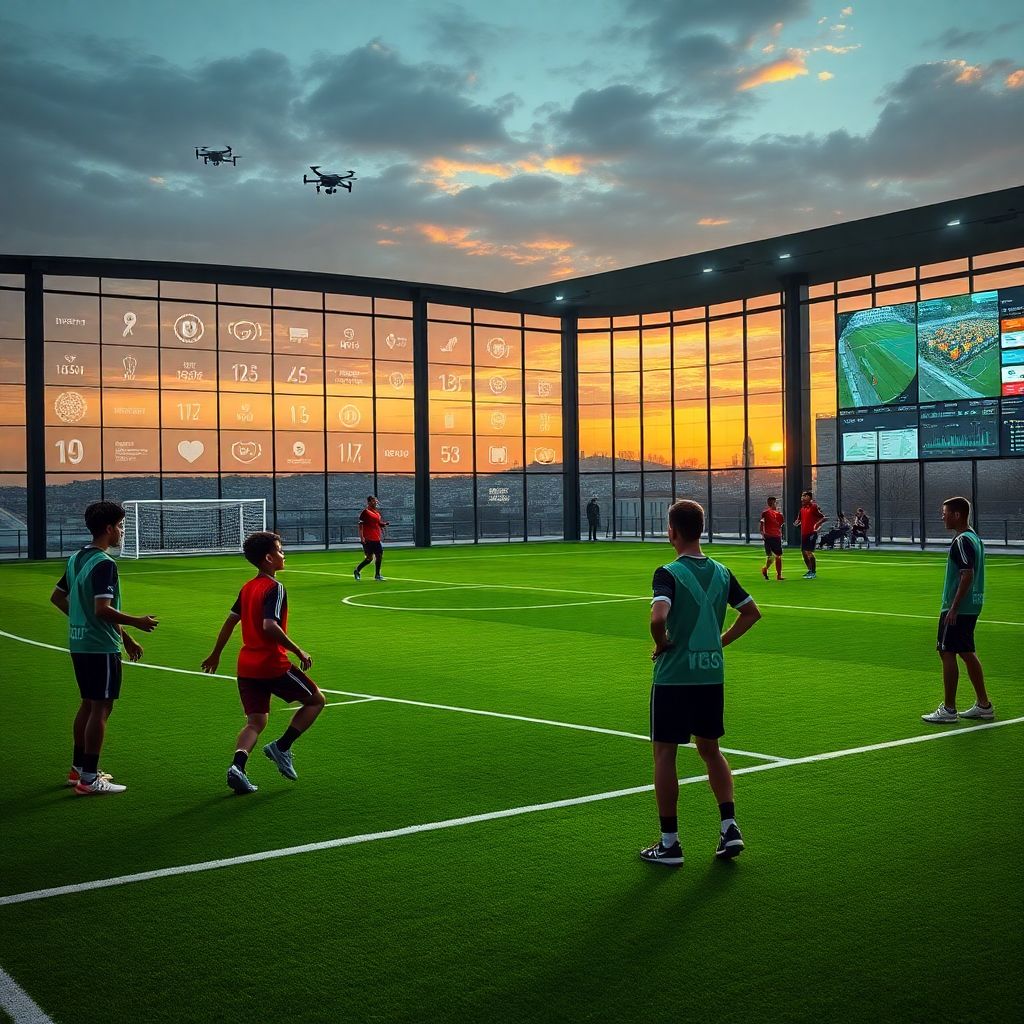
If you haven’t looked closely at Turkish youth football since the early 2020s, you might be surprised by how much has changed. The old image of a coach “discovering” a kid on a dusty pitch is only a tiny part of the story now. In 2026, turkish football academies for young talents are operating more like tech startups mixed with mini sports-science labs: they’re running data platforms, using AI-assisted video tools, and managing individual development plans that feel closer to Formula 1 telemetry than to what most of us remember from grassroots football. At the same time, the human side—how coaches talk to kids, how they support mental health, how they work with families—has become just as critical as the tactical side. This mix of analytics, psychology, and culture is exactly what’s shaping the next generation of Turkish players heading into the global market.
—
Necessary tools for modern talent ID in Turkey

In today’s landscape, saying you “have a good eye” is no longer enough for a scout in Turkey. Modern academies rely on a full toolkit that blends hardware, software, and structured methodology. The best soccer academies in turkey for youth development invest heavily not only in coaches but in performance analysts, sport scientists, and data engineers. They want measurable indicators: sprint profiles, high-intensity running metrics, technical efficiency under pressure, cognitive reaction times, and even sleep and wellness markers. All of that gets consolidated into long-term tracking so that decision-making isn’t based on one standout game, but on trends that extend across seasons.
Digital and data-driven toolkit
On the tech side, the backbone is a digital performance ecosystem. Almost every serious academy now uses GPS-tracking vests with inertial sensors for live and post-session analysis; these units capture distance, accelerations, decelerations, and “explosive efforts” that define a modern player’s match load. Video is fully integrated: multiple camera angles, automated tagging of key events, and AI-based tools that cut clips by player, zone, and action in seconds. This data is fed into integrated athlete management systems that pull in medical reports, growth and maturation data, wellness questionnaires, and even school performance. In 2026, many Turkish setups also use affordable cognitive training apps, interactive reaction boards, and decision-making drills in VR to profile how quickly a young player processes information on the pitch.
– GPS vests and heart-rate sensors for live load tracking
– Multi-angle video systems plus AI-based tagging and cloud storage
– Athlete management software for centralized data and longitudinal profiles
Human infrastructure and environment
Of course, none of that tech works without the right people and environment around it. Turkish clubs are gradually standardizing their scouting networks, with regional coordinators, school and community liaisons, and part-time scouts feeding into a central database. Nutritionists, sport psychs, and strength-and-conditioning coaches are now a standard part of the academy ecosystem at bigger clubs and an emerging trend at smaller ones. Academies also invest more in the physical and social environment: dedicated classrooms for video and theory, quiet spaces for psych sessions, integrated dorms with supervised study, and monitored social-media use for elite groups. The culture has shifted from “survival of the fittest” to a more holistic “long-term athlete development” philosophy—without losing the competitive edge that defines Turkish football.
– Regional scouting networks linked to a central database
– Interdisciplinary staff: analysts, physios, nutritionists, sport psychologists
– Structured educational and living environments for full-time academy players
—
Step-by-step process: how Turkish academies scout and shape young players
Behind every 18-year-old signing a pro contract, there’s usually a multi-year pipeline of identification, assessment, and development. In 2026, that pipeline is much more transparent and standardized than it used to be, even if each club adds its own flavor. The process usually starts with broad-based spotting, narrows down through repeated assessments, then shifts into individualized development work where each kid is treated as a specific long-term project. This is one reason many people abroad are asking how to get scouted by turkish football clubs and trying to reverse-engineer these pathways.
From street and school to first database entry
The initial identification phase is more systematic now. Instead of relying solely on local tournaments, academies actively cooperate with schools, municipal sports programs, and private grassroots clubs. Some big clubs run open days and regional camps twice a year, essentially acting as low-pressure turkey football trials for young players, which serve both as a marketing tool and a genuine scouting opportunity. Every player who catches the eye gets logged into a central scouting platform with basic metrics: technical strengths, physical attributes, dominant foot, tactical understanding, and psychological notes. Multiple viewings are mandatory; one “good day” is never enough. The goal is to distinguish early developers from genuinely high-ceiling talents and to avoid writing off late bloomers too soon.
Individual development planning and daily workload
Once a player enters the academy pathway, the focus shifts from selection to construction. Each prospect gets an Individual Development Plan (IDP) that defines target competencies over 6–12 months: for example, improving weak-foot passing under pressure, defensive body shape in wide 1v1s, or aerobic capacity for repeated sprints. Training sessions are crafted to plug these gaps while maintaining the team’s tactical model. In 2026, Turkish academies increasingly apply “constraints-led” training design—small-sided games and tailored rules that force players into the behaviors the coaches want to develop, rather than repetitive isolated drills. Data from GPS and video is reviewed weekly; small progress is documented, and if performance plateaus, the IDP is fine-tuned. This is where sport science meets everyday coaching: workloads, recovery, and growth spurts are all carefully balanced to reduce injury risk while pushing development forward.
Pathways: from academy to pro contract
The final step in the pipeline is transition to the professional game, and it’s become more strategic. Top clubs coordinate minutes across U17, U19, B-teams, and loan destinations, so a standout 17-year-old might split his season between domestic youth league, reserve matches, and carefully selected senior minutes. Academies invest heavily in game model education—pressing triggers, positional play, rest-defense concepts—so that players are tactically plug-and-play for the first team. Agents and families are brought into structured communication to avoid chaotic decision-making around the first contract. For foreign players who enroll in professional football academy in turkey, this phase also includes adaptation to local culture, language support, and clear explanations of how the Turkish league system works, so they don’t get lost between youth, reserve, and senior levels.
—
How to get noticed by Turkish academies in 2026
If you’re a young player or a parent trying to figure out how the system looks today, the landscape in 2026 is more open but also more competitive than ever. On one side, more clubs run structured outreach and public events; on the other side, the performance level and expectations have gone up. The most direct way to get visibility is to be consistently outstanding in a decent local environment: a competitive grassroots club, school team, or regional academy that already has relationships with professional setups. A lot of players also ask, in very direct terms, how to get scouted by turkish football clubs without “knowing someone”—the honest answer is that you need to combine visibility, evidence, and persistence.
– Play regularly in competitive environments that scouts already watch
– Build a video portfolio with full-match footage, not only highlight reels
– Use official club channels and reputable trial events instead of random “agents”
Open trials do still exist, but they’ve evolved. Rather than chaotic one-off events, many clubs now run structured assessment days, sometimes in partnership with tech platforms that pre-filter applicants based on video and basic data. These days resemble mini-combines: technical drills, small-sided games, physical tests, and psych questionnaires. For international kids looking to enroll in professional football academy in turkey, verified partner agencies and club-approved programs have become more important; they help with visas, school integration, and ensuring the trial is actually connected to a real academy and not a scam. Showing up prepared—with match fitness, recent game footage, and realistic expectations—remains the best way to turn a one-off opportunity into a long-term placement.
—
Troubleshooting common issues in Turkish youth development

No system is perfect, and even the most advanced academy setups run into recurring problems. Some are technical, like misinterpreting data or over-emphasizing short-term physical dominance. Others are cultural, such as inconsistent communication with families or unhealthy pressure from social media. In 2026, clubs have started to treat these issues like “bugs” in a software system: you don’t just complain about them, you log them, analyze root causes, and design interventions. This troubleshooting mindset is one of the quiet reasons the best soccer academies in turkey for youth development have pulled ahead of more old-school setups that still rely on intuition alone.
Fixing blind spots and biases in scouting
Scouting bias remains a big topic. Early-maturing players, especially in younger age groups, can still dominate physically and overshadow smaller, later-maturing kids with higher technical and cognitive ceilings. Modern Turkish academies are attacking this with a mix of education, data, and policy. Scouts are trained to factor in biological age, not just chronological age; height, weight, growth-velocity estimates, and family profiles are used to avoid over- or under-estimating potential. Technical staff also set quotas for repeated assessments of “borderline” kids, so that one lukewarm performance doesn’t kick them out of the pool. When turkey football trials for young players are organized, coaches use standardized evaluation sheets and group debriefs after the event, trying to reduce the impact of individual bias and emotional reactions to flashy moments.
Managing burnout, injuries, and motivation
Another big cluster of problems revolves around overload. With school demands, academy training, online presence, and family expectations, many teenagers struggle with burnout. Injuries from sudden growth spurts or poorly managed match congestion still happen often. Forward-thinking Turkish academies are trying to treat mental and physical fatigue as core metrics, not afterthoughts: daily wellness check-ins, confidential access to psychologists, monitored training loads with built-in deload weeks, and targeted education sessions on sleep and nutrition. Coaches are also asked to shift from fear-based communication to “challenge-support” models, where high demands are paired with consistent feedback and empathy. When motivation dips, instead of labeling a kid as “lazy,” the staff will review his environment, role clarity, and off-field stressors, and adjust training content or expectations accordingly. In practice, this can mean temporarily changing positions, resetting goals for a shorter period, or stepping the player down one competitive level to rebuild confidence and joy in playing.
—
Looking ahead: where Turkish academies are heading by 2030
Standing in 2026, you can already see the next phase on the horizon. Turkish academies are moving from isolated club projects toward more integrated ecosystems: shared data standards, regional development hubs, and tighter collaboration with schools and community programs. AI-based scouting will likely become more prominent, automatically flagging potential talents from broadcast or streamed games across the country. At the same time, the global market is watching; international families actively search for turkish football academies for young talents, and foreign clubs see Turkey as both a source and a polishing ground for players. The real question for the next few years is whether the system can scale without losing its human touch. If Turkish academies manage to keep the balance between technology, science, and the raw passion that defines football in the country, the players coming through in 2030 will make today’s “modern” setups look like the early prototype phase of something much bigger.