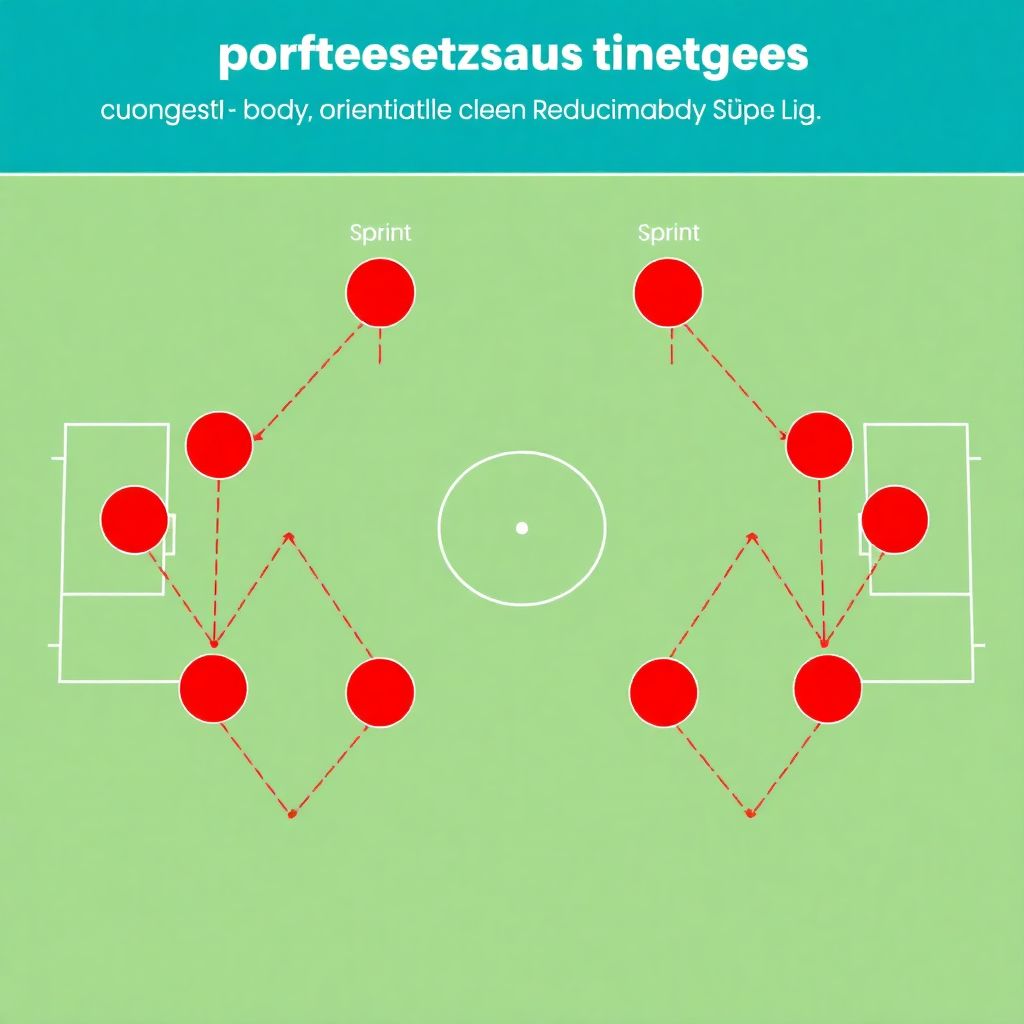
Pressing triggers are predefined cues that tell a team exactly when to start an aggressive press to win the ball back, not just a vague idea of “running hard”. In the Süper Lig, clear triggers reduce chaos: they align sprint timing, body orientation and cover, balancing ball recovery, risk and ease of implementation.
Core Pressing Triggers Overview
- A pressing trigger is a specific cue (pass, touch, body shape, zone) that activates collective pressure.
- Good triggers are simple, repeatable and visible for at least three players at once.
- Risk depends on distances behind the press, not only on how high the line is.
- Different Süper Lig teams choose triggers that fit their squad profile and crowd context.
- Video tagging and basic Süper Lig pressing stats analysis help validate if your triggers actually work.
- Implementation success comes from synchronised reactions, not from adding more triggers.
Myths First: Common Misconceptions About Pressing Triggers
A frequent myth in Turkish football is that pressing triggers simply mean “press high all game”. Height of the block is a separate decision. A team can sit in a mid-block yet still use very sharp pressing triggers on sideways passes, bouncing passes into pivots, or poor first touches.
Another misconception is that each player needs his own individual trigger. In reality, effective triggers are shared cues seen by the ball-near winger, striker and midfielder at the same time. If only one player recognises the cue, you get isolated runs, fouls, and big transition spaces behind.
Many coaches also believe more triggers automatically equal better pressing. This usually overloads players and increases risk. In the Süper Lig’s emotional, high-tempo environment, three to five clear, rehearsed triggers are easier to implement than a long theoretical list learned from an overseas football pressing tactics course.
Finally, triggers are not only “go press now” signals; they also tell players when to delay or drop. Top Süper Lig teams use shared language: one cue to jump, another to hold, another to funnel play wide. Without these boundaries, pressing becomes chasing, and chasing gets punished against technically strong build-up sides.
Tactical Anatomy: Defining a Pressing Trigger in Süper Lig Context
In Süper Lig reality, a pressing trigger can be broken into simple, coachable components that decide when and how the team jumps.
- Ball action cue: A specific event, such as a backwards pass from full-back to centre-back, a floated lateral switch, or a square pass into a dropping pivot. These are common in Süper Lig build-up, easy to spot from the touchline and on video.
- Receiver profile: Who is receiving and with which foot. A weaker-foot control, a back-to-goal striker, or a pressed full-back near the line are higher-value triggers than a free No. 10 receiving between lines.
- Body orientation and first touch: The moment the receiver opens up towards his own goal or needs an extra touch, the presser can attack. If he receives facing forward in the half-space, the trigger is usually to delay and compact instead of jumping.
- Zone and touchline as extra defender: Many Süper Lig teams prefer triggers near the touchline, where the opponent has fewer angles. For example, a lofted pass to a full-back stuck wide is a safer pressing trigger than the same pass into the centre circle.
- Support distances behind the press: Triggers are valid only if the second and third lines can squeeze. The nearest midfielder and full-back must be close enough to either cover the space behind or win second balls from rushed clearances.
- Collective signal and countdown: The cue becomes a trigger only when the pressing leader (often the striker) gives a clear signal: sprint, arm gesture, or short call. This creates a half-second “countdown” where three to four players jump together instead of reacting randomly.
- Exit condition: Every trigger needs an off-switch. If the opponent breaks the first line and finds the free pivot, the rule changes from “press” to “recover and form block”, reducing the risk of chaotic chasing against fast Süper Lig attacks.
Club Profiles: How Top Süper Lig Teams Initiate the Press
Different Süper Lig contenders use distinct pressing triggers based on squad strengths, risk appetite and fan expectations. Comparing them helps you choose an approach that fits your own level and dressing room.
-
High-press, striker-led model (e.g., title-chasing sides)
Main triggers are backwards passes from six to centre-back, and slow switches between centre-backs. The striker curves his run to block inside, the near winger jumps to full-back, and the eight closes the pivot. High reward, high physical demand, and higher risk if centre-backs are slow turning. -
Wing-trap mid-block (common among pragmatic coaches)
Team waits in a mid-block and uses the pass from centre-back to full-back as the main trigger. Winger jumps, full-back steps tight, and the six slides across. Easier to implement in average Süper Lig squads, lower risk, but less ball-winning near the opponent box. -
10-based trigger system (playmaker leads the press)
The No. 10 presses the opposition pivot on specific cues: bounce pass from centre-back into pivot, or a lateral pass between double sixes. This suits teams with clever attacking midfielders but demands big work-rate behind them to cover vacated zones. -
Striker-cover & second-ball focus (direct-play specialists)
Instead of hunting high, some Süper Lig clubs use pressing triggers around long balls. The trigger is a long diagonal or goal-kick to one side: striker screens the short option, ball-near winger crashes the duel zone, and midfield squeezes for second balls. Lower tactical complexity, moderate risk, strong fit for physical squads. -
Hybrid zone & scoreline-based triggers
Ambitious coaches link pressing behaviour to game state. At 0-0, they might press only on wide backward passes; when trailing, they add central triggers like bad touches from the six. This is more complex to train but offers a smarter risk profile over the season.
When you run your own Süper Lig pressing stats analysis or use a Süper Lig data analytics subscription, you often see these patterns clearly: which zone starts the most turnovers, which passes are most often followed by a press, and which clubs accept higher risk for faster recoveries.
Timing and Space: Spatial cues and temporal windows for trigger activation
Pressing triggers are judged both in space (where on the pitch) and in time (how long the window is open). Coaches must design them to be realistic for their players’ sprint capacity and decision speed.
Implementation Benefits by Timing and Space
- Simple wide triggers (full-back receives facing his own goal near touchline) have long temporal windows and are easy for intermediate players to apply consistently.
- Mid-block triggers around the centre circle reduce vertical space behind the last line, lowering risk of conceding on one pass.
- Pressing when the receiver’s first touch goes slightly away from his body gives defenders an extra step, increasing ball-win probability without extra speed.
- Zone-based language (for example, “press only when the ball enters our wide channel”) helps align the whole team visually, making it easier to coach in busy Süper Lig environments.
- Scoreline-aware triggers (more aggressive when trailing, more selective when leading) let you balance risk and physical load over congested fixture periods.
Inherent Risks and Limitations to Manage
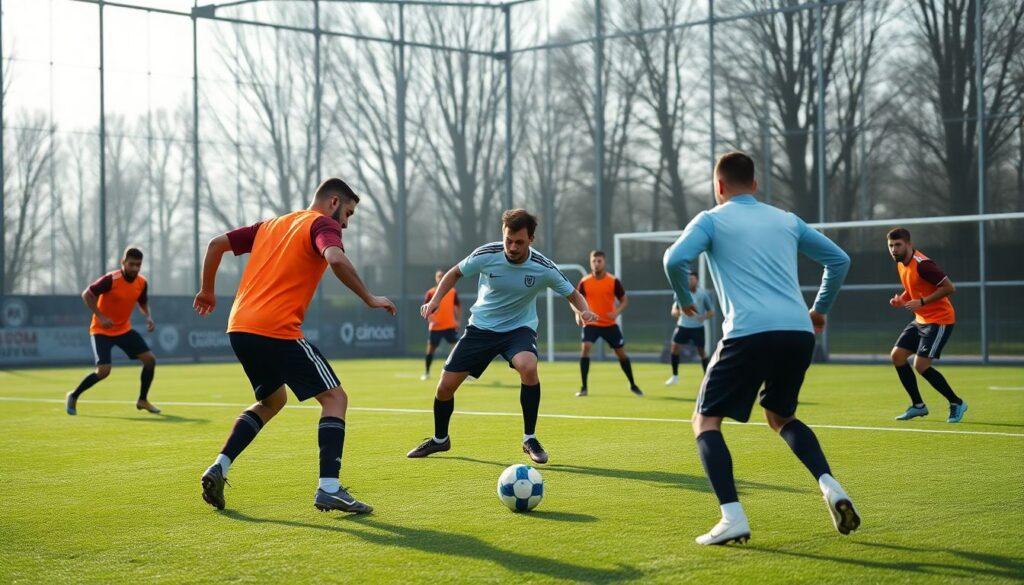
- Central triggers around the No. 6 or No. 10 are high reward but carry big risk if your centre-backs are slow to defend large spaces behind the line.
- Very short temporal windows, such as reacting only to poor first touches, demand high game intelligence; misreads lead to late presses and easy breaking of the first line.
- Ultra-high pressing against teams comfortable under pressure can backfire in the Süper Lig, where one broken press often leads to dangerous counter-attacks against disorganised blocks.
- Complex trigger systems are hard to maintain with frequent line-up changes, suspensions, and new signings; what looked great on the whiteboard may be unstable in a real squad cycle.
- High-risk triggers are often attractive for betting tips based on pressing stats Süper Lig observers notice, but coaches must value long-term stability above one spectacular game.
Collective Mechanics: Roles, synchronisation and escalation after a trigger
Triggers only work when the collective mechanics around them are clear. Role clarity and synchronisation reduce individual stress and make implementation smoother, especially for squads with mixed experience levels.
-
Undefined pressing leader
If nobody knows who starts the press, triggers come late. Decide if the leader is the striker, the No. 10, or the ball-near winger and coach their communication habits explicitly. -
Line disconnection after the jump
Common in Süper Lig: front line jumps, back line stays. The gap invites simple chipped passes. Train the back four to move up two to three steps automatically when a trigger fires. -
No plan for the second and third duel
Many teams coach the first tackle but not the follow-up. After the initial press, there must be a rule: nearest player attacks the second ball, far-side winger tucks in, six protects the middle. -
Escalation without exit strategy
If the opponent escapes the first wave, some players keep chasing. This escalates risk. Build a clear command to drop and reshape once a specific line is broken, limiting damage. -
Copying big-club models without adaptation
Coaches often try advanced football coaching tactics Süper Lig leaders use, but with slower players or less training time. Start with fewer, cleaner triggers and add complexity only when behaviour becomes automatic. -
No feedback loop from matches
Without simple video review and notes, misunderstandings stay hidden. Short weekly clips of triggers that worked and failed help players see why their timing and distances matter.
Measuring Success: Metrics, video markers and statistical indicators
Even without big data staff, you can build a basic, reliable evaluation of your pressing triggers and refine them through evidence instead of emotion.
-
Define what you track
Decide on three or four indicators: where the ball was won, how quickly after the trigger, whether the regain led to a shot or controlled possession, and how many players were involved in the press. Keep the list short so it is sustainable across the season. -
Use simple video tagging
Tag every instance of a planned trigger (for example, pass from centre-back to full-back). Note: did the team jump? Was timing correct? Did you win or lose the duel? This manual tagging is often more valuable than relying only on any external Süper Lig data analytics subscription. -
Translate to basic statistics
From your tagged clips, calculate simple rates: share of triggers that were actually activated, share of activated triggers that ended in a regain, and where on the pitch regains occurred. This gives clearer insight than raw running-distance numbers. -
Mini-case: wing-trap trigger refinement
Imagine your team uses the trigger “centre-back to wide full-back pass on the left”. Across several Süper Lig games, you review ten such clips where the pass is played and the cue appears:- In some clips, winger jumps but full-back stays deep: the opponent plays inside and escapes.
- In others, both jump but the six stays central: a simple wall-pass breaks the trap.
- In the best clips, winger, full-back and six move together; regain happens within a few seconds in the wide channel.
From this, you identify that the real problem is not the trigger itself, but poorly rehearsed movement of the six. Training focus shifts from inventing new triggers to automating this single pattern, which is far easier to implement and carries controlled risk.
-
Connect training games with match triggers
Build small-sided games where a coach or server recreates typical Süper Lig build-up passes. Blow the whistle to simulate the trigger and freeze the game after a few seconds to check distances. This tight loop between drill and match accelerates understanding far more than extra theory alone.
Direct Coach Queries – Clear, Actionable Answers
How many pressing triggers should a semi-professional team use?
Start with three main triggers that are easy to see and repeat, usually around wide areas and backwards passes. Only add more once players react automatically and distances behind the press are consistent.
Are high central triggers too risky for most Süper Lig-level squads?
Central triggers are high risk unless your centre-backs are comfortable defending large spaces and your six reads danger early. Use them selectively, and combine them with safer wing-based triggers to balance the overall risk profile.
What is the simplest trigger to implement with limited training time?
A pass from centre-back to full-back near the touchline is usually the easiest. Everyone can see it, sprint lines are clear, and the touchline acts as extra defender, limiting opponent options and reducing the punishment if your timing is slightly late.
How do I know if my triggers are physically too demanding?
If players cannot repeat the same pressing intensity for several cycles, or if your block becomes stretched late in each half, your triggers are probably too frequent or too high. Reduce the number of triggers or move your line a bit deeper to protect legs and structure.
Can pressing triggers help with individual player development?
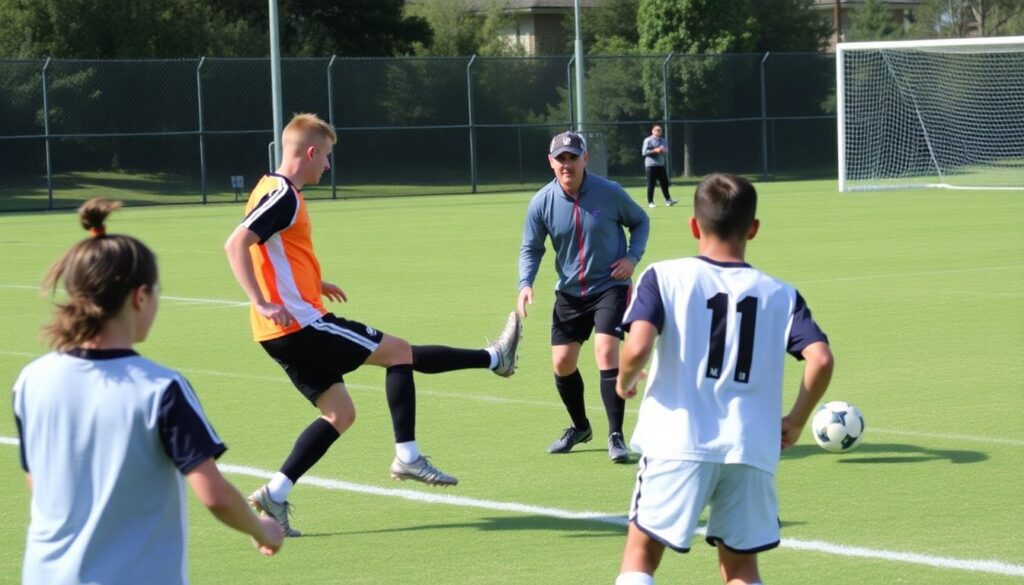
Yes. Clear triggers give players reference points for decision-making: when to jump, when to stay, where to angle their run. This sharpens scanning habits, body orientation and anticipation, improving both defensive and transition qualities.
Do pressing triggers change depending on opponent style?
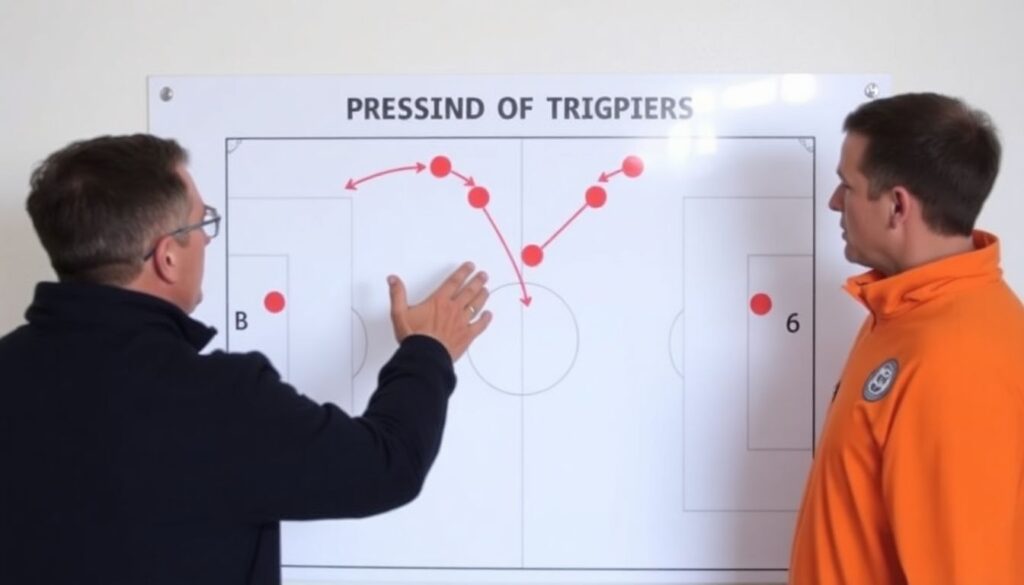
They should. Against build-up teams, you might target the six and full-backs; against direct sides, triggers shift to second-ball zones and goal-kicks. Keep your base structure, but tailor one or two priority triggers to each opponent.
Is it worth designing triggers with betting models in mind?
Coaches should focus on stability and performance, not betting tips based on pressing stats Süper Lig analysts produce. If your team becomes predictable for external models, it may also be predictable for opponents, which is a competitive disadvantage.