
Premier League teams generally play at higher tempo, with more intense pressing, vertical attacks and deeper analytics, while Süper Lig sides mix slower build-up, direct transitions and emotional momentum. For development, the Premier League suits analysts and tactically flexible players; the Süper Lig suits coaches and scouts focused on duels, transitions and fan-driven pressure.
Tactical snapshot: headline contrasts between leagues
- Tempo: Premier League matches sustain higher rhythm and intensity; Süper Lig games swing between slower circulation and explosive transitional phases.
- Pressing: England leans to coordinated high presses; Turkey features more mid-blocks, situational pressing and compact low blocks in big away games.
- Transitions: Premier League favours structured counter-pressing; Süper Lig often embraces open, end-to-end counterattacks built on individual flair.
- Possession: English sides increasingly build short from the back; Turkish teams more often mix build-up with long balls to target forwards.
- Width: Premier League full-backs act as playmakers; in the Süper Lig, wingers provide most width while full-backs are more conservative in big games.
- Coaching: Data-led micro-adjustments are standard in England; emotion, man-management and adapting to chaotic game states dominate in Turkey.
- Best fit: Premier League is better for systematic, high-intensity development; Süper Lig is better for learning to manage pressure, derbies and volatile match scripts.
Foundational tactical philosophies: tempo, risk and identity
This section frames the Premier League vs Super Lig tactics comparison through concrete selection criteria, with notes for analysts, coaches and scouts.
- Match tempo and physical demands
Premier League: constant high speed, demanding repeated sprints and fast decision-making (think Liverpool under Jürgen Klopp).
Süper Lig: more variable tempo, with extended slower phases then sudden flurries of attacks (for example, Galatasaray breaking games open in short bursts).
Persona focus: Analysts model physical peaks; coaches manage rotation; scouts assess resilience under intense but irregular demands. - Risk tolerance with and without the ball
Premier League: more teams accept risk in build-up and high defensive lines, seeking territorial dominance.
Süper Lig: many sides accept defensive depth and direct balls, especially away at top clubs like Fenerbahçe or Beşiktaş.
Persona focus: Analysts quantify risk-reward; coaches decide how much to expose the back line; scouts track players’ decision quality under pressure. - Identity: structured systems vs individual expression
Premier League: clear game models, pattern-based attacks (e.g., Manchester City’s positional play).
Süper Lig: more room for improvisation, dribbling and 1v1 solutions, particularly from wide players and no.10s.
Persona focus: Analysts highlight patterns vs chaos; coaches choose system-dependency; scouts prioritise system players vs free stylists. - Emotional volatility and stadium pressure
Premier League: intense but relatively stable crowd dynamics across games.
Süper Lig: extreme swings in atmosphere, especially in derbies; momentum can flip matches in minutes.
Persona focus: Analysts track performance swings; coaches plan emotional management; scouts value mental toughness and game management. - Refereeing line and game control
Premier League: more tolerance for physical duels, games often flow with fewer soft interruptions.
Süper Lig: more frequent fouls, stoppages and disputes around key calls.
Persona focus: Analysts measure foul patterns; coaches design set-piece packages; scouts judge adaptability to stop-start rhythms. - Role of analytics and structured preparation
Premier League: widespread use of advanced football analytics tools for Premier League and Super Lig level comparisons; match plans are heavily data-informed.
Süper Lig: analytics is growing but more uneven; intuition and experience of big-game context still dominate at many clubs.
Persona focus: Analysts find richer data in England; coaches get more staff support; scouts combine data with live context in Turkey. - Developmental value for players and staff
Premier League: ideal to experience top-end pressing, pace and detailed tactical structures.
Süper Lig: ideal to learn coping with hostile away grounds, unpredictable game states and huge pressure from supporters and media.
Persona focus: Analysts sharpen high-level modelling in England; coaches and scouts refine crisis management in Turkey.
Pressing models and defensive shape: space, triggers and compactness
Below is a comparison of common pressing options, with guidance on which league and persona each option suits best. Example clubs: Arsenal’s structured high press; Başakşehir’s compact mid-block.
| Variant | Keeps best for | Strengths | Limitations | When to prefer it |
|---|---|---|---|---|
| High-intensity high press | Premier League sides with fit squads; ambitious Süper Lig teams at home vs weaker opposition | Disrupts build-up, creates chances close to goal, suits vertical transitions; ideal for an English Premier League tactical analysis course case study like early Klopp Liverpool. | Physical load is huge; risks balls played behind the press; can expose slow centre-backs. | Use when your squad is athletically strong, bench is deep, and analysts can fine-tune pressing triggers. |
| Compact mid-block zonal press | Both leagues; mid-table and underdog sides balancing risk and control | Protects central spaces, easier to coach, fits mixed fitness levels; frequent in Süper Lig sides such as Trabzonspor away from home. | Allows opponent controlled possession; less ball recovery high up; fans may perceive it as passive. | Choose for stabilising results, or when centre-backs are strong but front line lacks pressing capacity. |
| Low block with rapid counters | Relegation candidates in both leagues; underdogs vs elite Premier League sides | Protects box, simplifies roles, showcases counterattacking forwards; common in Süper Lig derbies for smaller clubs. | Concedes territory, invites pressure, relies on clinical finishing and high concentration. | Best when facing superior technical opponents or in two-legged ties where away goal or narrow defeat is acceptable. |
| Hybrid situational press | Clubs with tactically intelligent players and strong match analysis departments | Can shift from high press to mid-block based on game state; maximises flexibility and makes scouting harder. | Complex to coach; mistakes in communication open large gaps; needs strong video and data support. | Use if you have time on training ground and staff trained in tactical scouting services Premier League Super Lig environments. |
| Man-oriented pressing with aggressive duels | Emotionally driven Süper Lig teams; certain Premier League sides in short bursts | Can suffocate key opponents, raises intensity, energises crowds; perfect fit for fiery Turkish stadiums. | Can be dragged out of shape; vulnerable to switches and rotations; heavy booking risk. | Best in home games where crowd momentum matters and when you trust your defenders in open duels. |
Persona lens: Analysts in England emphasise automatised high presses; Süper Lig coaches often blend mid-blocks and situational man-orientations; scouts look for pressing intelligence and running capacity that can translate between leagues.
Transitions and counterattacks: speed versus structural control
Use these scenario-based rules to choose transition strategies across both leagues.
- If your squad has rapid wide forwards but limited playmaking midfielders, then favour quick counters with early diagonal passes. In the Premier League, this fits clubs like Newcastle; in the Süper Lig, think of Fenerbahçe breaking through wide runners.
- If you face a stronger opponent with slow centre-backs, then sit a little deeper and trigger vertical runs behind on every regain. This is a pragmatic Süper Lig pattern that also works for lower-table Premier League sides away at top-six clubs.
- If you have a press-resistant pivot and ball-playing centre-backs, then prioritise structured counter-pressing: win the ball back within seconds to maintain territory. Arsenal and Manchester City are strong case material for any English Premier League tactical analysis course focused on this model.
- If your team emotionally over-commits after losing the ball, then in both leagues you should delay, recover shape, and counter only when at least six players are behind the ball; this is crucial in volatile Süper Lig derbies.
- If your best player is a creative no.10 who thrives in broken play, then allow more end-to-end transitions, accepting chaos. Premier League teams may deploy such profiles from the bench; in Turkey they often define the game plan.
- If you lack a deep squad and play twice weekly, then reduce full-pitch pressing and choose selective transition moments, conserving energy for decisive counters rather than constant sprints.
Persona lens: Analysts model expected threat from counters; coaches balance chaos vs security; scouts judge whether players’ transition strengths will scale up from Süper Lig to Premier League intensity.
Possession architecture: build-up patterns and passing networks
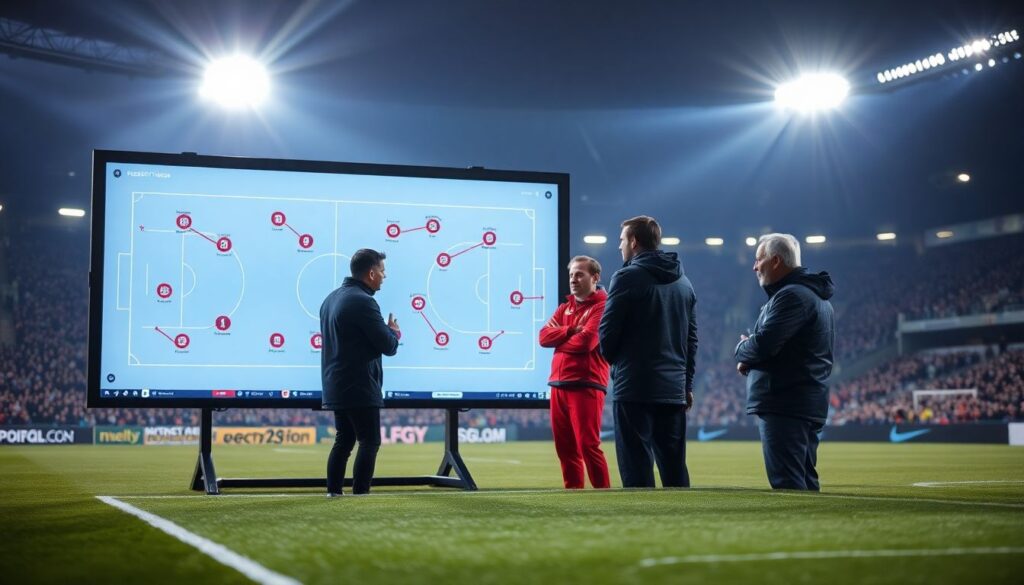
Follow this checklist to decide how your possession game should look in each league, using examples like Manchester City and Galatasaray.
- Map your technical leaders
Identify 2-3 players who must touch the ball early in build-up (e.g., City’s deep midfielders or Galatasaray’s regista-type). Design patterns that naturally funnel possession through them. - Choose your base structure
Decide between back three or four in build-up. Premier League teams often invert a full-back inside; many Süper Lig sides keep full-backs wide and drop a pivot between centre-backs instead. - Define vertical vs horizontal priority
In England, a vertical, line-breaking style meshes with league tempo. In Turkey, mixing switches of play with occasional long balls to a target forward is often safer on difficult pitches and under pressing. - Clarify the role of your no.6 and no.8s
If your no.6 is press-resistant, build through the middle more aggressively; if not, route play via full-backs and wingers. This distinction is vital when comparing Premier League vs Super Lig tactics comparison scenarios. - Stabilise rest defence before committing full-backs
Ensure at least two plus one (2 defenders + 1 midfielder) remain behind the ball when full-backs push high. In the Premier League this protects you against fast transitions; in the Süper Lig it guards against emotional, long-ball surges. - Integrate analytics and video feedback
Use passing-network visualisations and football analytics tools for Premier League and Super Lig to detect underused channels, such as diagonal switches to the far-side winger or third-man runs from midfield. - Stress-test against pressing styles
Rehearse build-up vs high press, mid-block and low block. Premier League sides tend to test all three weekly; Süper Lig teams often concentrate on mid-block and low-block solutions but must still prepare for big-club high pressing.
Persona lens: Analysts own the map of passing networks; coaches implement rehearsed patterns; scouts note which players naturally connect lines and could scale to a more possession-heavy environment.
Width, full-backs and set-piece strategies: exploiting flanks and dead-ball routines
Common mistakes when choosing wide play and set-piece approaches in either league, with specific risks for Turkish and English contexts.
- Overloading full-backs in the Premier League without depth in rest defence, leading to costly counters against fast wingers.
- Copying Premier League-style inverted full-backs in the Süper Lig without a press-resistant pivot, which invites dangerous central turnovers.
- Ignoring aerial profiles when planning corners and free-kicks, instead of tailoring routines to dominant headers and blockers in each squad.
- Underestimating the value of long throw-ins and wide free-kicks in the Süper Lig, where stop-start games create many dead-ball situations.
- Designing complex training-ground routines that do not fit the technical level and concentration span of your defensive unit.
- Failing to adjust wide roles in hostile away fixtures, where crowd pressure and pitch quality may demand simpler, more direct crossing strategies.
- Using the same delivery patterns in Premier League and Süper Lig without considering refereeing trends around blocking, grappling and goalkeeper protection.
- Over-scouting goals and not enough near-misses: analysts, coaches and scouts should track chance quality from set-pieces, not just conversions.
- Neglecting educational resources like the best books on football tactics Premier League and Turkish Super Lig coaches recommend, which often dedicate full chapters to flanks and dead balls.
Persona lens: Analysts quantify expected goals from set-pieces; coaches simplify roles for big games; scouts assess delivery quality and duel dominance on wide and dead-ball situations.
Managerial fingerprints: rotation, analytics and in-game adjustments
For data-driven analysts seeking the most advanced tactical lab, the Premier League is usually the better environment. For coaches wanting to master man-management, crowd dynamics and volatile match scripts, the Süper Lig is often the richer school. For scouts balancing both worlds, moving between leagues provides complementary, not competing, tactical education.
Tactical queries resolved for readers and practitioners
Which league is tactically stronger overall, Premier League or Süper Lig?
The Premier League is generally more structured, faster and more analytics-driven, so its tactical level is higher on average. The Süper Lig, however, offers unique complexity around emotions, derbies and chaotic transitions, which can be just as valuable for developing game management skills.
Where should an analyst start a career: England or Turkey?

For pure data and model-building experience, England is better because of infrastructure and club investment. In Turkey, analysts gain sharper instincts for momentum swings and context, but may face more limited tools and slower adoption at some clubs.
Is pressing intensity really that different between the leagues?
Yes, Premier League pressing is more constant and choreographed across more clubs. In the Süper Lig, intense pressing tends to be more situational, linked to specific matches, stadiums or phases of play rather than a strict club identity.
How should a coach adapt when moving from Süper Lig to Premier League?
Increase focus on synchronised pressing, rest defence and detailed opposition analysis. Training intensity, conditioning and rotation planning must be upgraded, while emotional management remains useful but is no longer the main competitive edge.
How should a scout compare players between the two leagues?
Prioritise transferable traits: decision speed, pressing intelligence, physical repeatability and resilience under pressure. Adjust for league tempo and game chaos when projecting Süper Lig players to the Premier League or vice versa.
Are tactical books and courses specific to these leagues useful?
Yes, league-focused resources help decode local trends in pressing, build-up and set-pieces. Combining books and courses on Premier League structures with material on Turkish dynamics gives a more rounded tactical understanding.
Can one game model work equally well in both leagues?
A flexible model with clear principles and adjustable pressing heights can transfer reasonably well. However, details in tempo, rest defence and emotional management must be tuned to each league’s typical rhythm and pressure profile.