
Why the new Turkish U21 wave feels different
If you’ve followed Turkish football for a while, you know the usual story: a couple of gifted kids break through at a big Istanbul club, everyone gets overexcited, and then half of them fade away. The current crop of turkish football wonderkids u21 2025 looks and feels different. They’re leaving early, learning in elite academies, speaking multiple languages, hiring proper data-nerd analysts, and treating their careers like long-term projects, not just a dream of one big transfer. That mix of street football flair and modern professionalism is exactly why scouts and analytics people are obsessed with this generation and why fans should pay close attention, not just to the big names but to the quieter risers hiding in second divisions and youth setups.
How to read a Turkish U21 scouting report like a pro

Before diving into names, it helps to know how to read any best young turkish players under 21 scouting report without getting blinded by hype. When you hear about a “new Arda” or “next Hakan Çalhanoğlu,” ignore the label and check a few core things: decision-making under pressure, intensity without the ball, ability to adapt to different positions, and how they perform when their team isn’t dominating. Turkish youngsters often look fantastic in highlight reels, but real edges for clubs and smart fans appear when you study their “ugly” games: away, cold, muddy pitch, tired, or playing out of position. If a kid can still influence a match in those conditions, you’re onto something more than just Instagram talent.
Arda Güler – the brain that bends games
You can’t talk about top turkish u21 football prospects to watch without starting with Arda Güler. At his best, Arda plays like football is on 0.75x speed for him and 1.5x speed for everyone else. His first touch sets up the second, his body shape before receiving already hints where the ball goes next, and he manipulates defenders by simply pausing for half a second. If you’re trying to evaluate him seriously, don’t just rewatch his goals; focus on what he does when he touches the ball near the halfway line. Does he turn out of pressure? Does he receive on the half-turn? How many times does he progress play with a single touch? That’s how you judge whether his style will scale from domestic games to Champions League knockout nights.
- Watch his first three touches after he comes on as a sub – they often tell you how confident he is that day.
- Track how many times he shows for the ball between the lines instead of waiting wide.
- Look at his pressing intensity in the first 10 minutes; if it’s high, he’s locked in mentally.
From a next gen turkish talents transfer market value perspective, Arda is already in the “hard to price” tier. You’re not just paying for current output but for the ability to be the creative hub of an elite side for a decade. For clubs, the only realistic angle now is loans or buy-back style structures with Turkish clubs, but for analysts and fans, the real edge is predicting exactly where his best long-term position lies: classic 10, right-sided playmaker, or even deeper as a progressive 8 in a control-heavy system.
Kenan Yıldız – chaos with a compass
Kenan Yıldız brings something that Turkish attacks often lacked: a forward who loves chaos but is smart about it. He can play as a false 9, off the left, or as a second striker. When you watch him, don’t just focus on his dribbles; pay attention to how he attacks the box when the ball is on the opposite wing. He has that striker instinct of suddenly appearing at the back post. For people scanning for the most realistic turkey u21 national team star players who can carry the senior side for years, Kenan is high on the list, because he combines physical profile, pressing work rate, and technical quality.
- Notice how often he sprints back after losing the ball – that’s a hidden indicator of coachability.
- Check his first-touch direction: does he knock the ball toward goal or away from it under pressure?
- Track his runs when someone else has the ball; intelligent off-ball movement ages better than dribbling tricks.
If you’re into data, start logging simple metrics by hand during a match: successful lay-offs, smart dummy runs, and pressing triggers. Over 3–4 games you’ll spot patterns that standard stat sheets miss, helping you see future development instead of just current highlight value.
Semih Kılıçsoy – the street finisher with modern habits
Semih looks like the kid you’d hate to play against in a tight cage pitch: low center of gravity, powerful legs, rapid turns, and a shot that comes out of nowhere. But he’s not just a street baller; he’s building modern striker habits. When you watch him, try ignoring the ball for a few minutes and look only at his body orientation and runs. He often starts runs on the defender’s blind side, then darts across the front. This is how undersized forwards survive and even thrive against bigger centre-backs. For clubs and serious fans checking next gen turkish talents transfer market value with limited budgets, Semih is the kind of profile that can explode if matched with a possession-heavy team that lives in the final third.
- Count his touches inside the box per 90, not just his total shots.
- Pay attention to how often he creates space for teammates with decoy runs.
- Note whether he adjusts his shot selection when facing stronger defenses or better goalkeepers.
Can Uzun – the hybrid 10/9 who loves half-spaces

Can Uzun operates in that awkward zone between attacking midfielder and striker, which can scare conservative coaches but excite forward-thinking ones. He likes to receive in the right half-space, open his body, and either slip a through ball or take a quick shot from the edge of the box. When thinking about the best young turkish players under 21 scouting report for Can, the key question is: will he end up as a second striker, a penalty-box forward with added creativity, or an inverted 10 arriving late into the area? Each role changes the type of club he fits and the league where he’ll thrive.
- Look at how often he scans over his shoulder before receiving – that’s pure IQ, not just talent.
- Track his defensive effort in transition; pressing discipline will decide which coaches trust him.
- Compare his shot maps over a season to see whether he’s learning to avoid low-value attempts.
Ravil Tagir – the modern defender test case
Everyone loves goals; if you want an edge, learn to scout young defenders properly. Ravil Tagir is a great test case. He’s mobile, comfortable on the ball, and not afraid to step into midfield. The trap with young Turkish centre-backs is overrating big clearances and sliding tackles. With Ravil, focus instead on how often he prevents danger before it happens. Does he step up early to intercept? Does he angle opponents toward weak zones? In lists of top turkish u21 football prospects to watch, attackers dominate, but modern football quietly values defenders like Ravil who can play 40 meters from their own goal and still look calm.
- Count how many times he receives under pressure and still finds a progressive pass.
- Note his starting position when the ball is on the opposite flank; good defenders stay connected.
- Watch his recovery runs – is he sprinting in straight lines or taking smart angles?
Under‑the‑radar names you should actually watch
Big names are easy. The real fun – and real edge – is spotting players before they trend on social media. In every U21 batch there are kids in youth leagues, on the bench in mid-table Super Lig sides, or grinding in European B teams who’ll suddenly “come from nowhere.” They don’t. Someone just watched them properly a year earlier. When looking beyond famous turkey u21 national team star players, pay attention to how certain profiles are undervalued: late-blooming defensive midfielders, full-backs converted from wingers, or tall attacking mids who can be retrained as deep-lying playmakers. Those are the archetypes clubs often overlook until it’s almost too late to buy them cheaply.
- Physically late developers playing central midfield – they can explode with a growth spurt and conditioning work.
- Right-footed left wingers comfortable receiving with their back to goal – ideal for inverted systems.
- Full-backs who take set pieces – usually a sign of above-average technique and crossing precision.
Practical checklist: how to “scout like a club” from your couch
You don’t need club-level resources to have a sharper eye than most pundits. You just need a simple, consistent system. Next time you watch a U21 game, try using the following approach for at least two or three matches per player. Over time you’ll build your own internal database that beats lazy narratives around the main turkish football wonderkids u21 2025 names everyone repeats.
- Pick one focus per match. First game: only off-ball movement. Second game: only pressing and defensive work. Third game: only touches under pressure. Splitting focus stops you from getting hypnotized by goals and nutmegs.
- Log three custom stats. For example, “smart runs,” “progressive passes,” and “danger prevented.” Your definitions can be rough, but being consistent across games is what reveals patterns.
- Rewatch 5-minute bad stretches. Every young player has sloppy periods. How they react to those, not to their best 30 seconds, tells you whether they can handle higher levels.
- Ignore the shirt, watch the habits. Whether the kid is at a giant club or in a small academy, look for repeatable actions: scanning, body orientation, pressing intensity, decision-making on the break.
- Update your opinion slowly. Don’t flip from “future Ballon d’Or” to “finished” in one match. Track 5–10 games before making any strong call on ceiling or ideal role.
Using this structure, you’ll find your own favorites among the top turkish u21 football prospects to watch, not just the ones algorithmic feeds keep pushing at you. Over a season, you’ll notice that your early reads on mentality and adaptability often predict who kicks on and who stalls when the first big contract arrives.
Unconventional angles for finding the next wave
If you want to get ahead of clubs on the next batch of turkish football wonderkids u21 2025-style players, you’ll need to do more than watch televised games. A few unconventional tricks can tilt things in your favor. None require fancy software; they just require curiosity and consistency. Think of it as building your own underground scouting network, where you connect dots that others ignore instead of just reading the same headlines about the same three kids every week.
Chase context, not just video
Most clips lie by omission. To compensate, dig into context. Was a player moved from winger to full-back mid-season? Did a coach publicly praise his training attitude? Did his team switch from a low block to high press, forcing him to adapt? These “boring” bits of information are gold when estimating future performance and realistic next gen turkish talents transfer market value. A midfielder thriving after a tactical shift tells you he can adapt; a forward still scoring in a dysfunctional team tells you his output isn’t system-dependent.
- Follow local journalists and fan accounts who attend youth and reserve games.
- Note coaching changes and formation tweaks, then see how specific players react.
- Watch at least one match where your target plays in an unfamiliar role.
Scout by archetypes, not names
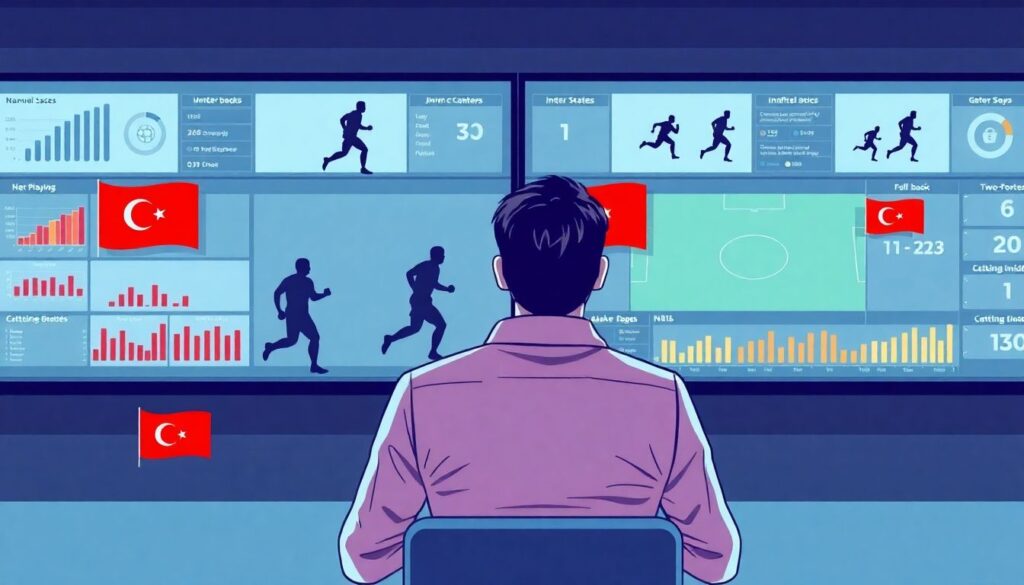
Instead of obsessing over individual names, start by deciding which archetypes are undervalued in the market. Maybe you believe that aggressive ball-playing centre-backs or two-footed inverted full-backs are the next trend. Once you know that, you can look at every best young turkish players under 21 scouting report through that lens. Suddenly, players who look “average” compared to today’s stars might be almost perfect fits for tomorrow’s tactics. This is how smaller clubs, and even smart Football Manager players, generate outsized returns: they scout for tomorrow’s meta, not yesterday’s.
Use language and culture as scouting tools
Another underused edge: cultural fit. A kid from Turkey already comfortable with German or Italian football culture, or speaking the local language, is more likely to adapt quickly abroad. Scan interviews, social media, and small documentaries. Who sounds obsessed with learning, not just “living the dream”? Who talks about diet, recovery, and tactical details? Among possible turkey u21 national team star players, the ones who treat their career like a craft tend to outlast the pure talents who rely only on raw ability and vibes.
Bringing it all together
The point isn’t to correctly predict every career; nobody does. The point is to watch this new Turkish generation with a sharper lens than the usual hype. If you structure how you watch games, think in archetypes, and blend eye test with a bit of data and context, you’ll build your own, personal list of top turkish u21 football prospects to watch that might differ from the mainstream by three or four names. And that’s where the fun starts: comparing notes with friends, following “your” players as they move across leagues, and understanding why some explode while others stall. Turkish football is finally producing a deep, varied wave of talent; if you watch them with intention instead of just scrolling highlights, you won’t just know the names – you’ll understand the stories before everyone else catches up.