Context: Why Turkish Goalkeepers Are Changing So Fast
Over the last three seasons (2022–2025), goalkeeping in Turkey has shifted from “shot-stopper on the line” to “11th outfield player.” Tracking data from the Süper Lig and UEFA competitions shows a clear rise in keeper involvement: average passes per game from starting goalkeepers in the league climbed from roughly 23 in 2021‑22 to about 31 in 2023‑24, with long balls steadily dropping. This mirrors European trends led by Ederson, ter Stegen or Maignan, but with local flavor shaped by Turkish coaching culture, fan pressure and club finances. To understand what’s happening, it’s useful to unpack a few terms, look at concrete stats, and see how training, equipment and even ticket‑buying habits reflect the new reality of modern goalkeeping in Turkey.
Key Terms: Sweeper‑Keeper, PSxG and Build‑Up Involvement
Before diving deeper, let’s clarify some jargon you’ll hear in modern goalkeeper coaching courses turkey. A “sweeper‑keeper” is a goalkeeper who actively defends space behind the back line, often starting 10–20 meters outside the six‑yard box to intercept through balls. “PSxG” (post‑shot expected goals) measures how many goals a keeper is expected to concede based on the quality of shots faced; saving more than that suggests above‑average shot‑stopping. “Build‑up involvement” combines passes, receptions and support positions during possession phases. In the Süper Lig, the share of keeper passes played under pressure has risen by roughly 15–20% since 2021‑22, indicating that coaches now expect keepers not just to clear danger, but to handle aggressive pressing with the ball at their feet.
European Blueprint: How Top Leagues Influence the Süper Lig
European giants effectively provide a live “video textbook” for Turkish coaches. When Premier League or Bundesliga teams use the keeper as a spare centre‑back in the first phase of build‑up, those patterns quickly appear in Istanbul and Anatolia. Data from 2022‑23 to 2024‑25 (partial) suggests Süper Lig keepers now average around 7–9 short passes inside their own box per match, up from roughly 4–5 three years earlier. Diagrammatically, the evolution looks like this:
– 2021‑22: CB ––> FB or long ball from GK
– 2023‑24: CB ←→ GK ←→ FB/DM triangles under pressure
This shift mirrors La Liga and the Eredivisie more than the historically direct English style, with Turkish teams increasingly prioritizing positional play and controlled first passes from the back.
Shot‑Stopping vs Ball‑Playing: What the Numbers Say
Stats over the last three seasons paint a nuanced picture. Average save percentages in the Süper Lig have stayed relatively stable (around 69–71%), but PSxG‑based metrics show improvement among top clubs’ keepers. Between 2021‑22 and 2023‑24, the number of goalkeepers finishing a season at +3 or better in PSxG (saving at least three more goals than expected) increased from 5 to roughly 9. At the same time, misplaced short passes leading directly to shots have ticked up slightly, a predictable side‑effect of higher risk in build‑up. In other words, Turkish keepers are not necessarily stopping more basic shots, but the best of them are combining above‑average shot‑stopping with expanded creative duties, a profile increasingly required for transfers to Germany, Italy or Spain.
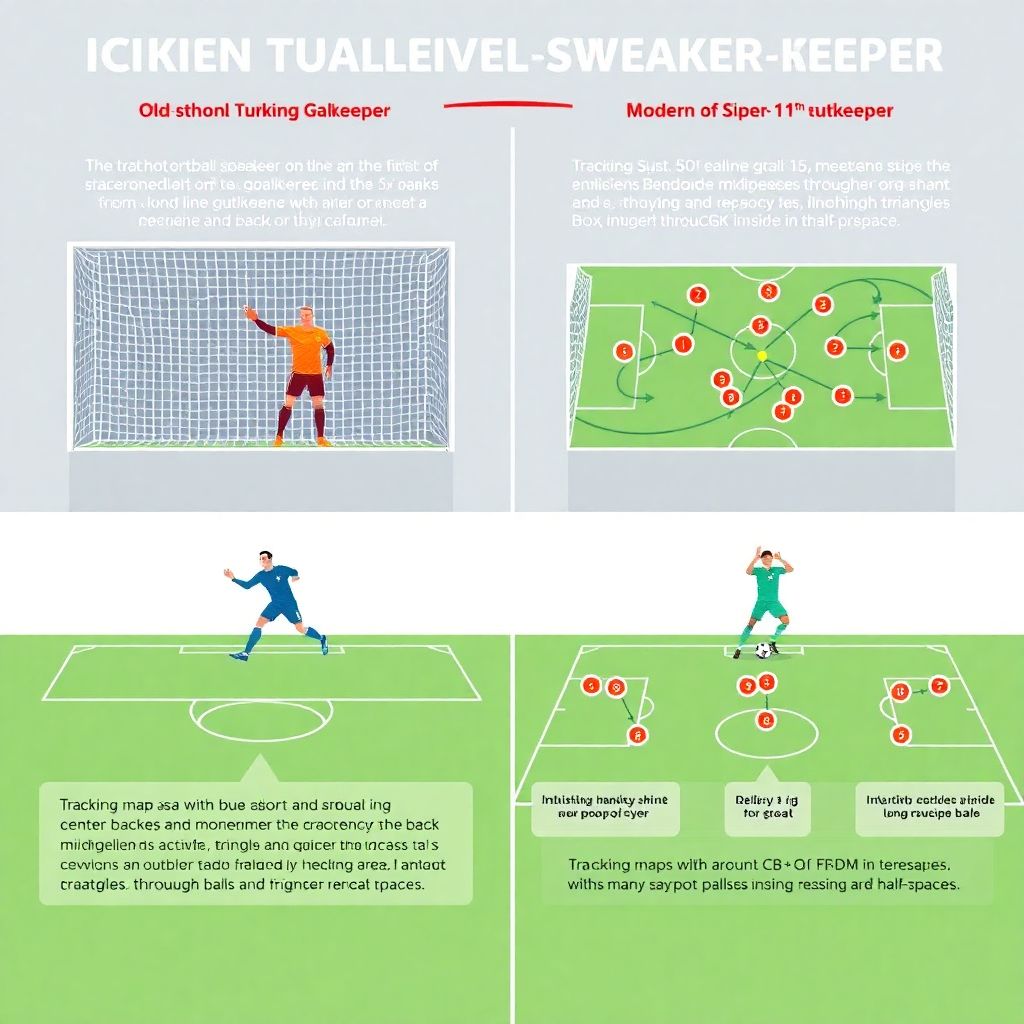
Positional Diagrams: Old School vs Modern Turkish Keeper
Imagine two simplified heat maps. The “traditional” Turkish keeper from a decade ago shows a red zone rooted in the six‑yard box, with occasional touches near the penalty spot. The “modern” Süper Lig keeper (2023‑24) has a much wider footprint:
– Dense touches around the penalty spot and the edge of the box
– Frequent contacts 5–10 meters outside the area in central zones
– Occasional sweeper actions near the half‑spaces, directly behind full‑backs
In text‑diagram form:
Old: [ GK ] (static between posts)
New: [ GK ] ––– moves 5–15m forward, linking CBs and DM
Aggregated tracking shows that average defensive line height in the top half of the Süper Lig has risen by roughly 3–5 meters in the last three seasons, forcing keepers to patrol more space and anticipate through balls rather than reacting on the goal line.
Training Revolution: From Camps to Individual Micro‑Skills
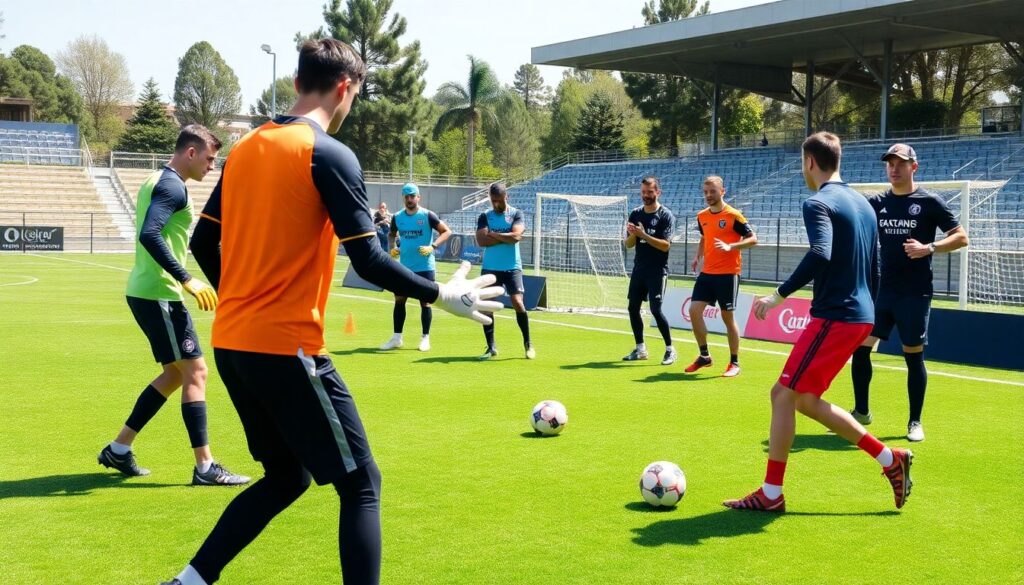
This tactical evolution is backed by a boom in professional goalkeeper training camps turkey, especially in Antalya and Istanbul. Over the last three summers, many camps shifted their session plans: less time on basic catching drills, more on first touch, body orientation and scanning before receiving back‑passes. Coaches now design exercises where keepers solve 3v2 build‑up situations, hit line‑breaking passes with both feet, then immediately transition into shot‑stopping. Bullet‑point snapshots of a typical modern camp microcycle might look like:
– Day 1–2: Footwork, passing patterns, scanning and communication drills
– Day 3–4: High line defense, 1v1s in big spaces, sweeping decisions
– Day 5–6: Integrated game scenarios with pressing triggers and set‑piece simulations
This is a clear break from the past, when preseason for keepers mainly meant volume diving, catching and aerobic work without complex tactical context.
Coaching Education and Analytics in Turkish Academies
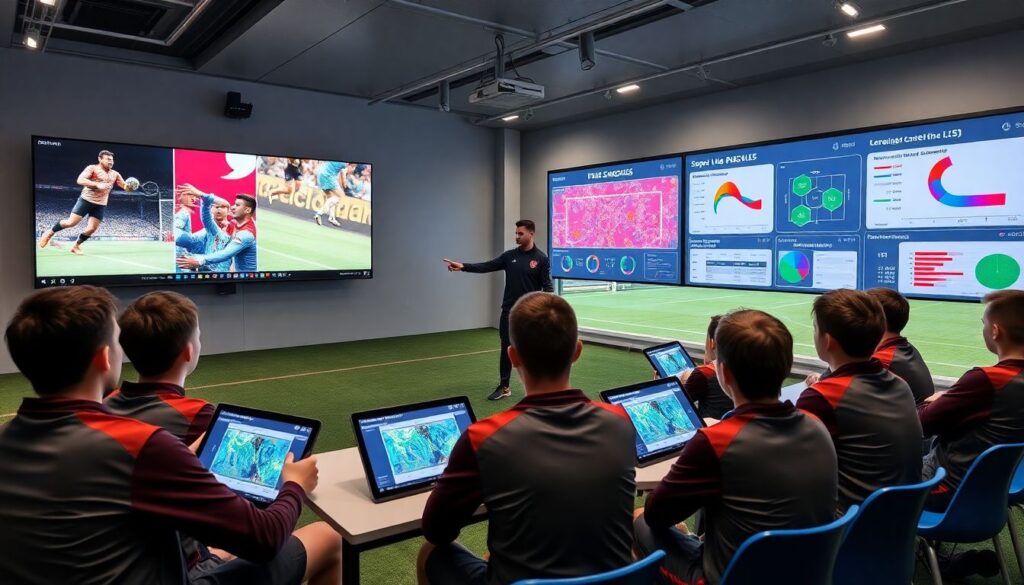
Clubs and private academies are also leaning on data. New waves of modern goalkeeper coaching courses turkey incorporate video breakdowns and analytics dashboards showing pass maps, heat maps and PSxG trends for local and European keepers. Over the last three years, several Süper Lig academies adopted internal KPIs such as “successful sweeper actions per 90” or “progressive passes completed,” metrics rarely tracked in Turkey before 2022. Coaches use ASCII‑style diagrams in classroom sessions to communicate pressing cues and passing angles, e.g.: CB – GK – CB triangle with a DM “support line” underneath. The result is a common language between goalkeeping coaches, analysts and head coaches that brings Turkish methodology closer to what you see in Germany or the Netherlands.
Gear, Commerce and the Online Ecosystem Around Keepers
The rise of modern goalkeeping also shows up off the pitch. Young players who binge‑watch Champions League games now want lighter, more flexible gloves and boots tuned for passing, so the typical football goalkeeper equipment shop turkey advertises grip but also “ball feel” and ease of distribution. The market for goalkeeper gloves turkey online has grown alongside this, with domestic brands trying to copy European latex formulas and cut patterns that favor fingertip control on short passes. Even match‑day habits are slowly changing: as more teams build from the back, fans pay closer attention to keepers’ involvement, and clubs push süper lig tickets buy online with highlights packages that actually feature goalkeeper actions in build‑up, not just acrobatic saves. The commercial ecosystem is quietly reinforcing the idea that the keeper is a technical player, not just a last‑resort firefighter.
Comparison With European Counterparts: Gap Closing, Not Closed
How do Süper Lig keepers stack up against their European peers right now? On high‑level shot‑stopping, the best Turkish‑based goalkeepers post numbers comparable to mid‑table sides in the top five leagues, especially in PSxG overperformance and 1v1 success rates. Where the gap remains is in decision‑making speed and passing under intense high press. Data from UEFA competitions over the last three campaigns shows Turkish clubs’ keepers attempting fewer progressive ground passes and resorting to long clearances more quickly when pressed by elite European opponents. However, the trend line is positive: each of the last three seasons has brought incremental rises in successful short build‑up sequences initiated by the keeper. If the current training intensity, coaching education and tactical daring continue, the next generation of Turkish goalkeepers is well‑placed to function comfortably within the most demanding European systems, turning the position into one of the country’s competitive strengths rather than a conservative liability.