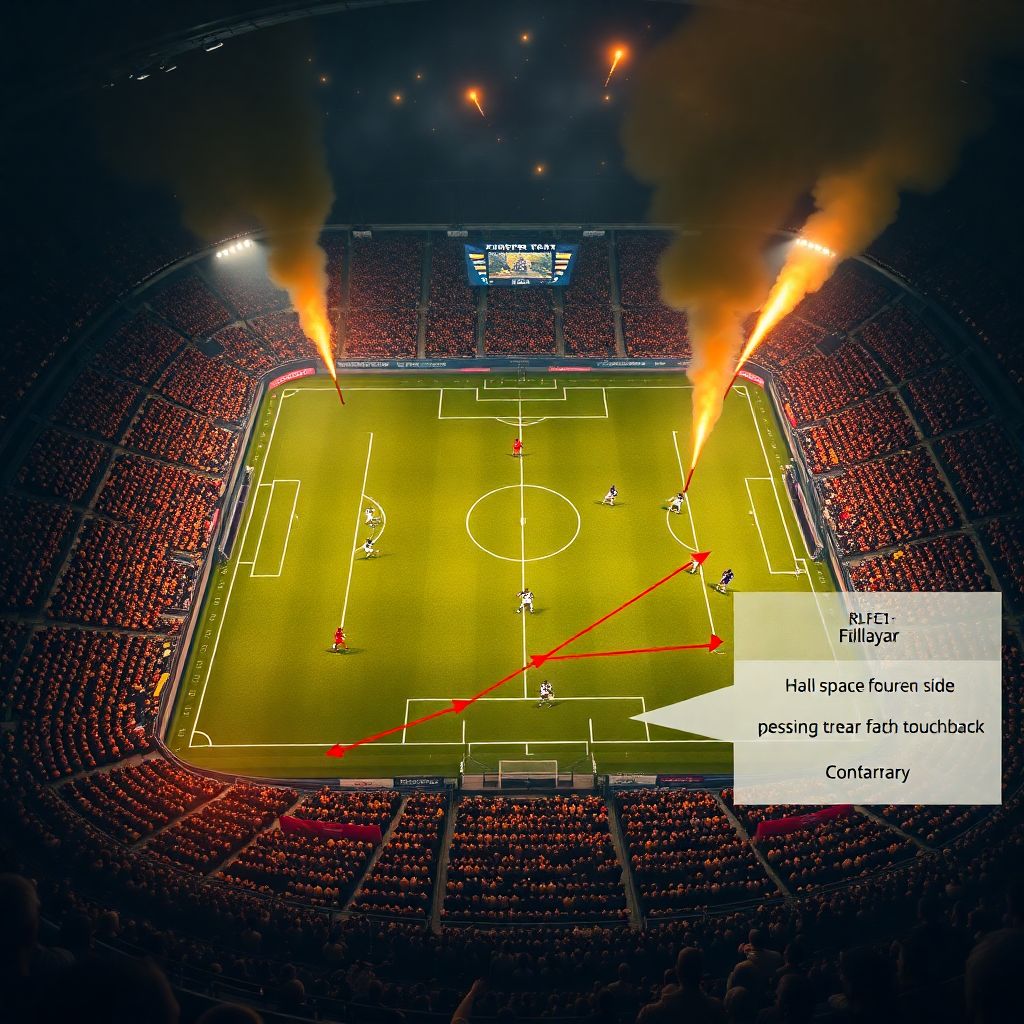
Inside the Derby: Why This Tactical Battle Really Matters
If you’ve watched even one Fenerbahçe vs Galatasaray game, you know it doesn’t feel like a normal match. The tension is different, the tempo is different, even the fouls feel heavier.
But behind the noise, flares and emotion, there’s a very clear tactical logic. A proper Fenerbahce vs Galatasaray tactical analysis shows that this derby is less about “who wants it more” and much more about pressing heights, rest defence, half‑spaces and transition control. Let’s unpack all that in a human, non-coach-speak way.
Historical Context: From Emotion to Structure
From chaos to calculated risk
For years, this derby was almost pure chaos. Think old-school 4‑4‑2 vs 4‑4‑2, long balls, second balls, constant duels and referees losing control. Tactical structure often collapsed after 15–20 minutes under emotional pressure.
Over the last decade, though, both clubs have been pulled into the global trend:
– more compact lines
– coordinated pressing
– clear build-up patterns
– data-driven preparation
So when you look at any modern Fenerbahce vs Galatasaray derby breakdown, you’re not just seeing “heart and passion”. You’re seeing a chess match: how to exploit the opponent’s full-backs, how to deny passes into the 10-zone, how to control counter-attacks when you commit numbers forward.
Derby identity: what rarely changes
Despite different coaches and systems, a few historical constants survive:
1. High emotional tempo – the first 15 minutes are often played at a sprint, which affects tactical decisions (more direct, fewer risky passes).
2. Wing focus – Turkish derbies traditionally use wide players as emotional and tactical weapons.
3. Set pieces as weapons – corners and free-kicks have extra value because open play can be scrappy.
Knowing this context helps you read any Fenerbahce vs Galatasaray match analysis today: you’re not just watching “modern football”, you’re watching a historically emotional game wrapped in modern tactical clothes.
Basic Tactical Principles in the Derby
1. Where to press and when to step back
The first big decision: Do you press high or protect space behind you?
– High press: Forces mistakes, wins the ball close to goal, but leaves huge gaps if broken.
– Mid-block: Lets the opponent come to the halfway line, then compresses space. Less glamorous, often smarter.
Galatasaray are often more comfortable building from the back, so Fenerbahçe might choose aggressive pressing triggers: back-passes to the keeper, sideways passes to a weaker-foot centre-back, or passes into a deep-lying 6 with his back to goal.
On the other hand, Galatasaray may press selectively, trying to trap Fenerbahçe near the touchline rather than in the middle. The Fenerbahce vs Galatasaray lineups and tactics often reflect this: coaches pick wingers and 8s who can sprint and press repeatedly, not just dribble.
2. Owning the half-spaces
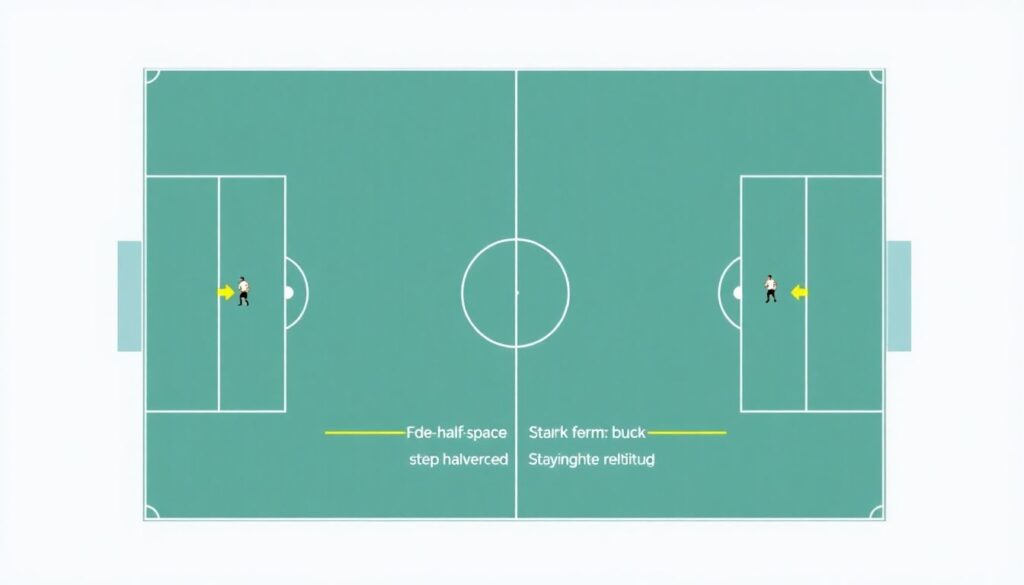
If you imagine the pitch divided into vertical lanes, the half-spaces are the channels between the central and wide zones. In this derby, these zones are gold.
Why?
– Attacking midfielders receive there on the half-turn and can play forwards.
– Full-backs hesitate: step inside or stay wide? That micro-second creates gaps.
– Defensive mids get “pulled” sideways, opening the central lane.
Both teams frequently overload one half-space with:
– Full-back
– Winger coming inside
– Attacking midfielder
– Sometimes a centre-forward dropping
This creates 3v2 or 4v3 situations, short triangles, and cutbacks. It looks like “messy improvisation” on TV, but underneath is a clear principle: overload one side, finish from inside the box.
3. Transition control: the hidden battle
The most underrated element in any Fenerbahce vs Galatasaray tactical analysis is what happens after the ball is lost.
Both teams often attack with many players, pushed high up. If they lose the ball and aren’t positioned for counter-pressing, they’re in trouble.
So coaches obsess over:
– Rest defence: who stays behind the ball when everyone else attacks.
– Counter-pressing structure: players in the middle ready to immediately swarm the ball carrier.
– Fouling intelligently: stopping counters early, in safe zones.
If you think “they’re just fouling because it’s a derby”, you’re only half right. Often, it’s perfectly calculated: foul now, organise, live to defend the next phase.
Concrete Examples of Tactical Patterns
1. Asymmetrical full-backs
A classic pattern in modern derbies:
– One full-back plays very high and wide, almost as a winger.
– The other tucks in as an “extra centre-back” or narrow midfielder.
This allows, for example, Fenerbahçe to pin Galatasaray’s wide defender deep on one flank, while maintaining numerical security in the first line. On the ball-far side, the tucked-in full-back helps build a 3‑2 structure (three at the back, two in midfield) that’s hard to counter.
It might look like “one full-back is just more attacking”, but it’s a systematic risk calculation.
2. False winger, true overload
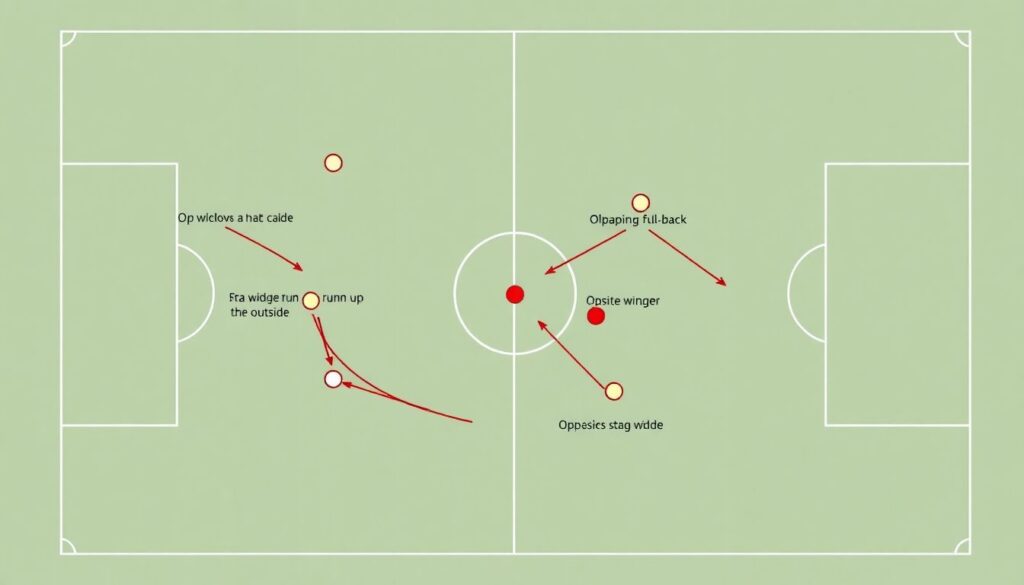
Another common pattern: the winger leaves the sideline and moves into the half-space, even closer to central areas. In his place, the full-back overlaps wide.
The effect:
– Central zones get crowded with attackers.
– The opposing full-back is torn: follow inside or stay wide?
– The far-side winger can arrive in the box for cutbacks.
This pattern is one reason you often see shots not from crosses, but from low passes pulled back from the byline.
3. Pressing traps near the touchline
Teams frequently guide the opponent’s build-up toward the sideline, where the field is “smaller” and escape options are fewer.
Typical trap:
1. Allow pass to full-back.
2. Winger presses from outside-in, blocking the line.
3. Striker jumps to cut the back-pass to centre-back.
4. Midfielder steps out to mark the inside pass.
Result: the full-back has to play a risky pass or clears long. It looks like “poor decision-making”, but actually he’s been herded into a cul-de-sac.
Newcomer Mistakes When Analyzing the Derby
1. Focusing only on emotion and ignoring structure
Many new fans – and even some pundits – talk about “heart”, “will” and “passion” and stop there. That’s only the surface.
Typical error:
Assuming a team is “not motivated” when they’re actually just in a mid-block by design, waiting for a trigger to press.
If you want to go deeper than surface-level commentary, always ask:
“Is this low intensity because they’re tired, or because they’re controlling space instead of chasing the ball?”
2. Confusing high tempo with good tactics
Derbies are fast and intense, but intensity doesn’t automatically mean quality. Newcomers often think:
– More sprints = better plan
– Constant long shots = strong attacking performance
– End-to-end chaos = “great game”
In reality, coaches often prefer controlled intensity: short bursts of pressure followed by organised rest phases. If a team is constantly running but never closing passing lanes, that’s not good tactics; that’s panic.
3. Ignoring off-the-ball positioning
Most people watch only the ball. But high-level Fenerbahce vs Galatasaray match analysis today lives in the spaces away from it.
Common beginner mistake:
– Judging a midfielder only by touches and shots.
– Ignoring that his main role was to close a passing lane, shadow a 10, or balance the structure.
When you rewatch highlights, try this: on one attack, follow a player without the ball. You’ll start to see why coaches select certain players who don’t always make the highlight reel.
4. Misreading tactical flexibility as “confusion”
When a coach changes shape mid-game – for example from 4‑2‑3‑1 to a 3‑4‑3 in possession – new viewers often say “they look lost” or “no clear plan”.
Often, the plan is:
– Build in one shape (to attract pressure one way).
– Progress in another (to exploit spaces elsewhere).
– Defend in a third (to protect key zones).
The mistake is judging the team only by static formation graphics and not by dynamic roles. Fenerbahce vs Galatasaray tactical analysis has evolved way beyond simple “4‑4‑2 vs 4‑3‑3” talk.
5. Treating betting odds as tactical truth
Because this derby attracts a huge global audience, a lot of people approach it via Fenerbahce vs Galatasaray betting tips and predictions. The rookie error is to believe odds or tips reflect precise tactical knowledge.
Reality check:
– Odds mostly express probabilities and market behaviour, not pressing schemes.
– Tipsters may not account for last-minute tactical tweaks, role changes, or fitness limits.
– Tactical match-ups (e.g., a slow full-back vs a rapid winger) can outweigh “form” or “home advantage”.
If you want to use tactics to inform your view of the game, flip the order:
First understand the tactical match-up, then look at any predictions – not the other way around.
How to Watch the Derby Like a Tactician
Simple checklist for your next viewing
Next time you watch the game, use this 5-step checklist to go beyond surface-level impressions. It will also make any Fenerbahce vs Galatasaray derby breakdown you read afterwards much easier to digest.
1. First 10 minutes: Pressing height
Ask yourself: Who is pressing higher? Who is letting the other have the ball? This tells you which coach is taking more structural risk.
2. Look at full-backs, not just the ball
Are they both high? One high and one tucked in? This reveals how daring the build-up is and how they plan to defend counters.
3. Track the 6 and the 10
Where does the defensive midfielder stand in build-up? Wide, central, dropping between centre-backs? Where does the playmaker receive – wide, between the lines, or almost as a second striker?
4. Observe the reaction to losing the ball
Count: how many players instantly sprint to press? If most turn and run backward, the team is prioritising defensive shape over regaining the ball.
5. Notice late-game changes
When legs are tired and space opens up, substitutions and shape tweaks can flip the script. That’s where smart coaches earn their reputation.
Using this mini-framework, you’ll get much more out of any Fenerbahce vs Galatasaray tactical analysis you read or watch later. You’ll start saying, “Ah, that overload on the left was planned,” instead of “They got lucky on that side.”
Bringing it all together
In the end, this derby is special because it merges three layers:
– History and emotion – the context that fuels the atmosphere.
– Modern structure – pressing schemes, build-up patterns, rest defence.
– Individual brilliance – players who can break any plan with one touch.
The smartest way to enjoy it is not to kill the emotion with dry theory, but to add another layer of appreciation. You can still shout at the screen, still feel your heart rate spike – just now you’ll also notice why one side suddenly starts dominating a flank or why a coach moves a winger five metres inside.
That’s the real payoff of an “inside the derby” view: once you see the patterns, you can’t unsee them.