
Turkish youth academies are strong for late developers, affordable pathways and fast first-team access, while Europe’s elite talent factories win on daily training intensity, facilities and global scouting. If budget and staying in Turkey matter, choose a top Süper Lig setup; if long-term ceiling and global visibility matter, target leading European academies.
What Distinguishes Turkish Youth Academies at a Glance
- Among the best football academies in Turkey for youth players, big Süper Lig clubs mix strong competition with relatively moderate costs and quick promotion into senior squads.
- In a direct turkey vs europe football academy comparison, European elites provide denser competition, more specialised staff and clearer international transfer routes.
- The cost of youth football academies in turkey and europe is generally lower on the Turkish side, especially outside Istanbul, but scholarships in Europe can level the field for top talents.
- Top european football academies for international players offer better English support, education integration and scouting visibility for major leagues.
- Learning how to join professional football academy in turkey often means combining club trials, agent networks and municipal programmes, not just one central pathway.
Structural Models: Club, Municipality and Private Academies in Turkey
In Turkey, three main structures dominate: club academies attached to professional teams, municipality academies run by local authorities, and private academies operating as businesses or development centres. Each suits a different budget, ambition level and geographic situation.
Core criteria to choose a Turkish academy structure
- Pathway to pro contract: Does the academy directly feed a professional club, or only prepare players for later trials?
- Training volume and quality: How often do players train weekly, and how qualified are the coaches (UEFA licences, experience)?
- Education balance: Is there coordination with school timetables and exam periods, especially at ages 14-18?
- Geographical access: Is daily travel realistic, or will the player need dormitories or relocation?
- Financial model: Monthly fees, extra payments (equipment, tournaments, transport) and any scholarship or fee-reduction options.
- Competition level: Which leagues or age categories the academy competes in, and average strength of opponents.
- Individual attention: Squad size per age group and realistic playing time for the player’s position.
- Support services: Presence of fitness coaches, analysts, psychologists or medical staff, even part-time.
- Reputation and network: History of moving players to higher leagues, relationships with bigger clubs inside and outside Turkey.
Decision path: which Turkish structure fits your case?
- If the player already stands out regionally and can access a big city, prioritise a Süper Lig club academy with clear age-group ladders.
- If budget is limited but local support is strong, look first at municipality academies with stable league participation.
- If the player needs extra technical polishing before club trials, use a private academy that regularly places players into pro environments.
- If education is the top priority, choose a structure that schedules training after school with minimal missed classes.
Talent Identification and Scouting: Turkey vs European Elites
Scouting in Turkey is decentralised, with heavy reliance on club networks and personal contacts, while Europe’s elite academies use more structured, data-informed systems. Understanding which scouting environment fits the player will guide whether to stay local or chase trials abroad.
Scouting and pathway options compared
| Variant | Who it suits | Pros | Cons | When to choose |
|---|---|---|---|---|
| Turkish big-club academy (Süper Lig) | High-potential players already strong in regional leagues in Turkey | Direct route to first team, intense local rivalries, lower relocation and language barriers | Scouting can be subjective; competition inside squads is high with limited patience for mistakes | Choose if the player is already on the radar domestically and family wants to stay in Turkey |
| Municipality or regional academy in Turkey | Late developers or players in smaller cities who need a first structured environment | Accessible, low cost, easier entry, more playing time in early years | Weaker international connections and fewer direct links to top European clubs | Choose as a stepping stone before trials at larger Turkish or European academies |
| Private Turkish academy with European links | Families ready to invest in extra training and occasional trial trips abroad | Focused technical work, trial organisation, dual exposure in Turkey and Europe | Quality varies; no guaranteed contracts; total cost can add up with travel and fees | Choose when you want targeted placement into both Turkish clubs and foreign academies |
| Top European club academy (EU big league) | Elite talents with EU passports or strong networks and readiness to relocate | World-class facilities, deep coaching staff, regular matches vs best peers, global scouting visibility | Hard entry, cultural and language adaptation, distance from family, higher living costs | Choose if the player is already standout at national level and can handle relocation academically and mentally |
| European boarding football school / academy | International players seeking education plus long-term European exposure | Integrated schooling, English-language support, regular showcases to clubs | Fees can be significant; pathway to pro contract is indirect through later trials | Choose if family can afford boarding and prioritises both diploma and football options in Europe |
Decision path: where to be seen by the right scouts
- If the player is not yet dominant in local Turkish leagues, stay in Turkey and aim first for strong club or municipality academies.
- If the player is one of the best in region and comfortable in English, add carefully selected trials at top european football academies for international players.
- If budget is tight, prioritise consistent playing time and visibility in Turkish competitions over rare, expensive trips abroad.
- If school results are strong and family accepts relocation, consider European boarding academies with clear links to professional clubs.
Coaching Philosophy, Curriculum and Player Pathways
European elite academies usually work with detailed, long-term curricula and role-specific development plans, while Turkish setups range from excellent to basic depending on club and region. Matching coaching style with the player’s needs is more important than the country label.
Scenario-based guidance for coaching and pathway fit
- If the player is technically gifted but tactically raw, then a European academy with clear game-model teaching and video analysis will usually accelerate learning.
- If the player lacks intensity and physical habits, then choosing a Turkish big club known for demanding sessions and competitive training can close that gap quickly.
- If education and bilingual skills are important, then look for academies (in Turkey or Europe) that integrate school programmes and language support, not just evening training.
- If the player is a late physical developer, then avoid environments that cut players early; choose clubs with history of patience and differentiated physical programmes.
- If the family wants a clear written pathway, then prioritise academies that publish their age-group curriculum and show recent examples of players promoted step by step.
Decision path: choosing by coaching, not by brand
- If you can access sessions for observation, first compare session structure and coaching feedback style, then decide on country.
- If one academy offers a written development plan and another does not, lean towards the transparent one even if its badge is less famous.
- If the player thrives under strict structure, pick environments with clear rules and measurable goals; if more creative, look for coaches who encourage risk-taking.
- If two options are equal, choose the one with better communication between coaches, parents and school.
Facilities, Investment Levels and Infrastructure Comparison
Europe’s elite academies typically lead in infrastructure: multiple high-quality pitches, specialised gyms and sports science labs. In Turkey, top clubs are improving quickly, but depth of infrastructure still varies strongly between big cities and regional setups.
Snapshot table: relative infrastructure and investment
| Environment | Relative cost level | Typical player output | Coaches per squad trend | Overall facility depth |
|---|---|---|---|---|
| Top Turkish club academies | Medium compared with the cost of youth football academies in turkey and europe overall | Regular first-team promotions and some foreign transfers | Moderate to good, usually at least one specialist beyond head coach | Strong main facilities; sometimes less depth in secondary pitches and support areas |
| Mid-tier / regional Turkish academies | Lower fees, often subsidised by clubs or municipalities | Occasional promotions to higher leagues; more focus on local leagues | Limited staff; one coach may handle several roles | Basic but functional; shared or multi-purpose fields are common |
| Elite European academies | Higher costs unless fully covered by club scholarships | Regular professional graduates each season across levels | High, with positional coaches, analysts and sports scientists | Comprehensive complexes with multiple pitches and specialised zones |
| European private schools/academies | High tuition, sometimes with partial scholarships | Players primarily progressing to trials or lower-tier pro clubs | Varies; usually more staff than mid-level Turkish setups | Good training grounds integrated with school campuses |
Checklist algorithm: how to compare facilities and investment
- Visit or virtually tour each academy and list concrete assets: number and type of pitches, gym, analysis room, medical room.
- Ask how often each age group can access the best pitches and gym; shared access can reduce real quality.
- Check staff depth: who handles conditioning, analysis and rehab, and how often these specialists are present.
- Clarify what is included in fees: match travel, kit, medical checks, extra sessions or tournaments.
- Compare travel and accommodation costs on top of academy fees, especially for European options.
- Evaluate maintenance standards: pitch condition, lighting, changing rooms, and safety procedures.
- Prioritise environments where investment clearly benefits youth categories, not just the first team.
Decision path: weighing cost against environment quality
- If a European option is only slightly better in facilities but much more expensive, a top Turkish academy may be a more efficient choice.
- If a Turkish option lacks basic infrastructure (stable pitches, gym, medical support), consider looking at another club or a European alternative with scholarships.
- If the player already has access to good local gyms or trainers, prioritise academies with better game pitches and competition over marginal gym upgrades.
- If budget allows only one major move, time it for the 15-17 age window when facilities and exposure matter most for contracts.
Competitive Exposure: Leagues, Tournaments and Loan Systems
European academies benefit from dense league structures and well-organised international tournaments, while Turkey offers strong derbies and passionate atmospheres but fewer regular cross-border events. Misjudging competitive exposure is a frequent mistake when families compare options.
Common mistakes when judging competition and exposure
- Choosing an academy only because it travels abroad once a year, while weekly domestic league level remains low.
- Ignoring how often the player will actually start matches, not just be part of the squad on paper.
- Underestimating the value of stable, structured leagues in Turkey compared with irregular friendly tournaments.
- Overrating short trial tournaments in Europe without a clear follow-up plan at specific clubs.
- Not checking how the club uses loan systems or partner clubs to give minutes at 17-20 years old.
- Assuming that being in a famous European city automatically means stronger weekly opposition.
- Overloading the player with travel and tournaments at the expense of training quality and recovery.
- Ignoring opportunities to face strong opposition within Turkey (national championships, regional finals) before going abroad.
- Failing to consider how school and exam periods limit the ability to attend distant tournaments.
Decision path: picking the right competitive environment
- If the player is not yet a regular starter at current level, choose an academy where he can start weekly rather than sit on a stronger bench abroad.
- If two options have similar training quality, prefer the one with more structured league games and clear age-category ladders.
- If aiming at Europe later, target Turkish academies that frequently play or transfer players to European clubs and tournaments.
- If school constraints are tight, choose strong local leagues over constant long-distance travel for friendlies.
Outcomes: Professional Graduates, Transfer Routes and Metrics
Ultimately, the decision between Turkish and European academies should rest on realistic outcomes: number and level of professional graduates, clarity of transfer routes and fit with the player’s profile and family constraints.
Mini decision tree before choosing your path
- If your main goal is a professional debut in Turkey and you need manageable costs, focus on the best football academies in turkey for youth players connected to Süper Lig or strong 1. Lig clubs.
- If your main goal is to access global markets and top-five European leagues, and you can handle relocation, target top european football academies for international players through carefully planned trials.
- If finances are limited but the player has clear talent, start in stronger municipal or regional Turkish academies and use them as a platform for later moves.
- If education and language skills are as important as football, consider European football schools or Turkish academies with solid school partnerships.
For families prioritising financial realism and proximity, leading Turkish club academies are usually the best first choice. For players already among the best of their age nationally, with strong academic and language skills, Europe’s elite talent factories can offer a higher long-term ceiling. Many successful paths combine both: develop in Turkey first, then move abroad at the right moment.
Practical Concerns and Short Expert Answers
How can a player practically learn how to join professional football academy in turkey?
Build a strong record in local and regional leagues, attend official club trials advertised by Süper Lig and 1. Lig teams, and use credible agents or coaches with existing club contacts. Keep video highlights updated to share before any trial invitation.
Is it better to target the best football academies in turkey for youth players or go straight to Europe?
If the player has not yet dominated locally, start with top Turkish academies to build a stronger base. Target Europe only when he is clearly standout among peers and ready for cultural and academic challenges.
How should families compare the cost of youth football academies in turkey and europe?
Include not just fees, but also housing, transport, visas, insurance and school costs. Turkish options usually look cheaper, but scholarships at European clubs or schools can reduce the difference for top talents.
When does a turkey vs europe football academy comparison matter most?
The comparison becomes critical around ages 14-17, when decisions influence exposure to scouts and contract timing. Before that, local coaching quality and enjoyment of the game are more important than the country.
Which top european football academies for international players should Turkish families consider?
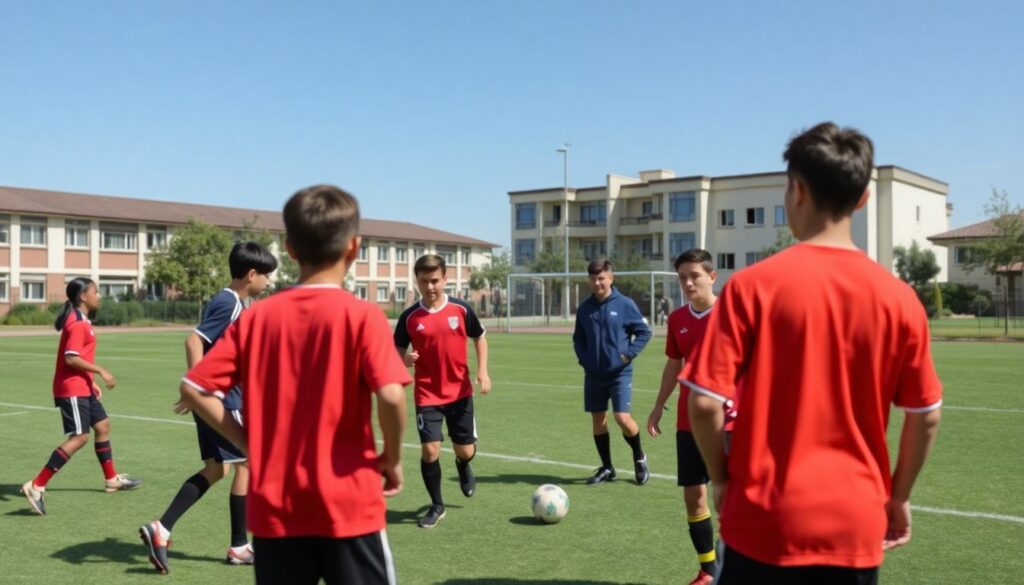
Focus on clubs with a clear history of integrating non-local players, English-language support and cooperation with schools. Always verify trial invitations through official club channels to avoid scams.
Can a player move from a Turkish academy to a European elite later?
Yes, many players first grow in Turkey and transfer later through youth international matches, tournaments or direct scouting. The key is continuous performance and having video and data to present to interested clubs.
How important is education when choosing between Turkey and Europe?

Education is critical because only a small fraction reach top professional levels. Prefer academies in both Turkey and Europe that integrate schooling, offer language support and provide alternative career planning.