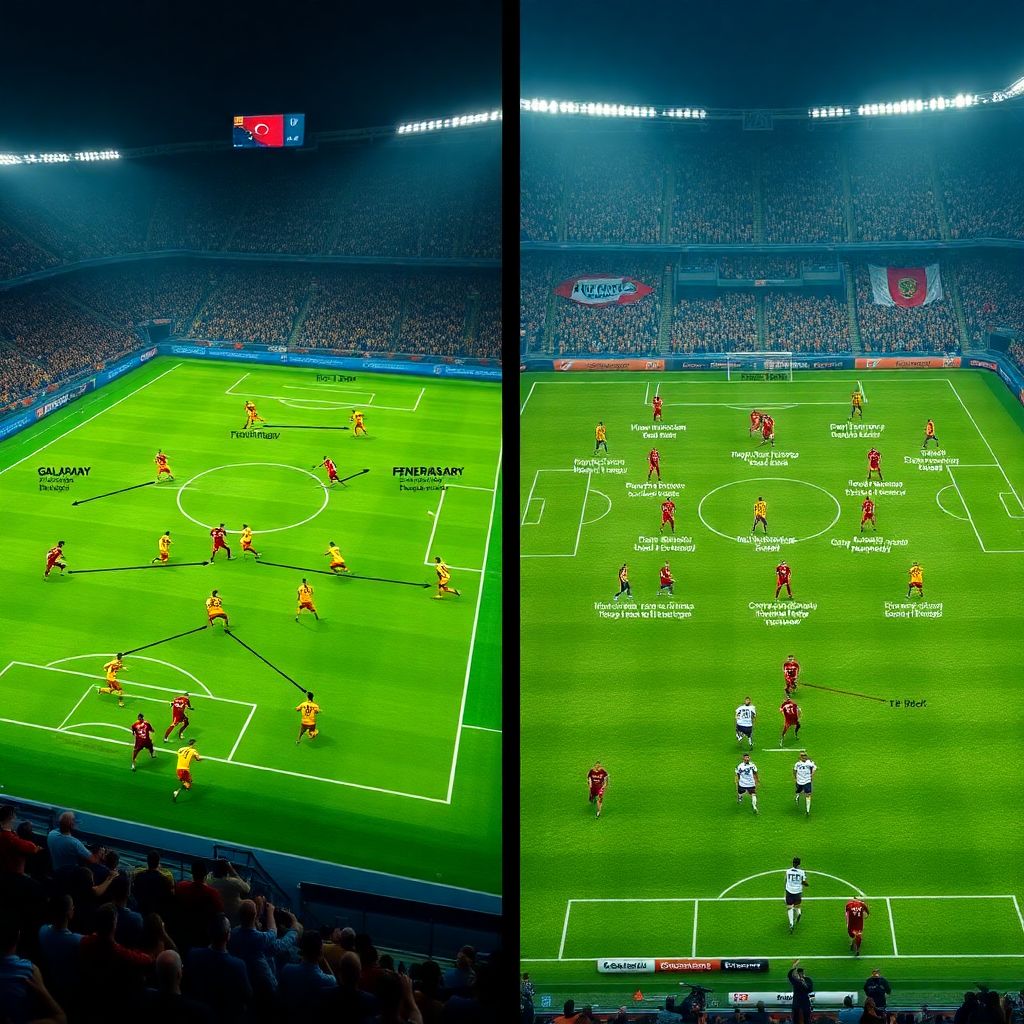
Why “Defensive Identity” Matters More in the Süper Lig Than You Think
In Turkey’s Süper Lig, you can’t just ask “Who defends better?” anymore. The real question is: who are you when you don’t have the ball?
Are you a high-pressing monster hunting the opponent in their own box, or a low-block python slowly suffocating space?
Over the last three seasons (2021–22, 2022–23, 2023–24), this choice between high press vs low block has basically split the league into two tribes. And unlike in some other leagues, the pitch quality, travel, intense atmosphere and huge gap between big and small clubs make that choice way more complicated than in theory.
*(Note: stats and trends below are based on publicly available data up to the end of the 2023–24 season from sources like Opta, FBref, Wyscout and similar services.)*
High Press vs Low Block in the Süper Lig: The Short Version
If you’re coming from a football coaching course high press vs low block perspective, the textbook contrast is simple:
– High press: more shots, more chaos, more running, higher risk.
– Low block: less chaos, less running, fewer chances both for and against, rely on counters.
In the Süper Lig, that contrast is magnified by three things:
1. Huge quality gap between the big three (sometimes four) and the rest.
2. Crazy home atmospheres that can supercharge pressing intensity.
3. Travel + climate that punish teams trying to press for 90 minutes every week.
So when we talk about *super lig tactical analysis high press vs low block*, we’re really asking:
How much pain are you willing to endure to play your “ideal” defensive style every week?
Real Cases: Who Presses, Who Parks, and Who Mixes?
Case 1: Galatasaray – Selective High Press, Not Chaos Press
Over the last three seasons, Galatasaray have been a good example of “we want the ball, but we’re not suicidal without it.”
From public PPDA data (passes allowed per defensive action) and field tilt stats (share of final-third possession), you see a pattern:
– 2021–22: Transitional, inconsistent year – pressing metrics around league average, results unstable.
– 2022–23: Title-winning season. PPDA dropped notably (fewer passes allowed before a defensive action), especially in home games. Field tilt among the top 2–3 in the league.
– 2023–24: Continued as a top pressing team in terms of *where* they defended (higher line), but did it in bursts rather than constant all-game pressure.
Key detail: they rarely pressed blindly. Against big rivals (Fenerbahçe, Beşiktaş) they often chose mid-block phases, then jumped aggressively on triggers: bad touches from center-backs, backward passes, slow switches.
So on paper it looks like “high press.” In practice it’s a very game-state-driven press:
– Leading? More mid-block, lower risk.
– Chasing? Line goes up, wingers lock in on full-backs, double-jumps on the six.
Case 2: Fenerbahçe – Max Volume Pressing With a Price Tag
Fenerbahçe over the last three seasons have frequently sat among the league leaders in pressing intensity by metrics like PPDA and high turnovers. Their identity leaned closer to:
“If we lose the ball, we attack again immediately – just without it.”
Trends from the last three years:
– Top tier in high regains (winning the ball back in the final third) and shots after high turnovers.
– Frequently among top 2–3 for average defensive line height and opposition passes per defensive action.
– Also near the top for fouls in the opposition half, a classic side-effect of aggressive pressing.
But that came with a cost:
– In 2022–23 and 2023–24, Fenerbahçe often allowed dangerous balls in behind when the first press was beaten.
– Some games vs mid-table teams turned into basketball scores: plenty of goals scored, but big chances conceded from two or three passes through the press.
For a club with attacking firepower, that risk is acceptable. For a bottom-half side? It’s suicidal.
Case 3: Ankaragücü, Hatayspor & Co. – Living in the Low Block
Look at the teams that spent most of the last three seasons fighting relegation, and a different pattern appears:
– Lower average defensive line, often just outside their own box.
– Higher PPDA (they allow more passes before engaging).
– Much higher share of blocked shots and crosses cleared – classic low-block by-products.
Many of these sides adopted a 5-4-1 or 4-5-1 and focused on:
– Compactness between the lines.
– Forcing opponents wide.
– Banking on set pieces and fast counters.
What’s interesting: when low-block teams survived or overperformed, it often wasn’t because their block was magically perfect. It was because they:
– Controlled where shots came from (forcing long-range efforts).
– Limited cut-backs and central cut-through passes.
– Had at least one elite transition player (fast winger or ball-carrying 8) to punish space.
Numbers That Actually Matter (Last 3 Seasons)
Let’s ground this in a few key trends from 2021–22 to 2023–24. Not exact numbers for every team, but clear, data-backed directions.
1. Goals per game stayed high.
Over these three seasons, the Süper Lig consistently hovered around 2.8–3.0 goals per match. That’s on the higher side compared to many European leagues. Translation:
> “We’ll just sit deep and play for 0–0” is usually a fantasy.
2. Pressing is creeping up, but unevenly.
– Top clubs have seen their average PPDA drop (i.e., pressing more often) compared to 2017–20.
– Bottom-half teams? Many still sit closer to old-school low-block numbers, pressing only in short bursts.
3. High turnovers are a decisive currency.
For several recent title contenders, public data shows:
– They are consistently top 3–4 in the league for shots after high regains.
– A double-digit percentage of their goals start from possession won in the opposition half.
4. Low-block specialists rely on set pieces.
Relegation-battlers that stayed up often ranked:
– Mid-table or better in set-piece goals scored,
– But bottom half in open-play xG created.
This is exactly the type of information you’d dig out of a football analytics service super lig defensive stats platform—and it’s also what many coaching staffs are now basing their seasonal game model on.
Non-Obvious Decisions: It’s Not Just “Big Club = High Press, Small Club = Low Block”
On paper it’s simple: strong teams press, weak teams sit back. In practice, Süper Lig coaches make some counterintuitive calls.
1. Big Teams Sometimes Go Low Block… on Purpose
In European away games or tough domestic away fixtures (think hostile Anatolian pitches), you’ll sometimes see:
– Galatasaray or Fenerbahçe dropping into a compact mid/low block after taking the lead.
– The block set at 35–40 meters, wingers moving deeper, line of engagement pulled back.
Why it works:
– The emotional tempo of the league means that once the big club is leading, the opponent must open up.
– A medium block + deadly counter threat is often safer than trying to suffocate the game by pressing high for 90 minutes.
So ironically, the “stronger” team will sometimes choose the same defensive shape as a relegation candidate—just with better athletes and better finishers on the break.
2. Smaller Teams Occasionally Press High in Short Blitzes
Some coaches at smaller clubs have used “pressing windows” instead of full-game high press:
– First 10–15 minutes of each half: ultra-aggressive high press to chase an early goal.
– After scoring: immediate shift back into a mid/low block.
– If the scoreboard is neutral again near the end: another short pressing wave.
This hybrid idea often doesn’t show clearly in season-average stats, but in match film and minute-by-minute data you can see pressing intensity spikes. It’s a way to:
– Exploit home crowd energy.
– Avoid physical burnout over the season.
– Still threaten big teams’ build-up once or twice per match.
3. Mid-Block as the “Invisible Third Option”
Mid-block rarely gets headlines, but in defensive tactics coaching high press low block discussions, more Süper Lig coaches quietly slide into that middle ground:
– Line of engagement just past the halfway line.
– Forwards screen passes into midfield rather than fully pressing the center-backs.
– Only certain triggers (bad touch, backward pass, specific player receiving) activate a high jump.
Why it works in Turkey:
– Pitches can be heavy; a constant high press is hard to sustain.
– Many opponents struggle to play through pressure once it’s shifted higher up—so even a delayed press can feel like a high press to them.
– You can keep a compact shape without inviting endless crosses.
Alternative Defensive Methods You Actually See in the Süper Lig
Beyond the classic “press or park,” several wrinkles show up regularly in super lig tactical analysis high press vs low block breakdowns.
1. Pressing Traps on One Side
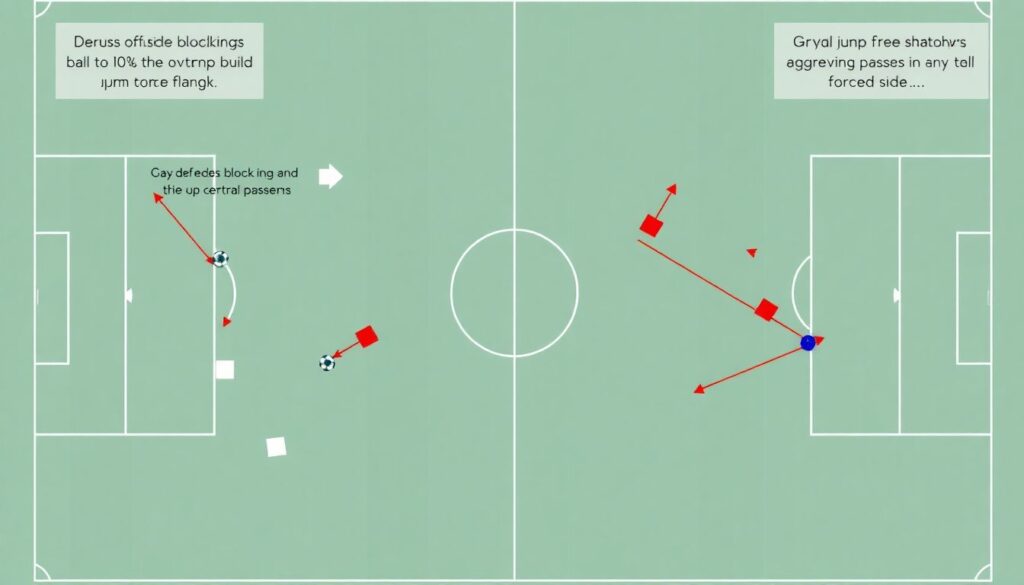
Instead of a full high press, some coaches:
– Force build-up to one flank using body orientation and cover shadows.
– Overload that side with a 3v2 or 4v3.
– Jump aggressively only once the pass is forced wide.
This gives you:
– High regain potential,
– But without needing to press all over the pitch.
2. Asymmetrical Back Four or Back Five
A common pattern:
– Ball-side full-back steps very high to engage early.
– Far-side full-back tucks in to form a temporary back three.
– Winger on ball-side tracks deep, making a 5-man line in some phases.
Result: you can press high on one side while still having low-block security centrally and on the far side.
3. “Fake” Low Block With Immediate Spring Trap
Some teams look ultra-defensive at first glance:
– Two narrow lines close to their box, deep starting position.
But the trick is:
– As soon as the opponent plays into their pivot or #10, three players jump at once.
– Once they win it, they attack the space behind the opponent’s full-backs with early vertical passes.
So the low block is less “we’re passive” and more “we’re waiting for *our* pressing trigger.”
Real-World Hacks for Coaches Working in the Süper Lig Context
If you’re designing your own model—or even subscribing to a super lig team tactics analysis subscription to study opponents—here are some practical pointers.
Hack 1: Choose Your Defensive Identity by Player Profile, Not Ideology
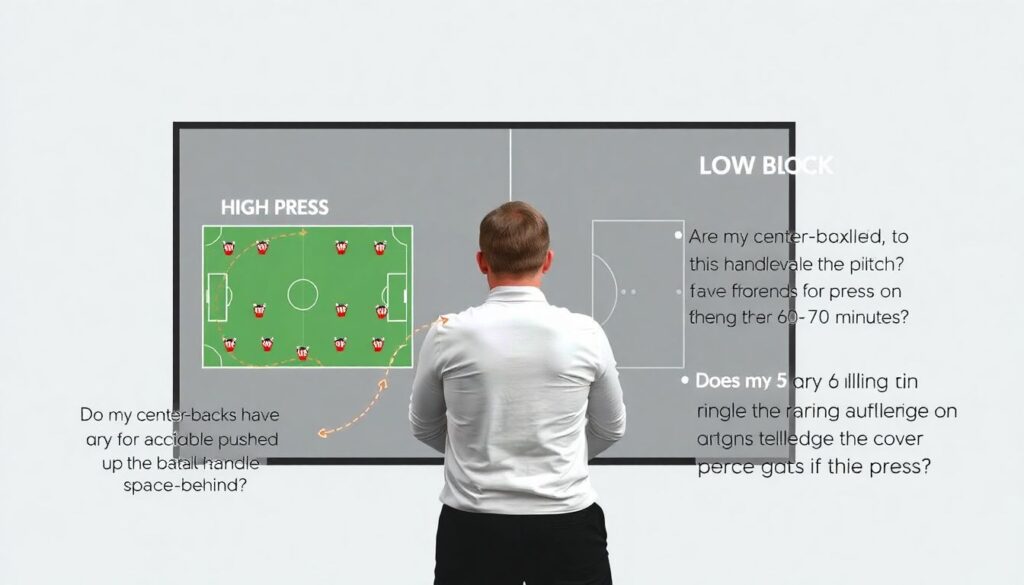
Before you pick “high press” or “low block,” ask three brutal questions:
– Do my center-backs have recovery pace to handle space behind?
– Are my forwards willing and able to press on repeat for 60–70 minutes?
– Does my 6 have the range and intelligence to cover large gaps if press is broken?
If the answer to at least two is “no,” a constant high press is probably fantasy. Design your identity around what your worst defender can handle, not your best attacker.
Hack 2: Use Data to Define When to Press, Not Just How
With any decent football analytics service super lig defensive stats pack, you can examine:
– Minutes when your team’s defensive actions drop.
– Zones where your press consistently gets broken.
– Opponents’ most frequent “escape passes” under pressure.
Then you can:
– Schedule pressing spikes in your physically strongest 15–20-minute segments.
– Avoid pressing in zones where your team gets consistently exposed.
– Create training games around opponents’ favourite outlet passes (e.g., long diagonal from CB to far winger).
Hack 3: Train “Emergency Low Block” Even If You’re a High-Press Team
Every pressing side in the Süper Lig will eventually face:
– Red card,
– Late away-game pressure,
– Chaos in extra time.
You need an emergency low-block plan that your players can snap into without thinking.
Key training ideas:
– 10–12 minute blocks of “defend the box” drills with no counters allowed – focus purely on structure and clearances.
– Clear, non-negotiable roles:
– Who closes the crosser?
– Who protects the cut-back zone?
– Who attacks first balls vs second balls?
If your players only ever train high press, they’ll panic the first time they have to defend the edge of the box for 20 minutes in Kayseri on a cold January night.
Hack 4: For Low-Block Teams – Build a One-Pattern Counter, Not Ten
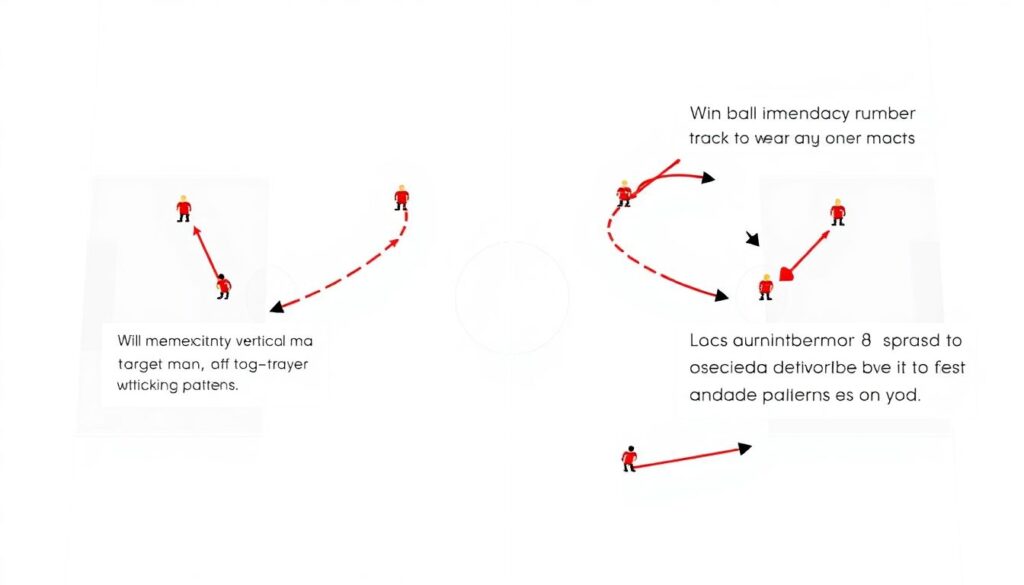
Many coaches overload low-block teams with complicated attacking patterns. They barely get out of their own half.
Instead, pick one or two ultra-clear counter patterns, for example:
– Win the ball → immediate vertical ball to target man → lay-off wide → early cross.
– Win the ball → opposite 8 sprints into half-space → third-man run from winger inside.
Drill these relentlessly. The low block will buy you time; the counter pattern will buy you goals.
What a Modern Defensive Identity Plan for a Süper Lig Club Looks Like
If you’re sketching a defensive blueprint today, blending ideas from coaching theory and reality on the ground, it might look like this:
– Default mid-block to save legs and manage space.
– Scripted high press in specific windows (e.g., first 15 minutes at home, after conceding, or when opponent brings on a shaky ball-playing CB).
– Rehearsed low-block fallback for closing games or surviving momentum swings.
– A couple of asymmetrical shapes that allow you to press on one side and stay secure on the other.
And this is exactly the kind of nuance that modern defensive tactics coaching high press low block material is starting to emphasize—less binary choice, more controlled variety.
If You’re Learning or Teaching: How to Study High Press vs Low Block in the Süper Lig
If you’re a coach, analyst or player trying to go deeper:
– Treat every big match like your own super lig tactical analysis high press vs low block case study.
– Clip sequences:
– 10–15 high-press situations,
– 10–15 low- or mid-block situations,
– Note the triggers, distances, and outcomes.
Combine that with:
– A structured football coaching course high press vs low block framework (principles, cues, distances).
– Match it against live Süper Lig examples to see how theory mutates under real pressure.
The gap between the whiteboard and the Turkish touchline is big. But with the right mix of data, video and honest evaluation of your own squad, you can choose a defensive identity that fits the league, the stadium, and—most importantly—the players actually on your team.