
Why Financial Fair Play Matters So Much in the Süper Lig
Financial Fair Play sounds like dry legal stuff, but in the Turkish Süper Lig it’s basically the invisible hand that decides who you can buy, how you play, and even which youngsters suddenly get a shot in the first team.
In Turkey, margins are thin: TV money is volatile, debts are high, fan pressure is brutal, and UEFA is watching. If you’re trying to understand *why* your club didn’t sign that dream striker, or *how* coaches adapt tactically to shrinking budgets, you’re in the right place.
This guide walks you step by step through:
– how Financial Fair Play (FFP) actually works for Turkish clubs,
– how budget limits affect transfer strategy,
– why tactics change when the money dries up,
– and what all this means for fans, analysts, and even for things like super lig transfer news today and super lig betting tips and predictions.
—
Step 1: Financial Fair Play Rules Explained for Clubs in Plain Language
What UEFA FFP really checks
Forget the jargon for a second. At UEFA level, financial fair play rules explained for clubs boil down to three core questions:
1. Do you spend more than you earn over several seasons?
2. Are your debts and payments under control?
3. Are your finances transparent and realistic?
If your club constantly burns money it doesn’t have, UEFA can:
– limit your squad size in European competitions,
– restrict new registrations,
– or, in the worst case, ban you from Europe.
For Turkish clubs, that’s huge. European prize money and exposure can make or break the budget.
Extra pressure: TFF and domestic controls
On top of UEFA rules, the Turkish Football Federation (TFF) has its own licensing and spending controls. In practice, that means:
– You need to prove you can pay salaries and taxes.
– You get monitored more closely if you’re already in debt.
– Transfer approvals can be slowed or blocked if your numbers don’t add up.
So when fans scream “Just pay the money!”, the reality is often: “We literally can’t without triggering sanctions.”
Common misconception to avoid
New fans often think:
> “Big club = can always spend big.”
That’s outdated. With FFP, big debt with no plan is now a sporting handicap, not a shortcut to success.
Warning:
Don’t assume that a lack of flashy signings means the board has no ambition. Very often it means: *this is the only way to stay within FFP and avoid long-term damage.*
—
Step 2: How Budget Constraints Rewire Transfer Strategy
From “Who’s the best?” to “Who’s the best for this price?”
Pre‑FFP mindset:
> “We need a striker. Let’s sign the best one we can convince to come.”
Post‑FFP mindset in the Süper Lig:
> “We need a striker. What profile can we afford, with salary, agent fees, bonuses and resale value *all* within the budget?”
This changes turkish super lig player transfers 2024 in a very visible way.
You’ll notice:
– More free agents.
– More loans with options to buy.
– Shorter contracts for older players.
– A stronger focus on resale potential for anyone under 26–27.
Why wages matter more than fees
Fans obsess over transfer fees, but under FFP the real killer is often the wage bill.
– A cheap signing on a huge salary can hurt you more than an expensive one on a reasonable wage.
– Every long-term, oversized contract is a future FFP time bomb.
Practical tip for reading transfer rumors:
Whenever you see super lig transfer news today linking your club to a big-name veteran, ask yourself: *Can the club afford two or three years of his salary under FFP, not just the signing bonus?*
Step-by-step: How a sensible Süper Lig club now builds a transfer plan
1. Calculate the FFP ceiling
– Estimate revenues: TV, ticketing, sponsorships, UEFA money, player sales.
– Deduct fixed costs: current wages, taxes, operations, debt payments.
– What’s left is your safe transfer + salary budget.
2. Define sporting priorities, not names
– Instead of “We want Star X”, write:
“We need a left-footed centre-back, good in the air, comfortable in buildup, max age 27, realistic salary range X.”
3. Segment the market
– Free agents (no fee, but bigger wage).
– Young prospects from smaller leagues.
– Loans from bigger clubs who pay part of the salary.
4. Model the total cost, not just the fee
– Transfer fee amortized over contract length.
– Gross salary, bonuses, agent fees.
– Possible resale value in 2–3 years.
5. Stress-test for bad scenarios
– What if you miss Europe?
– What if ticket income drops?
If the finances collapse under mild stress, the deal is too risky.
6. Decide: buy, loan or wait
Sometimes the smartest move is doing nothing and trusting academy or cheap depth signings.
Beginner mistake to avoid:
Valuing transfers only by “fee vs. talent”. Under FFP, the true value = *impact on the pitch* minus *full financial footprint over the contract*.
—
Step 3: How FFP Shapes Tactics on the Pitch
When you can’t buy stars, you build systems
Tactical identity becomes a financial tool.
If you can’t afford difference‑makers in every position, you need:
– Clear patterns of play,
– Stable structures,
– And roles that can be filled by cheaper or younger players.
Coaches in the Süper Lig increasingly design game models that:
– Protect weaker individuals (e.g., compact low blocks to hide slow defenders),
– Highlight cheap strengths (e.g., fast transitions if you can find speedy wingers on a budget),
– Create “plug-and-play” positions where similar profiles can quickly step in.
Why youth development is a tactical decision under FFP
Using academy players is not just romantic; it’s financially logical.
– They are cheaper.
– They help meet local-player quotas.
– If they succeed, you can sell them for a big fee that resets your FFP margin.
Tactically, that means:
– More minutes for 18–21-year-olds in “lower pressure” league matches.
– Systems that don’t overload young players with complex decisions (simple roles, clear instructions).
– Veterans positioned to cover for youthful mistakes (for example, an experienced holding midfielder behind an adventurous young full-back).
Super practical insight:
If your club suddenly shifts to a system that’s friendlier to youngsters (like a 4‑3‑3 with one clear holding midfielder and two more mobile 8s), that’s often a sign they are aligning tactics with their financial reality.
Game plans designed around transfer value
This is more cynical, but it happens:
– Coaches may design set-pieces and patterns to inflate the stats of certain players likely to be sold.
– Teams might push full-backs higher to showcase them for foreign scouts.
– A young winger might be kept wide and fed the ball repeatedly to rack up dribbles and goal involvements.
That, in turn, fuels the next cycle of turkish super lig player transfers 2024 and beyond.
—
Step 4: Reading Transfer Rumors Through the Lens of FFP
How to quickly judge if a rumor makes sense
When you see a headline or rumor, you can quickly filter it with three questions:
1. Does it match the coach’s system?
If your team plays high-pressing football and the linked striker barely runs, that’s a red flag.
2. Does it match the club’s financial logic?
– Club in rebuilding phase: older, high-wage star? Suspicious.
– Club just sold a key player: a realistic replacement in similar age/salary band? More plausible.
3. Does the timing line up?
Watch for links right after:
– a big sale,
– an FFP settlement announcement,
– or entry/exit from European competition.
Warning:
Not all super lig transfer news today is fabricated, but a large chunk ignores financial context. If the financial angle makes zero sense, treat it as clickbait, not information.
Signs a transfer is FFP-conscious, not just opportunistic
– Structure like “loan with option/obligation to buy depending on European qualification.”
– Wages heavily tied to appearances, goals or European success.
– Short contracts with club options, especially for older players.
These are classic risk-management tools clubs use to stay inside FFP boundaries.
—
Step 5: Building a Squad Under FFP – A Practical Blueprint
Let’s put it all together in a concrete, step-by-step model a Süper Lig sporting director might use.
1. Map your financial reality
– List guaranteed revenue: domestic TV, sponsors, season tickets.
– Don’t count “maybe” European revenue as guaranteed.
– Apply a safety margin (e.g., work with 80–85% of the optimistic budget).
Goal: Create a hard internal cap on wages + amortized transfer fees.
2. Separate non-negotiables from nice-to-haves
– Non-negotiables:
– One reliable goalkeeper,
– 2–3 experienced leaders,
– At least one creative outlet,
– Adequate depth at centre-back and defensive midfield.
– Nice-to-haves:
– Second star winger,
– Luxury back-up striker,
– Specialist “impact sub” roles.
Spend first on the non-negotiables, then see what’s left.
3. Define your tactical core and buy for it
If your coach wants:
– High pressing → sign fit, mobile players who can run, even if technically a bit raw.
– Deep block + counters → prioritize pace and 1v1 defending over ball-playing ability.
– Possession play → invest in press-resistant midfielders, not just finishers.
FFP punishes scattergun recruitment. Every signing needs a clear “tactical job description”.
4. Actively plan for sales, not just signings
To keep FFP healthy, you must treat player sales like a second revenue stream, not an accident.
– Identify 3–5 players with likely resale value.
– Ensure they play enough minutes to attract interest.
– Extend their contracts *before* they enter the final year, or be ready to sell.
Think in cycles:
– Develop → showcase → sell → reinvest → repeat.
5. Prioritize loan deals strategically
Loans are not just “we can’t afford him permanently”.
Used well, they allow you to:
– Test players tactically and mentally without long-term financial risk.
– Use top clubs’ surplus talent at limited cost.
– Create “try before you buy” scenarios.
Beginner tip:
A loan with a *realistic* option to buy (not a fantasy fee) is often smarter than a permanent deal that locks you into heavy amortization and salary for 4 years.
—
Step 6: What This Means for Fans, Pundits, and Bettors
For fans and commentators
Understanding FFP makes you a sharper observer:
– When your club doesn’t spend big, ask: *What are the long-term constraints?*
– When your club does splash, ask: *What’s the FFP plan behind this? Are there outgoings coming?*
You’ll also interpret tactical shifts differently:
– Switches to more youth-friendly systems often signal economic reality.
– Sudden reliance on set-pieces can indicate a team trying to “punch above its wage bill” with structured solutions rather than individual brilliance.
For people who follow odds and predictions
If you’re into super lig betting tips and predictions, factoring in FFP and budget constraints gives you a big edge over those who only look at last week’s result.
Things to watch:
– Clubs recently forced to downsize may look competitive on name value, but their bench depth and late-season stamina might be poor.
– Teams that sold one big star but reinvested smartly across three positions can actually get stronger overall.
– Squads with lots of loans and short-term deals might be fragile mentally when things go wrong; cohesion matters.
In close matches, that “invisible” financial structure can decide whether a team has the legs and options to survive a long season.
—
Step 7: The Streaming, Scouting, and Learning Angle
Watching with a “budget lens”
To really understand how budgets shape the pitch, you actually have to watch full matches, not just highlights.
When you pick the best streaming service to watch turkish super lig live, treat it as a scouting tool:
– Focus on how teams manage game states when leading vs. trailing.
– Notice which players are heavily used despite being imperfect – often they are cheap, homegrown, or key for tactical balance.
– Track younger players’ minutes and roles across the season; that’s your preview of future sales.
Over a season, you’ll see patterns:
– Who plays “big club football” on a small-club budget and gets punished.
– Who adapts the style to the wallet and quietly overperforms.
—
Common Pitfalls and How to Avoid Them (For Newcomers)
1. Judging every decision by emotion
– “We sold our best player; the board is useless.”
→ Maybe, or maybe he was the only asset that could fix an FFP hole.
How to avoid this:
Always ask: *What did this move do for the financial and tactical balance, not just emotions?*
2. Treating FFP as a rigid wall
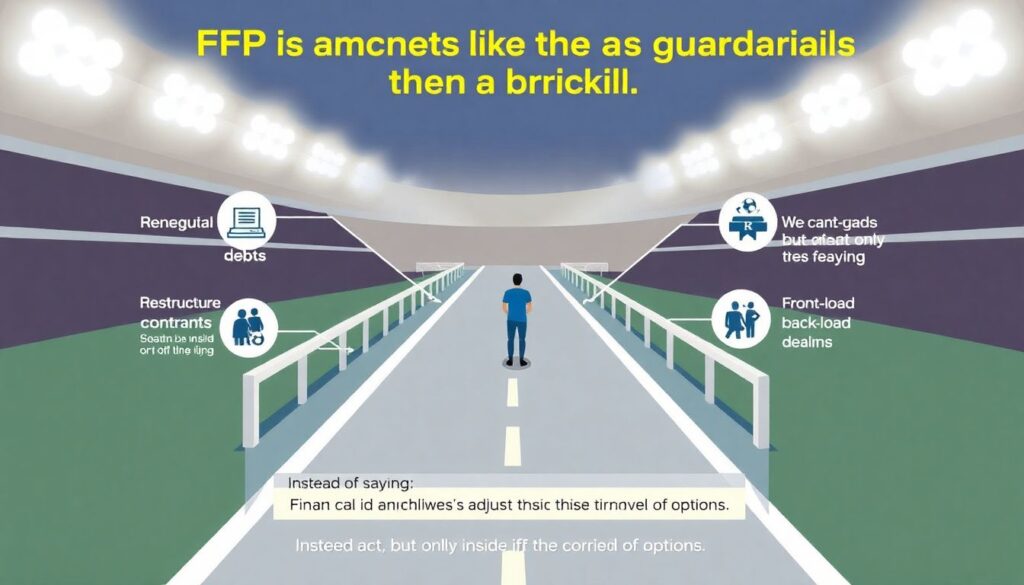
FFP is more like a set of guardrails than a brick wall. Clubs can:
– Renegotiate debts,
– Restructure contracts,
– Front-load or back-load deals to adjust the timeline.
How to avoid this misconception:
Instead of saying “We can’t do anything,” think: “We can act, but only inside this corridor of options.”
3. Overrating short-term miracles
A club might overachieve one season with a small, overworked squad. Next season, injuries bite, players regress, and the lack of depth is exposed.
How to avoid this:
When analyzing teams, always ask:
– *Is this performance supported by sustainable finances and sensible squad building?*
– Or is it a one-off run held together by luck and overused starters?
—
Quick Practical Checklist: How to Think Like a Modern Süper Lig Director
Use this 7-point checklist whenever you evaluate your club’s moves:
1. Does each signing have a clear tactical role?
2. Is the total cost (fee + wages) sustainable under realistic revenue?
3. Is there potential resale value or is this a pure “use and discard” player?
4. Does the squad have enough depth in physically demanding positions?
5. Are youth players positioned to play real minutes, not just fill the bench?
6. Do sales come at the right time, not in panic?
7. Does the coach’s style fit the financial level of the club?
If most answers are “yes”, odds are your club is navigating FFP intelligently, even if the names on the back of the shirts aren’t the flashiest.
—
Final Thoughts: Money, Ideas, and Margins
In the modern Süper Lig, Financial Fair Play isn’t an optional extra—it’s the framework every club operates in, whether they like it or not. Big budgets still help, but the gap between rich and poor can be narrowed by:
– smarter transfer strategy,
– coherent tactical planning,
– and disciplined financial choices.
If you start watching matches, reading rumors, and judging decisions with that lens, the league suddenly looks very different. You stop asking only “Why didn’t we sign a star?” and start asking, “How can we squeeze the most football out of every euro we’re allowed to spend?”
That’s where the real game is now.