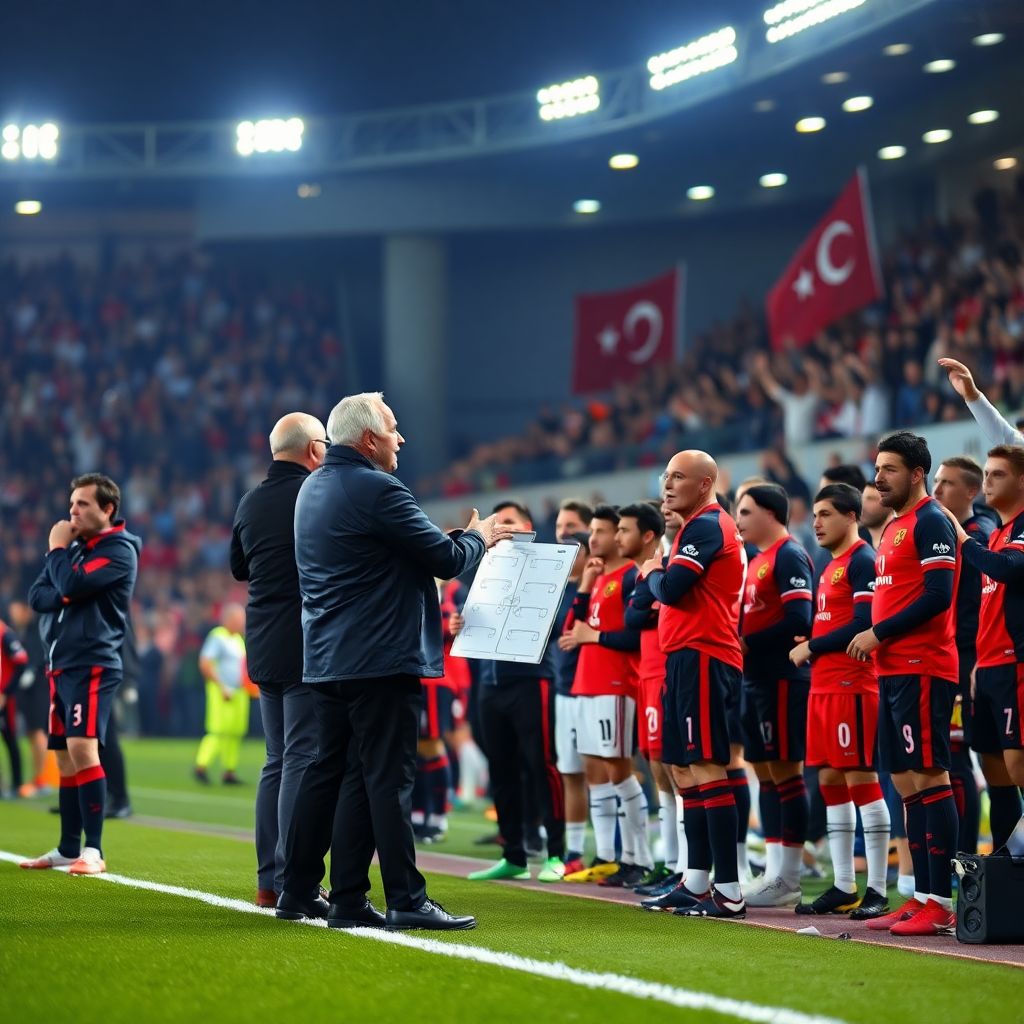
Turkish coaches in European football combine emotional man-management, flexible tactics and strong cup mentality, making them attractive to ambitious clubs outside Turkey. Their rise is visible in high-profile appointments, improved performances in UEFA competitions and growing demand for Turkish coaching expertise across different European leagues and competitive levels.
At a Glance: Turkish Coaches’ Ascent in Europe
- Turkish managers in Europe usually arrive after proving themselves in the Süper Lig and continental competitions.
- Their tactical identity mixes aggressive pressing, quick counter-attacks and emotional leadership.
- Case studies such as Fatih Terim and Şenol Güneş show how styles adapt to different leagues.
- Market factors like UEFA Pro licenses and agent networks drive more Turkish appointments abroad.
- Clubs can measure impact via points, expected goals, player development and resale value.
- Lessons from the history of Turkish football coaches in Europe help clubs reduce hiring risk.
Historical Roots: How Turkish Managers Entered the European Stage
The idea of a Turkish football coach in Europe grew slowly. Early pioneers usually moved through short stints, friendly connections or emergency appointments. Their main function was to bring passion and discipline rather than complex tactical systems.
Over time, as Turkish clubs improved in UEFA competitions, European directors started to notice the strategic side of these managers. Success in Champions League and Europa League campaigns gave evidence that Turkish coaches could prepare teams for high-pressure, two-legged ties and intense atmospheres.
The modern Turkish football manager career in Europe now follows a clearer path: domestic success in Turkey, visibility in UEFA tournaments, then offers from mid-table or ambitious clubs in leagues like Serie A, Ligue 1 or the Bundesliga. This structured route has turned isolated experiments into a recognisable trend.
Understanding the history of Turkish football coaches in Europe helps explain why some projects worked and others failed. Early appointments were often based on charisma or a single good result, while current hires are more data-driven and connected to long-term squad planning.
- Map each coach’s career: Turkish achievements, first European move, reasons for hiring.
- Study early European stints to see which conditions (club size, league style) suited them.
- Compare older one-off experiments with newer, planned long-term projects.
- Note how UEFA exposure changed European perception of Turkish tactical quality.
Tactical Signatures: Strategies and Styles Brought from Turkey
Turkish coaches arriving in European clubs usually keep their core principles but adjust tempo, pressing height and defensive risk depending on league culture. Their tactical identity is not one fixed system; it is a toolbox shaped in a league that rewards intensity and emotional momentum.
- High-intensity pressing phases: Even if not pressing all match, many Turkish managers use aggressive, compact pressing after losing the ball to create fast transitions.
- Fast flank attacks: Wide players and overlapping full-backs are used to stretch defences, with early crosses and quick cut-backs into the box.
- Flexible formations: Shapes like 4-2-3-1, 4-3-3 or 3-4-3 are switched during matches, focusing on roles rather than rigid numbers.
- Emotional game management: Half-time talks, touchline intensity and connection with fans are used as tactical tools to shift momentum.
- Set-piece creativity: Short corners, rehearsed free-kick routines and crowded penalty areas reflect detailed preparation.
- Risk-tolerant defending: Back lines sometimes hold higher positions, inviting transitions but also allowing territorial dominance.
- Adapting to opponent quality: Against stronger rivals, blocks get deeper and counter-attacks more direct; against weaker sides, positional play becomes more patient.
- Identify which tactical habits from Turkey fit your league’s pace and refereeing style.
- Ask candidates to show match clips where they shifted formation mid-game.
- Evaluate how they use set-pieces both offensively and defensively.
- Check if their emotional style matches your club’s culture and fan expectations.
Case Study – Fatih Terim: Club Success and European Translation
Fatih Terim is often mentioned among the best Turkish football managers in Europe because his domestic dominance came with credible continental performances. His work shows how a strong national identity can be adapted for foreign environments.
Below is a simplified comparative snapshot of different Turkish coaches, including Terim, to illustrate tactical traits and outcomes in European clubs:
| Coach | Club(s) Abroad | League | Tactical Traits | Measurable Outcomes |
|---|---|---|---|---|
| Fatih Terim | AC Milan, Fiorentina | Serie A | High pressing, aggressive full-backs, bold substitutions | Improved pressing intensity, strong home form, higher shot volume |
| Şenol Güneş | Trabzonspor (UEFA runs), Beşiktaş (European exposure), national team abroad | UEFA competitions vs multiple leagues | Structured build-up, compact defence, vertical counters | Consistent knockout qualifications, improved defensive records |
| Other contemporary Turkish coaches | Various European clubs | Top 5 and secondary leagues | Hybrid pressing, adaptive formations, set-piece focus | Better away results, squad value growth, more academy minutes |
In his European spells, Terim tried to keep his aggressive, proactive football but needed to adapt to slower build-up norms and stricter defensive structures in Serie A. His projects showed that passion alone was not enough; fine details in spacing, rest defence and squad rotation became critical.
Modern sporting directors looking at Turkish coaches European clubs success still study Terim’s period. Even when results were mixed, he demonstrated that a Turkish coach can lead big-name players, handle media pressure and represent a club in international competitions with authority.
- Analyse how Terim modified his pressing in a more tactical, defensive league like Serie A.
- Separate short-term motivational spikes from sustainable tactical improvements.
- Use his experience to define support structures a Turkish coach might need abroad.
- Check how communication style and language skills affected dressing-room dynamics.
Case Study – Şenol Güneş and Cross-League Adaptation
Şenol Güneş is an example of steady, methodical adaptation across competitions. He is known for well-organised back lines and clear attacking patterns based on triangles and vertical passing channels, which travel relatively well between leagues.
His work shows how a careful balance between structure and freedom can make transitions between domestic and foreign environments smoother. Defensive rules stay stable, while attacking roles are slightly altered to suit new player profiles and league speeds.
Advantages of the Güneş Model
- Strong defensive organisation reduces risk in early months of a new job.
- Clear positional roles help players understand expectations quickly.
- Vertical passing and fast combinations suit many European counter-attacking teams.
- Measured touchline presence appeals to boards preferring calm leadership.
Constraints and Potential Downsides
- Highly structured play may limit individual flair if not adjusted to star players.
- Initial caution can be criticised by fans expecting constant attacking football.
- Transition from Turkish officiating norms to other leagues can cause discipline issues at first.
- Too much focus on control may reduce risk-taking when a win is urgently needed.
- When evaluating a Güneş-type coach, focus on defensive metrics and chance quality allowed.
- Check past examples of how they integrated high-skill attackers without over-structuring them.
- Discuss adaptation plans for refereeing styles, travel demands and language barriers.
- Clarify expectations about attacking risk and entertainment with the coach before hiring.
Institutional and Market Drivers: Licenses, Networks and Club Demand
The rise of Turkish managers in Europe is not only about tactics; it is also about systems. UEFA coaching licenses, agent networks and international scouting departments have made it easier for Turkish coaches to be visible and employable abroad.
Clubs searching for value often look beyond traditional markets. Turkish managers are attractive because they combine European licensing standards with experience in a competitive, emotionally intense league. This profile suits mid-tier European clubs that need both discipline and ambition.
However, misconceptions still exist about what a Turkish coach can or cannot do. Some myths come from early failed experiments or from stereotypes about temperament and tactical depth.
- Myth: Turkish coaches lack tactical sophistication.
Reality: Their UEFA licenses require the same level of tactical education as other European managers; many also work with modern data and analysis teams. - Myth: They struggle outside passionate fan cultures.
Reality: Emotional intelligence can be redirected toward internal motivation and close dressing-room bonds, not only external atmospheres. - Myth: Language barriers always block success.
Reality: Some projects failed due to communication, but many coaches now invest early in language learning and strong bilingual staff. - Myth: Turkish coaches only fit relegation battles or chaos situations.
Reality: Several have guided stable clubs in Europe, building medium-term projects focused on youth and style.
- Verify UEFA licensing level and recent continuous-education courses of any Turkish coach.
- Assess the strength of their staff: analysts, assistants and language support.
- Challenge your own stereotypes by reviewing objective performance data, not narratives.
- Align club timeline (survival vs project building) with the coach’s proven profile.
Measuring Impact: Performance Metrics, Transfers and Long-Term Effects
To judge the real contribution of a Turkish coach in Europe, results alone are not enough. Clubs should build a small dashboard mixing performance data, financial outcomes and qualitative indicators such as playing identity and dressing-room stability.
Think of a simple evaluation routine like a short algorithm you repeat each quarter of the season:
Pseudo-framework:
- Track points per game, expected goals (for and against) and shot quality trends.
- Monitor minutes given to youth players and market value shift of key assets.
- Evaluate style consistency: pressing height, build-up patterns, chance creation zones.
- Collect feedback from players and staff about clarity of ideas and training intensity.
- Compare all the above with the period before the coach arrived.
This type of structured review is crucial when analysing Turkish coaches European clubs success across leagues. It stops boards from relying on single match narratives and instead looks at repeatable patterns over time.
- Define 3-5 core metrics before hiring any Turkish manager and track them publicly.
- Include both football and business indicators (results and player trading value).
- Schedule regular, data-informed review meetings with the coach and sporting director.
- Use comparisons with previous seasons, not with unrealistic media narratives.
Quick Practical Guidance for Clubs and Agents
These lessons from case studies and the broader rise of Turkish coaches in European football can translate into concrete decisions for hiring, supporting and evaluating managers from Turkey.
- When shortlisting candidates, include at least one coach with a proven UEFA background from Turkey to widen tactical options.
- During interviews, ask for clear video-based explanations of pressing, set-pieces and in-game changes, not only motivational speeches.
- Design a six-month integration plan: language support, analyst resources and clear board expectations.
- Benchmark their previous squads’ performance data against your current roster to predict fit.
- Use the label best Turkish football managers in Europe carefully; focus on context rather than reputation alone.
Self-Check: Are You Reading Turkish Coaches Correctly?

- Can you explain in a few sentences how a specific Turkish coach’s style would fit your league and squad?
- Have you separated media narratives from objective data like points, xG and player development?
- Do you understand the institutional factors (licenses, agents, networks) that brought the coach to your shortlist?
- Have you planned support structures for communication, analysis and local adaptation?
- Are you evaluating success over a realistic time horizon instead of only first-month results?
Practical Questions About Employing Turkish Coaches Abroad
How should a club start scouting a Turkish coach for a European job?
Begin by analysing their domestic record in Turkey and UEFA competitions, then request full-match videos and data reports. Speak with former players and staff about communication style, adaptability and training quality.
Which profiles suit a Turkish coach better: top contenders or relegation fighters?
Both are possible, but many Turkish coaches excel with ambitious, emotionally engaged clubs targeting growth. Clarify whether their past success came in long-term projects, survival battles or cup-focused campaigns.
What contract details are especially important when hiring from Turkey?
Include clear performance targets, support for relocation and language learning, and definitions of staff size and roles. Align expectations about transfer influence and youth development before signing.
How can agents promote a Turkish coach effectively in European markets?
Build a portfolio that highlights tactical clips, data-based improvements and testimonials from international players. Emphasise how the coach handled pressure matches and different squad cultures.
Do Turkish coaches need experience in smaller European leagues first?
Not always, but a step into a mid-level or secondary league can reduce risk for both coach and club. It offers a testing ground for language, travel and tactical adaptation without extreme pressure.
How should a board evaluate the first season of a Turkish coach abroad?
Combine results with process indicators: tactical clarity, training standards, development of key players and dressing-room mood. Compare these with the situation before their arrival, not just with ideal targets.
What role does fan culture play in the success of a Turkish coach in Europe?
Fan engagement can be an advantage because many Turkish coaches thrive in emotional environments. Clubs must, however, manage communication carefully to avoid misunderstandings during difficult periods.