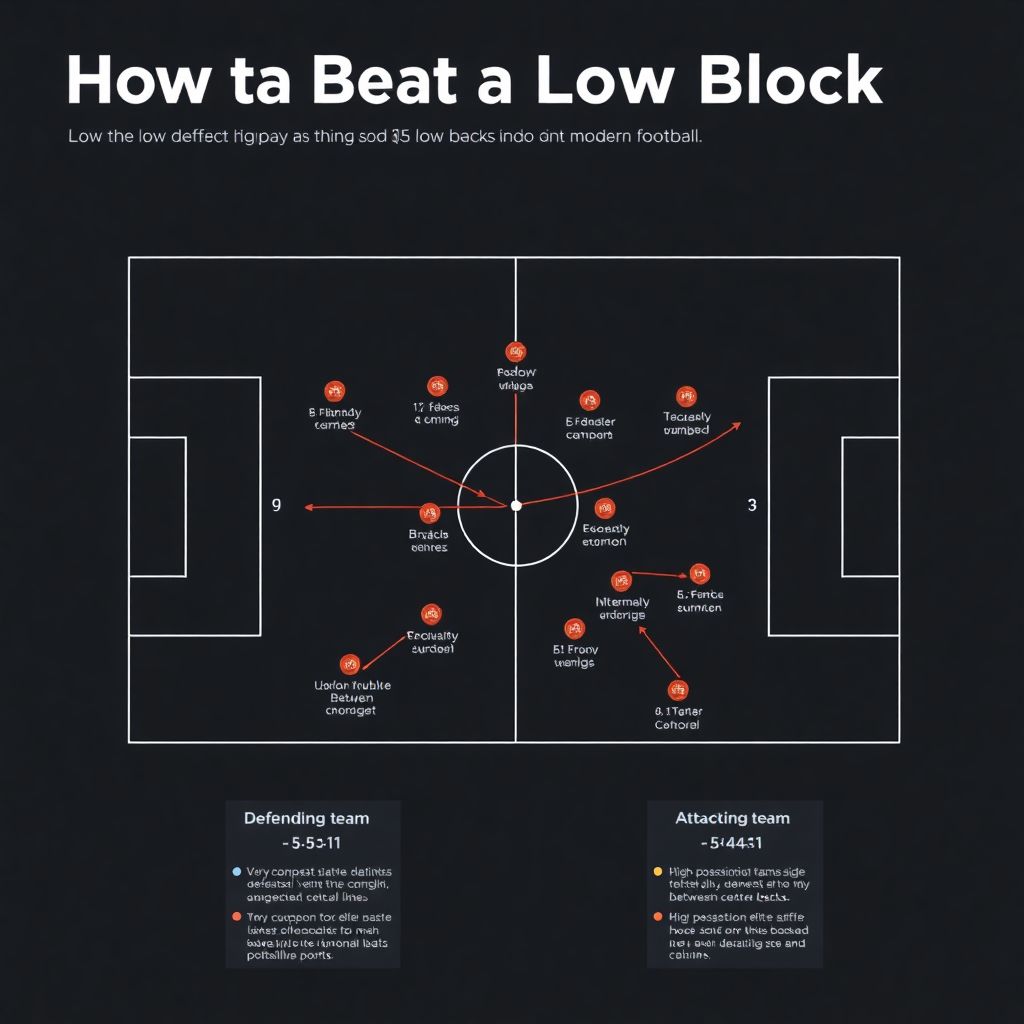
Context: Why Low Blocks Dominate Modern Football
Over the last decade the low defensive block has become the default survival tool for underdogs and mid-table teams. In the 2022/23 and 2023/24 seasons across Europe’s top five leagues, public data providers like Opta and StatsBomb consistently showed that teams outside the top six spent roughly 35–45% of their defensive time in what analysts tag as “low block” zones. That share has grown by several percentage points compared to the late 2010s, driven by improved video analysis, compact training routines and the sheer financial gap between elite clubs and the rest, which forces coaches to minimise risk at almost any cost.
Defining the Low Block in Practical Terms
Forget the textbook jargon for a second: a low block is basically a packed defence set up within 25–30 metres of the goal, usually with two or even three very narrow lines. Most coaches shape it as 4‑5‑1, 5‑4‑1 or 4‑4‑2, but the real detail is vertical distance. In recent tracking-data studies from 2023–2025, successful low-block teams kept an average of only 8–12 metres between their midfield and defensive lines when the ball was central. That tiny gap kills space for through balls and cuts the risk of being played behind, which is why learning how to beat a low block in football has turned into a core skill for any elite attacker.
Statistical View: What Actually Works Against Low Blocks
Crosses, Cutbacks and the Numbers Behind Them
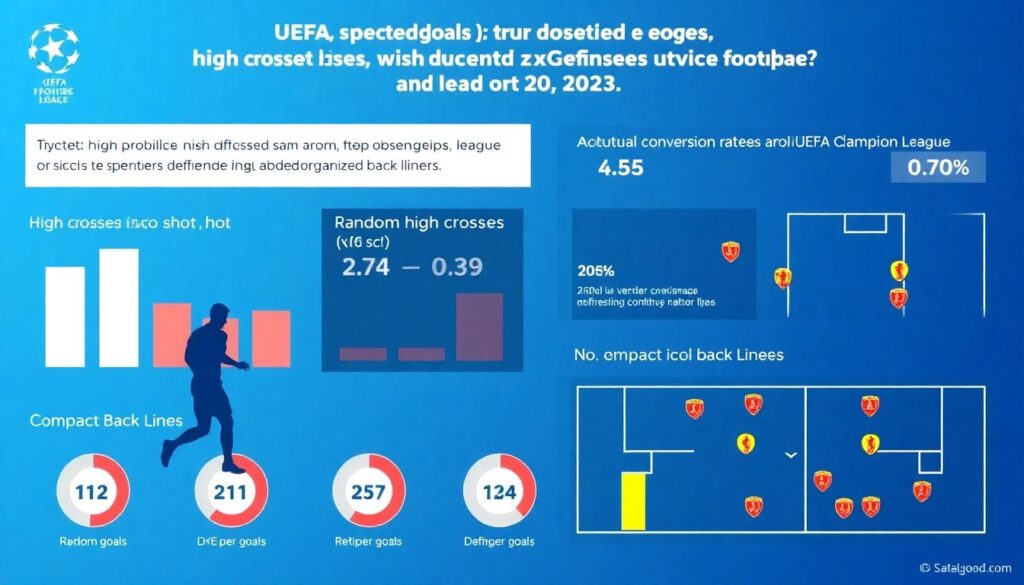
If you look at big-sample expected goals models from the Champions League and top domestic leagues between 2022 and 2025, one clear pattern emerges: random high crosses against deep blocks underperform badly. Their xG per shot often sits around 0.07–0.09, and conversion dips even more when defences keep five at the back. By contrast, low cutbacks from the so‑called “Guardiola zone” near the byline create closer to 0.18–0.22 xG per shot in the same period. That’s why coaches like Pep and Arteta obsess about reaching the byline rather than spamming floated deliveries from deep half‑spaces or full-back areas.
Central Overloads and Positional Play Data
Another trend in the last three seasons is the systematic use of central overloads to pull the low block apart. Data from 2022/23 to 2024/25 shows that teams using structured positional play – think Manchester City, Arsenal, Bayer Leverkusen, Brighton – create about 25–30% more shots inside the box versus low blocks than sides relying mainly on direct crosses. They do this by stacking midfielders between the lines and using the striker or a false nine as a wall player. When three or four attackers occupy those pockets, defenders must step out, briefly stretching the block and opening the precious lane for that final through pass.
Lessons from Europe’s Top Coaches
Pep Guardiola: Width, Patience and the Third-Man Run
Guardiola’s approach is a masterclass in tactics to break down a low defensive block. His City sides, and earlier Barcelona and Bayern, focus on extreme width from wingers or full-backs to pin the last line horizontally. Over the last three league seasons City ranked near the top for passes played in the half‑spaces before a chance, which is not accidental. Pep drills “third‑man runs” endlessly: one player drops between lines, draws pressure, lays it off, while another runs behind at the exact moment. It looks simple on TV, but tracking data shows these choreographed sequences add several expected goals per season specifically against low blocks.
Jürgen Klopp and the Power of Counter-Pressing
Klopp’s lesson is that you don’t always break a low block by slow probing; sometimes you stop it forming at all. Liverpool’s best years, and now his influence across Bundesliga pressing teams, show how counter‑pressing can pin opponents so deep they never escape in organised fashion. Between 2022 and 2025 Liverpool remained near the top in shots created within five seconds of a turnover in the final third, which analytics firms link to higher xG per chance. By winning the ball when the rival shape is messy, you attack before ten men retreat behind it, effectively bypassing the low block phase entirely.
Carlo Ancelotti: Fluid Roles and Individual Freedom
Ancelotti provides a different template, especially with Real Madrid. Rather than overly rigid schemes, he leans on fluid rotations and high-skill individuals. With players like Vinícius, Bellingham and previously Benzema, Real’s attacks against deep blocks often start from isolation: get the star in a 1v1, then flood the box for rebounds and second balls. Tracking numbers from 2023–2025 show Real generating an above‑average share of shots after dribbles or one‑twos near the area, instead of predictable wide crosses. The lesson for coaches is that structure matters, but giving creative players zones to improvise can be just as effective against parked buses.
Core Principles: Best Attacking Strategies Against Low Block
Dynamic Width and Rotations
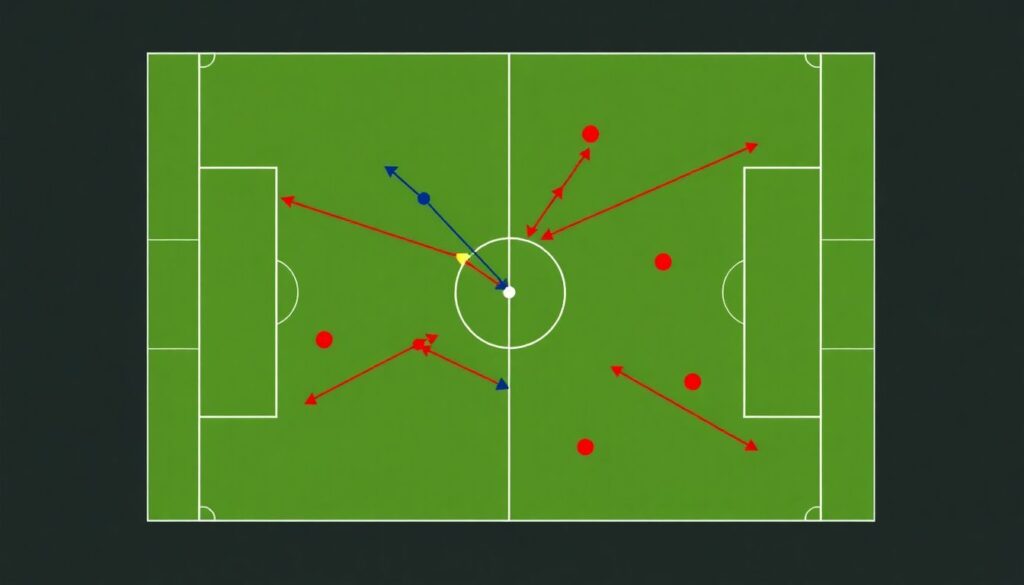
One of the best attacking strategies against low block is using “dynamic width” instead of static wingers stuck on the chalk. Top coaches ask full-backs to underlap, midfielders to drift wide and wingers to attack half‑spaces, constantly swapping lanes. Between 2022 and 2025, tracking metrics from La Liga and the Premier League showed that possessions with at least one wide rotation increased entry passes into the box by roughly a quarter versus static patterns. Rotations force defenders to pass marks and make decisions under stress, which is precisely when small gaps appear between centre-back and full-back for runners to exploit.
Vertical Tempo Changes and Rhythm Control
Another shared principle from elite benches is tempo manipulation. Against a low block you rarely score by playing fast all the time or slow all the time. Instead, teams like City, Leverkusen or Napoli under Spalletti circulate the ball patiently, then suddenly accelerate through one‑touch combinations. Analytical breakdowns of Champions League games from 2023–2025 indicate that many decisive attacks feature a short flurry of high‑speed passes – often three to five successive touches under 0.8 seconds – just before the shot. Practically, this means training players to recognise the moment the block shifts a few metres and then hit the gas without hesitation or extra touches.
Training Ground: From Theory to Practice
Drill Design and Football Coaching Courses
Modern football coaching course low block tactics modules look very different from ten years ago. Instead of generic pattern play, UEFA Pro and national federation licences increasingly include scenario‑based exercises that mirror real low‑block pressure: reduced space, limited touches, strict offside lines. Coaches practise 6v8 or 7v9 attacking waves, forcing the offensive team to be patient yet incisive. Since 2022, curriculum updates in federations like the FA, DFB and RFEF have added analytics‑led tasks where trainees must hit defined xG targets within small‑sided games. This tight connection between data and practice is slowly reshaping how young managers think about deep-defence problems.
Online Learning and Tactical Democratization
Parallel to official licences, online football tactics training beat low block schemes have exploded. Platforms selling detailed video breakdowns, freeze‑frame analysis and animated drills report strong growth in subscriptions from 2023 to 2025, fuelled by semi‑pro coaches and performance analysts. The upside is that knowledge once locked inside elite clubs spreads rapidly; the downside is that defensive coaches learn just as quickly how to patch new attacking trends. This arms race means that even regional teams now train specialised low-block behaviours, such as shadow pressing and narrow back-fives, raising the overall tactical level of the game at surprisingly low budget.
Economic Aspects: Why Low Blocks Are Here to Stay
Cost-Effective Survival Strategy
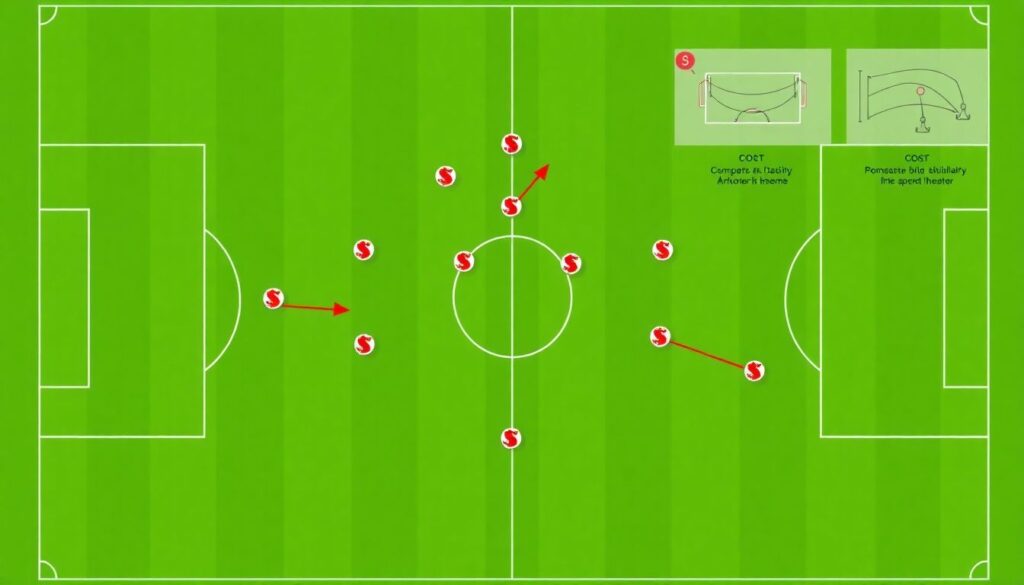
From an economic angle, the low block is cheap and scalable. Teaching organised pressing or complex build‑up requires time, fitness and technically gifted players, which is expensive. Teaching eleven men to stay compact in 20–25 metres, shift laterally and clear danger is far easier. Financial reports and wage-bill comparisons across Europe from 2022–2025 show a widening gap between the richest and the rest; surviving that gap almost forces smaller clubs into conservative setups. When staying in the top division is worth tens of millions in broadcast revenue, pragmatism wins, and low-block tactics become a rational business decision as much as a sporting one.
Analytics, Recruitment and Market Value
Data departments now even price players partly on their ability to function inside or break down deep blocks. Centre-backs and defensive midfielders who keep shape and clear crosses reliably offer “relegation insurance” and command solid wages. At the other end, creative midfielders with proven chance creation against low defences, as measured by expected threat or key passes into crowded boxes, see their transfer values climb. From 2023 to 2025, several high-profile signings – from playmakers at Arsenal or PSG to inverted full-backs at Bayern – were justified publicly in terms of improving efficiency versus deep opponents, showing how tactical needs directly shape market behaviour.
Future Trends and Forecasts
Hybrid Blocks and Shape-Shifting Systems
Looking toward 2028, analysts expect low blocks to evolve rather than disappear. Tracking data already hints at “hybrid blocks” that start higher but drop on specific triggers, often a backward pass or a certain opponent receiving the ball. Teams like Xabi Alonso’s Leverkusen or Arteta’s Arsenal mix mid‑block pressing with sudden retreats, confusing build‑up patterns. Model-based forecasts from several analytics consultancies suggest that, as player conditioning improves and squads get tactically smarter, such chameleon systems will spread. Attacking sides will need even better pattern recognition, using live data and in-game feedback to read when the block is about to drop and exploit the transition.
Role of AI, VR and Individual Skill Development
The bigger leap may come from technology. Clubs are already experimenting with AI‑assisted video analysis that tags low-block behaviours automatically, giving coaches instant clips of recurring problems. VR training tools are being tested to let attackers “replay” specific deep-defence scenarios from their own point of view, making decisions against simulated back-fives. Over the next three years, if costs keep falling, this tech should filter down to academies and ambitious semi‑pro teams. That could raise the average technical level in tight spaces, making it harder for pure massed-defence tactics to survive without some proactive elements, like selective pressing or targeted counter‑attacks.
Practical Takeaways for Coaches and Players
From Broadcast Insights to Training Pitch
So where does all this leave a coach or player trying to figure out how to beat a low block in football on a weekly basis? First, embrace the numbers: understand which zones and passing patterns actually yield chances against packed defences rather than trusting intuition alone. Second, borrow from Europe’s best but scale it to your squad; not every team can mirror Guardiola, yet everyone can drill basic third‑man runs and rotations. Finally, remember that tactics to break down a low defensive block work only if the technical level is there. Clean first touches, sharp scanning and calm finishing remain the real currency beneath all the high‑level theory.