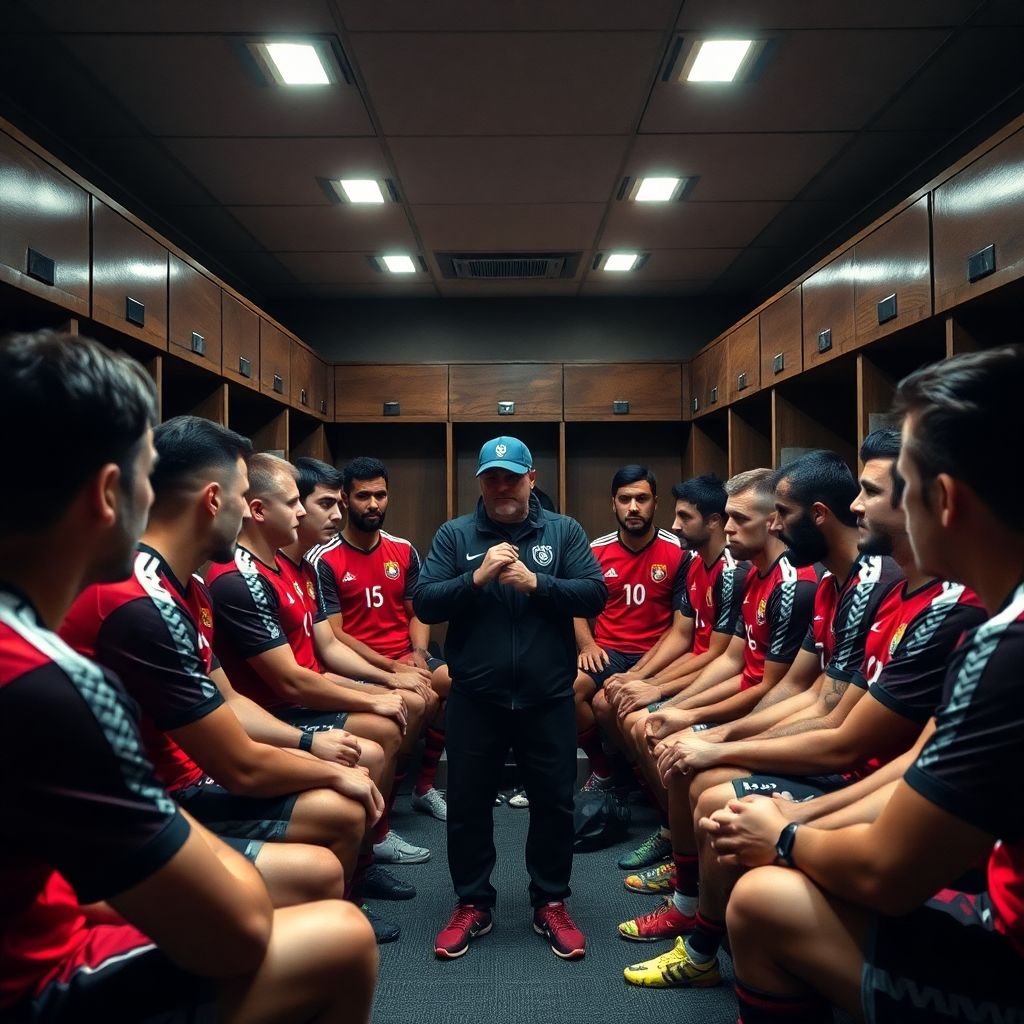
Inside a Süper Lig title race, dressing-room psychology is the hidden engine behind form swings, comebacks and collapses. It shapes how players handle pressure, react to setbacks and follow game plans. Getting it wrong costs points; getting it right turns tight matches into steady, professional wins.
Inside the Dressing Room: Core Psychological Drivers
- Title-race performance depends as much on shared identity and club culture as on talent and tactics.
- Leaders include more than the coach and captain; informal influencers can stabilise or destabilise the group.
- Pressure management is built through consistent routines, not last-minute motivational speeches.
- Conflict is inevitable; how quickly it is named and processed decides whether it harms cohesion.
- Motivation architecture must reward role clarity and discipline, not only goals and assists.
- In season climaxes, cognitive load often beats physical fatigue; simplifying decisions protects performance.
Collective identity and club culture during Süper Lig title races
Collective identity in a Süper Lig dressing room is the shared answer to a simple question: “Who are we when it really matters?” It is built from club history, local culture, supporters’ expectations and the current squad’s internal rules about effort, respect and behaviour under pressure.
During title races, this identity becomes a psychological filter. A strong, coherent culture helps players interpret pressure moments as a challenge they are prepared for, rather than a threat. For example, Galatasaray or Fenerbahçe squads that constantly hear and see stories of past comebacks tend to treat going a goal down as a normal script, not a crisis.
The culture also sets invisible limits. If the dressing room tolerates excuses, late arrivals or emotional outbursts after every refereeing decision, that identity silently authorises small drops in focus. Over a run of high-stakes matches, these micro-slippages can matter more than any discussion about Super Lig title race odds or tactical tweaks.
For staff, the fast way to protect identity is to make it concrete: short, repeated messages (“We run back immediately after losing the ball”), visible rituals (for example, greeting staff by name, short post-match debriefs) and clear lines that are never crossed, even when chasing a title.
Leadership anatomy: captains, coaches and informal influencers
Leadership in a Süper Lig dressing room is a distributed system, not a single armband. Understanding that system helps you prevent common errors like relying only on the “star” or speaking to the group while the real influencers sit silent at the back.
- Coach as architect of emotional climate
Quick error: using press conferences and team talks to vent frustration. Fast fix: keep emotional messages short, specific and private; in public, protect the players so they stay focused on performance, not media noise. - Captain as norm enforcer, not just referee talker
Quick error: picking a captain only for seniority or language skills. Fast fix: choose someone willing to challenge both teammates and staff on standards, even if they are not the most famous name in the room. - Informal leaders (cliques, language groups, local heroes)
Quick error: ignoring the influence of a popular bench player or local veteran. Fast fix: involve these people in small leadership tasks (warm-up intensity, recovery routines), so their influence supports, not competes with, the coach. - Leadership alignment on key messages
Quick error: coach and captain giving different explanations for a bad result. Fast fix: a two-minute alignment chat before media or team meetings to agree on one simple narrative and next step. - Use of former players and club legends
Quick error: bringing legends into the dressing room on every big game, creating extra pressure. Fast fix: use them selectively, earlier in the week or early in the season, to support culture without overwhelming current players. - Leadership and external noise (media, fans, betting)
Quick error: allowing talk about Super Lig betting tips today or rival slip-ups to dominate the room. Fast fix: leaders constantly redirect talk to controllable actions in the next training session or match.
Managing competitive pressure: routines, rituals and resilience
Pressure in the Süper Lig ramps up through packed stadiums, constant Super Lig live stream Turkey coverage, and minute-by-minute social media reactions. The most effective antidote is predictable, boring structure: stable routines that keep players anchored when everything outside feels chaotic.
- Derby weeks in Istanbul
Common mistake: changing everything for big games – new hotels, different schedules, extra long tactical meetings. Quick prevention: keep 80-90% of the routine identical; change only what is strictly necessary (for example, travel time to the stadium). - Late-season away games against relegation candidates
Common mistake: players subconsciously expect an “easier” game and relax their preparation. Quick prevention: staff label such matches as “high-risk mentally” and keep competition for starting spots high during the week. - Backing up after European nights
Common mistake: emotional hangover after a big European tie, leading to flat domestic performances that hurt the title push. Quick prevention: a fixed “reset ritual” within twenty-four hours – short review, then strict shift of focus to the next Süper Lig opponent. - Handling referee decisions and VAR drama
Common mistake: players carry anger for several minutes after a decision, arguing instead of resetting. Quick prevention: pre-agreed reset cues (for example, one word from the captain, a specific breathing routine) rehearsed in training. - Post-match narratives after setbacks
Common mistake: framing a single loss as “end of the title race.” Quick prevention: staff use neutral language (“We dropped points; here is the specific behaviour to fix”) and avoid dramatic win-or-lose-the-league talk.
Conflict, cohesion and their visible impact on match outcomes
Conflict in a title-chasing dressing room is normal. The practical question is whether disagreements are short, clear and resolved, or hidden, sarcastic and prolonged. Fans often only see the result: a disjointed press or a team that stops running when they concede.
Below are typical advantages of well-managed conflict and the limitations or risks when it is mishandled, with quick prevention steps for each.
Benefits of constructive conflict management
- Sharper standards – players call each other out on poor pressing or lazy tracking, which raises the training level and transfers into matches.
- Role clarity – open conversations reduce confusion about who presses, who covers and who leads, especially when game plans change late in the season.
- Stronger trust – when arguments end with clear agreements, teammates feel safer expressing doubts, which protects against silent resentment.
- Faster in-game problem solving – players are used to speaking honestly, so they can adjust on the pitch without waiting for half-time.
Risks and limitations when conflict is mismanaged
- Side-taking and cliques – micro-groups form by language or nationality, often reflected in celebrations and body language when the team concedes.
- Passive-aggressive behaviour – players follow the game plan only “on paper,” slowing down transitions or ignoring agreed pressing triggers.
- Media leaks – disagreements leak to the press, amplifying external pressure and affecting how supporters behave, from Super Lig match tickets Istanbul demand to stadium mood.
- Short-term fixes that hide deeper issues – fines or one-off emotional meetings create short bursts of discipline but do not change daily habits.
| Unhelpful dressing-room pattern | Fast, practical correction |
|---|---|
| Players argue publicly during games, pointing fingers after goals conceded. | Agree a rule that analysis is done in the dressing room; in-game, only solutions are spoken (“next action”) and led by captain. |
| Two players stop passing to each other after a training clash. | Coach or senior player facilitates a five-minute, solution-focused conversation the same day; clear behavioural agreement for the next match. |
| Bench players complain in corners rather than in feedback meetings. | Create short, regular one-to-ones for non-starters, with honest explanations and specific improvement targets. |
Motivation architecture: incentives, communication and micro-behaviors
Motivation architecture is the design of rewards, messages and daily micro-behaviours that tell players what really matters. In Süper Lig title races, common mistakes come from copying “big-club” habits without checking their impact on this specific group and season context.
Frequent misconceptions and quick preventions
- “Big bonus equals big performance”
Mistake: believing that larger win bonuses alone will keep focus in the run-in. Problem: players can become money-focused, anxious and more afraid of mistakes. Prevention: combine financial rewards with role-based recognition (for example, defensive actions, support work from the bench). - Overusing emotional speeches
Mistake: long, dramatic talks before every big match. Problem: emotional fatigue; players tune out. Prevention: keep pre-match messages short and predictable; save intense speeches for truly exceptional moments. - Star-player dependency
Mistake: allowing one or two stars to break rules because they score or assist often. Problem: dressing-room fairness collapses, and effort from others drops. Prevention: apply basic rules (timekeeping, defensive effort) consistently, regardless of market value or shirt sales when fans buy Super Lig team jerseys online. - Motivation by fear of losing the title
Mistake: constantly warning players they will “throw away the league.” Problem: players play not to lose, avoiding risky but necessary passes or runs. Prevention: frame goals positively and behaviourally (“We commit to our press for ninety minutes”). - Ignoring the bench and staff motivation
Mistake: assuming only the starting eleven need close attention. Problem: substitutes and staff disengage, damaging training quality and game intensity. Prevention: recognise key support roles publicly, such as analysts, fitness staff and impact substitutes. - Letting external narratives drive internal goals
Mistake: adjusting targets weekly based on Super Lig title race odds or media comments. Problem: unstable focus; players feel the ground is always moving. Prevention: set internal performance goals early and review them calmly, independent of external predictions.
Cognitive load and decision-making in season climax scenarios
In the final weeks of a title race, physical fatigue is visible, but cognitive load is the silent threat. Players juggle tactical instructions, media noise, family expectations and thoughts about contracts or transfers, all while making split-second decisions in high-pressure matches.
A typical Süper Lig example: an Istanbul side is level away from home with ten minutes left, knowing a win keeps them in front on goal difference. Players have heard all week about rival results, fan expectations and potential bonuses. In the final minutes, they start forcing vertical passes, losing structure and conceding a counterattack goal.
The fast prevention strategy is to simplify decisions in advance. Instead of complex, conditional instructions, the staff provide two or three clear late-game scripts (“protect the draw,” “controlled risk,” “full risk”) and train them repeatedly. In the match, the coach and captain quickly label the current script so players know exactly which behaviours to prioritise.
Conceptually, you can think of it like simple pseudo-code in coaching terms:
IF last_15_minutes AND score_level THEN
    CALL "controlled risk" plan
    PRIORITISE compact shape
    LIMIT central risk passes
    TARGET specific crossing pattern
ENDIF
By pre-loading these “if-then” plans in training, the dressing room reduces thinking time in matches. This keeps players calmer and more likely to execute the basics, regardless of how much media talks about Super Lig betting tips today or other title contenders.
End-of-article checklist for rapid psychological hygiene
- Can every player repeat in one sentence what this team’s identity is under pressure?
- Do coach, captain and key influencers send the same message after defeats and controversial decisions?
- Are pre-match and post-match routines stable across big and “small” games?
- Is conflict surfaced and resolved within twenty-four hours, or does it linger in cliques?
- Have you simplified end-of-season game plans into a few clear, rehearsed scenarios?
Practical practitioner questions about dressing-room psychology
How can I quickly spot if our dressing-room culture is hurting our title push?
Look for small patterns: repeated lateness, sarcastic comments in training, players arguing with staff in front of others, and inconsistent effort when you rotate the squad. These are early signs that identity and standards are slipping, especially under pressure.
What is the fastest way to stabilise emotions after a chaotic loss?
Give a short, factual message in the dressing room, postpone deep analysis to the next day, and reset the routine immediately. Avoid long emotional meetings on the same night; they usually create more blame than solutions.
How much should we talk about rivals and title permutations with the players?
Keep it minimal and scheduled. One short briefing about the table and run-in is enough, then shift focus back to controllable performance targets. Daily talk about rival results increases anxiety and distracts from your own behaviours.
Do bonuses and financial incentives help or hurt late in the season?
They can help if they are clear, agreed early and linked to team outcomes. Constantly changing or negotiating bonuses during the run-in usually adds stress and divides the squad, especially between starters and non-starters.
How should I handle a star player who breaks rules but wins matches?
Address it early and privately, with concrete examples of the impact on the group. Explain that consistent rules protect everyone, including them, and follow through on consequences. Quiet tolerance sends a louder message than any speech about unity.
Is it useful to bring club legends into the dressing room before big games?
Sometimes, but timing matters. Use them earlier in the season or midweek for cultural messages. Bringing them in just before kick-off can overload players emotionally and shift focus from the current game plan.
How can analysts and support staff contribute to better dressing-room psychology?
They can simplify information, highlight positive trends and avoid information overload in video sessions. Short, clear clips that match the coach’s main message help players feel prepared instead of confused or overwhelmed.