
Set-piece mastery decides titles by turning low-margin league campaigns into steady goal and point gains. In the Süper Lig and top European leagues, organised routines, specialist roles and data-informed planning make corners and free-kicks a repeatable source of advantages, stabilising performance when open-play form dips and deciding tight games between evenly matched teams.
How set-pieces tip title races: concise conclusions
- Set-pieces are predictable, repeatable phases where superior organisation reliably converts small tactical edges into decisive goals.
- Elite teams treat corners and free-kicks as a structured attacking system, not a collection of one-off tricks.
- Süper Lig contenders that invest in dead-ball detail often outperform their underlying open-play performances across a season.
- Analytics, clear role profiles, and tailored training blocks allow coaches to sustain high set-piece output under pressure.
- Late-game set-pieces decide titles when combined with smart substitutions and targeted match plans.
Statistical impact: how set-piece efficiency translates to league points
Set-piece efficiency describes how well a team converts corners, wide and central free-kicks, long throws and penalties into expected goals and actual goals. In title races, even small improvements in conversion rate from these situations can separate champions from teams that finish just behind them.
Instead of looking only at total goals, focus on three core indicators: expected goals from set-pieces versus open play, set-piece conversion rate (goals from shots after dead balls), and goals conceded from defensive set-pieces. Title-winning sides typically show a consistent positive balance in these metrics relative to rivals.
For Süper Lig and European clubs, a football analytics service for set piece optimization helps track these indicators week by week. Coaches can see which routines generate quality chances, which delivery zones work best, and where defensive structures leak chances, then update their tactical set piece playbook for coaches accordingly.
When set-pieces are monitored like this, they become a controllable performance lever. Even in matches where open play is flat or opponents dominate possession, a team with strong dead-ball habits still creates clear scoring moments, protecting results and accumulating the extra wins that secure a title.
Tactical frameworks for corners and free-kicks that win championships
Championship-level set-piece work is built on frameworks, not isolated moves. These frameworks define patterns, roles and variations that scale across a long season and different opponents.
- Zone selection and delivery maps: Define priority zones for near-post, central and far-post targets, plus fast low deliveries and cut-backs. Link each zone to specific runners and blockers so timing is automatic.
- Role-based runs and screens: Assign fixed roles (first-contact attacker, screen runner, second-ball hunter, safety cover) so players repeat the same actions and refine timing across the season rather than learning new movements weekly.
- Opponent-specific variants: Prepare two or three variants for common opponent behaviours (full zonal, mixed, strict man-marking). This reduces preparation time while ensuring your routines exploit space in each system.
- Second-phase structure: Plan where clearances usually land and position players for immediate counter-press or rest-defence. Many title-deciding set-piece goals come from recycled balls, not the first header.
- Quick versus set restarts: Decide in advance when to go fast (catching opponents unorganised) and when to wait for tall players to come up. Make this part of your match plan, not a player-by-player improvisation.
- Free-kick deception: Use screens, decoy runs, reverse passes and disguised deliveries to force defensive errors, but keep a small core of repeatable patterns so players remain comfortable under pressure.
- Defensive routines mirrored from attack: Build your defensive set-piece structure with the same clarity: zones, responsibilities, box-out techniques and first-outlet players for counters.
Personnel blueprint: profiles and recruitment for dead-ball dominance
Most title contenders in the Süper Lig and European leagues recruit with set-pieces in mind. They identify profiles that can sustain a high-impact system, instead of hoping existing players adapt.
- Delivery specialists: At least one right-footed and one left-footed taker capable of consistent pace, trajectory and whipped deliveries from both sides. These players often decide whether well-designed routines actually produce chances.
- Primary aerial targets: Central defenders or target forwards with strong timing and body positioning in the box. They may not be the tallest, but they dominate duels and attack specific zones you design into routines.
- Screen and block experts: Physically strong, tactically disciplined players who can create separation for main headers without committing fouls. Their job is to open channels, not to score.
- Second-ball controllers: Midfielders with good anticipation and first touch around the box. They stabilise possession and turn loose balls into shots or secure rest-defence against counter-attacks.
- Goalkeeper with command of area: On the defensive side, a keeper who dominates crosses, communicates clearly and starts counters transforms set-piece defence from a weakness into a launchpad for attacks.
- Coaching and analysis staff: Staff trained via a football set piece coaching course or exposed to a professional football set piece training program can design, teach and refine routines in a structured way, aligned with recruitment.
Training methods and periodization to raise set-piece yield
Effective coaches integrate set-pieces into weekly work instead of treating them as an afterthought at the end of sessions. Smart periodization protects players from fatigue while keeping routines sharp.
Practical advantages of structured set-piece training
- Creates automatic behaviours under pressure through repetition of the same patterns and calls.
- Improves delivery quality and aerial timing, even for players not naturally dominant in the air.
- Allows you to test and refine routines using set piece analysis software for football teams before committing to them in matches.
- Builds a shared vocabulary across staff and players, making in-game adjustments faster and clearer.
- Integrates seamlessly into a professional football set piece training program that links physical, technical and tactical demands.
Limitations and common training constraints
- Overloading sessions with long dead-ball blocks can reduce intensity and player focus, especially in congested Süper Lig schedules.
- Without video feedback and data, repetition alone may reinforce poorly designed movements instead of improving them.
- Copying routines from elite European sides without adapting to your squad’s profiles often leads to confusion and weak execution.
- Neglecting defensive set-pieces in favour of attacking routines leaves teams vulnerable in big matches.
- Rigid scripts can make players predictable if you never refresh or slightly vary patterns through the season.
Match-management: using set-pieces in decisive moments and substitutions
Title races are shaped by a small number of high-pressure moments: derbies, direct clashes with rivals, and late-season fixtures against low blocks. How you manage set-pieces in these games often decides outcomes.
- Ignoring specialist substitutions: Coaches sometimes avoid late changes aimed purely at set-piece impact (a tall centre-back added as an extra target, or a fresh delivery specialist) because they feel too narrow. In tight matches, these small choices can turn a draw into a win.
- No pre-planned late-game routines: Teams often improvise in the final minutes. Instead, prepare two or three specific routines for “need a goal” and “protect the lead” scenarios, then drill them in training.
- Poor communication on quick restarts: Confusion over whether to take corners quickly or slowly leads to wasted chances. Decide rules before the game and reinforce them at half-time based on how opponents defend.
- Neglecting emotional control: After conceding or missing a big chance, teams frequently switch off at the next dead ball. Train emotional resets and standard pre-kick routines so focus remains stable.
- Underusing analysis support in-game: Staff with a tactical set piece playbook for coaches and live video can spot opposition changes at corners and free-kicks. Failing to relay this quickly to players wastes an edge.
Comparative evidence: Süper Lig patterns versus leading European competitions
While each club is unique, consistent patterns appear when comparing Süper Lig title contenders with leading European teams. The differences are less about creativity and more about structure and continuity.
- Süper Lig challengers often rely on individual delivery quality and tall centre-backs, with routines changing coach to coach and season to season.
- Top European clubs typically maintain a stable set-piece identity that survives coaching changes, supported by analytics staff and codified playbooks.
- Clubs that treat set-pieces as a core system, supported by a football analytics service for set piece optimization, gain a compound advantage across multiple seasons.
A simple practical model for clubs in Turkey is:
// pseudo-structure for a season-long set-piece plan
Define core principles (zones, roles, rest-defence)
Design 6-10 primary attacking routines + 3-5 defensive structures
Test & track via software and match footage
Refresh micro-variants every 4-6 games without changing fundamentals
Integrate new signings into existing framework, not vice versa
Quick self-audit checklist for your club’s set-piece approach
- Do we track expected goals and goals from set-pieces separately from open play and review them monthly?
- Do players have fixed, clearly defined roles in each attacking and defensive dead-ball routine?
- Is there a documented tactical set piece playbook for coaches and players that is updated during the season?
- Do we allocate dedicated weekly training time and use video or data tools to refine our routines?
- Are recruitment decisions influenced by how new players will strengthen our set-piece framework?
Answers to common strategic uncertainties about set-piece influence
How many attacking set-piece routines should a team realistically maintain?
Most squads perform best with a limited core of well-practised routines plus a few simple variants. The focus should be on consistent execution, not on having many patterns that players struggle to remember under pressure.
Do we really need analysis tools at semi-professional or lower levels?
Even basic video and simple spreadsheets can reveal patterns in set-piece chances and goals. Advanced set piece analysis software for football teams adds value, but clarity of ideas and repetition matter more than technology at these levels.
Should smaller teams invest more in set-pieces than big clubs?
Smaller teams often gain a higher relative benefit, because set-pieces reduce the impact of weaker open-play possession. However, big clubs also need strong structures to avoid conceding cheap goals and to unlock deep defences.
How do we balance creativity with structure in our routines?
Define strict frameworks for zones, roles and triggers, then allow limited creativity in runs and final decisions within those boundaries. This balance ensures repeatability while keeping your routines unpredictable for opponents.
What is the first step for coaches new to detailed set-piece work?
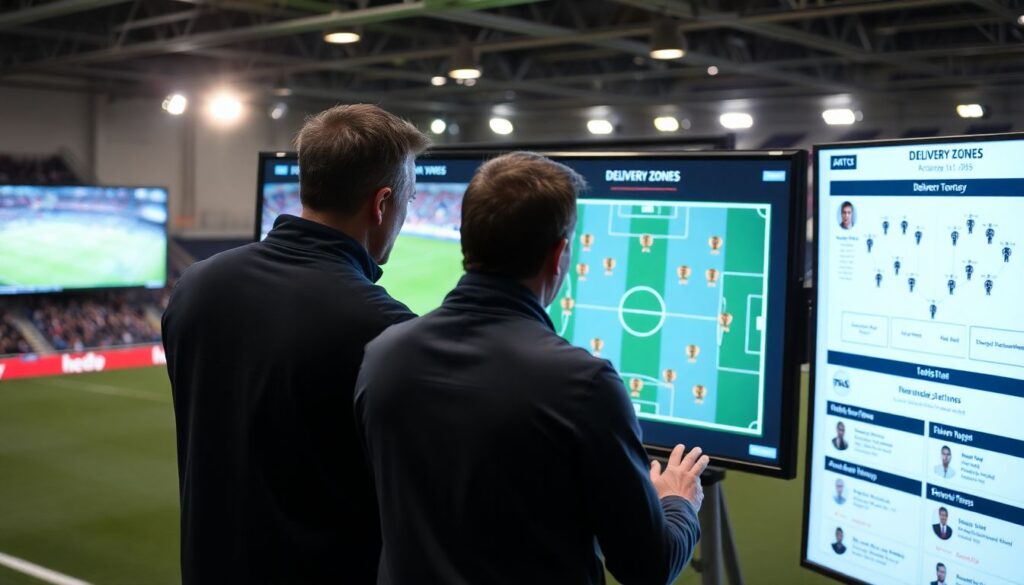
Start by analysing your last matches and identifying your most common delivery zones and aerial targets. From there, consider a football set piece coaching course or online materials to learn how to convert these patterns into a structured system.
How can we integrate set-piece focus without overloading players mentally?
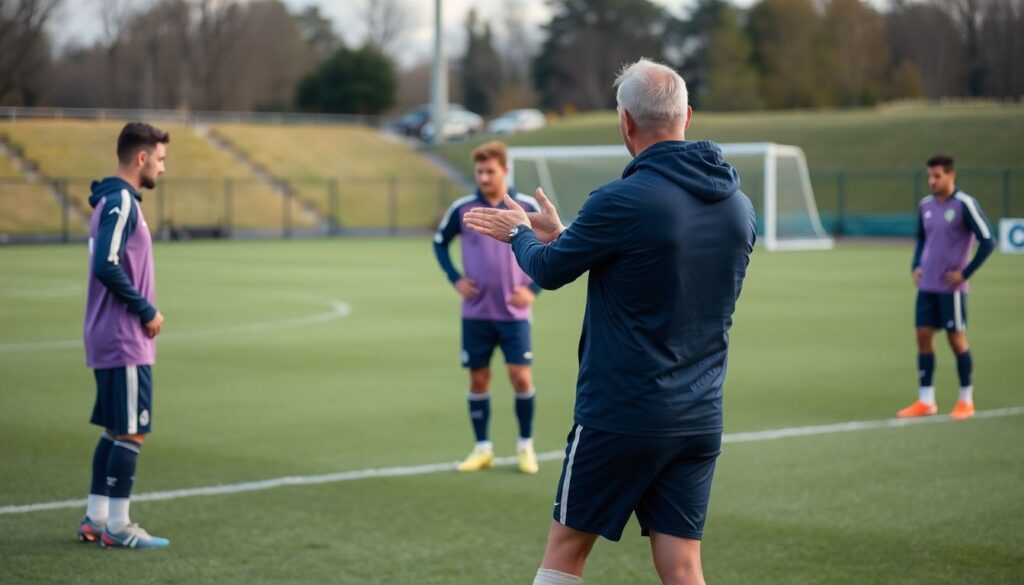
Introduce routines gradually, link them to clear keywords or hand signals, and repeat them regularly in short blocks. Keeping terminology simple and roles stable reduces cognitive load while maintaining a high tactical level.
Is it necessary to have a dedicated set-piece coach?
Dedicated specialists help at the top level, but at many clubs the assistant coach or analyst can lead this area. The key is that someone is clearly responsible for planning, reviewing and updating your set-piece work throughout the season.