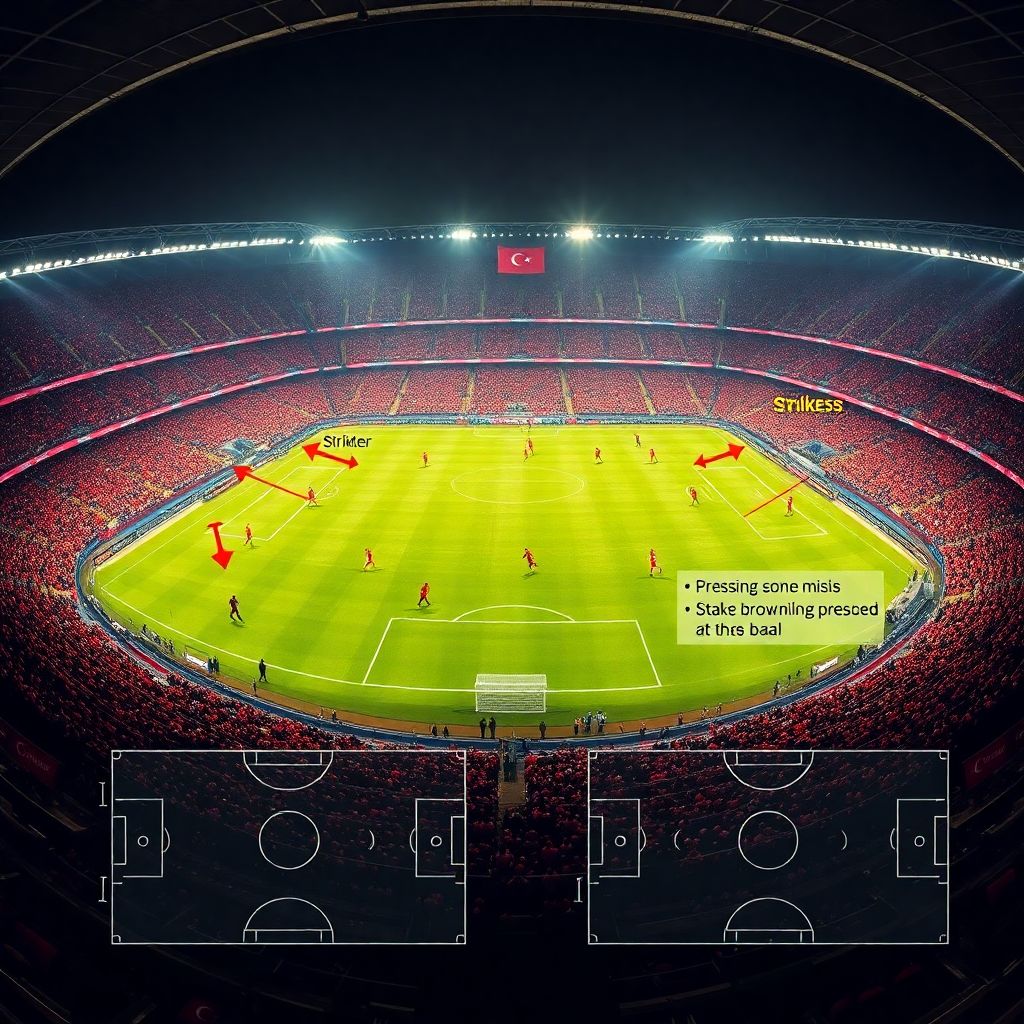
Why pressing traps became the Süper Lig’s “cheat code”
If you look at the Süper Lig over the last few seasons, the league has quietly turned into one of Europe’s best laboratories for pressing traps. Coaches stopped thinking of pressing as just “run and hunt the ball” and started to design sequences where they intentionally lure the opponent into specific zones, then outnumber and suffocate them. The trend really accelerated around 2022–23, when several clubs began copying high‑tempo models from the Bundesliga and Primeira Liga, but adapted them to Turkish rhythms: more vertical, more transitional, and with a bigger emphasis on emotional momentum in home games. By 2026, it’s hard to find a top‑half team that doesn’t have at least three or four well‑rehearsed pressing traps in its weekly game plan.
Core mechanisms: how Süper Lig teams create overloads in pressing traps
Most of the effective traps in Turkey today revolve around the same basic idea: show the opponent a seemingly safe pass, then spring a numerical overload the moment that pass is played. One common pattern is the “wide bait” on the full‑back. The winger curves his run to block the centre‑back’s inside option, steering play toward the flank. As soon as the ball travels, the near‑side No. 8 jumps out, the full‑back pushes high, and the far‑side midfielder tucks in, turning a 1v1 into an instant 3v2. Another popular mechanism is the “back‑to‑goal striker trap”: allow the opposing striker to receive between the lines, but collapse with a centre‑back stepping in, a holding midfielder from behind and a wing‑back pinching in to attack the second ball. These schemes work because teams drill not just pressing intensity, but synchronisation: the trigger, the direction of the run and the cover behind are all rehearsed on video and then on grass three or four times a week.
Numbers behind the chaos: statistical trends in Süper Lig pressing
From a numbers angle, the evolution is just as clear. Between 2018–19 and 2023–24, public event data shows a steady drop in average opponent pass completion in their own defensive third against top Süper Lig sides, from roughly the high eighties to the low eighties in percentage terms, which is a big shift at elite level. At the same time, high‑turnover rates – regains within 40 metres of the opponent’s goal that lead to a shot within 20 seconds – have gone up, with leading clubs generating close to a quarter of their total xG from these situations. The most effective pressing traps don’t necessarily produce the most tackles; they produce the dirtiest possessions for the opponent: hurried clearances, vertical punts and risky square balls. You can see it in metrics like “forced long balls per defensive action” and “regains from intercepted passes”, which climb year on year as coaches refine their cues and learn which opponents can be teased into the wrong decisions.
Tech and subscriptions: how analysis tools shape pressing traps

What really pushed this tactical leap was technology. Ten years ago, most Turkish clubs relied on basic video clips and coach intuition. Now mid‑table sides are buying access to tracking data, using AI‑driven visualisations and even running “what if” scenarios on their laptops. A typical week involves analysts tagging every pressing trigger from the previous match in a Süper Lig match analysis software platform, building short playlists for each line of the team, then presenting clips on how well the trap was sprung, how many bodies arrived and what exit routes the opponent still had. This has spawned a niche ecosystem around the league: companies offering a Süper Lig tactical analysis subscription specifically focused on off‑ball phases are selling not just raw clips, but annotated scenarios, recommended pressing cues and automated heatmaps of where turnovers tend to cluster against certain formations, which in turn feeds straight into Monday’s training design.
Education boom: coaches, online courses and licensing
On the human side, coaching education in Turkey has had to catch up. Pressing traps are not a “feel” thing anymore; they’re a curriculum item. Candidates preparing for a professional football coaching license Turkey pathway now need to demonstrate not only their attacking patterns, but detailed defensive schemes: how they set the first line, how they manipulate opposition build‑up and how they plan to outnumber wide overloads without leaving the far side open. To fill the gap, many younger coaches and analysts turn to a football pressing tactics online course, often in English, where Süper Lig case studies sit right next to those from the Bundesliga or LaLiga. This continuous learning loop means ideas move faster than ever: a clever trap used by an Anatolian club on Friday can be dissected, clipped and re‑used by a youth coach hundreds of kilometres away by Monday afternoon, creating a very dense tactical exchange across the country.
Data, services and the new analytics marketplace
All of this tactical sophistication would be hard to maintain without specialists in data. Clubs that once employed a single “video guy” now routinely have multi‑person analytics teams or at least outsource key tasks. Providers offering football data analytics services for clubs have realised that one of the easiest ways to demonstrate value is through pressing analysis: showing how many traps were triggered, how many led to shots, and how pressing intensity changes after substitutions or when protecting a lead. Some firms even build “pressing fingerprints” of opponents: maps of their safe zones, favourite release passes and typical panic options under pressure. For Süper Lig sides with smaller budgets, subscribing to these services is cheaper than hiring an extra analyst, so a new micro‑industry has emerged that lives on monthly retainers, bespoke match reports and on‑call support during transfer windows to identify players who naturally fit aggressive pressing schemes.
Economic ripple effects: player markets and wage structures
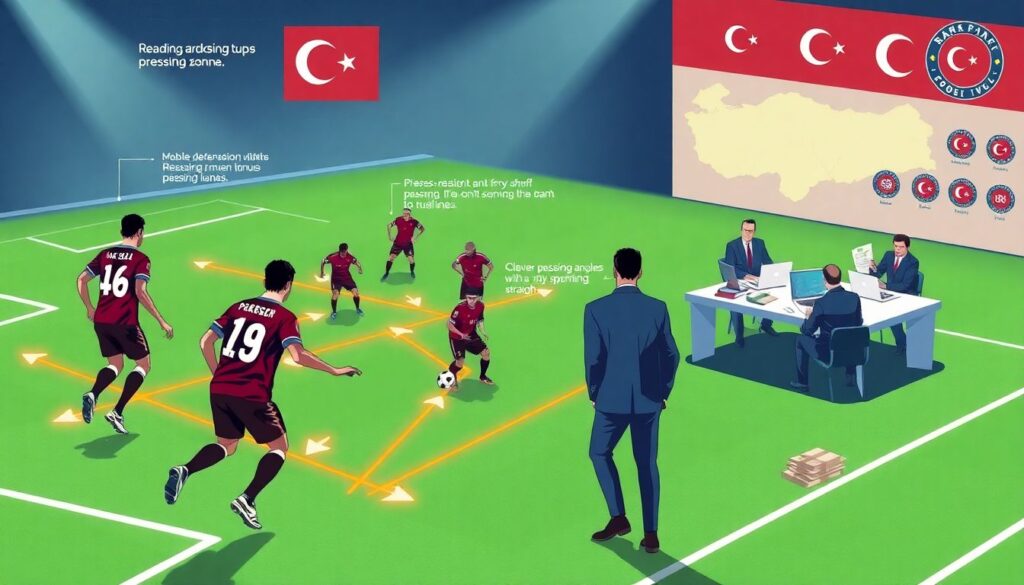
The economic impact of pressing traps might sound indirect, but it’s already reshaping squads. Players who read pressing cues well – mobile No. 6s, press‑resistant centre‑backs, forwards who can close angles instead of just sprinting – are commanding premiums in the Turkish market. Agents now highlight their clients’ counter‑pressing stats and defensive sprint counts next to goals and assists, and transfer committees look closely at how often a player helps outnumber the ball zone. That shift influences wage structures: clubs are willing to pay more for a winger who can win the ball high ten times a game than for a luxury playmaker who switches off out of possession. At the same time, investments in analysis staff, software licenses and specialised training equipment have become line‑items in budgets. Directors ask not only “What is the coach’s style?” but “How much does his pressing model cost to implement and maintain over a three‑year cycle?”
Future outlook to 2030: where Süper Lig pressing traps are heading
Looking forward from 2026, the next step is probably personalisation and load management. With more longitudinal data, clubs will refine which players can sustain high pressing volumes and when to dial back to avoid injuries. We’ll likely see more targeted rotation keyed not to minutes, but to pressing actions per game and recovery times after intense blocks of pressure. Tactically, expect hybrid traps that flow between man‑oriented and zonal principles depending on game state: relaxed mid‑block when leading, ferocious directional pressing when chasing a goal. Add in the steady improvement of domestic coaching education and easier global access to ideas through every new football pressing tactics online course, and the Süper Lig should keep its status as one of Europe’s most “alive” competitions tactically, where even smaller clubs use sophisticated traps to outnumber and unsettle technically superior opponents week after week.