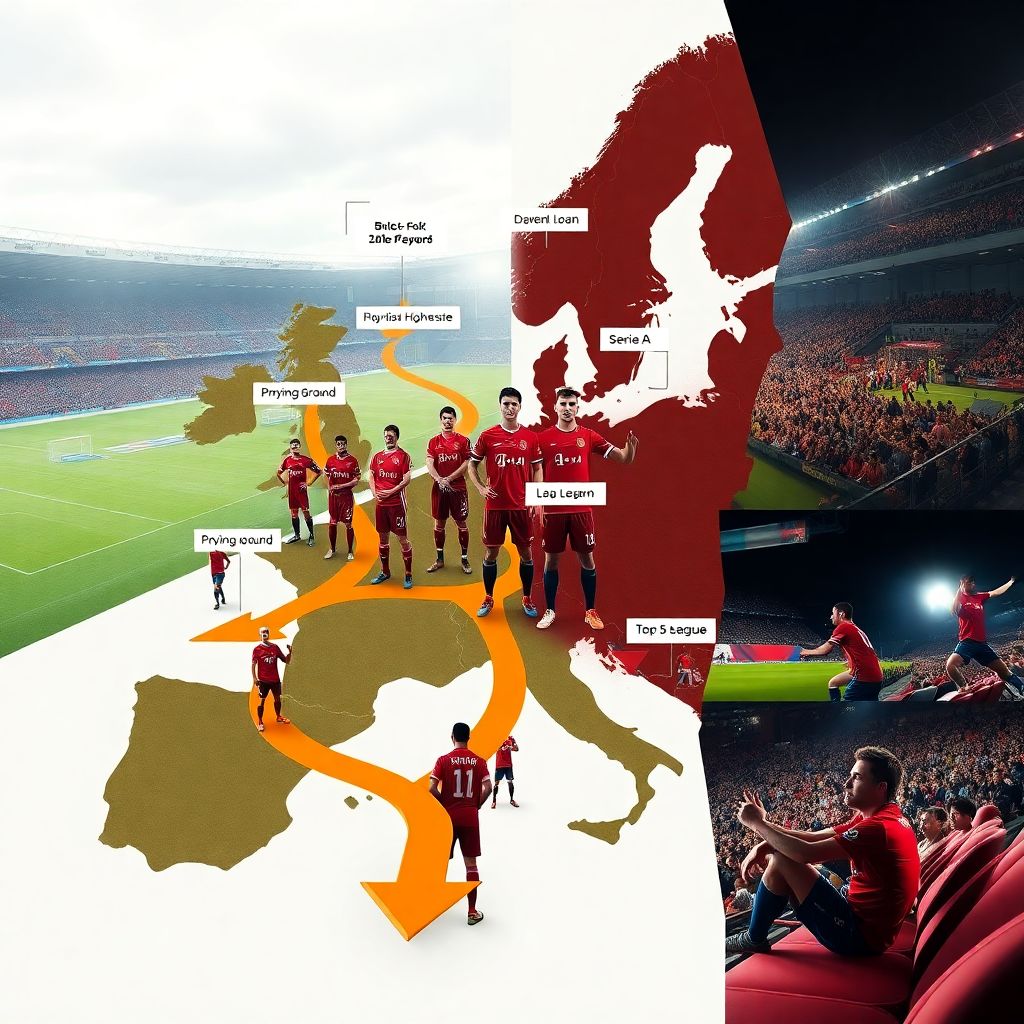
Why loan paths suddenly matter so much for young Turkish players

Over the last decade, European clubs have stopped seeing Turkish youngsters just as “cheap depth” and started treating them as long‑term assets. Loan paths have become a key development tool: instead of parking a kid in the reserves, clubs create a two‑ or three‑step roadmap across leagues with rising difficulty. That shift explains why we now see steady flows of turkish football talents in europe transfers rather than isolated success stories. For many teenagers from Istanbul, Izmir or Anatolia, a smart loan can be the difference between drifting back home and earning a serious contract in a top‑five league.
Different European approaches to developing Turkish loanees
Bundesliga and Eredivisie: step‑by‑step growth
German and Dutch sides usually prefer a structured ladder. A player arrives at 18–19, spends half a year between U‑19 and reserves, then goes on loan to a second division or a smaller first‑division club. These leagues are technically sharp, tactically clear and relatively tolerant of mistakes, which makes them ideal for young Turks adapting to high‑tempo football. Coaches there tend to give precise, data‑driven feedback, so players understand exactly why they play – or sit. For many families and agents, this predictability is a huge psychological safety net.
England, Italy, Spain: high‑risk, high‑reward loans
In the Premier League, Serie A and La Liga, the logic is harsher: if you’re good enough, you play now; if not, you’re loaned out quickly, often more than once a season. That creates both opportunity and chaos. One year a Turkish winger might be rotating in the Conference League, the next he’s struggling on the bench in a relegation fight. These swings can either harden a player or completely shake his confidence. The upside is clear: performing in these environments can instantly multiply a youngster’s market value and open doors to clubs that once felt unreachable.
Belgium, Austria, Portugal: proving grounds for hidden gems
Smaller but ambitious leagues have quietly become the best european clubs for young turkish players looking for minutes rather than marketing. Belgian and Austrian teams, in particular, specialise in taking 19–21‑year‑olds on loan, polishing them with consistent game time and then either buying them or sending them back transformed. Portuguese sides often add a strong tactical education, especially for midfielders. For Turkish prospects, these “mid‑tier” destinations can be more useful than a glamorous badge with no realistic path to the first team.
Technology behind modern loan development
Data, GPS and video instead of gut feelings
The old model – “he looks energetic, let’s loan him to anyone who wants him” – is rapidly dying. Today, clubs apply extensive data analysis to every loan move. Running metrics, pressing intensity, expected goals involvement, even sleep and heart‑rate data follow the player from parent club to loan club. Video analysts clip every involvement to track progress in key tasks: pressing triggers, defending the far post, scanning before receiving. This tech allows both sides to judge whether a loan is working after a few months rather than waiting for an end‑of‑season summary that comes too late.
Pros and cons of this tech‑heavy approach
There are obvious upsides. Objective numbers help filter bias: a Turkish full‑back can’t be dismissed as “too emotional” if his data shows elite consistency. Technology also protects players from being forgotten; even if a loan coach doesn’t fully trust them, the parent club can see every minute. On the flip side, excessive monitoring can turn development into a spreadsheet exercise. Some youngsters start playing for stats – avoiding risky passes or duels just to keep numbers pretty. Others feel constantly judged and lose spontaneity, which is fatal for creative attackers.
Common rookie mistakes with technology and feedback
Newcomers often treat GPS and analytics like school grades, obsessing over sprint distance or pass completion without context. They argue with analysts instead of asking how to interpret the numbers. Another classic mistake is ignoring tactical feedback in favour of highlight clips; a young Turkish striker might rewatch his goals 20 times but skip defensive‑pressing reviews, then wonder why he doesn’t start. The smart approach is to see tech as a compass, not a verdict: it shows direction, but real improvement still comes from training habits and mental resilience.
Frequent mistakes young Turkish players make on loan
Choosing the wrong club for the wrong reasons
The biggest trap is chasing the biggest league, not the clearest pathway. Many teenagers prioritise Instagram prestige over minutes. They accept loans where the coach didn’t even watch their full games, simply because the league sounds glamorous. Three months later, they’re stuck as “depth”, confidence evaporates and the parent club starts looking for a new target. A better strategy is ruthless honesty: is this coach known for trusting youth? Does the tactical style match my strengths? If those answers are weak, the badge won’t save the loan.
Underestimating adaptation off the pitch
Another recurrent mistake is treating adaptation as an afterthought. Young players land in Belgium or Germany, live with only Turkish friends, avoid the local language and consume social media from home all day. On the pitch they look shy, late into duels, hesitant in pressing. It’s not just tactics; they simply don’t feel anchored. The loanees who thrive usually attack the culture with the same intensity as duels: language lessons, mixed friendship circles, openness to local habits. Emotional stability turns into better decision‑making under pressure.
Agent and family pressure: too many cooks
Early in their careers, players often listen to everyone at once: agent, family, old youth coach, national‑team staff. Advice becomes contradictory: “push for a transfer”, “stay and fight”, “change position”, “don’t change anything”. This noise is a serious beginner error. Top professionals narrow their circle to two or three trusted voices and demand clear roles from them. Without this filter, a young loanee can change decisions every window, accumulating short, unproductive spells that make clubs hesitant to invest.
How clubs compare in handling Turkish wonderkids
Scouting and planning: from gut feel to structured reports
The rise of the turkish wonderkids scouting report 2025 trend shows how far scouting has come. Instead of relying on single‑game impressions in youth tournaments, clubs now compile multi‑year reports: physical maturation curves, injury history, psychological traits under stress. German and Dutch scouts are typically meticulous and patient, while some Southern European clubs act more opportunistically, jumping on a player after one breakout tournament. For Turks, the patient model tends to work better; they often bloom later once they leave familiar surroundings.
Academies versus “loan factories”
Some institutions operate strong football academies in europe for turkish players, investing in language support, schooling and cultural mentoring. Others lean on a “loan factory” model: sign many prospects cheaply, loan them widely, keep the two or three who explode. Neither model is purely good or bad. Academies provide stability but may offer fewer ultra‑competitive minutes, while factories offer exposure but little individual care. Understanding which ecosystem a club belongs to helps players and parents set realistic expectations about the path ahead.
Psychological support: the hidden differentiator
The deeper difference between clubs lies in mental‑health infrastructure. Better‑run sides include sports psychologists, cultural mediators and clear communication channels about expectations. In weaker setups, a Turkish youngster can go months without a meaningful conversation about his role. This silence breeds anxiety and impulsive decisions, like forcing a mid‑season exit. When comparing offers, asking about mental‑support staff is not a luxury; it’s a necessity, especially for teenagers leaving home for the first time.
Practical tips for choosing the right loan
Look beyond the badge and ask the right questions

When a loan offer arrives, the key is not “How big is the club?” but “How clear is the plan?” Young Turks and their families should request concrete answers: what position will I play, who are my direct competitors in the squad, how did you use similar players last season? Clubs that struggle to answer are waving a red flag. Another useful question: how often will my parent club analyse my games? A tight feedback loop between the two staffs greatly increases the chances that the loan serves a genuine development purpose.
Match your profile to the league’s style
League fit is underrated. A small, agile playmaker might flourish in the Netherlands or Portugal but get lost in a physically brutal second‑tier league. Conversely, a powerful centre‑back may learn faster in a direct, aerially intense competition. A common rookie error is assuming “top league = best education”. In reality, the best environment is where your main strengths are actually used: if a coach loves building from the back and you’re a brave passer, that might beat a bigger but more conservative club every time.
Define success in more than minutes played
While game time is vital, judging a loan purely by number of minutes is simplistic. A player who logs 800 high‑quality minutes in a well‑structured team, with clear tactical growth, might progress more than a peer who plays every week in a chaotic side with zero coaching. Before signing, define with the parent club what “success” means: maybe improved pressing numbers, better defensive duels, or a new role learned. That clarity helps resist the panic that often hits when a loanee doesn’t start immediately.
Market value, transfer dynamics and trends toward 2026
How loans reshape market value
By 2026, turkish young players market value and transfer news are increasingly shaped by loan outcomes rather than youth‑league hype. A strong season in Belgium or the Eredivisie can multiply a valuation overnight, while two disjointed, poorly chosen loans can label a player “unstable” in scouting databases. Clubs now discount raw talent that lacks evidence of adaptability. This means every loan is both a classroom and an audition; agents and families who still treat it as a temporary parking spot are badly misreading the market.
Dual‑development: club plus national team
Another trend is tighter coordination between European clubs and the Turkish federation. Youth national‑team coaches track loanees closely, often visiting them abroad, sharing video and physical data with parent clubs. This dual‑development model helps avoid conflicting demands, like a player being trained as a winger in club football but used strictly as a wing‑back for the national team. For the youngster, it also reduces one major beginner stressor: feeling torn between impressing at club level and meeting national‑team expectations.
Shorter, smarter, more flexible loans
Looking toward 2026, loan deals are becoming shorter and more modular. Six‑month spells with an option to extend, performance‑based break clauses and multi‑club cooperation agreements are becoming normal. This flexibility allows quick corrections when a match clearly doesn’t work. For Turkish prospects, it means fewer “lost seasons” – but also less room to hide. If you don’t adapt, clubs move on faster. Those who understand the system, pick their spots carefully and avoid the classic rookie mistakes will find Europe far less of a gamble and far more of a launchpad.