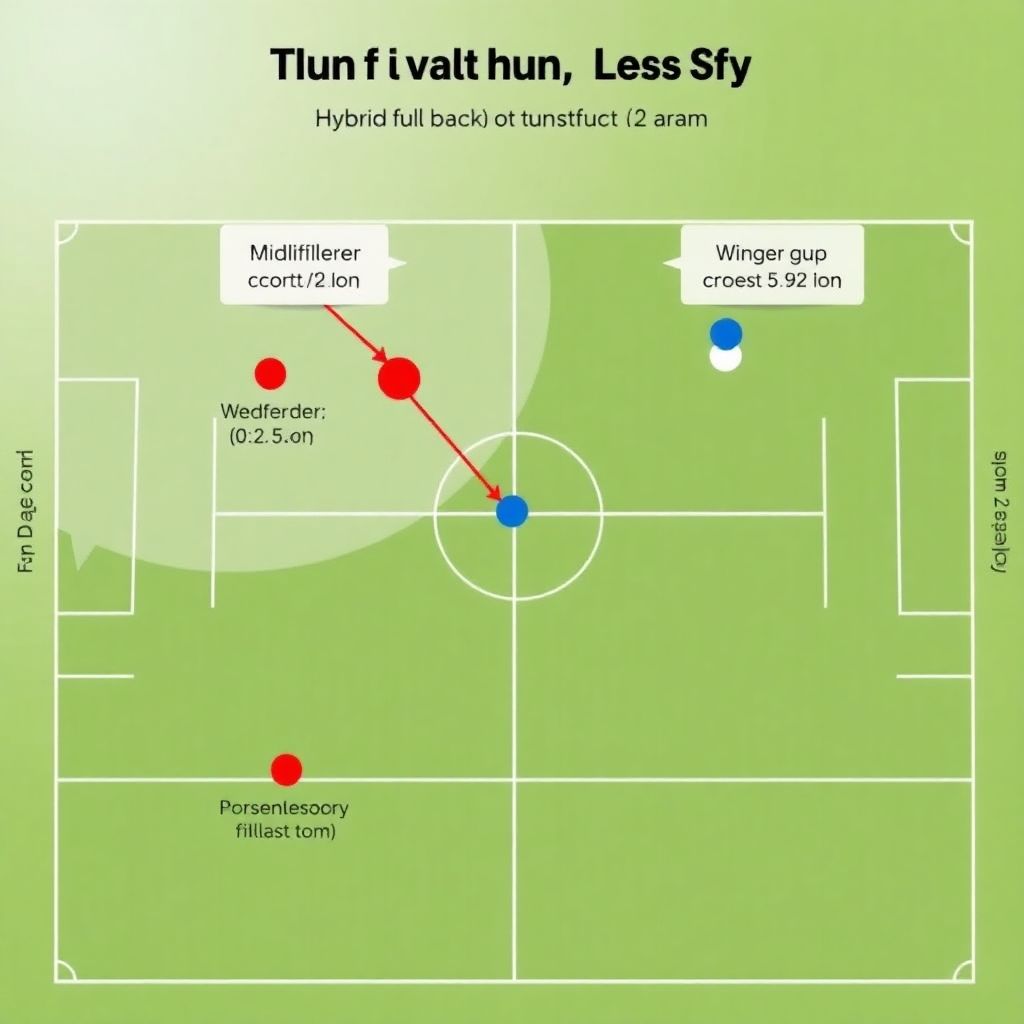
Hybrid full-backs are wide defenders who can switch between classic full-back, extra midfielder and winger roles within one game, depending on phase and team structure. Their rise comes from positional play, pressing demands and build-up patterns. Evaluating them requires watching role changes by zone, plus tracking passing, pressing and contribution to chance creation.
Core Functions of Hybrid Full-Backs
- Provide width or move inside to create an extra midfielder in build-up.
- Support overloads with wingers and eights through overlaps and underlaps.
- Control rest defence by covering counters when the team attacks.
- Act as pressing triggers on the opposition full-back or pivot.
- Switch roles quickly in transition, from attacker to defender and back.
- Offer crossing and cut-back threat from different starting positions.
- Stabilise circulation as a safe passing option under pressure.
Defining the Hybrid Full-Back: Traits and Measurable Indicators
The hybrid full-backs role in football combines three layers: defensive line work, midfield support and wide attacking actions. The same player might defend in a back four, build in a three while stepping inside, and attack as a winger or interior, depending on where the ball is and the coach’s structure.
In modern full back tactics analysis, the key is not only position on paper but functional zones. A hybrid full-back regularly touches central lane zones in possession, supports half-spaces, yet still defends wide 1v1. This versatility is visible in both heat maps and pass networks across matches.
Coaches on a football coaching course attacking full backs module usually look for a mix of physical, technical and tactical traits. Physically, repeated high-intensity runs and quick turns. Technically, clean first touch under pressure, vertical passing and crossing. Tactically, scanning, timing of runs and understanding when to stay or go.
| Key Trait | Practical Metric / Indicator | Typical Player Profile Example |
|---|---|---|
| Inside support in build-up | High number of receptions in central or half-space zones during first and second phase | Inverted full-back who joins the pivot line to help progress the ball |
| Wide & deep defending | Low success rate for opponent 1v1 dribbles on that flank, frequent interceptions in wide channels | Defender who can isolate wingers and delay counters without constant help |
| Overlaps & underlaps | Regular penetrative runs beyond the winger, entries into final third and penalty area touches | Attacking full-back combining with an inside winger to break the last line |
| Pressing and counter-press | High number of pressures in opposition half, quick recovery runs after turnovers | Aggressive full-back used as first presser on opposition wide build-up |
| Decision-making and timing | Few ball losses in risky zones, good pass completion under pressure, limited fouls in transition | Mature full-back adjusting runs depending on teammates’ positioning |
Tactical Evolution: How Systems Created the Hybrid Role
- Back four to back three in build-up: one full-back tucks inside, forming a three with the centre-backs while the opposite full-back pushes high and wide.
- Inverted roles from 4-3-3: full-backs step into midfield next to or ahead of the pivot, allowing wingers to stay wide and the eights to attack the box.
- Asymmetric flanks: one side uses a classic overlapping full-back, the other side a hybrid who inverts or holds a deeper position depending on ball side.
- Pressing structures: full-backs jump aggressively to opposition full-backs, while the near winger presses inside, effectively swapping traditional responsibilities.
- Rest defence adjustments: when both wingers stay high, a hybrid full-back stays deeper and narrower, creating temporary back three or back five shapes in defensive transition.
- Positional rotations: overlapping, underlapping and inside support rotations with wingers and eights create fluid patterns that confuse marking schemes.
In tactical analysis of full backs in europe, many top teams now design their whole possession and pressing frameworks around these hybrid movements, not as individual improvisations but as pre-planned patterns triggered by ball position and opponent shape.
Offensive Patterns: Overloads, Underlaps and Inverted Movements
Hybrid full-backs are essential for creating controlled overloads. They coordinate with wingers and midfielders so that at least one player offers width, one attacks depth, and one provides inside connection. This ensures vertical options and safe backward links in the same zone.
-
Wide overload with overlap
Full-back starts deeper, winger receives to feet, eight arrives to support. When the winger drives inside, the full-back overlaps, forcing the opponent wide defender to choose, which often opens a cut-back or a third-man run from the eight. -
Half-space underlap from deeper position
Full-back receives from centre-back, passes to winger wide, then underlaps into the half-space. The winger can play a reverse pass into the channel, giving the full-back access to low crosses or cut-backs from near the by-line. -
Inverted build-up support
When pressed high, the full-back moves inside to form a double pivot. This creates a free man between lines or allows the centre-back to carry the ball forward while the full-back covers their zone in case of loss. -
Third-man combinations around the block
Full-back plays inside to the eight, then sprints on the outside. The eight bounces the ball to the winger, who now has a simple pass down the line to a free full-back running into crossing space. -
Switch-of-play support
On the far side, the hybrid full-back holds a slightly narrower, higher position. When the ball is switched, they can attack the space between opposition wide midfielder and full-back, either receiving to cross or to combine again inside.
Mini-Scenarios: Applying the Concepts in Training and Matches
Use these short patterns as simple, repeatable drills before integrating them into 11v11 work.
-
Scenario 1: Breaking a mid-block on the right
1) Centre-back plays to right full-back. 2) Full-back passes wide to winger and underlaps. 3) Winger can go 1v1 or play the underlap. 4) If blocked, reset via the full-back back inside to pivot and switch. -
Scenario 2: Inverted left-back vs high press
1) Goalkeeper passes to left centre-back. 2) Left-back steps into midfield, receiving inside. 3) On pressure, they play to the pivot and immediately drift wider to support. 4) Team escapes via diagonal to the opposite full-back. -
Scenario 3: Late arrival in the box
1) Full-back holds deeper while winger and eight combine. 2) When winger beats the first line, full-back sprints into the half-space. 3) Cut-back zone is occupied by the hybrid full-back arriving unmarked at the edge of the box.
In defensive and attacking full back systems analysis süper lig environments, adapting these scenarios to local tempo and physicality is vital: fewer touches on heavy pitches, more direct runs when pressing is less coordinated.
Defensive Duties, Press Triggers and Transition Priorities
Hybrid full-backs must defend both space and man. Their starting position before loss of possession often decides whether a transition is controlled or chaotic. Coaches should define clear press triggers and default zones so that the player does not hesitate between stepping out or dropping.
Strengths Brought by Hybrid Full-Backs
- Improved build-up security by providing extra passing lanes inside and outside the pressing line.
- Flexibility to change from back four to back three or five without substitutions.
- Better coverage of half-spaces, reducing simple through balls for the opponent.
- Extra numbers around the ball for counter-pressing after losing possession.
- Unpredictable attacking angles, as crossing and cut-backs can come from various zones.
Limitations and Risks to Manage
- Space left behind when the full-back steps inside or goes high too early, especially against fast wingers.
- Physical overload on the player, who must sprint repeatedly in both directions for ninety minutes.
- Dependence on communication with centre-backs and pivots; misunderstandings quickly create open channels.
- Potential confusion if the role is not clearly defined within the overall game model.
- Need for specific player profile; not every classic full-back adapts well to frequent role changes.
Quick Evaluation Algorithm for Your Hybrid Full-Back
- Define role zones: mark on the pitch where the full-back should appear in each phase (build-up, attack, defence, transition).
- Analyse 3-5 full matches: check if their average position matches the planned zones in and out of possession.
- Track 4 key metrics: progressive passes or carries, final-third entries, 1v1 defensive duels, recovery runs after loss.
- Review 6-10 critical moments: goals, big chances, counters; decide if the full-back’s position helped or hurt the team.
- Adjust instructions: if issues repeat, simplify their tasks (either more classic or more inverted) and retest over the next two matches.
Case Studies from Europe: Metrics, Matches and Player Profiles
European examples show both the potential and the common errors with hybrid roles. In modern full back tactics analysis at elite level, the biggest difference is not pure running power but clarity of decision-making and synchronisation with midfielders during transitions.
-
Error 1: Inverting without cover
When a full-back moves inside but the near centre-back does not shift wider, a simple long ball can isolate the far-side centre-back. Coaches should always pair inverted roles with compensating movements or a deeper pivot. -
Error 2: Overlapping into traffic
Full-backs often run outside even when the winger is wide and marked by two players. This crowds the wing, reduces passing angles and kills speed. The correction is to hold a half-space or deeper support position until the winger drives inside. -
Error 3: Late reaction in defensive transition
Some attacking full-backs only jog back after lost possession. A clear rule is needed: first three seconds are maximal sprint to goal side of the ball, then adjust marking. This simple rule drastically reduces counter threats. -
Error 4: Misreading pressing triggers
If the full-back jumps to press on the wrong cue, the midfield line stretches and central spaces open. Frame video clips around specific triggers (back pass, bad touch, sideline trap) so the player learns exactly when to go or hold. -
Error 5: Misused profile
Not every good crosser should be a hybrid full-back. Some players are more effective as pure wide runners. Forcing them inside can reduce their strengths and complicate build-up unnecessarily.
Süper Lig Spotlight: Local Variants and Implementation Examples
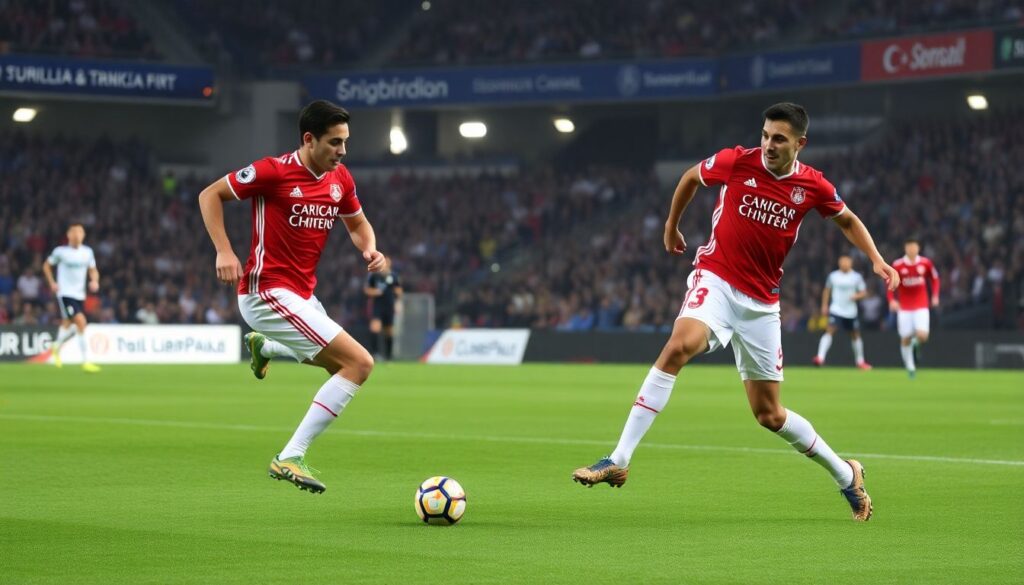
In Turkey’s Süper Lig, coaches often adapt hybrid full-back roles to the league’s transition-heavy style. Full-backs are asked to support attacks aggressively but with strict rules about when to invert and when to hold a deeper line, especially away from home.
A simple Süper Lig-style game plan could look like this:
- In build-up, right full-back stays wider, left full-back steps slightly inside to help the pivot against pressing eights.
- In attack, whichever side has the ball, that full-back may overlap; the opposite full-back must remain deeper and narrower for rest defence.
- On loss of possession, nearest full-back presses ball carrier for three seconds; far-side full-back drops to form a back three with centre-backs.
- If the team leads after the 60th minute, both full-backs reduce overlapping and focus on compactness and winning second balls.
For defensive and attacking full back systems analysis süper lig coaches can review these rules post-match: check where counters started, which side conceded more crosses, and how often full-backs were caught ahead of the ball during turnovers.
Practical Questions on Coaching, Selection and Match Use
How do I know if a player suits a hybrid full-back role?
Look for technical security under pressure, repeated high-intensity runs, and tactical awareness. In video, the player should scan frequently, adjust position early, and show calm passing choices in both wide and central zones.
How many training sessions are needed to introduce hybrid patterns?
Introduce basic patterns across several microcycles rather than one intensive block. Start with simple 5v5+2 or 7v7 games with clear rules for the full-back, then gradually add complexity as behaviours become automatic.
Should both full-backs be hybrid in the same team?
At intermediate level, it is usually safer to develop one side as more hybrid and the other more classic. This asymmetry keeps the structure stable while still adding tactical richness.
How do I protect against counters when my full-back inverts?
Set clear compensations: pivot or near centre-back must slide into the vacated space, and opposite full-back holds a deeper line. Emphasise first three seconds of counter-press and sprint recovery in training.
What video clips should I prepare for my full-backs?
Group clips into four folders: build-up support, wide 1v1 defending, overlaps/underlaps, and transition reactions. Keep each clip short and focus comments on starting position, body orientation and timing.
How do I link hybrid full-backs with my midfield structure?
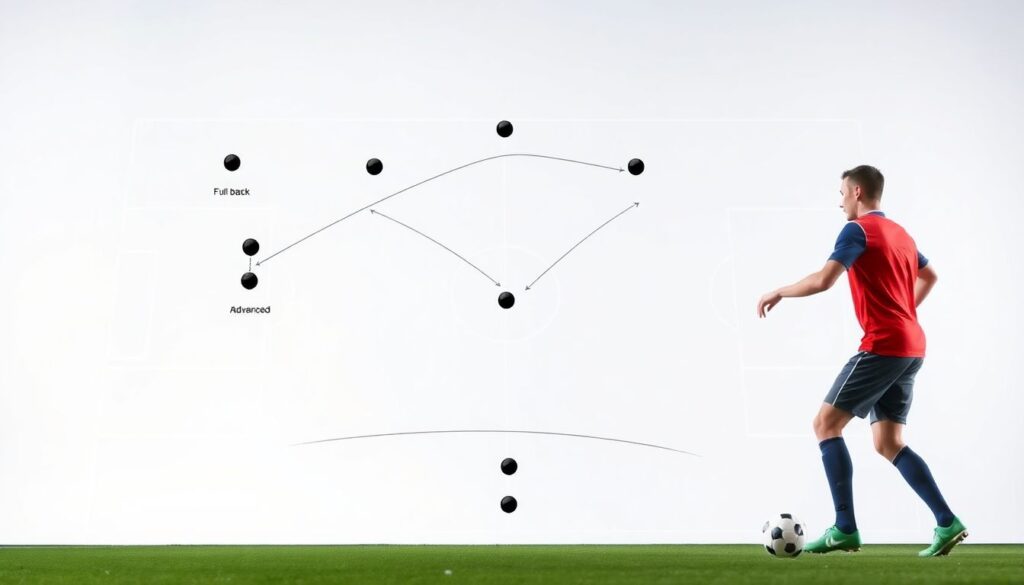
Decide in advance if your full-back supports next to the pivot, ahead of it, or level with the eight. This decision shapes the whole positional play and should be consistent with the qualities of your midfielders.
Can hybrid roles work in lower divisions and youth football?
Yes, if simplified. Limit the player to one or two main behaviours (for example, invert in build-up, overlap in final third) and coach them consistently rather than changing instructions every week.