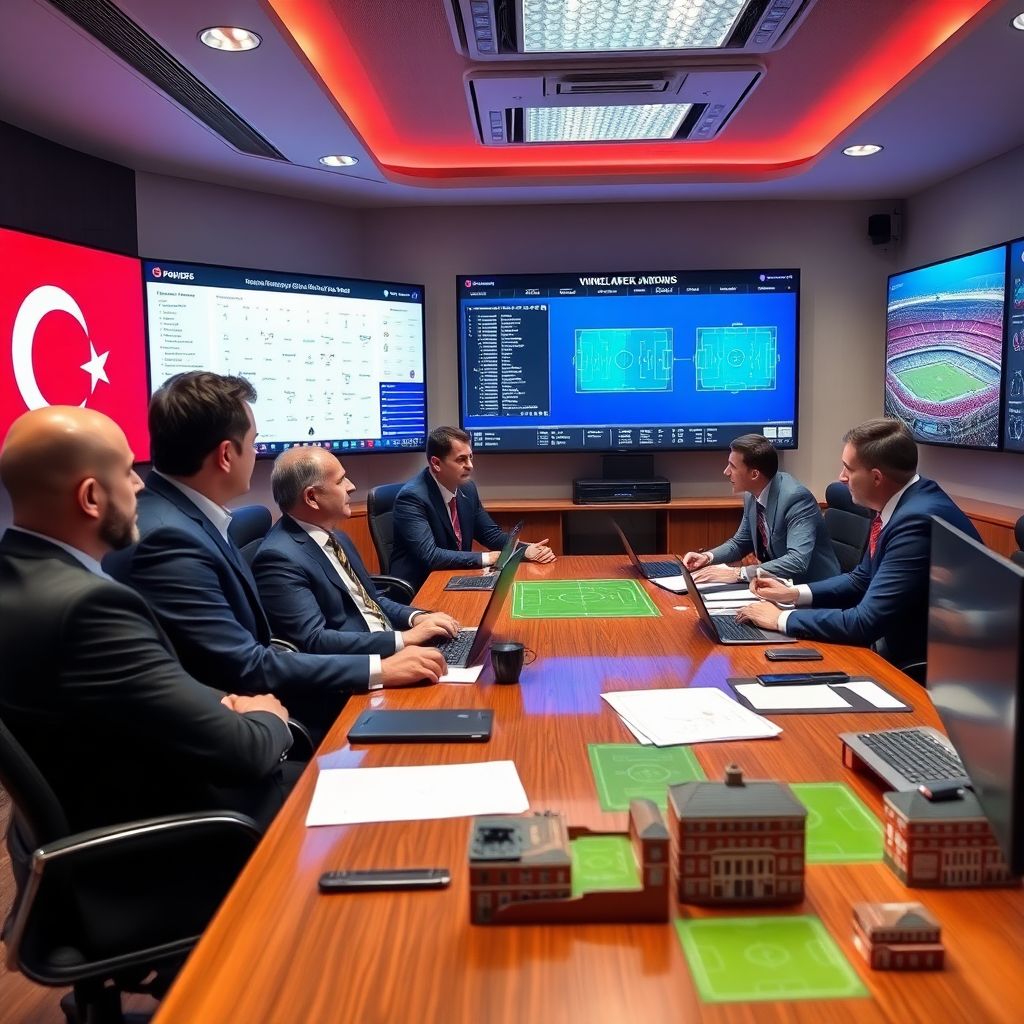
Turkish clubs are reshaping their European ambitions by tightening finances, targeting smarter recruitment and investing in coaching, data and infrastructure instead of only star names. The aim is consistent group-stage qualification, deeper runs in UEFA tournaments and a recognisable identity, even for mid‑table sides with limited budgets compared with Europe’s traditional powers.
Strategic Overview: How Turkish Clubs Recast Their European Ambitions
- Priority is shifting from short-term star signings to sustainable, UEFA-compliant budgeting and academy output.
- Squad building focuses more on roles, pressing intensity and set-piece strength than on reputations.
- Coaches with European experience and clear game models are valued above purely motivational figures.
- Stadiums, training centres and basic analytics tools are seen as competitive assets, not luxuries.
- Clubs re-position themselves as sellers and regional hubs while activating the Turkish diaspora across Europe.
- Even resource-limited teams copy key ideas: loan markets, targeted sales and selective European pushes.
Financial Rewiring: Investments, Revenue Streams and Compliance with UEFA Rules
Financial rewiring means reorganising how Turkish clubs earn, spend and report money so they can stay inside UEFA’s financial regulations while staying competitive. It is a move away from emergency loans and short-term transfer splashes toward predictable income, controlled wage bills and value-creating investments, especially for European campaigns.
For the biggest brands, European participation remains central. When fans search for Galatasaray Fenerbahce Besiktas UEFA Champions League tickets, they indirectly highlight how important group-stage prize money and matchday income are for these clubs’ budgets. Consistent qualification stabilises finances, which in turn funds better squads and facilities without breaching UEFA cost-control rules.
For mid-table Süper Lig teams, financial rewiring looks different. They rarely plan budgets assuming group stages, but they still design wage structures that leave “headroom” if they qualify. They try to treat any unexpected income from being among Turkish football clubs in European competitions 2024 as a bonus to reduce debts or invest in long-term assets like training pitches.
Alternative paths for limited resources include: heavy use of free transfers and short contracts, performance-based bonuses instead of high fixed salaries, co-ownership of scouting networks with partner clubs, and smart use of sell-on clauses. The core idea is the same across budget levels: use Europe to grow steadily, not to gamble on one miracle season.
Squad Construction: Balancing Homegrown Talent, Imports and Tactical Identity
Squad construction is the practical mechanism that connects financial reality with on-pitch identity. Turkish clubs have to respect foreign-player rules, win domestically and still compete in Europe’s intensity. The process is less about assembling “names” and more about building a balanced, tactically coherent group.
- Define a non-negotiable game model. Decide if the team will press high, defend compact, dominate the ball or play in transition. Recruitment then targets players whose physical and technical profiles fit that style, starting with the spine (goalkeeper, central defenders, holding midfielder, centre-forward).
- Blend homegrown and imported players. Academy graduates secure local-quotas, understand Süper Lig rhythms and are cheaper. Foreign signings should address clear gaps (e.g., left-footed centre-back, box-to-box runner, creative 10) rather than duplicate local strengths.
- Plan for different competitions. Domestic games may allow more rotation, but facing stronger clubs in Europe demands players comfortable under pressure. Depth in central areas and full-back positions is particularly important for the Turkish Super Lig teams performance in Europa League and Conference League.
- Use age and contract cycles strategically. Combine peak-age leaders, rising talents with resale value and a few experienced specialists with European minutes. Structure contracts so not all key players can leave in the same window.
- Exploit loan and free markets. Resource-limited clubs can borrow fringe players from bigger European sides, offering them minutes and exposure. If they perform well in qualifying rounds, these loans often turn into affordable permanent deals.
- Prioritise versatility. Players who can cover several positions (e.g., winger/10, full-back/wing-back, 6/8) allow coaches to adjust systems without buying a separate substitute for each role.
- Align fitness profiles with European intensity. Recruiting players with a history of durable seasons and high running intensity matters more than highlight-reel skills that fade under pressure.
Recent seasons show this in practice. Clubs pushing to be considered the best Turkish football club to support in Europe have added pressing forwards, athletic defenders and box-to-box midfielders to complement older playmakers, ensuring they can survive away games in tough atmospheres without losing their attacking threat.
Coaching and Leadership: Appointments, Stability and European Experience
Coaching and leadership determine how well talent and budgets convert into results. Turkish clubs used to cycle through managers quickly; now, many try to hire coaches whose methods match club identity and whose staff understand European preparation, including recovery and opponent analysis.
Typical application scenarios include:
- Big club chasing Champions League groups. Here the coach must manage stars, maintain domestic title pressure and navigate qualifiers. Leaders with previous UEFA group-stage experience and strong backroom teams can integrate new signings quickly, organise set pieces and handle double-game weeks.
- Mid-budget club targeting Europa or Conference League. The coach builds a compact, counter-attacking side that can frustrate technically superior opponents. Leadership is about clarity and discipline more than complex systems; every player must know his role without ball and on transitions.
- Rebuild after financial crisis. A stabilising coach works with many academy players, focuses on physical conditioning and simple patterns, and aims to re-enter Europe within a few seasons rather than instantly. Leadership also means honest communication with fans about realistic expectations.
- Emerging club with ambitious owner. Here leadership includes pushing back against impatient decision-makers when they want uncontrolled spending. The head coach and sporting director must align on which investments actually raise the European ceiling, instead of signing redundant attackers.
Across these scenarios, stability is an underrated competitive advantage. Constant coach changes reset tactical identity and reduce the value of carefully built squads. Even clubs with limited budgets gain an edge if they trust a coherent project for several seasons and protect staff from short-term pressure swings.
Competitive Trajectory: Season-by-Season Performance and Defining Moments
Competitive trajectory describes how a club’s European results evolve year by year: qualifying rounds, group stages, knockout appearances and the emotional “defining nights” that shape reputation. For Turkish clubs, this trajectory is often uneven but still reveals whether strategies are converging toward sustainable progress.
Upside of a Structured European Trajectory
- Facilitates better planning of budgets and squad cycles, instead of relying on one-off miracle runs.
- Raises the club’s profile, helping with sponsorships and attracting players who specifically want European exposure.
- Strengthens the domestic league’s image, improving overall respect for Turkish football clubs in European competitions 2024 and beyond.
- Gives younger players meaningful minutes under pressure, speeding up their development and resale potential.
- Builds fan culture around European nights, which increases season-ticket demand and digital engagement.
Constraints and Structural Challenges
- Fixture congestion can drain thin squads, harming domestic form and increasing injury risk.
- Limited TV and commercial revenue versus top-five leagues makes it hard to keep peak-age stars after breakout campaigns.
- Dependence on qualification income can tempt risky spending if clubs assume group-stage participation as guaranteed.
- Seedings and qualifying paths may force tough early draws, especially for Turkish Super Lig teams performance in Europa League qualifiers.
- Political and economic volatility in the region can impact currency stability, ticket pricing and sponsorship deals.
Infrastructure and Technology: Stadiums, Training Centers and Data Analytics
Infrastructure and technology are the less visible pillars of European ambition. Modern stadiums help with atmosphere and income, but training centres, medical areas and data tools usually decide whether squads can handle the physical and tactical demands of European games across several months.
Common mistakes and myths include:
- Myth: “Only superclubs need analytics.” Even basic tools that track running loads, chance quality and set-piece routines can help mid-table sides prepare for specific European opponents without expensive software suites.
- Overbuilding stadiums while neglecting training grounds. Attractive arenas help sell Galatasaray Fenerbahce Besiktas UEFA Champions League tickets, but poor daily facilities hurt player development and injury prevention, limiting long-term European competitiveness.
- Buying technology without staff to use it. Clubs sometimes purchase tracking systems and databases but lack analysts who can translate numbers into simple coaching messages.
- Ignoring recovery science. Long travel to European away games requires planning around sleep, nutrition and rotation. Underestimating this leads to flat domestic performances and rising muscle injuries.
- Assuming smaller budgets cannot innovate. Resource-limited clubs can partner with universities, use open-source tools, and focus on 2-3 key metrics (e.g., expected goals from set pieces) instead of trying to copy full-scale Premier League analytics departments.
- Underusing fan and diaspora data. Ticketing and streaming analytics can reveal where abroad there is demand to how to watch Turkish clubs in European cups live stream, guiding foreign marketing and kick-off-time negotiations.
Market Positioning: Transfer Strategy, Brand Expansion and Diaspora Engagement
Market positioning is how a club presents itself to players, fans, sponsors and media across Europe. For Turkish sides, this increasingly means accepting a role as a “stepping-stone” or regional powerhouse, and turning that into an advantage through transfer strategy and targeted brand work.
A typical mini-case: a Süper Lig club with limited finances decides it cannot outbid bigger leagues, so it focuses on undervalued markets (for example, younger players from Africa or Eastern Europe) and clear resale pathways. It explains to recruits that strong domestic form plus a couple of standout Europa or Conference League ties can generate moves to top-five leagues within a few seasons. At the same time, the club runs digital campaigns toward Turkish communities in Germany, the Netherlands and the UK, promoting memberships and custom packages for fans searching how to watch Turkish clubs in European cups live stream or visiting Istanbul for big ties.
This strategy offers an alternative for smaller-budget teams that still want a European profile. Instead of chasing one-off star names, they become known for discovering talent, playing attractive football and providing intense atmospheres. Fans abroad who are choosing the best Turkish football club to support in Europe then see a clear narrative: a club that fights smartly in UEFA competitions, offers emotional nights and respects its supporters at home and across the diaspora.
Addressing Practical Concerns About Implementation and Measurable Impact
How can mid-table Turkish clubs aim for Europe without risking financial collapse?
They should build budgets that do not assume European prize money, then treat any qualification as a bonus. Prioritising sell-on clauses, loans, and modest fixed wages with performance bonuses allows them to improve squads for Europe without locking in unsustainable costs.
What is realistically achievable for Turkish clubs in UEFA competitions over the next few seasons?
Regular group-stage participation in Europa and Conference League and occasional Champions League group appearances are realistic. Deep knockout runs depend on smart cycles of recruitment and coaching stability, not only on budget size.
How important is it to have a coach with previous European experience?
European experience helps with preparation and in-game management, but it is not everything. A tactically clear, organised coach who can adapt and communicate well may outperform a more famous name whose style does not fit the squad.
Can smaller clubs benefit from infrastructure upgrades without building new stadiums?
Yes. Upgrading training pitches, gyms, medical rooms and video-analysis setups often brings more performance gains than a new arena. Smart partnerships with municipalities or universities can lower costs while raising professional standards.
How should clubs measure the success of their European strategy beyond match results?
They can track academy minutes in European games, player resale values, sponsorship growth tied to UEFA exposure, and digital audience changes in key markets. These indicators show whether the club is becoming more attractive and resilient.
What should fans look at when choosing a Turkish club to follow in Europe?
Consider playing style, commitment to youth, stadium atmosphere and how consistently the club reaches UEFA competitions. For many international supporters, these factors matter as much as the current league table position.
Is it still worth buying tickets if the team often exits early from Europe?
European nights remain valuable for fan culture, club revenue and player motivation even when runs are short. Buying tickets or following live streams supports the long-term project that can eventually lead to deeper European campaigns.