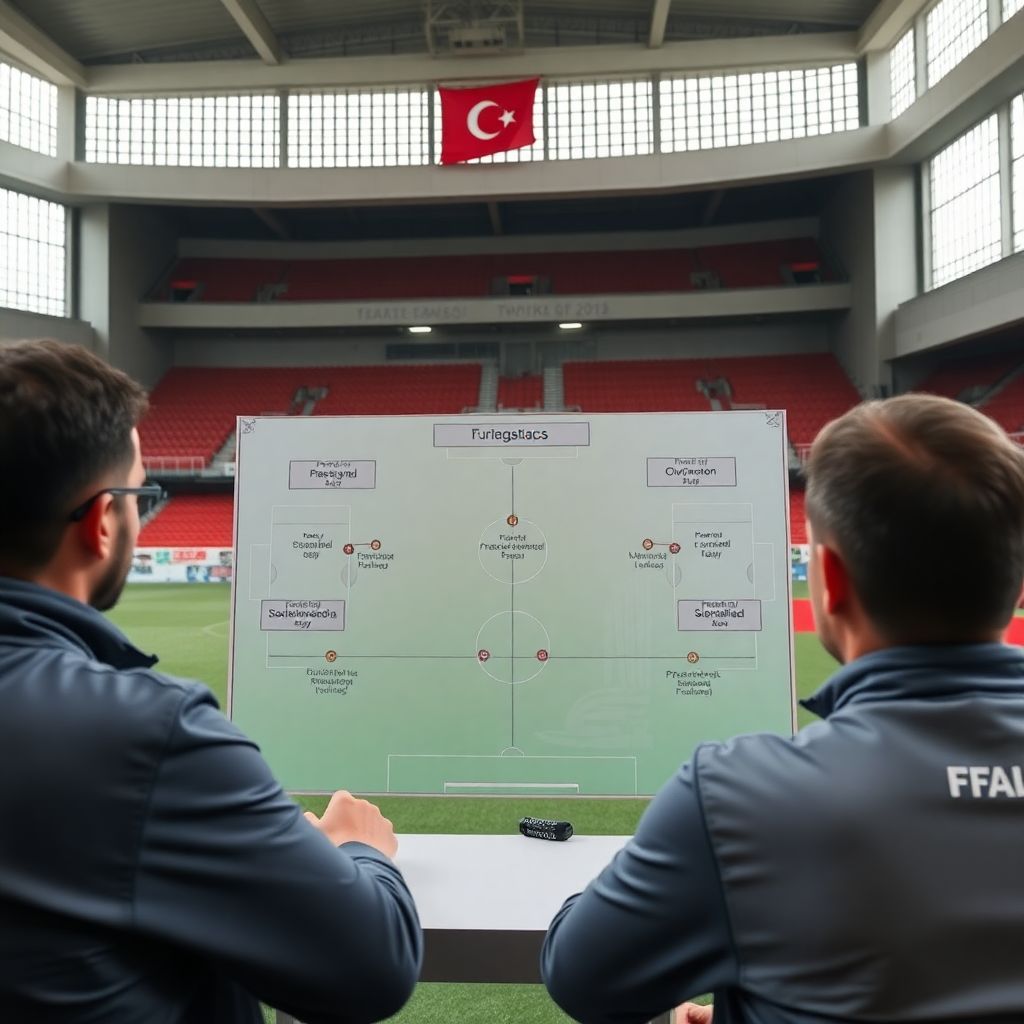
Premier League tactical trends appear in the Süper Lig with lower budgets, more variability between clubs and stronger home‑advantage effects. High pressing, compact mid‑blocks, wide overloads and set‑piece routines all transfer, but must be simplified. To choose the best tactical model, match intensity, squad profile, recruitment budget and league‑specific refereeing and tempo.
Tactical highlights: how Premier League trends map onto the Süper Lig
- High pressing from the Premier League works in the Süper Lig mainly in short, well‑drilled bursts rather than 90‑minute chaos.
- Build‑up trends shift from pure goalkeeper‑center‑back patterns to more direct links into compact midfielders.
- Wide overloads remain vital but rely more on rotations and half‑spaces than expensive 1v1 wingers.
- Defensive blocks are usually slightly deeper in Turkey, with more focus on crowding the box.
- Transitions and counters yield high value, especially for mid‑table and budget clubs.
- Set‑piece innovation and data‑light analytics bring outsized edges where resources are limited.
- For applied work and even Premier League Super Lig betting tips, understanding these structural differences is more important than copying one famous club.
Pressing patterns: intensity, triggers and local adaptation
Choose your pressing model using these criteria that differ between Premier League vs Super Lig tactical analysis while still sharing core principles.
- Squad aerobic capacity: Can your front six repeat high‑intensity runs for long stretches, or do you need carefully timed pressing waves?
- Defensive line speed: Are your center‑backs quick enough to defend space behind a high press, or do you require a medium block with cover?
- Keeper involvement: Is your goalkeeper comfortable sweeping and playing high, as in many Premier League sides, or safer staying deeper like many Süper Lig keepers?
- Opponent build‑up culture: Do domestic opponents insist on short build‑up, giving you pressing triggers, or go long early, forcing different traps?
- Refereeing tolerance: Is contact and aggressive dueling allowed as in some Premier League games, or whistled quicker, affecting counter‑pressing risk?
- Home vs away dynamics: Süper Lig crowds can drive frantic early pressing at home, but you may need calmer mid‑blocks away.
- Bench depth and rotation: High pressing in England relies on deep squads; in Turkey you may need narrow rotations and game‑to‑game load management.
- Coaching time: Complex pressing traps need weeks of repetition; choose simpler schemes if training time is limited or squad turnover is high.
- Profile of forwards: Intelligent pressers with good body shape can run a structured press even without elite pace; lazy runners force you into deeper blocks.
Build-up play under constraints: from center-backs to compact mids
This table compares realistic build‑up options for clubs that want to echo Premier League trends while adapting to Süper Lig realities.
| Variant | Who it suits | Pros | Cons | When to choose |
|---|---|---|---|---|
| Direct CB to target forward with second‑ball structure | Budget Süper Lig teams with strong striker, limited ball‑playing defenders | Simple coaching, low risk near your box, works on poor pitches, mirrors some bottom‑half Premier League solutions | Can become predictable, requires compact midfield to win second balls, less control of tempo | Use when you face intense press or lack calm center‑backs; ideal away to stronger rivals |
| Hybrid short build‑up into double pivot | Clubs with two reliable central mids and average technical defenders | Balances control and safety, easier to train, offers angles to escape first line of press | Still vulnerable if pivots are tightly marked, needs clear automatisms for full‑backs and wingers | Choose when you want more ball control without mimicking full Guardiola‑style structures |
| Goalkeeper plus split center‑backs with inverted full‑back | Top Süper Lig sides with technically strong back line and tactically sharp full‑back | Creates 3v2 or 4v3 in first line; reflects many top Premier League teams; enables calm progression | High coaching demand; risky if players misread pressing triggers; needs confident keeper | Use against mid‑block opponents when you trust decision‑making and pitch quality |
| Asymmetric build‑up through one overloaded side | Teams with one standout full‑back or winger but limited build‑up on the other flank | Focuses resources where you are strongest, simplifies patterns, hides weaker side | Opponents can over‑shift, leaving you stuck if star player is marked or injured | Best when you have a premium wide player and want clear, repeatable routes into the final third |
Compared to England, Turkish squads often lack multiple elite ball‑playing defenders, so hybrid and direct variants are usually more stable than full positional play. For applied work and even best sites for Premier League and Super Lig predictions, understanding which of these variants a team actually uses is more useful than raw possession numbers.
Wide play and overloads: recreating wing dynamics on tighter budgets
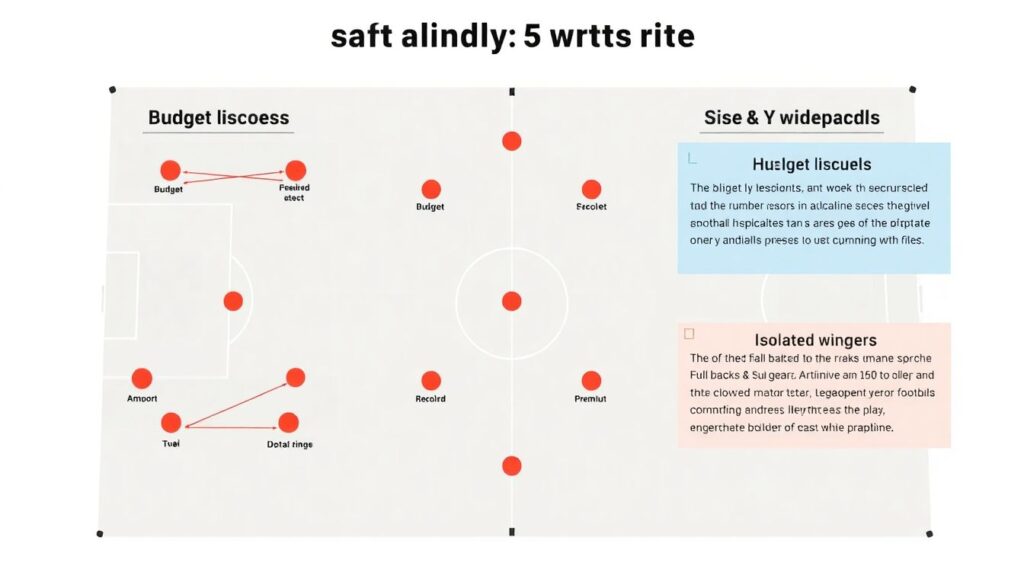
Use conditional planning to mirror Premier League wide play inside Süper Lig constraints, separating budget and premium pathways.
- If you lack expensive 1v1 wingers, then prioritize wide triangles (full‑back, winger, near‑side midfielder) and early underlaps instead of pure isolation dribbles.
- If you have a premium winger but budget full‑backs, then keep full‑backs deeper for rest‑defence and let the winger receive high and wide with a close interior support to combine.
- If your crossing quality is modest, then target cut‑backs from the half‑space rather than hopeful floated crosses; rehearse third‑man runs into the box.
- If your league opponents defend very narrow, then rehearse switches of play from one half‑space to the opposite wing instead of constant same‑side overloads.
- If you run a budget‑first squad, then use fixed patterns (e.g., overlap‑underlap‑cut‑back) that lower decision‑making load rather than giving total creativity to technically limited players.
- If you can afford premium full‑backs with engines, then push them high and invert one central midfielder to stabilize rest‑defence, following modern Premier League trends with Süper Lig‑appropriate safety nets.
Defensive organization: zonal lines, compactness and transitional risks
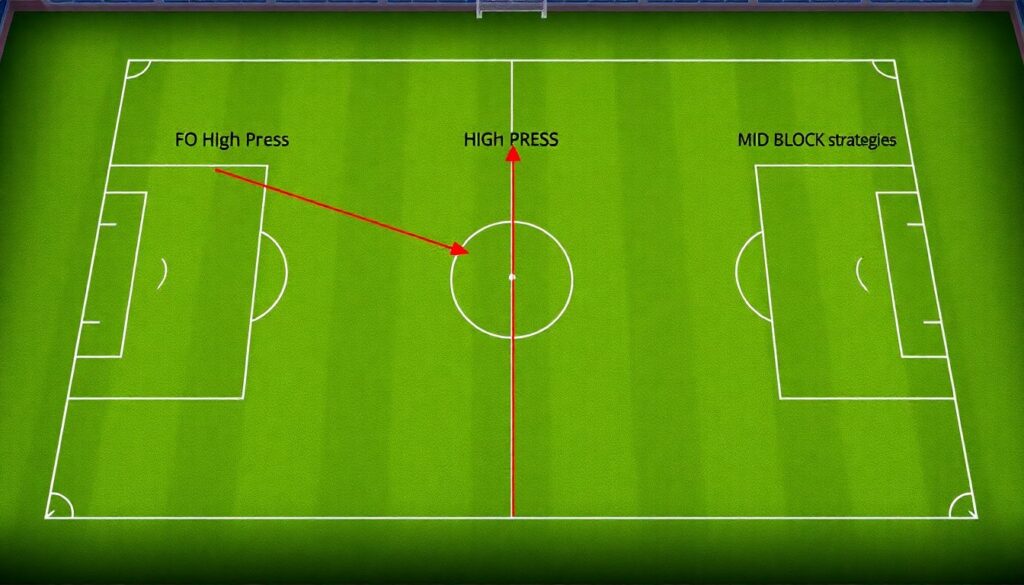
Follow this quick checklist to select and calibrate your defensive structure for Turkish conditions while borrowing Premier League principles.
- Define your default line of engagement: high press, mid‑block or low block, based on squad physicality and the pace of your center‑backs.
- Decide the distance between lines (defence to midfield to attack) and freeze it in training, aiming for minimal gaps where Süper Lig opponents love to receive between lines.
- Choose your wing control method: wide midfielders tracking full‑backs, or full‑backs staying narrow while wingers drop; train one approach consistently.
- Clarify who jumps to press the ball when it enters the half‑space, to avoid both center‑back and pivot stepping out together and opening the channel.
- Set clear rest‑defence numbers: how many players stay behind the ball when attacking; copy Premier League standards but reduce by one if your bench lacks depth.
- Define transition rules: first three seconds after loss are for counter‑press, then immediate recovery run; rehearse these explicitly with time‑limited drills.
- Review video clips from both competitions, ideally using Premier League and Super Lig stats and analytics tools, to check if your block behaves the same under match stress as in training.
Transitions and counters: exploiting space with available personnel
Avoid these frequent selection and design errors when building a transition‑focused model that fits Süper Lig realities while learning from England.
- Choosing pure counter‑attack football without having two or three players who can reliably carry the ball at speed over distance.
- Copying famous Premier League counter patterns but ignoring that Turkish referees and tempo can break up long, chaotic transitions with more fouls.
- Leaving only one defender back on set‑pieces, which can be punished in a league with many fast wingers and direct counters.
- Over‑committing full‑backs forward so often that repeated defensive sprints burn them out across the season, especially in smaller squads.
- Training transitions only from ideal pressing‑win situations instead of also from messy second‑ball recoveries and random clearances.
- Ignoring the technical limits of your pivot: choosing vertical passing patterns he cannot execute reliably under pressure.
- Failing to synchronize the first runner in depth with the timing of the pass, leading to constant offsides or checked runs.
- Relying on long balls into channels without preparing support runs, so the forward becomes isolated versus two defenders.
- Not integrating transition principles into your analysis of opponents, which also weakens your use of Premier League vs Super Lig tactical analysis for practical planning.
- Letting external narratives, including poorly grounded Premier League Super Lig betting tips, influence tactical choices instead of video and training evidence.
Analytics, set-piece innovation and scalable coaching methods
For budget‑first Süper Lig clubs, the best approach is usually a hybrid style: compact mid‑block, sharp transitions, structured set‑pieces and simple wide patterns, supported by basic video and data rather than complex models. For resource‑rich clubs, a more Premier League‑like positional game makes sense if coaching time, recruitment and analysis capacity can sustain it.
Common implementation queries for coaches and analysts
How can I study both leagues efficiently without a big analytics department?
Combine event data from public Premier League and Super Lig stats and analytics tools with your own tagged video clips. Focus on three phases only at first: build‑up under pressure, defending wide areas and defensive transitions.
Does copying a top Premier League club ever make sense in the Süper Lig?
Copying entire game models rarely works. Instead, steal two or three micro‑patterns that match your squad, such as a specific pressing trap or set‑piece routine, and adapt them to local tempo and refereeing.
How do live broadcasts help my match preparation and review?
If you watch Premier League and Turkish Super Lig live streaming with a tactical eye, note recurring patterns, not just spectacular moments. Use pause and replay to capture how teams set up their rest‑defence before they lose the ball.
Can tactical knowledge improve my betting decisions on these leagues?
Understanding tactical styles helps you interpret odds and narratives more critically, but it never guarantees outcomes. Treat any Premier League Super Lig betting tips with caution and always consider squad rotation, fatigue and contextual factors.
What should I prioritize if my club cannot afford advanced data platforms?
Start with simple, repeatable video workflows: code goals, big chances and set‑pieces manually, then log basic metrics in a spreadsheet. Even without premium software or the best sites for Premier League and Super Lig predictions, consistent internal data beats guesswork.
How can I integrate set-piece work without overloading players?
Limit yourself to a small menu of routines and tie them to existing open‑play patterns. For example, use the same blocking runs in corners that you use when attacking crosses in open play.
What is a realistic timeline for changing our tactical model?
Plan for incremental shifts across half a season instead of sudden overhauls. Introduce one major phase change at a time, such as adjusting your pressing height before reshaping build‑up.