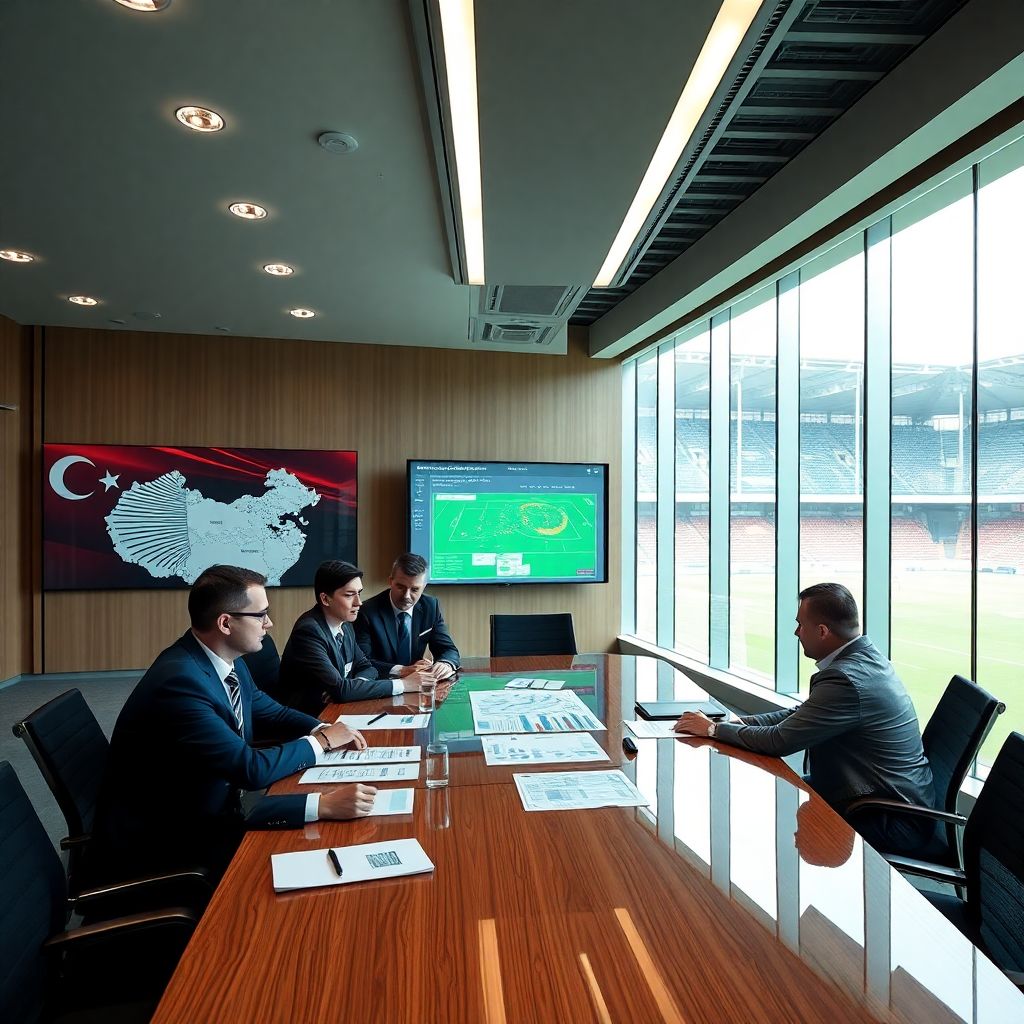
The Süper Lig can close part of the gap to Europe’s top leagues by upgrading governance, enforcing financial discipline, investing aggressively in youth development, and modernising its media and fan products. Focus on smaller, realistic reforms: clearer rules, predictable revenue-sharing, academy standards, smarter scheduling, and targeted international branding instead of risky short-term spending.
Strategic summary: priority reforms for immediate impact
- Separate league governance from club politics with clear, stable rules and transparent decision-making.
- Introduce enforceable financial controls: medium-term licensing, wage-to-revenue guardrails, and ownership vetting.
- Standardise academies and coaching pathways, tying league revenues to youth development KPIs.
- Repackage turkish super lig tv rights and live streaming deals with digital-first products and fan-engagement incentives.
- Align competition format and calendar with UEFA windows to improve club performance and player recovery.
- Build a coherent international brand, linking transfers strategy with turkey super lig sponsorship and advertising opportunities.
- Use safe, stepwise pilots (2-3 seasons) before scaling any structural reform across the league.
Modernising league governance and commercial structures
Governance problem: politicised decisions and short-termism
Problem. Frequent rule changes, ad‑hoc decisions, and political pressure reduce trust among clubs, investors, and broadcasters. This uncertainty discourages long-term investment and makes super lig club investment and ownership opportunities less attractive to serious, professional owners.
Proposal (1-2 years).
- Create an independent Süper Lig company with a professional board (club reps plus independent experts) operating under a published charter.
- Fix a multi‑year regulatory calendar (e.g. no mid‑season rule changes except for safety or UEFA mandates).
- Require transparent publication of all key league decisions, votes, and disciplinary explanations.
Expected metrics. Fewer legal disputes and appeals, longer average contract duration with sponsors and broadcasters, and more bidders in tenders for turkey super lig sponsorship and advertising opportunities.
Benchmark. The Premier League’s separation from the FA created a clear commercial entity, while the Bundesliga’s DFL structure combines club influence with independent management and predictable frameworks.
Commercial structure problem: fragmented rights and weak centralisation
Problem. Clubs negotiate too many deals individually, weakening collective bargaining power and creating inconsistent brand positioning for the league as a whole.
Proposal (1-2 years).
- Centralise domestic and international media rights, official data, and core sponsorship categories at league level.
- Allow clubs to sell only secondary, non-conflicting assets (local sponsors, matchday packages) within a clear rulebook.
- Design revenue-sharing bands that reward performance and commercial effort without destroying competitive balance.
Expected metrics. Higher combined value of central rights, more coherent branding across stadia and broadcasts, and shorter negotiation cycles with global partners.
Benchmark. LaLiga’s shift to centralised TV rights and a unified international marketing arm significantly improved media value and global recognition, without removing club personality.
Financial competitiveness: sustainable ownership, revenue sharing, and wage controls
Infrastructure and tools required for reform
To make financial reforms effective and safe, league and clubs need several concrete tools and access points.
- Central financial monitoring unit. A small professional team at league level to collect club financial data, run risk analyses, and coordinate with auditors.
- Standardised reporting template. All clubs use the same chart of accounts and quarterly reporting, enabling like‑for‑like comparison and early warning signals.
- Licensing and sanction framework. Clear rules linking participation, squad size limits, or transfer restrictions to financial compliance.
- Club education and advisory support. Workshops and one‑to‑one support on budgeting, cashflow planning, and debt restructuring so reforms do not break vulnerable clubs.
Ownership and investment: attracting stable capital
Problem. Short-term owners and opaque funding structures create volatility, delayed wages, and reputational damage for the league.
Proposal (1-2 years).
- Introduce a fit‑and‑proper owner test focused on source of funds, business plan, and governance structure.
- Require any new owner to submit a 3-5 year funding plan, including commitments to academy and infrastructure spending.
- Create a league-level guide for super lig club investment and ownership opportunities to attract institutional investors, family offices, and strategic partners.
Expected metrics. Fewer ownership changes, reduced late payment incidents, and more investments in training facilities instead of only first-team wages.
Benchmark. The Premier League and Ligue 1 strengthened their owners’ tests and reporting requirements, making the environment safer for players, staff, and long-term investors.
Wage controls and revenue sharing
Problem. Salary spending often grows faster than revenues, creating chronic deficits and dependence on short-term player sales.
Proposal (2-5 years).
- Phase in a soft wage‑to‑revenue guideline (for example: bands where clubs exceeding a threshold face restrictions on new registrations).
- Link a portion of central revenues to compliance with financial and youth-development KPIs.
- Design a revenue-sharing model that guarantees a safety floor for smaller clubs while still rewarding European performance and audience size.
Expected metrics. Gradual decline in aggregate operating losses, more predictable wage bills, and fewer emergency sales of key players.
Benchmark. LaLiga’s squad cost limits system, tied to club income, offers a practical blueprint that has stabilised many mid‑table clubs.
Raising player development: academies, coaching standards and youth pathways

This section focuses on a safe, practical sequence of reforms that clubs and the league can adopt together.
-
Define minimum academy standards
Set a basic rulebook covering facilities, staff, safeguarding, and education support for all age groups.
- Pitch quality and indoor training access for bad-weather days.
- Medical screening protocols for youth players.
- Schooling partnership agreements with local education providers.
-
Certify and upskill coaches
Map current coaching qualifications and introduce a pathway from grassroots to elite youth licenses, with regular refresh courses.
- Offer subsidised coaching courses linked to league licensing.
- Share modern training curricula centrally, translated and adapted to local context.
-
Create clear youth-to-first-team pathways
Reduce the gap between academy and senior level with structured steps that minimise risk for both player and club.
- Under‑21 or B‑team competitions aligned with first-team calendars.
- Safe loan frameworks to lower-tier clubs with agreed playing-time expectations.
-
Align incentives with playing time for domestic talent
Reward clubs that give real minutes to locally trained players instead of relying only on foreign signings.
- Financial bonuses from central pools for minutes played by club-trained players.
- Solidarity mechanisms within the league for long-term player development.
-
Implement tracking and data feedback
Collect standardised data on youth players’ physical, technical, and psychological progression, always respecting privacy and ethical standards.
- League-level database accessible to clubs’ academy staff.
- Regular reports to parents and players to support safer long-term development choices.
Expected metrics. Increased number of academy graduates in first-team squads, higher transfer income from homegrown players, and fewer failed transitions from youth to senior level.
Benchmark. Ajax and Benfica show how consistent academy standards, aligned pathways, and patient integration can produce competitive teams and sustainable transfer income.
Fast-track mode: condensed academy reform checklist

For clubs or league officials needing a rapid, low-risk starting point:
- Agree on a league-wide academy rulebook and certify all academies against it.
- Prioritise coach education: fund licenses and standard curricula before heavy infrastructure spending.
- Launch a unified U‑21 competition with clear rules on over‑age players.
- Introduce financial bonuses tied to minutes played by club-trained players.
- Start a simple, privacy‑respecting data system for tracking youth progression across clubs.
Broadcasting, digital rights and fan engagement models
Quality control for media and fan reforms
Use this checklist to verify whether new approaches to media, turkish super lig tv rights and live streaming deals, and engagement are actually working.
- Media rights packages are clearly segmented (domestic vs international, linear vs digital) with simple, understandable terms for fans.
- Average match broadcast quality (production, graphics, commentary) is consistent across all fixtures, not just big derbies.
- Official league and club apps or platforms provide safe, legal streaming options, reducing dependence on piracy.
- Fan feedback channels (surveys, social media analysis) are regularly reviewed before renewing or changing broadcast partners.
- super lig ticket prices and season tickets for top clubs are coordinated with TV schedules to avoid half‑empty stadia in prime slots.
- Clear separation between editorial content and commercial integrations, especially where best super lig betting sites and odds comparison content appears, ensuring responsible gambling standards.
- International fans can access at least one official English‑language product (highlights, social feeds, or commentary) without unsafe workarounds.
- Clubs use match data and fan behaviour insights to improve stadium experience (entry times, catering, family sections) while respecting privacy rules.
- Experimentation with new formats (behind‑the‑scenes shows, tactical analysis, fan forums) is done via small pilots with pre‑defined safety and quality criteria.
Benchmark. The Premier League’s multi‑platform strategy and the Bundesliga’s focus on stadium atmosphere and safe fan culture offer practical references for balancing TV value with matchday experience.
Competition format, scheduling and European qualification optimisation
Recurring mistakes that reduce competitiveness
Avoid these common errors when adjusting competition format and calendar.
- Changing league size or relegation rules too often, which confuses fans and undermines long‑term planning.
- Scheduling intense run‑ins for top clubs immediately before key UEFA fixtures, increasing injury risk and fatigue.
- Creating overly complex play‑off or play‑out systems without clear communication or fan education.
- Ignoring climate, travel distance, and local events when planning fixtures, leading to unsafe or low-attendance matches.
- Overloading domestic cup schedules without aligning them with league and European commitments.
- Allocating European qualification in ways that do not reward sustained performance (e.g. one‑off cups overshadowing league consistency).
- Scheduling derbies and high‑risk matches at times that strain policing, security, and public-transport systems.
- Failing to run small pilots (for example, testing a new play-off format in a secondary competition) before making permanent changes.
- Not involving players’ unions and medical experts in discussions on winter breaks, mid‑week rounds, and pitch conditions.
Benchmark. The Belgian Pro League’s phased experiments with play‑off formats, and the Scandinavian leagues’ adaptation to climate via calendar shifts, show how to test and refine structural changes safely.
International branding, transfers strategy and partnership ecosystems
Alternative pathways to global relevance
Clubs and the league have multiple options; choosing the right one depends on budget, risk appetite, and long-term vision.
-
Player-development export model
Focus on producing and selling high-potential players while staying competitive domestically.
Best when clubs have strong academies, patient ownership, and established scouting networks. Works well with multi-club partnerships and data-driven recruitment models seen at clubs like Red Bull Salzburg.
-
Destination league for selected markets
Position the Süper Lig as an attractive destination for talent from specific regions (e.g. Africa, Balkans), offering exposure and a stepping stone to top‑five leagues.
Effective when paired with targeted turkey super lig sponsorship and advertising opportunities in those regions and clear, secure work-permit processes.
-
Diaspora and tourism-focused strategy
Leverage the Turkish diaspora and football tourism by building tailored media products, pre‑season tours, and partnerships with travel operators.
Suitable when clubs and league can guarantee safe, welcoming stadium experiences and reliable schedules for visiting fans.
-
Strategic club and league alliances
Form long-term collaborations with European clubs and leagues for joint academies, tournaments, and knowledge exchange.
Best when there is clarity on shared objectives (player development, commercial reach) and protection of local identity and governance autonomy.
Benchmark. The Eredivisie’s role as a development league, combined with individual club partnerships across Europe, demonstrates how a non-top‑five league can stay relevant and financially sustainable without overreaching.
Rapid answers to implementation doubts
How can reforms start if some clubs resist change?
Begin with voluntary pilot programs and incentives instead of immediate punishment. Offer financial or sporting benefits for early adopters, then gradually integrate successful measures into mandatory regulations once value is proven.
Will stricter financial rules make the league less attractive for star players?
Well-designed rules shift spending from unstable, short-term wages to sustainable packages and infrastructure. The aim is not to remove star players but to ensure they join a more stable, credible competition.
Are youth development reforms realistic for smaller clubs with limited budgets?
Yes, if standards focus first on safe environments, coach education, and basic facilities. The league can co‑fund shared services (scouting, sports science) so smaller clubs benefit without unsustainable costs.
How risky is it to change competition format or introduce play-offs?
The main risk comes from large, sudden changes without testing. Use small pilots, clear communication with fans, and external evaluation before locking any new format into the long-term calendar.
Can betting partnerships be used without harming the league’s reputation?
Yes, provided the league sets strict responsible-gambling standards, controls where best super lig betting sites and odds comparison content appears, and protects minors from direct targeting. Transparency and clear rules reduce reputational risk.
What if international branding fails to attract new fans?
Focus on learning rather than immediate success: track which markets and content types respond best and adjust quickly. Start with low-cost digital experiments before committing to expensive tours or large campaigns.
How long before these reforms show visible results?
Governance and financial stability can improve within 1-2 seasons if rules are enforced consistently. Academy and international branding payoffs are slower, typically several seasons, but they create deeper, more sustainable advantages.