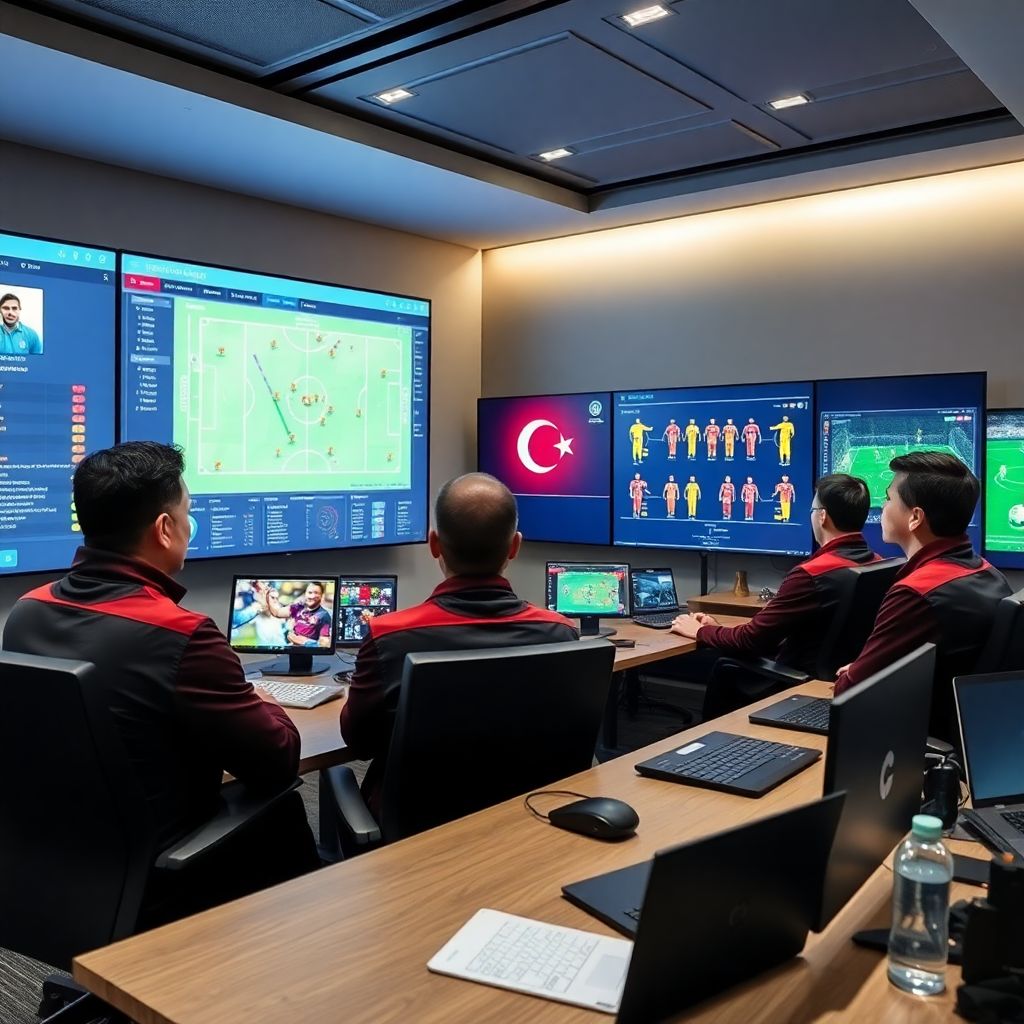
Data-driven football in Turkish clubs means using structured match, training, and recruitment data to support daily decisions instead of relying only on intuition. Start with a lean infrastructure audit, define clear tactical and recruitment questions, pick fit-for-purpose tools, and then embed simple, repeatable analytics routines into coaching, scouting, and boardroom workflows.
Core analytics insights for Turkish clubs
- Begin with a focused data audit; do not buy new tools before understanding current GPS, video, and medical data quality.
- Use football performance data software for clubs that integrates with existing GPS and video providers instead of creating isolated dashboards.
- Limit KPIs to the 8-15 metrics that coaches and scouts can actually use in weekly meetings.
- For mid-table Süper Lig teams, start with basic chance quality, pressing, and physical output trends before complex models.
- Combine internal analysts with external football data analytics services for clubs when local capacity is limited.
- Validate any new metric against coach perception and video clips before letting it drive transfer or contract decisions.
Data audit and infrastructure checklist for Süper Lig teams
Analytics work best for clubs that already capture consistent GPS, video, and squad information and have at least one staff member able to work with data. It is usually not worth a full programme if your head coach openly resists any use of numbers or your ownership expects instant transfer miracles.
Use this checklist to understand where you are before calling in Turkish football clubs analytics and data services:
- List data sources: GPS, heart-rate, video event data, tracking data, injury and medical logs, training attendance, contract and salary data.
- Check ownership and access rights: who controls each dataset (club, league provider, third party, agent, or external platform).
- Review basic data hygiene: consistent player IDs, positions, match IDs, competition names, and time zones across systems.
- Audit storage: where files live (laptops, shared drive, cloud), backup frequency, and what happens when staff leave the club.
- Assess hardware: analyst laptops, storage capacity, video capture quality, GPS units, and Wi‑Fi coverage in training ground and stadium.
- Map workflows: how coaches currently receive information (WhatsApp, printed PDFs, video meetings, cloud folders).
- Identify quick wins: one or two existing reports that could be automated or simplified without new purchases.
Must-check before deploy: Confirm you can retrieve one full season of match, GPS, and squad data for your first team in a consistent format before commissioning new sports analytics consulting for football teams.
Building a performance data pipeline: steps and tools
To turn raw information into usable insights, you need clear connections between collection, storage, processing, and delivery. Most Turkish clubs can start with relatively simple tools if the pipeline is well designed.
- Define key users and decisions: head coach, assistant, fitness coach, head of recruitment, academy director, and board.
- Choose a central storage location: secure cloud folder or database where all football performance data software for clubs can connect.
- Select ETL tools (Extract, Transform, Load): from simple spreadsheets and scripts to off‑the‑shelf analytics platforms.
- Standardise identifiers: unique player codes from academy to first team, consistent club and league IDs, and minute-by-minute time stamps.
- Automate regular imports: set schedules after each match, training session, and transfer window update.
- Decide on visualization: BI dashboards, simple PDFs, or video overlays, depending on coach preference and language comfort.
- Plan permissions: separate views for technical staff, medical staff, and board to avoid confusion or data misuse.
Example: a mid-size Istanbul club routes GPS and event data into a central cloud folder, then uses light scripting and dashboards to create standard weekly reports for staff, instead of every coach building their own Excel files.
Must-check before deploy: Test the pipeline end-to-end after one friendly match; confirm that within 12-24 hours, staff can see updated metrics without manual copying and pasting.
On-pitch analytics that directly inform tactical choices
Prepare the groundwork before you start using analytics to change tactical behaviour:
- Agree with coaches on 3-5 recurring tactical questions (pressing, build‑up, set‑pieces, transitions).
- Ensure video and event data are aligned for at least your last 10 matches.
- Set a fixed weekly meeting where data is reviewed alongside video, not separately.
- Clarify who has authority to turn insights into training drills (usually the assistant coach).
- Define non-negotiable tactical principles
Document key principles for and against the ball: pressing trigger zones, build‑up structure, and preferred chance creation zones. Analytics must answer whether you are actually playing the way you intend, not chase random patterns. - Build a minimal match analysis template
Create a short, repeatable template with 8-12 tactical indicators: shot quality, box entries, pressing intensity by zone, progression routes, and set-piece outcomes.- Use the same template for each league match to see trends.
- Include 2-3 clips per key metric to connect numbers with pictures.
- Connect metrics to specific training drills
For each tactical issue (e.g., conceding counters), link 1-2 clear metrics to target in the next microcycle and design drills that mirror those situations. The analyst should help select and tag clips that illustrate successful and unsuccessful examples. - Plan opponent-specific adaptations
Use recent opponent data to highlight their main strengths and weaknesses in a one-page scouting report. Focus on 3-4 actionable ideas: where to press, which zones to overload, and which players to direct play away from. - Integrate feedback from staff and players
After each match, collect quick feedback from coaches on what felt important and check whether the data confirms or challenges it. Use this loop to refine which KPIs stay, change, or are dropped. - Standardise delivery rhythm
Agree a fixed weekly rhythm: post‑match report + clips, opponent preview, and pre‑match set-piece plan. Stick to the same format so staff know where to look for information.
Example: a Black Sea-region club set a simple rule that every major system change (back three vs. back four) must be supported by trend data on chance quality and buildup stability from the last five matches, plus video clips illustrating the issues.
Must-check before deploy: Verify that each tactical recommendation in your reports is directly traceable to 1-2 clear metrics and linked video clips, and that the head coach signs off on these before they reach players.
Recruitment and scouting: embedding metrics into transfer workflow
An effective recruitment process blends data-driven scouting solutions for football clubs with live reports and character checks, rather than replacing scouts.
- Every position has a short profile document describing required physical, technical, tactical, and age/contract parameters.
- Shortlists are generated from data first, then filtered by scouting, not the other way around.
- Each player on the shortlist has a standard data page: usage, playing style, risk flags, and suitability to your league.
- Subjective scout ratings are captured in a consistent scale and stored with data, not in private notebooks.
- Video review always happens before live scouting trips, using clips tailored to the player’s profile.
- Medical and injury risk information is integrated early, not at the final negotiation stage.
- Budget and wage structure limits are visible to analysts and scouts to avoid unrealistic targets.
- Post‑transfer reviews are scheduled: six and twelve months after signing, with both data and coach feedback.
- At least one local and one external comparison is made for each target (e.g., alternative player in TFF 1. Lig).
- External football data analytics services for clubs are used only where internal data is incomplete or staff capacity is overloaded.
Example: a mid-table Anatolian club requires that final striker targets rank in the upper band of expected chance contribution among peers, but must also be validated by at least two independent scout reports.
Must-check before deploy: Ensure no player can be signed without appearing in both the data shortlist and at least one structured scouting report using the agreed template.
Matchday decision protocols: using real-time feeds and staff responsibilities
Real-time data can be useful on matchday, but only if roles and limits are clearly defined. Many Turkish clubs overcomplicate things by flooding the bench with unfiltered numbers.
- Assigning an analyst to the bench without clear authority or communication rules, leading to confusion.
- Trying to track too many metrics live instead of 3-5 critical ones aligned with game plan.
- Allowing phones and unofficial apps to become primary sources of information on the bench.
- Changing substitution plans based on small sample live metrics without video confirmation.
- Ignoring context such as weather, pitch, or refereeing when interpreting physical output data.
- Letting real-time feeds contradict agreed pre‑match strategy without proper discussion.
- Failing to rehearse the communication flow between analyst, assistant, and head coach.
- Not defining what is sent at half-time and who filters it, creating information overload.
Example: one Süper Lig club limits real‑time input to two channels: live physical load alerts to the fitness coach and simple shot/box-entry summaries to the assistant, who then decides what to pass to the head coach.
Must-check before deploy: Run at least one full rehearsal with real-time feeds during a friendly, confirming that each message sent from the analyst box leads to a clear, pre‑defined action or decision option.
Measuring ROI: KPIs, adoption milestones and validation checks
Not every club needs a large internal analytics department; there are several viable models depending on budget, league position ambitions, and existing staff skills.
- Lean internal analyst with selective external support
One in‑house analyst focuses on workflows and communication, while using targeted Turkish football clubs analytics and data services for complex modelling, opposition analysis in Europe, or custom tools. - External sports analytics consulting for football teams as primary driver
Suitable for smaller clubs or newly promoted sides with limited staff, where an external partner manages data pipelines and reporting, and the club focuses on implementation and feedback. - Coaching-staff-led analytics with lightweight tools
In resource-constrained environments, assistant coaches use simple dashboards and reports provided by league data packages without building a full data team. - Shared services model across multi-club structures
Groups of clubs share one central analytics unit that serves all teams, with standard reports customised per league and style.
Example: a smaller Istanbul club might initially rely on league data and a part-time consultant to set up core reports, then gradually internalise more tasks as staff skills grow.
Must-check before deploy: Choose a model where at least one staff member inside the club has clear ownership of data workflows and can translate analytics outputs into football language for coaches and executives.
Typical implementation obstacles and concise solutions
How can we start without hiring a full analytics department?
Begin with one part-time analyst or a staff member with data interest and outsource specialised tasks to football data analytics services for clubs. Focus on two or three priority workflows: post‑match reports, recruitment shortlists, and basic squad monitoring.
What if our head coach does not trust numbers?
Start by pairing data with video clips and language the coach already uses. Use analytics only to support existing principles at first, then gradually introduce new metrics that clearly explain on-pitch realities.
Which tools are safest for a club with limited IT support?
Prefer cloud-based platforms that integrate with your data providers and offer simple dashboards rather than complex local installations. Avoid custom code until you have stable workflows and at least one staff member comfortable maintaining scripts.
How do we avoid overloading players with data?
Share only 3-5 key points with players, always tied to video examples and clear actions. Keep numerical details within staff documents and use simple, consistent visuals for dressing-room communication.
Can analytics really help with transfers in the Turkish market?
Yes, especially by comparing foreign targets to realistic local options and understanding league adaptation risk. Combine data-driven scouting solutions for football clubs with structured live scouting and character checks to reduce expensive mistakes.
What is the minimum data quality we need to make decisions?

You need consistent player and match IDs, clear time stamps, and at least one full season of reasonably complete data. If this is not available, prioritise building stable collection processes before attempting complex analysis.
How often should we review our analytics setup?
Conduct a light review each pre-season and winter break to adjust KPIs, workflows, and tool choices based on staff feedback and club strategy changes. Revisit bigger structural choices when key staff or coaching philosophy changes.