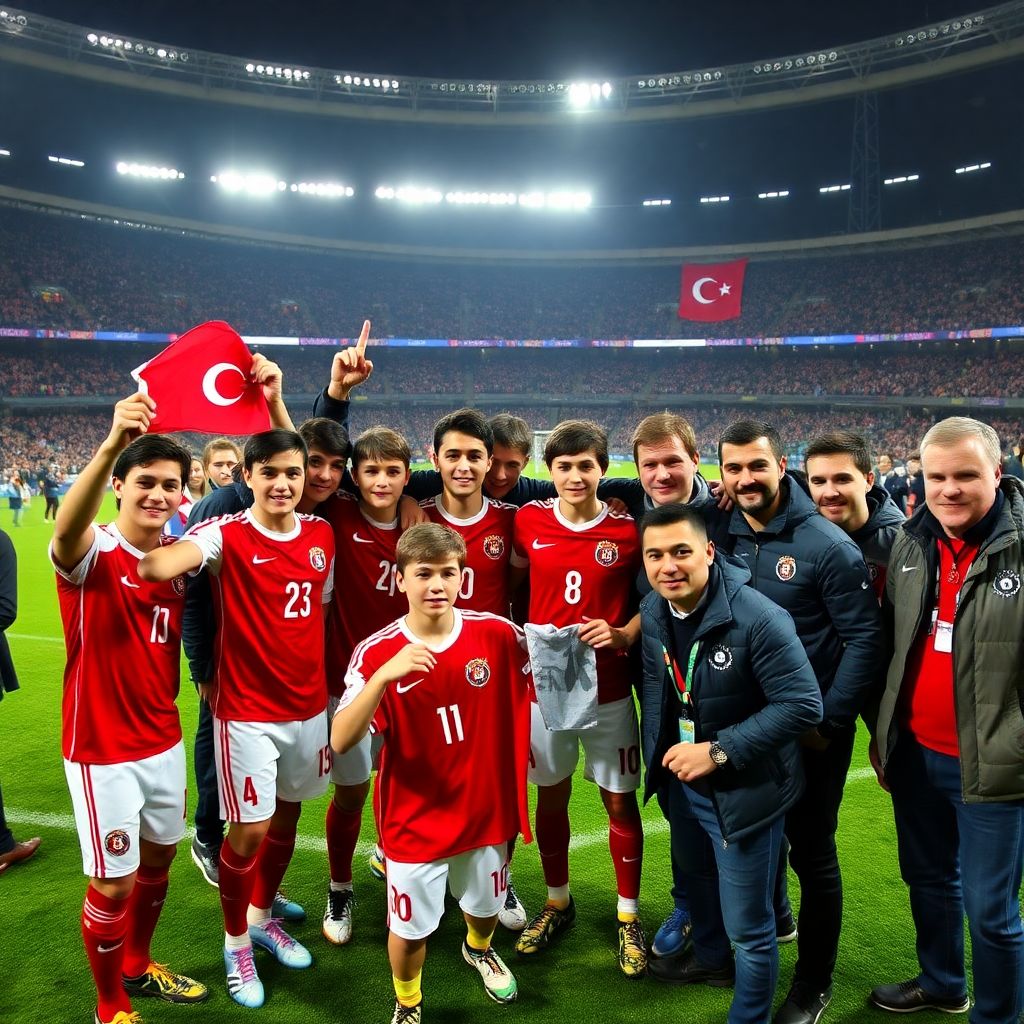
Young Turkish talents in European leagues are increasingly important export assets for Süper Lig clubs, combining strong technical schooling with competitive mentality and dual‑nationality advantages. For clubs, agents and players, understanding how young Turkish football talents in Europe are scouted, transferred and developed is now a core competency, not a niche opportunity.
Core insights on Turkey’s emerging football exports
- The best young Turkish players in European leagues benefit from early tactical schooling in Turkey followed by physical and positional refinement abroad.
- Scouting is now highly systematised: live views, data, video and detailed Turkish football talents scouting reports drive decisions.
- Dual passports and EU upbringing often make the next big Turkish football stars in Europe administratively easier to sign.
- Market value grows fastest when a clear development plan and smart loan strategy are defined before the first move.
- Mismanaged early transfers and unrealistic expectations remain the main reasons many promising profiles never become Turkish wonderkids transfer news success stories.
From Süper Lig academies to Europe: historical pathways and turning points
The rise of young Turkish football talents in Europe can be understood as a gradual shift from occasional individual exports to a sustained, structured flow of players. Historically, Turkish stars went abroad late in their careers, after proving themselves in the Süper Lig and in European competitions with big Istanbul clubs.
Today the pattern is different. European clubs target players earlier, sometimes directly from Turkish youth academies, sometimes from diaspora academies in Germany, the Netherlands, Belgium or France. For Turkish clubs, this creates both risk (losing players cheaper) and opportunity (positioning as a talent‑development hub that sells efficiently).
In practice, the pathway now usually follows three broad routes:
- Direct Süper Lig export: A player establishes himself as a starter in Turkey, performs well in Europe or for the national team, and is sold to a top‑five league.
- Youth export from Turkey: A teenager leaves a Süper Lig or 1. Lig academy for a European club, often into a U19 or B‑team structure.
- Diaspora‑to‑Turkey‑to‑Europe cycle: A player trained in Germany or another European country joins a Turkish club, gains first‑team minutes, then returns to Europe on a bigger contract.
Understanding these routes helps clubs, agents and families decide when and how to move. The definition of success is not just a big transfer fee, but a pathway where the player’s minutes, role and learning curve grow step by step.
Scouting pipelines: how European clubs identify and recruit Turkish prospects
European clubs use layered systems to spot and validate Turkish prospects before they appear in headlines as the best young Turkish players in European leagues. Typical pipeline elements include:
- Data pre‑filtering: Analytics teams scan Süper Lig, 1. Lig and U19 leagues for age, minutes, actions per 90 and position‑specific metrics.
- Video scouting: Analysts then review 5-10 full matches to judge decision‑making, movement, pressing intensity and mentality under pressure.
- Live observation: Scouts travel to priority fixtures, national youth team games and tournaments, building a contextual Turkish football talents scouting report.
- Background checks: Clubs speak with former coaches and staff about professionalism, family situation, injury history and adaptability to living abroad.
- Trial periods or training visits: Some clubs invite the player for a week to test training intensity, language comfort and tactical understanding.
- Negotiation with multiple stakeholders: Especially in Turkey, clubs must align with parents, agents, academy directors and sometimes third parties before signing.
- Post‑signing integration plan: Serious clubs define where the player will live, study language, and how he will be moved between U19s, B‑team and first team.
For agents and families, the lesson is simple: the polished media narrative that appears in Turkish wonderkids transfer news is the end result of months of structured evaluation, not a spontaneous discovery.
Applied mini‑scenarios for scouting pipelines
Scenario 1: A 17‑year‑old Süper Lig full‑back is flagged by data for high progressive runs. A German club’s analyst compiles video, the head scout watches a U19 international live, and within three months the player signs, starting in the U23s with a clear promotion timeline.
Scenario 2: A diaspora midfielder in the Netherlands chooses Turkey’s U18 national team. His performances trigger interest from Süper Lig clubs, who propose a fast‑track to first‑team minutes that Dutch clubs currently cannot guarantee. Within two seasons in Turkey he is ready for a move back to Western Europe.
Technical and tactical profiles: common strengths of young Turkish players
Young Turkish talents who succeed abroad tend to share recurring technical and tactical traits that make them attractive for European systems. These strengths define which roles they can realistically win in competitive squads and how they are evaluated as the next big Turkish football stars in Europe.
-
Creative attacking midfielders and wingers
Turkish academies traditionally produce players with close control, flair on the ball and combination play between the lines. In Europe, these profiles are used as:- Inverted wingers cutting inside to create and shoot
- Number 10s in 4‑2‑3‑1s where defensive work is well‑structured
- Flexible interiors in 4‑3‑3s, attacking half‑spaces
-
Ball‑playing central midfielders
Many successful exports act as deep or box‑to‑box midfielders with strong passing range. Typical applications:- Controllers in possession‑dominant systems
- Relays between defence and attack in transition‑heavy teams
- Press‑resistant pivots when surrounded by strong physical profiles
-
Technically secure full‑backs
Turkish full‑backs are often comfortable on the ball and willing to overlap or invert. They fit:- As wide, high full‑backs in attacking 4‑3‑3 shapes
- As inverted full‑backs stepping into midfield in build‑up
- As wing‑backs in back‑three systems, exploiting their crossing ability
-
Mobile forwards and second strikers
Forwards who drop to link play and attack channels tend to adapt well, especially when supported by physical target men or fast wingers. Use cases:- As pressing forwards in high‑energy systems
- As second strikers connecting midfield and attack
- As wide forwards attacking the far post against low blocks
-
Intelligent defenders with room to grow physically
Centre‑backs with anticipation, reading of the game and good passing can thrive once they add strength and speed. European clubs often:- Start them in U23 or B‑teams to build physique
- Loan them to more direct leagues for aerial and duelling experience
- Convert them into full‑backs or defensive midfielders if mobility is an issue
Transfer frameworks and eligibility: work permits, loans, and FIFA rules
Getting young Turkish football talents in Europe onto the pitch is as much about regulations as it is about ability. Understanding transfer mechanics helps avoid stalled careers and wasted seasons.
Regulatory advantages and practical upsides
- Dual nationality leverage: Many Turkish prospects have EU passports via family routes, which simplifies work permits and squad registration quotas.
- Loan pathways from big clubs: European giants may sign young Turks early, then use structured loans to mid‑table teams to guarantee minutes.
- FIFA training compensation and solidarity: Turkish academies receive payments when former players sign abroad, rewarding long‑term development work.
- Early exposure to top coaching: For technically gifted but tactically raw players, early moves can accelerate learning under high‑level staff.
- Brand and market synergy: A successful Turkish star can boost a foreign club’s commercial presence in Turkey and among the diaspora.
Constraints, risks and compliance issues
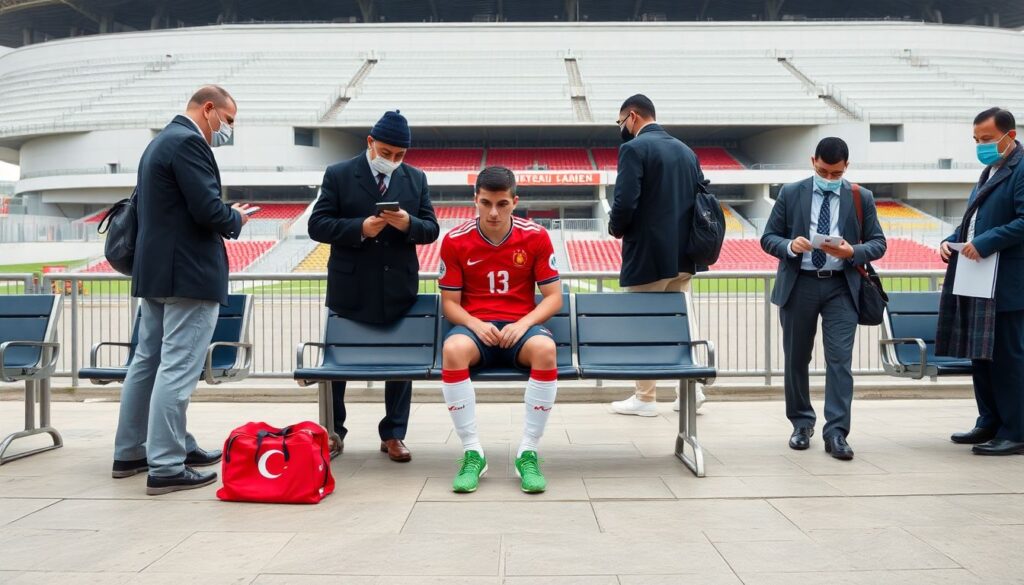
- Work‑permit thresholds in some countries: Non‑EU Turkish players without dual passports may struggle to obtain permits in leagues with strict criteria.
- Non‑homegrown quotas: Clubs must balance foreign‑player limits, sometimes reducing patience for long‑term development projects.
- Overuse of short‑term loans: Repeated one‑year loans without a clear end‑destination can stall adaptation and confidence.
- FIFA minor protection rules: Cross‑border transfers under 18 are tightly restricted, limiting how early some moves can happen.
- Contractual complexity: Sell‑on clauses, buy‑backs and performance bonuses can complicate future moves if drafted without long‑term vision.
Mini‑scenario: navigating a first move abroad
Imagine a 19‑year‑old Süper Lig winger with no EU passport. A mid‑table club in a top‑five league is interested but work‑permit rules are tight. Instead of forcing that transfer, the agent organises a move to a league with easier non‑EU rules, including a buy‑out and a clear performance plan. After two strong seasons and national‑team appearances, work‑permit points and market leverage align for a bigger move.
Impact analysis: performance case studies across top European leagues
Real‑world experiences of young Turkish players abroad reveal recurring patterns of success and failure. Studying these patterns helps interpret Turkish wonderkids transfer news beyond hype and highlight reels.
-
Successful step‑by‑step integration
Players who joined European clubs at 17-20 and spent one season in youth or B‑teams before gradual first‑team exposure often stabilised as regulars. The key factor was a shared plan between club, player and agent about minutes and position. -
Jumping too high, too fast
Some highly rated prospects moved directly to Champions League clubs without a realistic path to playing time. After two seasons of sparse minutes and late‑game cameos, they were loaned repeatedly, losing identity and confidence. -
Positional mismatch with league style
Creative number 10s who relied on time on the ball sometimes struggled in high‑tempo, physical leagues that pressed aggressively. Those who adapted by learning to play as wide forwards or deeper midfielders extended their careers; others faded into second divisions. -
Underestimating cultural and language adaptation
Even the best young Turkish players in European leagues needed support off the pitch: language classes, family integration, and realistic media expectations. Where clubs invested in this, performance curves were much more stable. -
Returning to Turkey too early
After a difficult first season abroad, some players returned home permanently instead of accepting a smart loan or lateral move within Europe. This often capped their long‑term ceiling at domestic‑league level.
Practical development moves for Turkish clubs, agents and players
Transforming potential into stable careers requires coordinated decisions from all parties involved in young Turkish football talents in Europe. Below is a practical, step‑by‑step perspective that stakeholders can adapt.
For Turkish clubs: building sustainable export models

- Define a clear academy game model that mirrors modern European tactics and positional profiles.
- Track players’ development using simple, transparent metrics (minutes, positions played, key actions).
- Engage early and honestly with families about realistic pathways and likely destination leagues.
- Negotiate sell‑on and buy‑back clauses that protect upside without blocking the player’s progression.
- Maintain relationships with destination clubs to monitor playing time and support the player remotely.
For agents: structuring transfer trajectories
- Start every Turkish football talents scouting report with the question: what is the player’s realistic ceiling and timeline?
- Prioritise clubs with a proven record of integrating youngsters, not just big names.
- Plan two moves ahead: the first club in Europe, and the likely next level once the player proves himself.
- Protect the player from overexposure in media, especially when labelled among the next big Turkish football stars in Europe.
- Regularly review the plan with the player, adjusting based on performances, injuries and personal needs.
For players and families: practical decision checklist
- Clarify the primary goal: fast money, long‑term career, or national‑team visibility.
- Assess whether the destination club’s style matches the player’s strengths today, not just in theory.
- Ensure there is a credible language and education plan alongside football development.
- Ask concretely: which team will I start in, and what needs to happen for promotion?
- Agree on who makes final decisions in moments of pressure: player, family, or agent.
Illustrative mini‑case: a controlled three‑step pathway
Consider a 16‑year‑old attacking midfielder in Istanbul. Instead of chasing immediate moves, he signs a first professional contract with a clear clause for a reasonable future fee. At 18, after 40 senior matches, he moves to a mid‑table club in a development‑friendly European league, starting as a rotation player with targeted minutes.
At 21, with three seasons of consistent playing time and improved physical profile, he is ready for a move to a stronger league. Because the original contract and clauses were structured intelligently, all three clubs and the player benefit financially and sportingly.
Practical answers for clubs, agents and players
How early should a Turkish player consider moving abroad?
The right timing depends on maturity and minutes, not just age. A move under 18 only makes sense if competitive games, education and family support are guaranteed. For many, 18-20 with at least one season of senior football in Turkey is a safer window.
Which European leagues are most suitable for first moves?
Leagues that value technical ability and give youngsters minutes are best: mid‑table teams in the Netherlands, Belgium, Austria, Portugal or Switzerland often provide better development platforms than bigger clubs in top‑five leagues.
How can Turkish clubs protect value when selling young talents?
Use realistic but meaningful sell‑on percentages and, where possible, buy‑back or matching‑offer clauses. Avoid overpricing the first transfer; a slightly lower initial fee with strong upside mechanisms usually creates more total value and goodwill.
What should be in a good individual development plan after transfer?
It should define target position, expected minutes, tactical role, physical objectives and language milestones over 12-24 months. It must also specify whether loans are part of the plan, and under which conditions they are considered a positive step.
How can agents avoid overhyping their players?
Focus on concrete performance milestones instead of media labels. Limit public statements, keep negotiations discreet, and only push for bigger moves once the player has demonstrated consistency across a full season in a competitive league.
Is returning to Turkey after a difficult spell abroad a failure?
Not automatically. A return can be a reset if it is part of a structured plan to regain minutes and confidence. It becomes a failure only when it reflects emotional decisions without a clear long‑term direction.
How important is dual nationality for young Turkish exports?
Dual nationality often simplifies work permits and squad registration, widening the range of possible clubs. However, strong performance and the right tactical fit still matter more than passports in the medium term.