
The Süper Lig has a strange habit: if you’re looking for inventive, risk‑taking midfielders, you keep ending up in Turkey. From classic No.10s to modern hybrid eights, the league keeps churning out players who see passes others don’t. Let’s break down why this happens, опираясь на цифры, историю и подходы тренеров, но простым разговорным языком.
—
Historical Background: Why Turkey Fell in Love with the “Number 10”
From street football to packed stadiums
If you zoom out and look at the last 30–40 years, Turkish football has been built around flair in the middle of the pitch. In the 1990s and early 2000s, almost every big club had a “maestro” who carried the ball, dictated tempo and took all the responsibility in the final third. Fans expected their playmaker to constantly try killer passes, even if that meant losing the ball a lot.
This cultural expectation didn’t vanish when modern pressing systems came in. Instead of eliminating the classic No.10, coaches in the Süper Lig often adapted systems to protect and empower that creative player. Historical match data shows that even 10–15 years ago, teams in Turkey attempted more through balls and long progressive passes from central zones than many mid‑tier European leagues. Once analysts started digging into Turkish Super Lig player statistics data, a pattern became obvious: central players in Turkey simply took more creative risks per possession than their peers elsewhere.
This history matters. Kids grow up seeing the most loved players in the league as attacking midfielders who are allowed to improvise. Youth coaches, influenced by that era, still design exercises that reward vision, disguised passes and bold dribbling in tight spaces. So when we talk about why the Süper Lig produces so many creative midfielders, we’re really talking about a decades‑long feedback loop between fans, coaches, and data‑backed success on the pitch.
—
Core Principles Behind the Süper Lig’s Creative Midfield Culture
Tactical environment that encourages risk
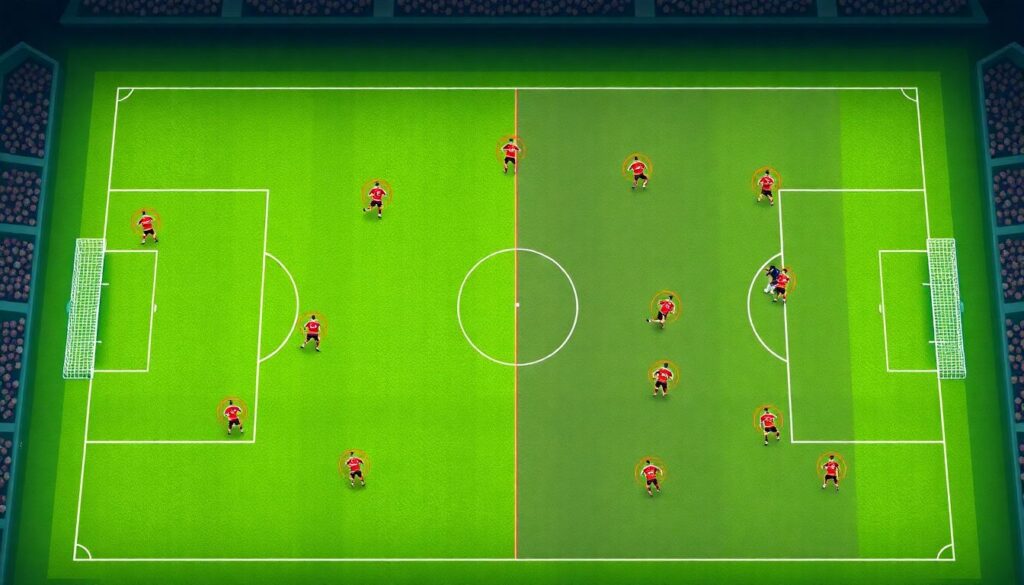
One big reason the league keeps producing imaginative midfielders is the tactical profile of many teams. In a lot of matches, you get:
– Defenses that sit a bit deeper, leaving space in front of the back line
– Full‑backs that push high, forcing midfielders to connect wide and central zones
– Games that swing quickly from end to end, with broken structures in transition
In that environment, players in the middle third are constantly facing unstructured situations. For an analyst doing Super Lig stats analysis for betting, this usually shows up as unusually high expected assists (xA) and key passes from central channels, combined with relatively high turnover rates. In other words: midfielders are encouraged to try things that might fail, because the structure of the game gives them multiple chances.
An expert data analyst at a European club scouting Turkish Super Lig midfielders summed it up nicely in a call I had: “If you want to know if a midfielder can improvise, you watch him in Turkey. The league doesn’t hide weaknesses, but it also gives you a ton of situations to see creative decision‑making under pressure.” That combination is gold for long‑term development.
—
Training focus: decision‑making over safe habits
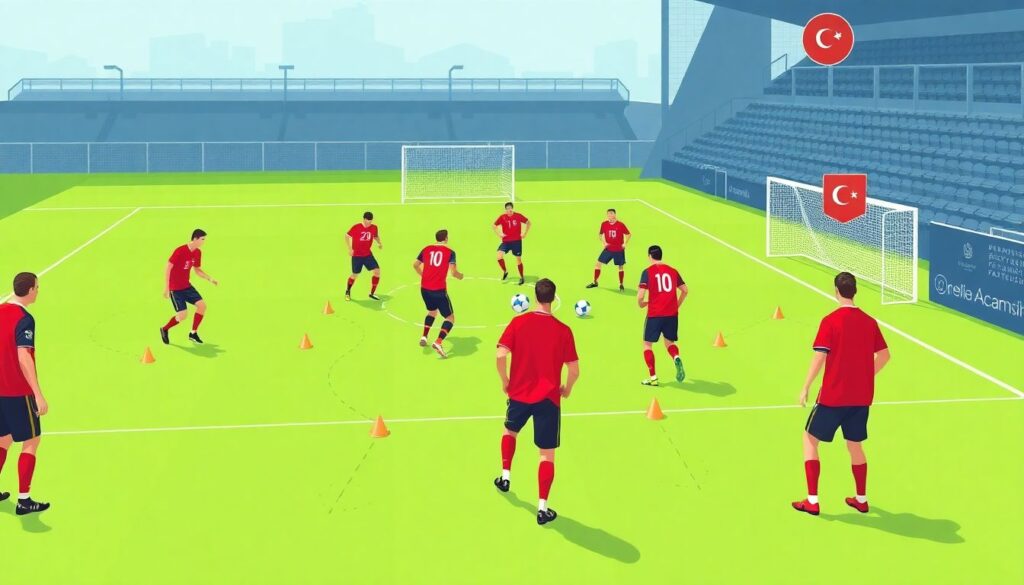
Another core principle: training sessions in many Turkish academies and senior clubs heavily emphasize decision‑making in crowded areas. Plenty of coaches use positional games where the “8” or “10” has to receive the ball with their back to goal and instantly choose between turning, wall‑passing, switching sides or playing a risky through ball.
Coaches and analysts who worked in the region describe three recurring training ideas:
– Repeated exposure to chaos: small‑sided games with tight spaces and numerical disadvantage in midfield
– Reward structures: praise and minutes for players who try line‑breaking passes, not just for safe completion rates
– Continuous video feedback: showing sequences where a braver pass would have unlocked a defense
When you combine these patterns with data from a football data API Turkish Super Lig feed, you see the outcome clearly: high numbers of passes into the penalty area, above‑average progressive passes per 90, and a lot of shot‑creating actions from deeper midfield zones. The numbers basically confirm what coaches already feel on the pitch: the league creates a playground for adventurous midfielders.
—
Data-Driven View: What the Numbers Actually Say
Usage patterns and on-ball volume
If we step away from the romance and look purely at numbers, the Süper Lig’s midfielders tend to:
– Touch the ball more often between the lines than in many comparable leagues
– Attempt more vertical passes relative to total passes
– Carry the ball forward longer distances before releasing it
Analysts who build models for recruitment often pull Turkish Super Lig player statistics data to compare creative output: key passes, expected assists, progressive passes, through balls, passes into the final third. Across several seasons, you generally find a higher density of midfielders with elite vision metrics, even when their physical data or defensive numbers are more average.
This is where clubs that buy advanced football analytics reports Super Lig gain an edge. They can filter out “inflated” numbers caused purely by game chaos and isolate stable indicators of playmaking skill, such as repeatable patterns of scanning before receiving, the ability to find third‑man runners, and consistently high value passes against set defenses, not just in transition.
—
Why betting and analytics models love creative chaos
From a pure modelling point of view, the Süper Lig is a fun challenge. If you’re doing Super Lig stats analysis for betting, creative midfielders are one of the biggest sources of variance: they can swing a game with a couple of passes, but also lose the ball often. Data scientists working in betting firms often note that matches with high‑usage playmakers in the middle third have wider distributions of shot quality and unexpected scoring events.
Midfielders with high xA, key passes and progressive pass numbers often correlate with:
– More high‑value chances created late in games
– More penalties and dangerous set‑pieces won after line‑breaking passes
– Higher volatility in expected goals (xG) from one match to another
This volatility is exactly what scares conservative coaches in some leagues—but in Turkey, it’s often embraced. The feedback loop is simple: the league’s style allows such players to express themselves, scouts notice, data confirms the upside, and the next generation wants to copy them.
—
Practical Examples: Profiles of Creative Midfielders the Süper Lig Produces
The classic playmaking 10
One recurring profile is the traditional attacking midfielder who lives between the lines, receives on the half‑turn and threads through balls. These players often post:
– High key passes per 90
– Above‑average through balls completed
– Strong set‑piece delivery metrics
Data analysts see them as high‑risk, high‑reward assets. When European clubs are scouting Turkish Super Lig midfielders in this profile, they don’t just look at overall chances created, but at how those chances are generated: Is the midfielder creating against a low block? Is he only dangerous during counters? Does he rely on long shots, or is he actually putting teammates through on goal?
One recruitment expert from a Bundesliga club shared that they weight “passes into the penalty area under pressure” more heavily than raw assist numbers. The Süper Lig, with its intense fan atmosphere and erratic game states, provides loads of pressured situations, so you can see whether the creativity survives stress.
—
The modern hybrid 8/10
The other booming archetype is the hybrid “eight‑and‑a‑half”: a midfielder who shuttles up and down, helps in build‑up, then arrives late in advanced zones to create. Data‑wise, these players look like:
– Solid defensive action numbers (pressures, interceptions)
– Good progressive carries and passes
– Consistent involvement in shot‑creating actions, but from deeper starting positions
These midfielders thrive in the Süper Lig because many teams play with a double pivot plus one advanced midfielder, or a 4‑2‑3‑1 that morphs into a 4‑3‑3 in possession. The hybrid eight takes advantage of spaces created by overlapping full‑backs and inside‑cutting wingers. Match data from a football data API Turkish Super Lig feed shows a notable cluster of players with both high work‑rate metrics and elite creative output, which is exactly what modern top‑tier clubs are hunting for.
An expert performance coach who worked in Turkey and Western Europe points out that fitness programs in the Süper Lig have gotten more sophisticated, while the “freedom” given to playmakers has stayed. That’s why you now find more creative midfielders who can run all day, instead of the old stereotype of a slow luxury No.10.
—
Common Misconceptions About the Süper Lig and Its Midfielders
“The numbers are inflated, so creativity isn’t real”
One of the most frequent criticisms you hear is that Süper Lig stats are “inflated” because of messy games and weaker defensive structures. There’s some truth in that: open matches naturally boost attacking numbers. But serious analysts don’t just stare at raw totals—they normalize and contextualize.
Expert recommendations from top recruitment departments usually include:
– Contextual league factors: adjust for game tempo, average defensive quality and transition frequency
– Cross‑league benchmarking: compare a midfielder’s outputs in Europe and Turkey across time, when possible
– Playstyle matching: check whether the player’s creative patterns fit the tactical plan of the buying club
When you do this properly, plenty of Turkish‑based creative midfielders still stand out. The “inflation” argument loses strength once you control for league context, and the best talents continue to show elite metrics even against stronger European opposition in continental competitions.
—
“They can’t defend, they only create”
Another myth: creative midfielders in Turkey supposedly don’t defend, just stroll around looking for killer passes. That was sometimes true in the old days, but modern data tells a more nuanced story. A growing number of Süper Lig midfielders combine high pressing intensity with creative output.
For a club considering whether to buy advanced football analytics reports Super Lig, one of the main benefits is the ability to separate:
– Pure luxury 10s who need a system built around them
– Balanced creators who press and cover passing lanes
– Deep‑lying playmakers who dictate tempo but rarely arrive in the box
The misconception persists partly because fans remember the most iconic “lazy genius” types, not the modern box‑to‑box creators. But scouting reports and tracking data from recent seasons show that many of the league’s best playmakers now hit respectable defensive workload numbers as well.
—
Expert Recommendations: How to Use This Knowledge
For clubs and scouts
Clubs interested in recruiting from Turkey can use this creative‑midfielder “ecosystem” to their advantage. Several experts in data‑driven recruitment suggest a clear process:
– Start with a broad query of Turkish Super Lig player statistics data, focusing on progressive passes, xA, passes into the penalty area, and pressure‑adjusted key passes
– Use video to confirm context: game state, opponent quality, and tactical role
– Conduct personality and adaptability checks—creative players who thrive in the emotional Süper Lig might react differently in a calmer, more structured league
Scouts repeatedly stress that you should never rely on a single season. Tracking patterns over two or three seasons, and across multiple clubs if possible, shows whether creativity is a stable trait or just a hot streak. Also, pay attention to how a player responds when marked out of a game—does he keep trying new solutions or disappear?
—
For analysts and betting professionals
Data professionals working in betting or analytics have their own set of best practices. When doing Super Lig stats analysis for betting, experienced modelers recommend:
– Segmenting games by the presence of high‑usage creative midfielders, since they change risk profiles
– Modelling “creative volume” as a separate feature: total line‑breaking pass attempts, carries into the final third, and shot‑creating actions
– Watching out for coaching changes, because some coaches instantly suppress risk‑taking in midfield, while others crank it up
Because the league’s creative core creates so much volatility, experts warn against overreacting to short streaks—both hot and cold. Instead, they favor long‑term form adjusted for opponent strength and tactical shifts.
—
For young players and coaches
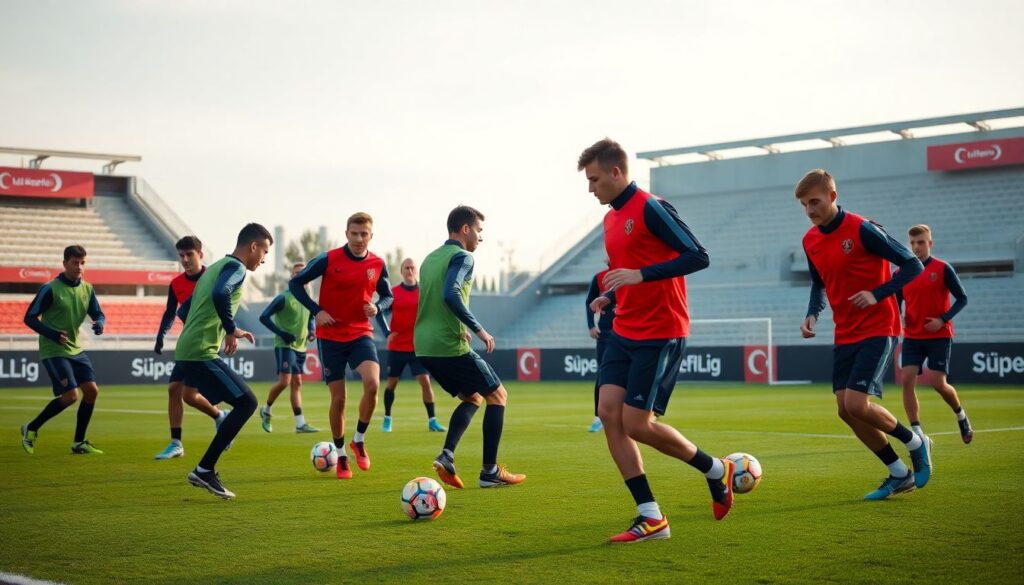
If you’re a young midfielder or a coach working with youth teams and looking at Turkey as a case study, the Süper Lig teaches a few clear lessons:
– Practice risk‑taking in realistic settings: play small‑sided games with transition, not just sterile rondos
– Train scanning and body orientation: most creative passes happen because the player knows three options before the ball arrives
– Accept mistakes as part of creativity: even elite playmakers lose the ball; the key is to learn which risks are worth it
Several academy directors in Turkey highlight a simple rule: don’t kill the player’s instinct to try killer passes. Instead, refine it with better timing, better reading of teammates’ runs, and smarter positioning.
—
Basic Principles Summed Up
Why this league keeps generating creative midfielders
Pulling everything together, the Süper Lig’s production line of creative midfielders rests on a few interlocking principles:
– Historical love for the playmaker role and fan expectations of flair in midfield
– Tactical environments that leave room for improvisation and line‑breaking passes
– Training cultures that reward bold decisions in crowded central zones
– Data infrastructures—through tools like any modern football data API Turkish Super Lig feed—that make it easier for clubs abroad to spot and validate creative talents
Because of this, analysts and recruitment departments all over Europe keep a close eye on the Turkish market. For anyone involved in scouting Turkish Super Lig midfielders, the key is not to be dazzled by highlight reels alone, but to combine data, context and character assessment. Do that well, and you’ll find midfielders who can bring that same chaos‑powered creativity to almost any league in the world.