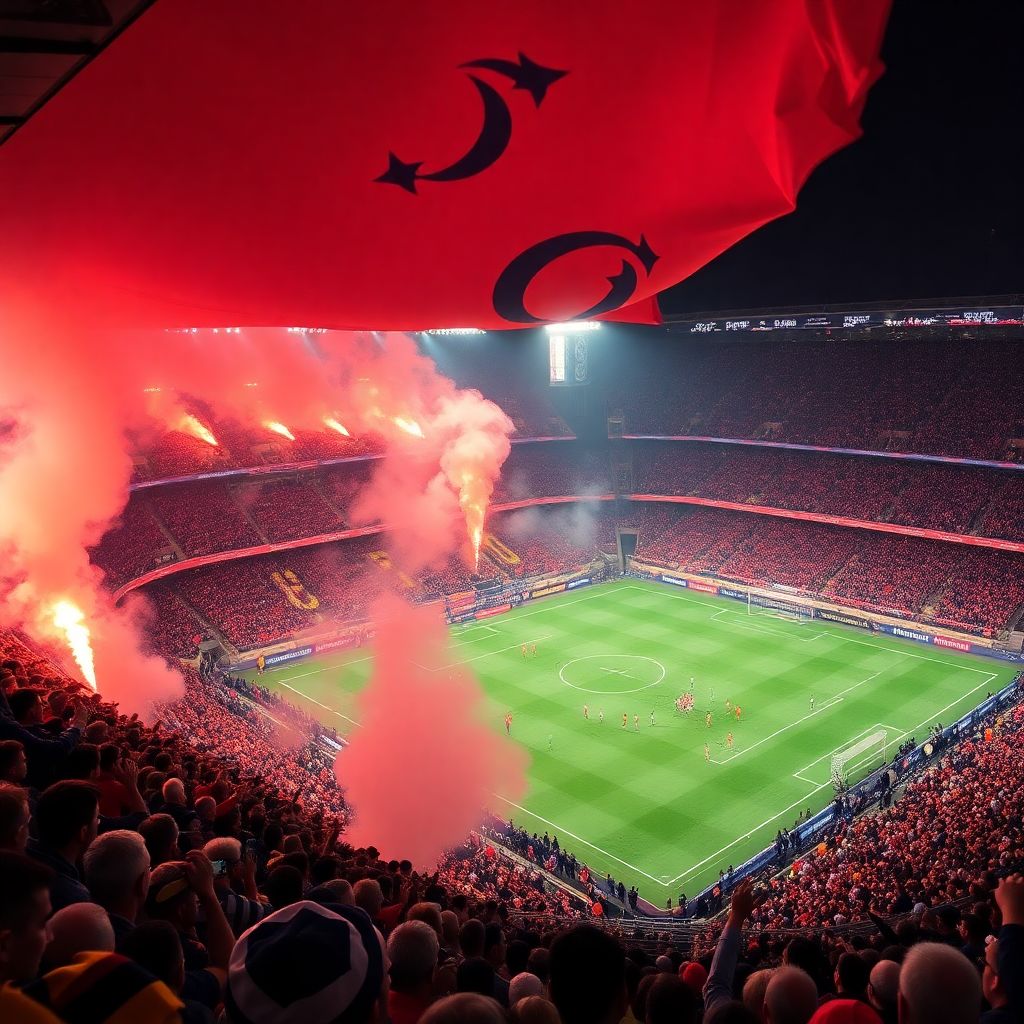
Turkish football doesn’t really start with the referee’s whistle; it starts in the streets, on the tram to the stadium, in the stairwells where drums and megaphones are unpacked. Ultras in Turkey have turned matchdays into full‑scale social events and, in the process, shaped how the whole football industry looks and works in the country.
Historical Roots and Social Context of Turkish Ultras
Ultras culture in Turkey grew rapidly in the 1990s, when European ultra traditions mixed with local neighborhood networks and political street culture. Groups like ultrAslan (Galatasaray), Çarşı (Beşiktaş) and GFB (Fenerbahçe) evolved from loosely organized terraces into stable, quasi‑institutions with their own internal governance, media channels and merchandising ecosystems. Surveys by Turkish sociologists show that in Istanbul big‑club fan bases, up to 20–25% of active match‑going supporters self‑identify as “ultra”, which is a very high share compared with many Western European leagues where the core ultra block is often below 10%. That density creates a critical mass able to dictate the emotional temperature of an entire stadium.
In practice, these groups function as micro‑communities. They coordinate choreographies, away travel and sometimes even social aid campaigns via encrypted messaging apps and closed forums. Case in point: after the 2023 earthquakes, major ultra groups rapidly redirected their logistics networks—originally built for away travel and tifo material—towards collecting supplies and buses for the disaster zone. This dual identity, half football, half civic activism, means that Turkish ultras are not just passive consumers but political and cultural actors, capable of organizing thousands of people in a matter of hours. For club management and authorities, that makes them both an asset and a risk factor that must be carefully managed.
Matchday Atmosphere and Ultras Practices
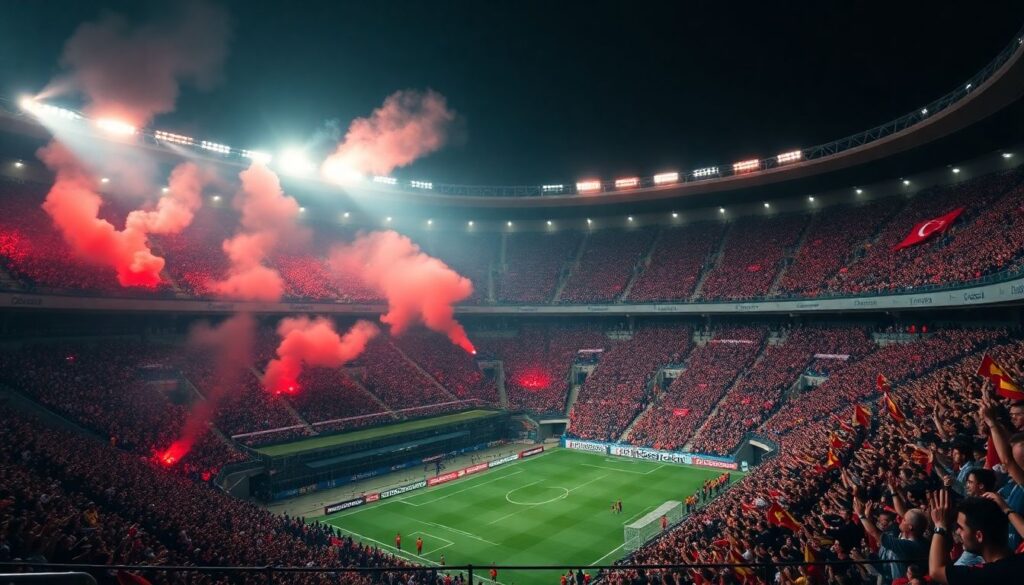
From a stadium‑atmosphere perspective, Turkish ultras operate like informal event‑production agencies. They design “acoustic pressure” through coordinated chanting, drum patterns and call‑and‑response segments that last 90 minutes or more. Decibel measurements during intense derbies in Istanbul frequently exceed 115–120 dB, levels comparable to a rock concert. Players routinely describe the noise as physically affecting decision‑making: communication becomes difficult, heart rate and adrenaline spike, and the home‑advantage coefficient increases. UEFA performance data over the last decade shows that Istanbul’s big clubs have significantly stronger home than away records in European competitions, and local analysts directly attribute part of that delta to ultra‑driven psychological pressure on opponents and referees.
One concrete case: during Galatasaray’s Champions League run in the late 2010s, the club’s sports science staff monitored players’ biometric data in home vs. away games. They reported that at the Türk Telekom Arena, peak heart rates occurred more often immediately after choreographed chant waves from the ultras end, not strictly after high‑intensity sprints. That suggests emotional contagion from the stands has measurable physiological impact on athletes. On the fan side, the demand for turkey football ultras tickets has become a separate sub‑market: some supporters don’t care where they sit as long as they are embedded in the singing, high‑intensity block, which pushes up prices on secondary markets for those specific sectors and influences stadium zoning policies.
Visual Culture: Scarves, Flags and Choreographies
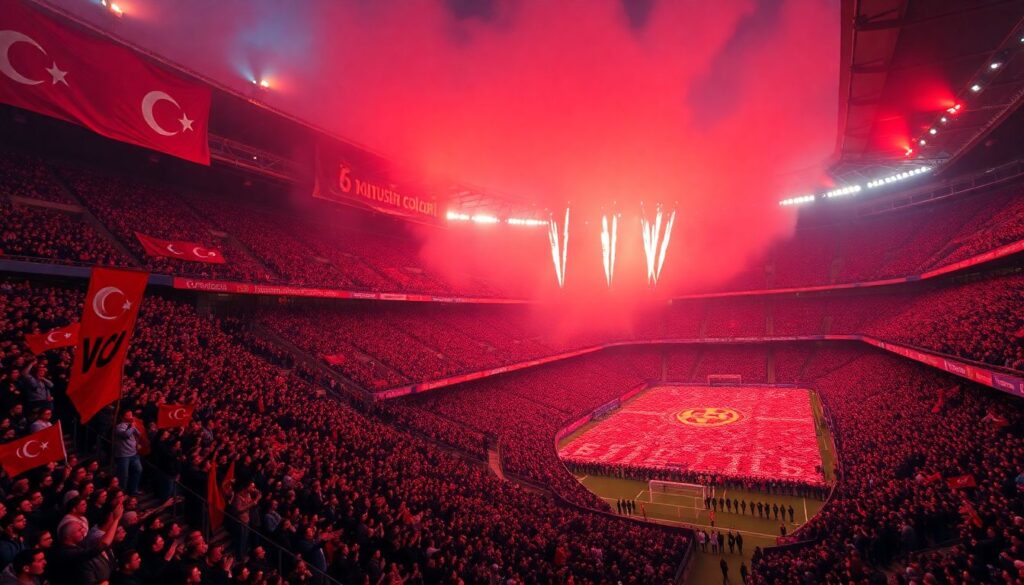
Visually, Turkish stands are dense with color and iconography. Ultras treat terraces as a canvas where club identity is continuously reinvented. Massive banners, pyrotechnics (despite regulations) and synchronized card displays are not just “decoration”; they are semiotic tools that broadcast messages to players, boards and rival fanbases. Production of these materials has become industrial: for big derbies, logistics teams may move several tons of fabric, poles and paint. The market for ultras fan scarves and flags Turkey wide has professionalized, with small workshops in Istanbul and Anatolian cities specializing in rapid manufacturing of custom designs aligned with each group’s aesthetic codes, slogans and historic references.
An illustrative example is Galatasaray’s ultrAslan, which has turned its iconography into a recognizable brand. Before major European nights, they coordinate tifo crowdfunding, design work and execution much like an advertising agency working to a fixed deadline. Parallel to that, galatasaray ultras fan merchandise—hoodies, limited‑run scarves, patches—sells out online within hours of release. While the club also runs its official store, there is a gray zone where fan‑group merch uses unofficial logos or stylized motifs, creating both IP tension and a symbiotic relationship: the club benefits from wider cultural reach, the ultras benefit from monetizing their identity. Economically, this fan‑driven visual production feeds small creative businesses, print shops and textile suppliers around major football hubs.
Economic Dimensions of Ultras Culture
Financially, ultras influence both direct club revenues and the broader sports economy. On the club side, consistent high‑intensity support correlates with better home performance, which in turn drives prize money from league finishes and European participation. A 2022 analysis by Turkish sports economists estimated that qualifying for the Champions League group stage can add €20–30 million in one season for a Süper Lig club; ultras, by sustaining an intimidating home environment, are indirectly linked to these windfalls. Moreover, ticket demand in Turkey is highly elastic to perceived atmosphere: matches expected to feature full ultra participation see higher occupancy and stronger secondary‑market activity than low‑stakes fixtures, even when sporting importance is comparable.
On the consumer‑spending side, matchdays activate entire urban micro‑economies. Around stadiums, bars, street‑food vendors, unofficial merch stalls and transport operators all tie their business models to home‑game calendars. For derbies, turnover for nearby hospitality venues can spike several hundred percent compared with regular weekends. Tourism agencies have also learned to package this passion: offerings such as fenerbahce ultras tour istanbul explicitly sell foreign visitors a curated, “safe edge” experience—pub meet‑ups with local supporters, guided walks to the stadium, coordinated seating in noisy sections. At the macro level, this blurs the line between sports tourism and cultural tourism, using ultras culture as a differentiator against other European football destinations.
Tickets, Packages and the Derby Industry
The intense atmosphere around high‑risk fixtures has generated a distinct product segment: turkish football derby match packages. These bundles typically include match tickets, hotel, city tours and sometimes a pre‑game briefing on fan customs and safety rules. For international fans, the allure lies precisely in the reputation of the Turkish derby as one of the loudest and most emotionally charged experiences on the planet. Local travel firms partner with clubs and sometimes with fan groups themselves to ensure that visitors see choreographies, hear the main chants and avoid conflict zones. The revenue from such packages flows into airlines, hotels, guides and clubs, turning ultras’ reputation into exportable cultural capital.
Within the domestic market, another layer is ticketing policy. Clubs have experimented with dynamic pricing that recognizes the added value of ultra blocks. If the core groups announce a boycott, ticket sales and in‑stadium consumption often dip; when they fully mobilize, sales surge. In some seasons, management has quietly subsidized ultras’ season cards or organized bus transport to critical away matches because the presence of a vocal block is treated as a performance asset. For foreign fans who buy turkey football ultras tickets via resellers, this sometimes creates friction, as they may not fully understand ultra codes of conduct—standing all game, participation in chants, bans on certain clothing—which can lead to minor clashes but also to intercultural learning when handled well.
Influence on the Football Industry and Future Trends
Ultras shape strategic decisions well beyond matchdays. Club boards factor potential reactions from organized fan groups into coaching appointments, transfer strategies and even political alignments with municipalities and sponsors. A high‑profile case involved Beşiktaş’s Çarşı group mobilizing protests not just about football issues but about broader urban policies; the resulting media visibility forced both club and local authorities to recalibrate communication strategies. From a governance standpoint, ultras act as informal veto players, capable of orchestrating stadium‑wide chants demanding board resignations, which then influence shareholder and sponsor confidence. This feedback loop embeds supporter sentiment directly into club corporate decision‑making.
Looking ahead, digitalization will probably transform how ultras operate. Social media already amplifies their choreography videos worldwide, drawing more foreign interest and, indirectly, commercial opportunities. Clubs are experimenting with controlled collaborations—co‑created content, limited‑edition drops, carefully framed community projects—while trying to avoid co‑opting groups so much that they lose authenticity. Forecasts by Turkish sports marketers suggest that by 2030, revenue streams linked to fan culture—content, merchandising, experiential tourism—could account for 15–20% of top‑club commercial income, up from roughly 8–10% today. The tension will be balancing this monetization with preserving the organic, sometimes unruly edge that makes Turkish ultras so distinctive and attractive in the first place.
Regulation, Security and the Risk–Reward Balance
Regulators walk a fine line between enforcing safety and preserving atmosphere. After incidents involving flares, pitch invasions or clashes with police, authorities have introduced e‑ticketing, ID checks and sector‑specific camera coverage. These tools reduce disorder but can also feel like surveillance, triggering resistance from groups who prize autonomy. Security professionals now talk in terms of “risk management of collective emotion”, recognizing that completely sterilizing the stands would damage the league’s brand and, by extension, its media rights value. In broadcast negotiations, executives explicitly reference Turkish stadium noise and visuals as unique selling points compared with more sanitized competitions.
At the same time, the ecosystem around ultras is slowly formalizing. Some groups register associations or foundations to run charity projects and manage finances transparently, which helps them negotiate with clubs and sponsors. Yet the informal economy—the cash‑only sale of street‑level merch, the unlicensed printing of banners, the ad‑hoc bus rentals to away games—remains significant, feeding lower‑income segments of urban populations. As long as galatasaray ultras fan merchandise and similar products from rival groups circulate widely, and as long as young fans aspire to be part of these intense, identity‑forming communities, ultras will continue to be a central force in shaping not just the football atmosphere in Turkey, but the very structure of its football industry.