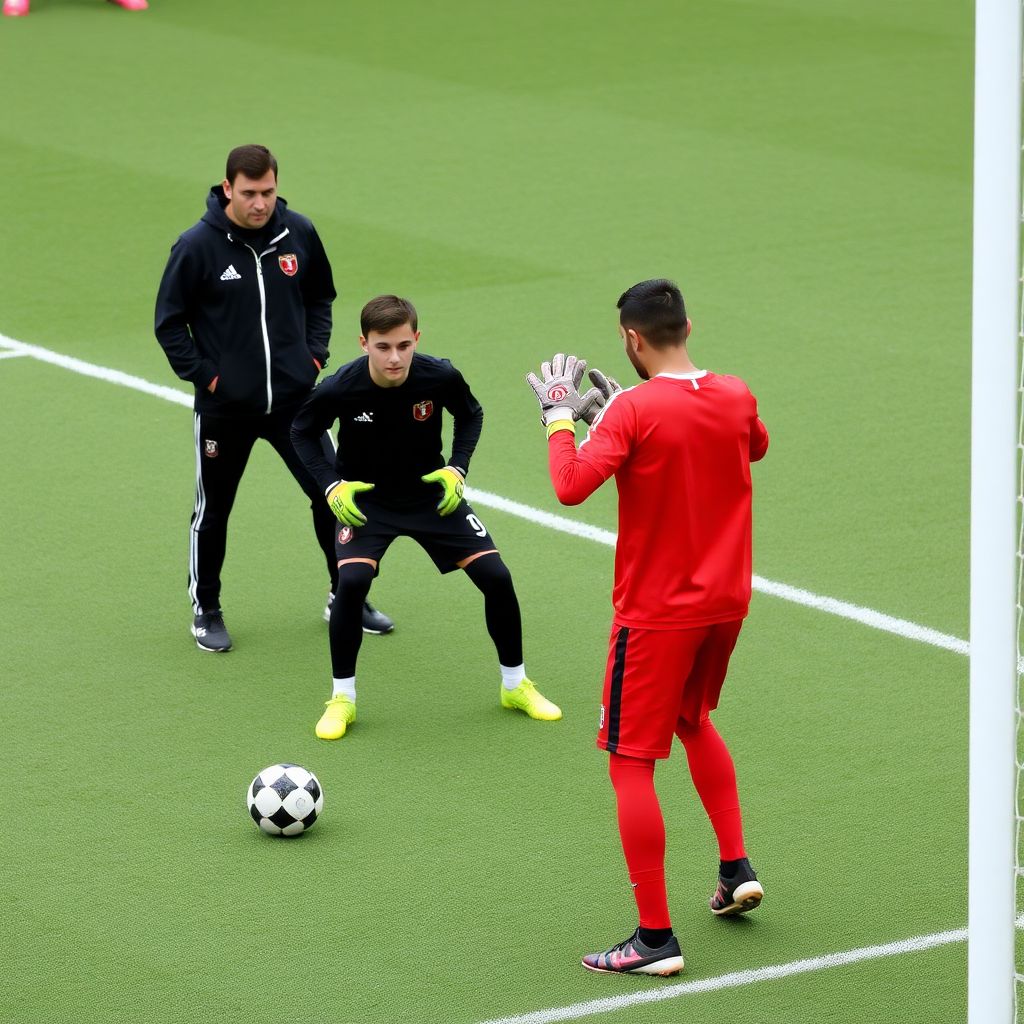
Turkey keeps producing top goalkeepers because clubs treat the position as a strategic advantage, not an afterthought. Early scouting, position-specific coaching, competitive Super Lig environments and strong football identity all support this. Compared with many countries, Turkish systems are relatively easy to adopt, but carry clear risks if psychological work is ignored.
Performance Pillars Behind Turkey’s Elite Goalkeepers
- Goalkeeping has strong historical role models, giving young players clear identity and social status.
- Youth academies in Turkey start position-specific work early and link it with match exposure.
- Coaches use systematic, repeatable methods that smaller clubs can copy with limited cost.
- Club tactics in the Super Lig push keepers to handle high-pressure, shot-heavy games.
- Investment in facilities and competition pathways is uneven, creating both fast tracks and bottlenecks.
- Mental resilience work is improving, but remains the main risk area when copying Turkish models.
Historical and Cultural Roots of Goalkeeping Excellence
In Turkey, the goalkeeper has long been framed as a heroic, almost tragic figure who carries the nation’s hopes. This mythology shapes how kids see the position and why they choose it. Families and local clubs often celebrate goalkeepers more openly than in many European systems.
This cultural respect builds a clear identity: you do not just play in goal, you represent the street, the district and sometimes the political or cultural background of your club. For aspiring talents, this turns the path followed by the best Turkish goalkeepers 2024 into a familiar storyline: start local, endure pressure, reach the national stage.
For other countries, importing this cultural layer is easy at the surface and risky in depth. Copying slogans and social media narratives is simple, but without genuine community backing it can create fragile egos instead of resilient leaders. The safe move is to adopt the narrative of responsibility while avoiding unrealistic hero worship.
- Define clear role models and stories for young goalkeepers in your club or academy.
- Promote the position publicly, not only strikers, in club communication and events.
- Avoid excessive hero language that makes mistakes feel like personal disasters.
- Anchor identity in teamwork and service to the group, not in individual glory.
Youth Academies: Talent ID and Early Specialist Training
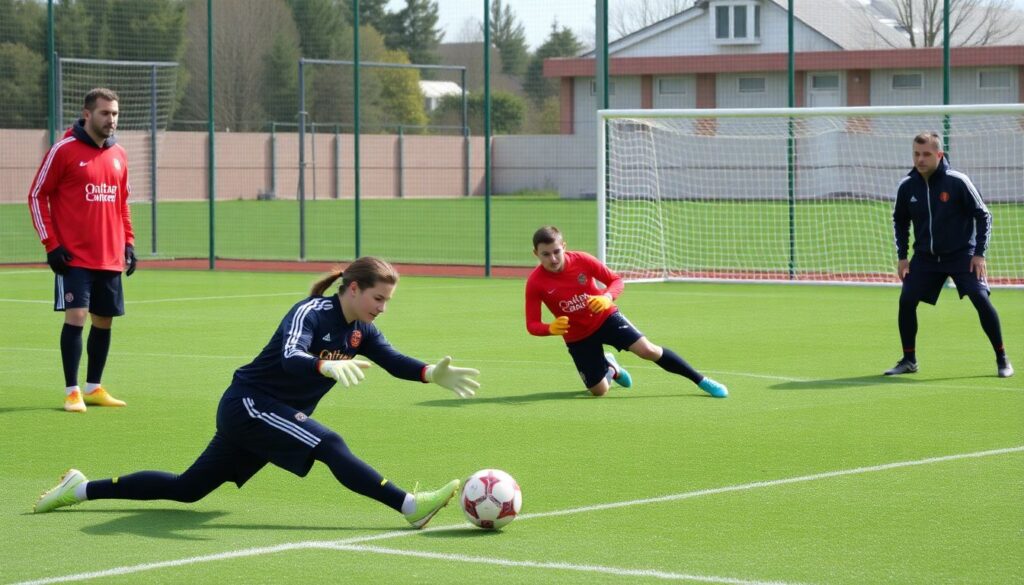
Turkish youth academies treat goalkeeper identification as its own process, not a side-effect of outfield selection. Coaches look for coordination, bravery and game-reading before height has fully developed. Many large clubs run specialised goalkeeper sessions by age 10-12, often parallel to team training.
From an implementation point of view, this model is modular. Smaller academies can adopt pieces of it without copying everything. The main risk is building complex drills without having qualified goalkeeper coaches, which turns training into random punishment instead of skill acquisition.
- Early screening sessions: Short, low-pressure games where kids rotate into goal so scouts see natural reactions, not only volunteers.
- Dedicated goalkeeper slots in each age group: Clear target numbers force coaches to actively search for keepers, not recycle outfielders.
- Position-specific micro-cycles: Weekly plans that integrate catching, diving and footwork with team tactical themes.
- Linked match exposure: Friendly tournaments and internal games where young keepers stay in goal long enough to face real pressure.
- Seasonal benchmarking: Instead of chasing Turkish Super Lig top goalkeepers stats, academies use video and qualitative notes to compare progress.
- Pathways through regional hubs: Players from smaller towns join strong youth centres, similar to football goalkeeper training camps in Turkey’s coastal regions.
- Start with simple extra sessions before overhauling your entire academy structure.
- Invest first in at least one educated goalkeeper coach before buying more equipment.
- Document progress with video clips and short notes, not only match results.
- Protect young keepers from overexposure to blame during heavy defeats.
Coaching Philosophy and Position-Specific Methodologies
Goalkeeper coaching in Turkey often sits close to the first team staff, not isolated. The philosophy is pragmatic: combine solid basic technique with high tolerance for chaos in the penalty area. Coaches focus on repeatable habits that stand up to crowded boxes and deflected shots.
In practical terms, methods cluster around several scenarios that any intermediate coach or analyst can recognise and adapt. Each scenario offers a different balance between ease of implementation and risk of misapplication, especially when copied without full context.
Scenario 1: High-Volume Shot-Stopping Blocks
Clubs design blocks of intense shooting drills where goalkeepers face long sequences of finishes. This is easy to implement anywhere and builds confidence under fire. The risk is overtraining and teaching bad diving patterns if the coach does not control technique quality.
Scenario 2: Crowded-Box Crossing and Chaos Drills
Turkish sessions often recreate derby-style traffic: multiple bodies, blockers and late runs. This prepares keepers for the kind of aerial duels typical in domestic games. It is effective but relatively risky; poorly supervised chaos drills can lead to injuries and fear of contact.
Scenario 3: Sweeper-Keeper and Build-Up Integration
Modern Turkish clubs increasingly link goalkeepers into build-up, even if the team is not playing a pure possession style. Sessions combine simple passing patterns with triggers for long distribution. Implementing this is medium-easy, but copying elite patterns without matching outfield quality can produce dangerous turnovers.
Scenario 4: Pressure Penalties and Set-Piece Routines
Specific routines for penalties and set plays are common, particularly at the clubs producing the best Turkish goalkeepers 2024. These scenarios are low-cost to add and give quick psychological benefits. The main risk is overfitting to rehearsed patterns and underpreparing keepers for unexpected variations.
- Prioritise a small number of core drill families and run them with high technical control.
- Integrate the goalkeeper coach into tactical meetings so drills reflect real match plans.
- Limit high-risk chaos drills and always supervise contact and landing mechanics closely.
- Continuously adjust build-up demands to the goalkeeper’s current passing ability.
Tactical Systems That Elevate Shot-Stopping Roles
Team tactics in Turkey often place the goalkeeper at the centre of survival. Many Super Lig sides accept defensive volume: they concede shots but rely on a strong keeper to neutralise danger. This naturally accelerates the development of keepers who can handle pressure and frequent decision-making.
For foreign coaches looking to imitate this, the convenience lies in not needing a perfect defence to train a high-level goalkeeper. The risk is strategic: over-reliance on shot-stopping can freeze tactical evolution and hide structural weaknesses. A balanced view is essential.
| Tactical approach | Ease of implementation | Main benefits for goalkeepers | Key risks for the team |
|---|---|---|---|
| Deep block with heavy crossing and shots | High – simple structure and common in many leagues | Develops reflexes, aerial dominance and mental toughness | Invites pressure, may hide poor defending habits |
| Mid-block with fast counters | Medium – requires coordination between lines | Improves starting position, sweeping and 1v1 timing | Bad spacing can expose the keeper to free runners |
| Possession play with high defensive line | Low-medium – demands ball-playing centre-backs and keeper | Builds distribution, reading depth and communication | Misplaced passes create direct scoring chances for rivals |
- Map your current tactical style and identify which goalkeeper skills it naturally develops.
- Do not copy a high-risk high line unless your goalkeeper and defenders can pass under pressure.
- Use video from Turkish Super Lig top goalkeepers stats compilations as study material, not as a tactical template.
- Regularly review whether your goalkeeper is compensating for structural weaknesses you should fix tactically.
Infrastructure, Competition Pathways and Club Investment
Turkey’s infrastructure story is mixed: big clubs boast advanced facilities, while many regional teams work with basic resources. Surprisingly, this has helped development. Keepers grow up in varied environments, from perfect training pitches to unpredictable lower-division fields, building adaptability that shows when they move abroad.
When other systems try to replicate the apparent success, several myths and mistakes appear. Most of them revolve around where to invest first and which shiny objects actually matter for performance and safety.
- Myth: Expensive gear is the main driver. Buying the latest Turkish goalkeeper gloves for sale or advanced mannequins feels productive, but without competent coaching, performance barely changes.
- Myth: One elite academy can serve the entire region. Overcentralisation leaves many potential keepers without realistic access and limits the diversity of styles that made Turkey strong.
- Mistake: Ignoring lower-division and school competitions. Many Turkish internationals came through rough pitches and intense amateur leagues; copying only top-level models misses this engine.
- Mistake: Underusing seasonal camps. Clubs sometimes treat football goalkeeper training camps in Turkey as tourism; when designed well, they can compress learning with controlled high-intensity work.
- Myth: Marketing guarantees development. You can buy Turkish national team goalkeeper jersey stock for your club shop, but branding alone does not upgrade your training environment.
- Channel initial investment into safe pitches, basic equipment and coach education before advanced tech.
- Maintain strong competitions at multiple levels, not only at national academies.
- Use seasonal camps with clear objectives, not just as team-building trips.
- Review every year whether budget goes to status projects or direct on-field impact.
Mental Resilience, Identity and the Goalkeeper Mindset
Turkish goalkeepers grow up under constant scrutiny from fans, media and passionate club cultures. This environment can break or harden them. The most successful develop a mindset that treats pressure as information, not threat, and uses mistakes as fuel for technical and tactical upgrades.
A simplified mental process seen among top Turkish keepers can be described like pseudocode:
concede_goal() → 10-20 seconds emotional reset → rapid technical review (position, decision) → short communication with defenders → refocus on next action trigger
This loop looks simple but demands years of practice in real matches. When imported into new environments, the pattern is easy to explain and rehearse, but the risk lies in skipping psychological support. Without a healthy culture, players may suppress emotion instead of learning from it.
- Train specific reset routines after goals conceded in both practice and matches.
- Include mental skills discussions in goalkeeper meetings, not only video and tactics.
- Educate parents and staff to respond constructively to visible mistakes.
- Pair young keepers with experienced mentors who model healthy coping behaviours.
Self-Assessment Checklist for Applying Turkish-Inspired Models
- Have you defined a clear, positive identity for the goalkeeper role in your club culture?
- Do your training plans include structured, position-specific work led by a qualified coach?
- Is your tactical system developing the skills you want, rather than just relying on shot-stopping?
- Are you investing more in coaching and safe environments than in marketing and fancy gear?
- Do you intentionally train mental reset routines and support keepers after visible errors?
Practical Clarifications for Coaches and Analysts
How can a small club copy Turkey’s goalkeeper model without big budgets?
Focus on coach education, simple technical drills and regular match exposure. You do not need elite facilities to train handling, positioning and communication. Start with one or two weekly specialist sessions and consistent video feedback.
Are Turkish-style chaos and crossing drills safe for youth goalkeepers?
They can be safe if you control contact, landing mechanics and workload. Begin with semi-opposed drills, add bodies gradually and stop immediately when technique collapses. Safety supervision matters more than copying exact Turkish exercises.
What is the biggest risk when imitating Turkish tactical dependence on goalkeepers?
The main risk is letting structural defensive problems stay hidden because the keeper keeps saving the team. Over time this limits team growth and can overload the goalkeeper mentally and physically.
Do I need advanced statistics to benchmark young keepers like in the Super Lig?
Advanced data helps but is not essential. For youth, simple video clips, basic save categories and notes on decisions are usually enough. Detailed Turkish Super Lig top goalkeepers stats are better used as learning examples than hard targets.
How important are camps compared with daily academy work?
Camps compress learning into short, intense periods and can be very useful for focus and team bonding. However, daily academy routines and weekend matches still drive most long-term development, so treat camps as supplements, not the core.
Does buying national team-style gear affect motivation or performance?
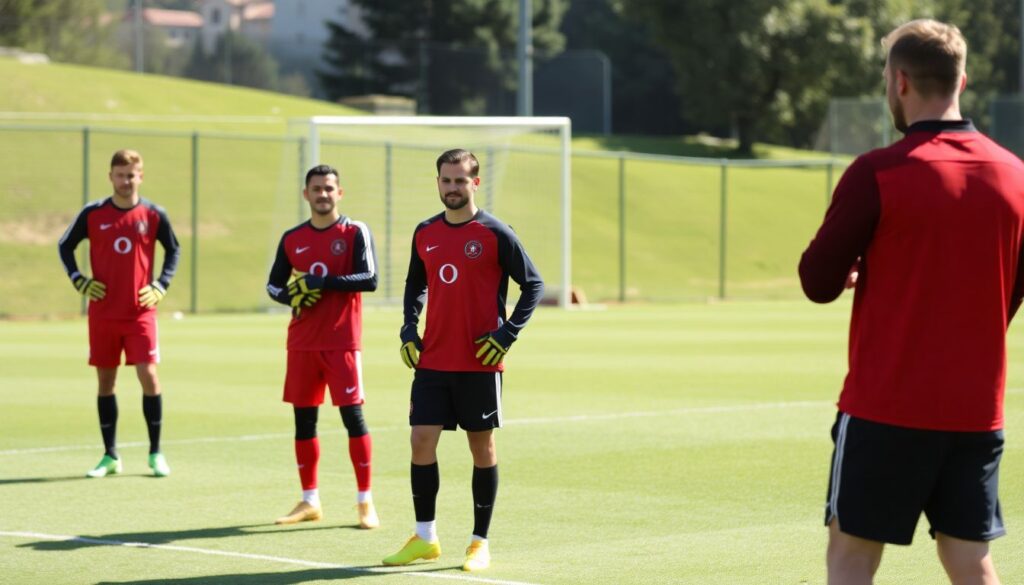
Wearing professional-quality kits can boost pride and comfort, especially when players buy Turkish national team goalkeeper jersey replicas they admire. Yet performance gains are small compared with better coaching and well-planned training.
Should every academy separate goalkeeper training from team training?
Goalkeepers need both integrated and separate work. Aim for dedicated technical sessions plus regular involvement in team tactical exercises so they learn how their choices fit the collective game model.