
The 4-2-3-1 dominates the Süper Lig because it balances defensive security with flexible attacking shapes, fits local player profiles (creative 10s, aggressive full-backs, mobile pivots), and adapts well to game-state swings. It allows coaches to press or sit deeper without changing formation, which simplifies preparation while enabling rich tactical variation.
Essence of the 4-2-3-1 in the Süper Lig
- Built around a double pivot that protects centre-backs and starts transitions.
- Central number 10 links midfield with a usually lone striker and wide forwards.
- Full-backs provide width; wingers can attack half-spaces or hug the touchline.
- Pressing can easily morph into 4-4-1-1 or 4-4-2 without substitutions.
- Suited to Turkish squads rich in technical 8/10s and inverted wingers.
- Remains the reference shape in most super lig 4-2-3-1 tactics analysis content.
Persistent myths about the 4-2-3-1 in Turkish football
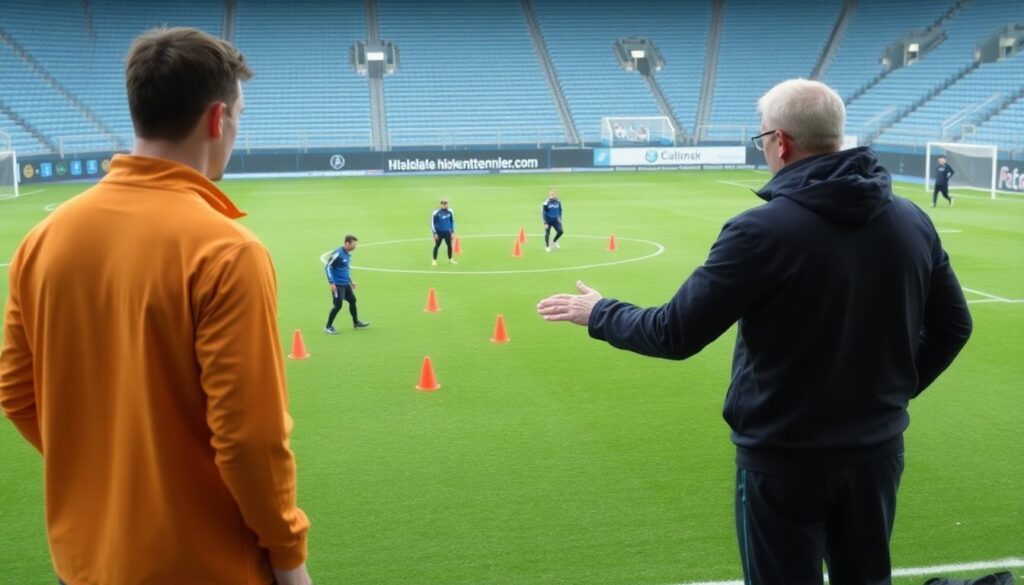
The 4-2-3-1 in the Süper Lig is often described as a defensive, counter-attacking system. In reality, the structure is neutral; it becomes attacking or conservative depending on where the block is set, how high the full-backs go, and how aggressively the double pivot jumps to press.
Another common myth is that the 4-2-3-1 is rigid and predictable. On the contrary, Turkish coaches use it as a flexible platform that can resemble 4-3-3, 4-4-2, or even 3-2-5 in possession. The base numbers on a tactics board hide the fluid rotations that occur when the ball moves.
A third misconception: the 4-2-3-1 only works with a classic playmaker who does not defend. Modern Süper Lig sides increasingly demand that the central attacking midfielder lead the press, screen the opponent’s pivot, and counter-press after losing the ball, blending creative freedom with high-intensity work.
Quick practical tips for applying 4-2-3-1 in the Süper Lig
- Define one pivot as the primary holder and the other as the more aggressive presser; avoid both jumping forward at once.
- Drill wide triangles (full-back, winger, 10) on both sides to break low blocks with third-man runs.
- Train your 10 to cue the press: when he sprints, the striker and wingers must lock onto centre-backs and full-backs instantly.
- In build-up, rehearse dropping one pivot between centre-backs to create a temporary back three against high presses.
- For match preparation and best super lig betting tips and tactical previews, track how often opponents shift from 4-2-3-1 into 4-4-2 without changing players.
- Use professional football analysis software for super lig clubs to tag moments when your 4-2-3-1 shape is broken and identify why (late recovery, poor distances, or ball-watching).
How the formation took root: timeline and local influences
- Post-4-4-2 transition era: As classic strike partnerships declined globally, Turkish teams needed a system that kept a central 10 but supported a lone striker; 4-2-3-1 offered this bridge.
- Abundance of attacking midfielders: The Süper Lig has consistently produced and imported creative 8/10 profiles. Coaches organised around these players by placing them behind a striker, flanked by wingers.
- Foreign coaching impact: Influential foreign coaches introduced structured pressing and compact mid-blocks, using 4-2-3-1 as a clear reference for training distances and roles.
- Adaptation to European competition: Against tactically advanced opponents, Turkish sides needed extra protection in front of the defence; the double pivot offered defensive stability without sacrificing a high line of three attackers.
- Suitability for squad turnover: Frequent transfers in the league mean coaches need a system that new players recognise immediately; 4-2-3-1 is now the default template many arrivals already understand.
- Data and video era: As turkish super lig tactical analysis subscription services and club video departments expanded, the clarity of 4-2-3-1 roles made it easier to tag, compare, and refine tactical behaviours.
Defensive backbone: the double pivot’s evolving responsibilities
The double pivot is the anchor of the 4-2-3-1 in Turkey. These two midfielders protect space in front of the centre-backs, screen passing lanes into the opponent’s 10, and dictate when the block steps forward or drops off.
Typical scenarios where their role is decisive:
- Versus a lone 6: One pivot presses the opposition holding midfielder from the front while the other covers the space behind, preventing simple vertical passes through the middle.
- Against double 8s: Each pivot tracks an interior runner, but they stagger vertically so the deeper one can still shield the back line and intercept through balls.
- Protecting advanced full-backs: When a full-back overlaps, the nearest pivot shifts wide to cover the vacated half-space, keeping the back line from being exposed in transition.
- Managing counter-pressing: After losing the ball, at least one pivot must be positioned behind the ball to delay counters, allowing the rest of the team to recover.
- Dropping into the back three: Against aggressive presses, a pivot can drop between centre-backs, creating a 3-2 structure in build-up that stabilises possession.
- Late-game control: In closing phases, both pivots often sit deeper, turning the system into something closer to 4-4-1-1 to protect a narrow lead.
Creative anatomy: the central playmaker and wide support dynamics
The attacking midfield trio and striker give the 4-2-3-1 its personality. The central playmaker connects lines, while wide players and the centre-forward create depth and width patterns suited to Turkish defensive habits.
Attacking strengths of the 4-2-3-1 in the Süper Lig
- Allows a gifted 10 to receive between the lines, especially when local defences defend too close to their box.
- Inverted wingers can move inside to shoot while overlapping full-backs stretch the flank.
- The striker can alternate between pinning centre-backs and dropping to combine with the 10.
- Rotations on one side (full-back overlap, winger inside, 10 drifting over) naturally create overloads.
- Easy to commit five players into the box (10, two wingers, striker, far-side pivot) without fully sacrificing rest defence.
- Compatible with modern training like a football tactics course 4-2-3-1 formation, which often emphasises layered attacking lanes.
Structural limitations and vulnerabilities
- If the pivots sit too deep, space opens between them and the 10, making build-up predictable and long-ball oriented.
- Wide players who do not track back can leave full-backs in repeated 2v1s, especially on fast switches of play.
- An isolated striker may struggle if crosses are poor or the 10 is tightly marked out of the match.
- Over-reliance on the central playmaker can lead to stagnation when he is fatigued or double-marked.
- Pressing triggers can become unclear; the block may hesitate between high press and mid-block and end up doing neither well.
Transitions and pressing: how Süper Lig teams shape counter-attacks
Transition moments often decide games in Turkey, and the 4-2-3-1 is designed to launch quick counters while staying balanced. The front four are already positioned to attack open space when the ball is recovered, especially after turnovers in wide areas.
Common mistakes and persistent myths about transitions in this shape:
- Myth: the double pivot automatically guarantees safety. In reality, if both pivots are above the ball in attack, counters can cut straight through the centre. Coaches must clearly assign which pivot stays behind.
- Over-aggressive full-backs without cover: When both full-backs overlap simultaneously, even a double pivot can be overloaded by quick diagonal balls into the channels.
- Late pressing cues: If the 10 waits before leading the press, the front four become disconnected, allowing clean opponent build-up and leaving more running for the midfield.
- Ball-watching after losing possession: Wingers sometimes react slowly to turnovers, forcing pivots to defend wide zones they cannot reach in time.
- Confused rest-defence structure: Teams that throw too many players into the box without pre-defined counter-pressing roles concede dangerous breaks from second balls.
- Assuming pressing equals high line: Effective pressing in 4-2-3-1 can also come from a compact mid-block that jumps aggressively on cues, not only from a constant high press.
Club case studies: tactical tweaks from dominant and upstart sides
Across recent seasons, both title contenders and smaller clubs have treated 4-2-3-1 as a starting template, then adjusted it to their squad profiles and strategic aims. These tweaks explain why the formation remains relevant rather than becoming stale.
Typical adaptation patterns seen in super lig 4-2-3-1 tactics analysis:
- Big clubs chasing dominance: One pivot behaves like a classic 6, the other steps higher as an 8, turning the structure into 2-3-5 in settled possession. Wingers drift inside, and full-backs provide almost constant width.
- Mid-table sides seeking balance: Both pivots stay relatively flat, prioritising defensive compactness. The 10 is given freedom but must counter-press centrally, while one winger is tasked with deeper tracking duties.
- Relegation battlers focusing on transitions: The line of three sits slightly deeper; wingers start narrower, close to the striker, to shorten distances in counters. Full-backs advance selectively rather than every attack.
For coaches and analysts, structuring match reports around these patterns creates a practical framework. Whether you use a turkish super lig tactical analysis subscription or club-based video tools, log how each team bends the 4-2-3-1 shape toward dominance, control, or counter-attacking. This same framework helps bettors interpret trends when following best super lig betting tips and tactical previews built on actual tactical behaviour rather than only results.
Clear answers to recurring tactical uncertainties
Is the 4-2-3-1 still the best default system for Süper Lig clubs?
It remains the most practical default because most squads are built with a surplus of attacking midfielders and inverted wingers. However, it is only effective if the double pivot roles are clearly defined and the 10 contributes defensively.
How attacking can a 4-2-3-1 be without losing balance?
It can be very aggressive if one pivot always stays behind the ball and the far-side winger tucks into a rest-defence role. Problems start when both full-backs and both pivots attack at the same time.
What profile should the double pivot have in the Süper Lig context?
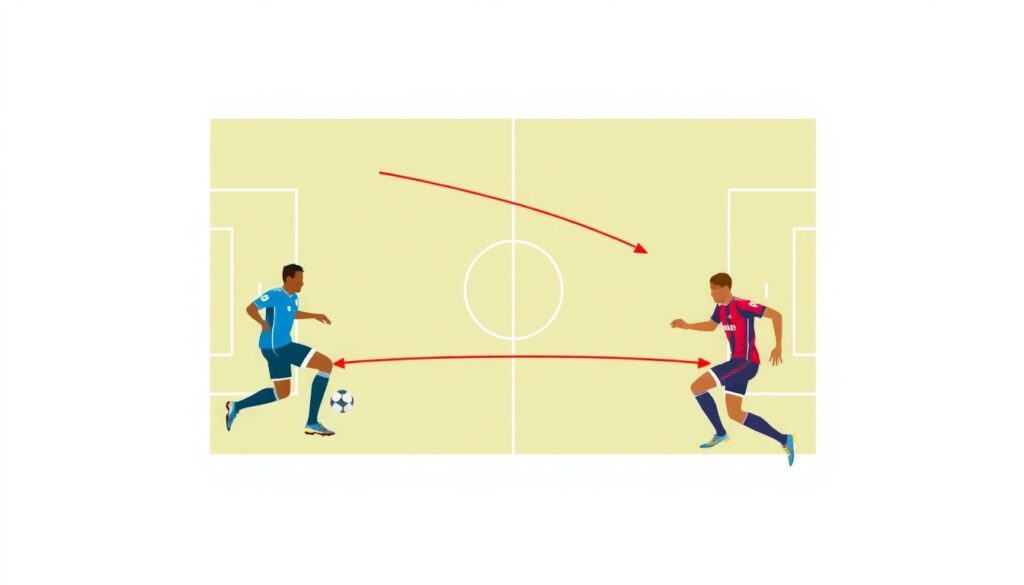
Ideally you pair a more positional, press-resistant passer with a dynamic ball-winner who can cover ground. Both need enough technique to handle pressure, as opponents often press high in Turkish stadiums.
How important is the 10 in a modern 4-2-3-1?
The 10 is still vital but must be more than a classic playmaker. He should lead the press on the opposition pivot, attack the box, and combine with wingers, not just wait for the ball to feet.
Can a team easily switch from 4-2-3-1 to 4-4-2 during a match?
Yes. The simplest in-game switch is pushing the 10 alongside the striker in the first line of pressure. The wide players then flatten, forming a clear midfield four while the pivots stay central.
How useful is specialised software for analysing 4-2-3-1?

Professional football analysis software for super lig clubs is extremely useful for tagging pivot positioning, pressing triggers, and transition quality. It turns subjective impressions into clips and metrics that coaches and analysts can act on.
Where do structured learning resources fit into 4-2-3-1 development?
A focused football tactics course 4-2-3-1 formation can speed up your understanding of patterns and coaching language. Combining such courses with a turkish super lig tactical analysis subscription gives both theory and live local examples.