Tactical context and evolution under Buruk
From chaos to structured aggression
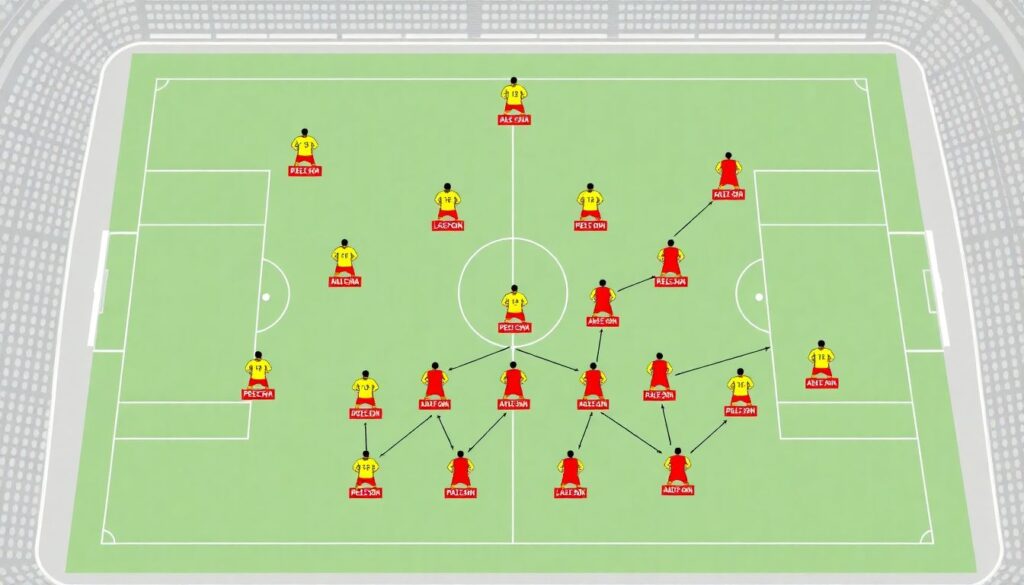
Under Okan Buruk, Galatasaray moved from sporadic, emotion‑driven pressing to a far more calibrated system. When we talk about Okan Buruk Galatasaray tactics analysis, the key shift is balance: controlled high pressing without losing compactness behind the ball. Earlier versions of the team often stretched vertically, leaving midfield gaps. Buruk’s first big tweak was distance management between lines: 10–12 meters between defence and midfield in settled phases, plus clear pressing triggers linked to opposition build‑up patterns rather than purely to ball location or crowd energy.
Pressing architecture
Pressing definitions and triggers
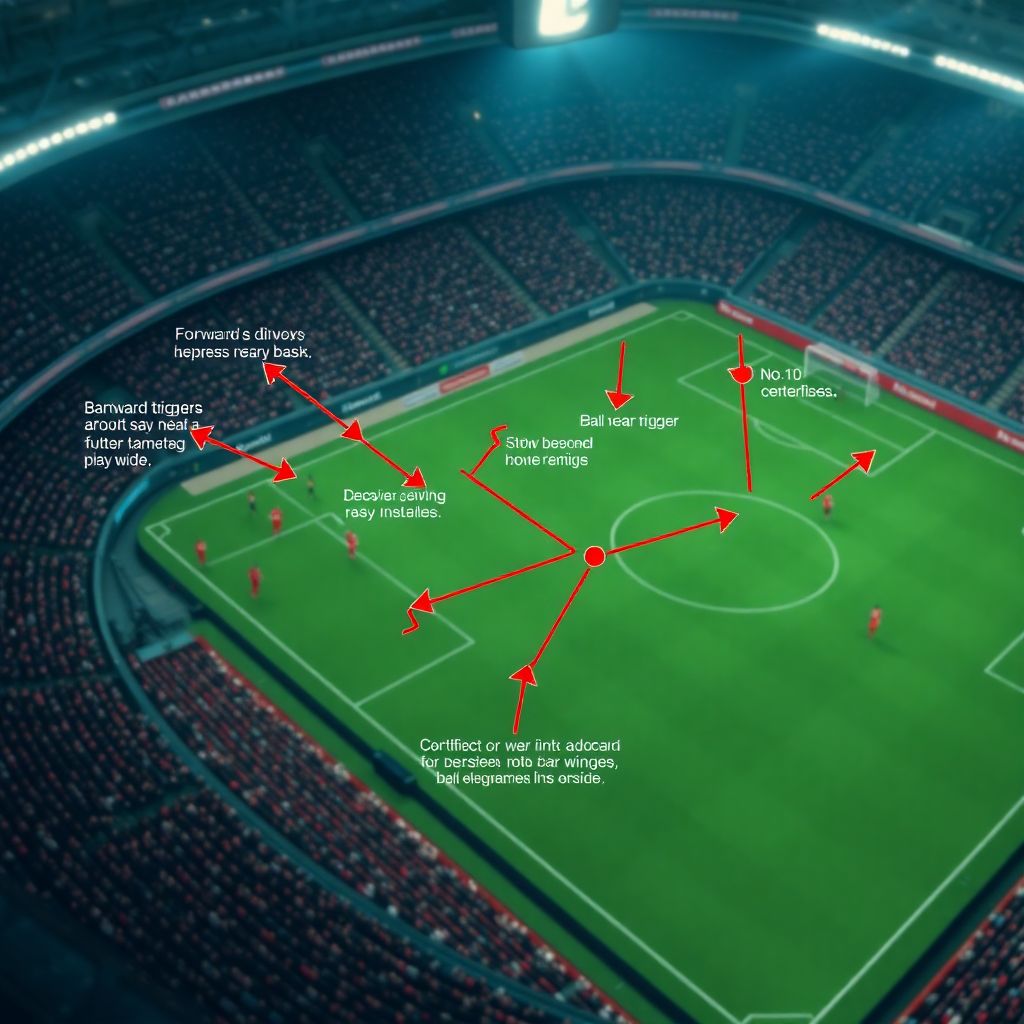
By “high press” here we mean organizing pressure inside the opponent’s first two build‑up lines, usually within 40 meters of their goal. The Galatasaray pressing style under Okan Buruk is based on oriented pressing: the block does not just chase the ball but steers play toward pre‑selected zones. Triggers are mostly: backward pass to centre‑back, slow outside‑foot touch by fullback, or receiver with closed body shape. Once a trigger appears, the nearest forward accelerates, wingers lock the fullbacks, and the ball‑near No.8 jumps to screen the pivot.
Pressing shape: textual diagram
Visualize a standard 4‑2‑3‑1 high press as follows:
F9 W(L) W(R)
#10
#8 #6
LB LCB RCB RB
In Buruk’s structure, it often looks like a 4‑4‑2 out of possession: #10 steps up alongside the striker, while the ball‑far winger tucks into midfield. In text‑diagram form:
ST #10
W(L) W(R→in)
#8 #6
Back four
This creates a “+1” around the opposition pivot and closes central lanes, forcing play wide into pressing traps.
Counterpress and rest defence
“Counterpress” (or gegenpress) means immediate pressure on the ball right after losing it, before the opponent can lift their head. Buruk refined this by tying it to “rest defence” – the team’s protective structure during their own attack. When both fullbacks advance, at least two players remain staggered behind the ball, usually the 6 and a half‑space fullback or centre‑back. That layout looks like a shallow “W”: CB – 6 – CB, with one defender half‑stepping into midfield to jump on clearances and keep the ball in the attacking third.
Width as a strategic tool
Functional vs nominal width
Width is not just players standing near the touchline; it is the horizontal stretching of the opponent’s block to open vertical lanes. In Okan Buruk coaching philosophy Galatasaray use what we can call “functional width”: sometimes fullbacks provide it, sometimes wingers stay wide, and at other times even a No.8 drifts outside. The rule of thumb is simple: if the winger comes inside to attack the half‑space, the fullback must hug the line and pin the rival fullback deep, creating a 2v1 on that flank or freeing the central corridor.
Textual diagram of wide structures
Picture a typical left‑side build‑up:
LW (inside) ST
#10
L8 R8
LB #6 RB
Back line
Here the left winger steps into the half‑space, between lines, while the left‑back stays wide. The passing lanes form triangles: CB–LB–L8, CB–L8–LW(in). This is where Galatasaray tactical analysis width and rotations becomes interesting: rotations are not random; each move maintains at least two passing angles around the ball. The wide fullback also secures rest‑defence access, ready to sprint back if possession is lost.
Rotations and positional play
What “rotations” actually mean
“Rotations” are pre‑designed role switches between two or three players across zones, without losing overall structure. Under Buruk, they are most common between winger, fullback and No.8 on each side. For example, the winger drops short, the No.8 runs beyond the defence, and the fullback underlaps into the half‑space. The key is zone coverage: after the rotation, all three vertical corridors (flank, half‑space, central lane) must still be occupied. This maintains positional superiority around the ball and keeps the opponent guessing.
Midfield triangles and third‑man runs
Positional triangles underpin the passing network. In the left half‑space triangle, the No.6, L8 and LW constantly exchange heights. A typical pattern: No.6 passes to L8, who is under pressure; LW has moved inside behind the rival midfielder. L8 simply lays the ball back (wall pass) and No.6 plays a “third‑man” vertical ball into LW’s diagonal run. This mechanism is recurrent in Okan Buruk Galatasaray tactics analysis and explains why the side often looks more dangerous after two or three short passes rather than a single direct long ball.
Case study I: Fenerbahçe 0–3 Galatasaray (January 2023)
Pressing and transition clinic
This derby is ideal for Okan Buruk Galatasaray match analysis and statistics. Fenerbahçe tried to build with a 2‑3 base, but Buruk’s front four pressed in a 4‑4‑2 shell. The key was forcing the ball to Fener’s right centre‑back, then jumping with Icardi, while the No.10 blocked access inside. Once Galatasaray recovered, they attacked the vacated half‑space behind Fener’s aggressive left‑back. The expected‑goals share and high turnovers in the final third underline how the pressing plan directly fed chance creation.
Real‑world pressing trigger example
One recurring pattern: Fener’s keeper rolled the ball to the right centre‑back with his back to goal. Immediate trigger. Icardi curved his run to shut the pass back to the keeper, while the ball‑near winger sprinted toward the fullback’s lane, not the ball. This cut off the “safety valve” wide, forcing a panicked vertical pass into midfield. Behind that, Torreira and the ball‑near No.8 squeezed inward, intercepting and launching fast breaks. The entire move is scripted: angle of run, body shape and cover shadows are all specified.
Case study II: Manchester United 2–3 Galatasaray (UCL 2023–24)
Mid‑block, width and counterpress
At Old Trafford, Buruk used a medium block instead of constant high pressing. United were allowed to reach the middle third, but central lanes were saturated. Wingers tracked fullbacks only up to a certain line; beyond that, No.8s took over, so the front line could stay ready for transition. When Galatasaray regained the ball, width came from rapid fullback sprints, while Zaha and Aktürkoğlu cut inside. The winning goal sequence shows this logic: regain centrally, immediate wide release, then inside‑out movements attacking the red defence facing its own goal.
Rotations under Champions League stress
Under heavy pressure, rotations can either stabilize or break a team’s structure. In this match, Buruk simplified them: side‑specific guidelines instead of extreme fluidity. On the left, Zaha often started wide and then drifted into the left half‑space, with the No.8 taking his place near the touchline. On the right, the winger mostly kept width, while the fullback underlapped. This asymmetry made pressing reads harder for United, because their back line faced different patterns on each flank, complicating their reference points for who should follow whom.
Comparisons and analogues
Similarities with other pressing models
Compared with Klopp’s Liverpool or Gasperini’s Atalanta, Buruk’s model is slightly less man‑oriented and a bit more conservative in the back line. Galatasaray rarely leave both centre‑backs in pure 1v1s across the full width; there is usually at least a covering midfielder dropping into the last line. Conceptually, though, the pressing cues and use of curved runs resemble those elite references. The difference lies in tempo control: instead of an all‑game press, intensity comes in planned waves, often right after kick‑off, goal kicks or throw‑ins.
Width and rotations vs positional‑play purists
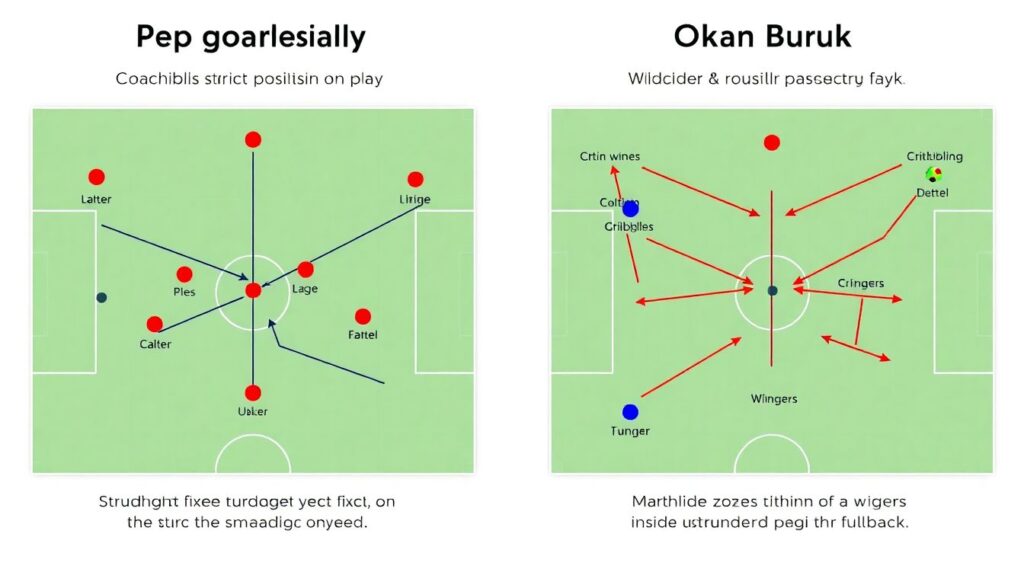
If we compare to Guardiola’s strict positional play, Buruk allows more individual freedom on the wings. Zones matter, but player profiles are trusted to improvise within the framework. For example, wingers can choose whether to attack the defender inside or outside, as long as the surrounding triangle is preserved. A concise Galatasaray tactical analysis width and rotations angle is this: the system uses positional play as a skeleton, but accepts local chaos to exploit 1v1 advantages, especially in the Turkish Süper Lig where technical wingers can dominate duels.
Key principles summarized
Operational guidelines on the pitch
To wrap the concepts into practical rules, players essentially follow these operational guidelines:
– Maintain 10–12 meters between lines in settled defence to stay compact.
– Trigger the high press on backward passes, poor touches and closed body shapes.
– Ensure at least one player gives width and one occupies the half‑space on each side.
– After rotations, check that three vertical lanes remain filled around the ball.
These are simple to remember, but sophisticated enough to scale from domestic league matches to Champions League intensity.
Why the evolution matters
Beyond results, the evolution under Buruk is an upgrade in repeatable mechanisms. Instead of relying solely on individual talent spikes, patterns of pressing, width and rotations generate consistent field tilts and shot volumes. In conversational terms, the team now has a “default setting” that produces chances even on average days. That is the core of a modern, process‑driven model. For analysts, this makes Okan Buruk Galatasaray tactics analysis a rich case study in how to modernize a big‑club identity without abandoning its aggressive, front‑foot DNA.