
Why Set Pieces Decide Modern Games
From “lucky corners” to engineered goals
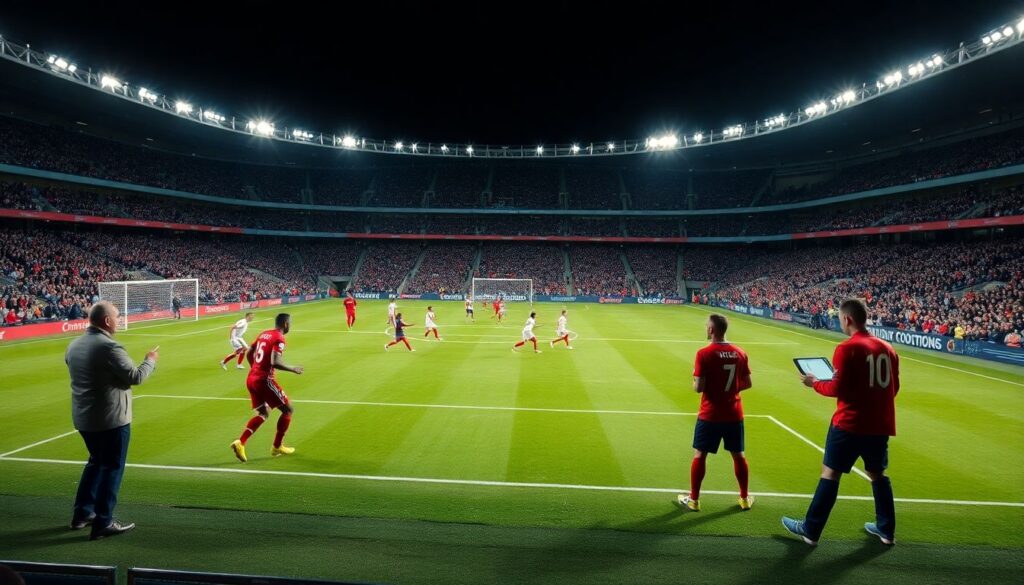
In top‑level football, open‑play chances are shrinking, defensive blocks are tighter, and expected goals from set pieces keep rising every season. That’s why coaches now treat corners and free kicks as scripted attacks, not afterthoughts. When you hear analysts talk about set piece tactics football on TV, they’re really talking about repeatable patterns: screens, decoy runs, second‑ball traps, and pre‑planned rest-defense. Turkish and European teams that take set pieces seriously are regularly adding 10–15 goals per season just from rehearsed routines. That’s often the difference between mid‑table and European spots, or between group‑stage exit and a deep run in UEFA competitions. So if you’re a coach, analyst, or even a semi‑pro player, mastering dead‑ball phases is one of the most “cost‑efficient” upgrades you can make to your team’s overall game model.
In other words, set pieces are no longer “detail work” handled on Friday; they’re a strategic pillar. Ignore them and you’re simply handing free value to better‑organized opponents.
How Turkish Teams Build Set-Piece Identity
Physical dominance and hybrid European models
Turkish clubs, especially the big Istanbul sides, lean heavily on physical profiles and aerial power. Traditionally, the model was simple: stack the box, target the strongest header, attack the goalkeeper’s zone. But over the last 5–7 years, with European analysts arriving in the Süper Lig, that has shifted to a hybrid: screen blocks borrowed from basketball, near‑post glancing runs copied from the Premier League, and elaborate second‑phase structures inspired by Bundesliga sides. In practical terms, a Turkish set‑piece unit will still value tall centre‑backs and aggressive No. 9s, yet they now operate within highly choreographed schemes: synchronized starting positions, timed bursts, and “vacuum runs” that drag markers away from the real target zone. If you watch carefully, you’ll see routines recycled across clubs, tweaked to match each squad’s physical and technical strengths, creating a uniquely Turkish‑European blend.
Lower‑budget Turkish teams also exploit long throw‑ins almost like mini‑corners, a very pragmatic way to generate xG without dominating possession.
How European Giants Engineer Their Dead Balls
Across Europe’s top five leagues, successful set‑piece programs look more like R&D labs than old‑school “hit and hope” practices. Clubs invest in dedicated analysts, tracking every dead ball situations soccer analysis detail: delivery height, curve type, run timing, and opponent marking structure. Premier League and Bundesliga sides tend to run modular routines—each with a name, triggers, and variants—so that players can recognize and adapt in real time. In La Liga and Serie A, there’s a bit more emphasis on disguised short corners and third‑man combinations, using technically gifted players to unbalance strict zonal schemes. Unlike many Turkish teams that still rely heavily on aerial supremacy, top European squads spread the threat: near‑post flicks, edge‑of‑box volleys, cut‑backs from overloads, and rehearsed rebounds. The shared pattern: nothing is random. Every movement serves a function: block, distract, attack space, or secure rest‑defense against counters.
A key difference: European giants align set‑piece strategy tightly with their overall game model, so routines don’t feel “bolted on” but integrated into how the team already attacks and defends.
Comparing Approaches: Turkey vs Wider Europe
Marking schemes, delivery profiles, and risk appetite
When you compare Turkish and European set‑piece play, three practical contrasts jump out. First, marking. In Turkey, many teams still use hybrid man‑oriented schemes with heavy grappling and close contact, betting on winning duels. In the Premier League or Bundesliga, you see more sophisticated zonal‑plus systems with clearly defined lanes and “attack the ball” zones. Second, delivery. Turkish takers often prioritize power and chaos—fast, whipped balls into the six‑yard box—because they back their physical edge. European sides more frequently vary delivery profiles: flat, outswinging corners to attack the near post, looping inswingers toward the penalty spot, or cut‑back routines after a short corner to isolate a late‑arriving shooter. Third, risk appetite. Turkish teams are sometimes willing to commit seven or eight players into the box, even away from home. Many elite European coaches instead maintain a robust rest‑defense shell, accepting slightly lower immediate xG for better transition protection.
These philosophical differences matter for coaches: copying a routine without copying the underlying risk model usually ends badly.
Training Culture and Player Education
Europe’s top clubs typically embed football coaching set piece routines into daily work, rather than saving them for a single pre‑match session. Players are educated on principles—screening, timing, blind‑side runs—so they can improvise when opponents disrupt the initial pattern. In Turkey, the trend is moving this way, but many clubs still lean on “memorize this routine” rather than “understand the logic,” which can limit adaptability under pressure.
If you want your team to behave like the European models, your priority is teaching concepts first, choreography second.
Technology: Tools That Power Modern Set Pieces
Video, data, and on‑pitch tech
Today, serious programs rely heavily on tech. For analysis, clubs use multi‑angle video and event data from providers like Wyscout or InStat to break down every corner and free kick over a season. Analysts tag deliveries, blocks, matchups, and outcomes, then run dead ball situations soccer analysis to locate high‑yield patterns and opponent weaknesses. On the grass, GPS and tracking tools show if runs are starting too early or late, whether screens are placed correctly, and how often the designated target actually attacks the right space. Some teams even use mini‑drones in training to record overhead footage, giving a clear view of spacing and timing. For coaches, simple platforms like telestration apps on tablets allow you to quickly sketch new routines, overlay runs on real footage, and communicate complex ideas in seconds. Turkish clubs are catching up here: the big three are already using most of these tools; smaller clubs often rely on lighter, cheaper versions or shared league data.
The core benefit of technology is not “fancy graphics” but fast feedback loops: try, measure, tweak, repeat.
Pros and cons of going all‑in on tech
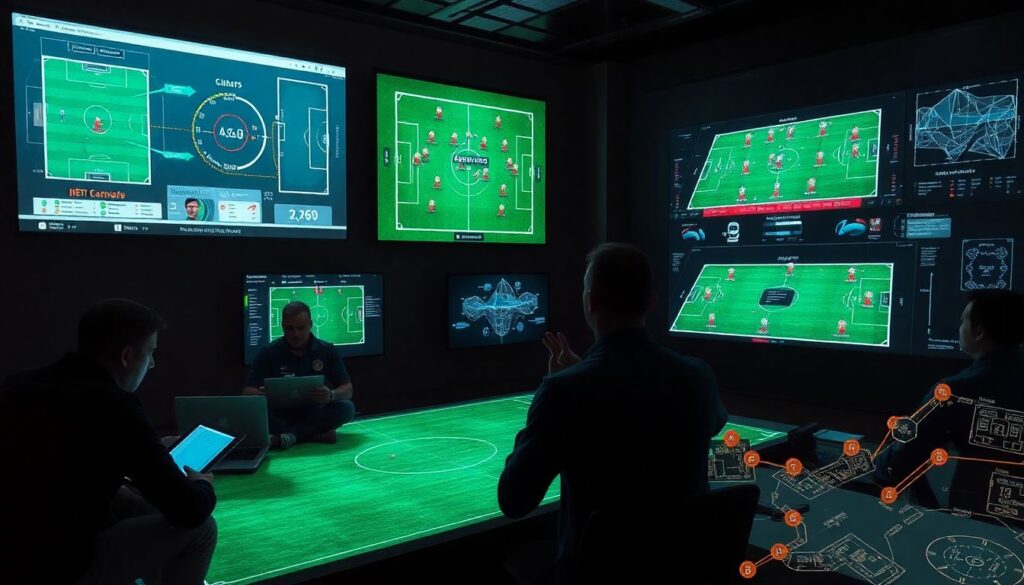
The upside of tech‑heavy set‑piece work is clear: more precise targeting of opponent weaknesses, evidence‑based selection of routines, and objective evaluation of your own players’ execution. But there are trade‑offs. Over‑reliance on data can lead to over‑complex routines that collapse under match‑day pressure. Players at lower levels may not have the cognitive bandwidth to memorize seven variants for each corner. There’s also the cost factor: advanced tracking systems and specialist staff can be unrealistic for semi‑pro Turkish clubs or smaller European sides.
Practically, the sweet spot is using tech to validate what you see and to simplify decisions, not to flood players with information.
Practical Recommendations for Coaches
Building a simple but dangerous set-piece program
Start by picking two or three core corner routines and one direct free‑kick pattern, and drill them relentlessly until they become automatic. Your soccer set piece training drills should mirror match reality: opposition mannequins or live defenders, correct starting positions, and specific targets (e.g., “near‑post runner scores or flicks; far‑post runner attacks second ball”). For Turkish amateur or academy coaches, one of the best upgrades is to standardize calls: give each routine a short, memorable name and a simple in‑game trigger. In Europe’s better academies, U15 teams already operate with this kind of shared language, which massively speeds up in‑game adjustments. Next, integrate your routines into weekly microcycles: 10–15 minutes at the end of sessions, but with real intensity and scoring consequences. Finally, constantly review match footage to see if players actually reproduce what you trained; if not, simplify.
Aim for clarity: if players hesitate or look confused at a corner, your design is too complicated.
Choosing the right technology level for your context
If you coach at grassroots or semi‑pro level, you don’t need a tracking system to gain an edge. A basic camera, a laptop, and free analysis software are enough to catalogue opponent habits and refine your own set pieces. At pro level in Turkey or Europe, the question isn’t “tech or no tech” but “which stack fits our budget and staff skills.” Before investing, decide who will own the process: an assistant coach, an analyst, or a dedicated set‑piece specialist.
Whatever you choose, commit to using it every week; unused tools don’t score goals.
Developing yourself as a set-piece specialist
The rise of set‑piece coaches has created a new career path. Many clubs now hire staff who focus almost exclusively on corners, free kicks, and throw‑ins. If you’re interested in this niche, consider enrolling in set piece specialist coaching courses that combine tactical theory, video analysis, and on‑pitch methodology. Pair that with independent study—watching Turkish and European matches specifically for restarts, cataloguing patterns, and testing them in your own environment. Over time, you build not just a library of routines but a framework for deciding which ones fit which squads.
Your goal isn’t to be the coach with the biggest playbook, but the one whose routines actually work under pressure with the players you have.
Trends Shaping Set Pieces by 2026
Positionless roles, throw‑in innovation, and data‑driven evolution
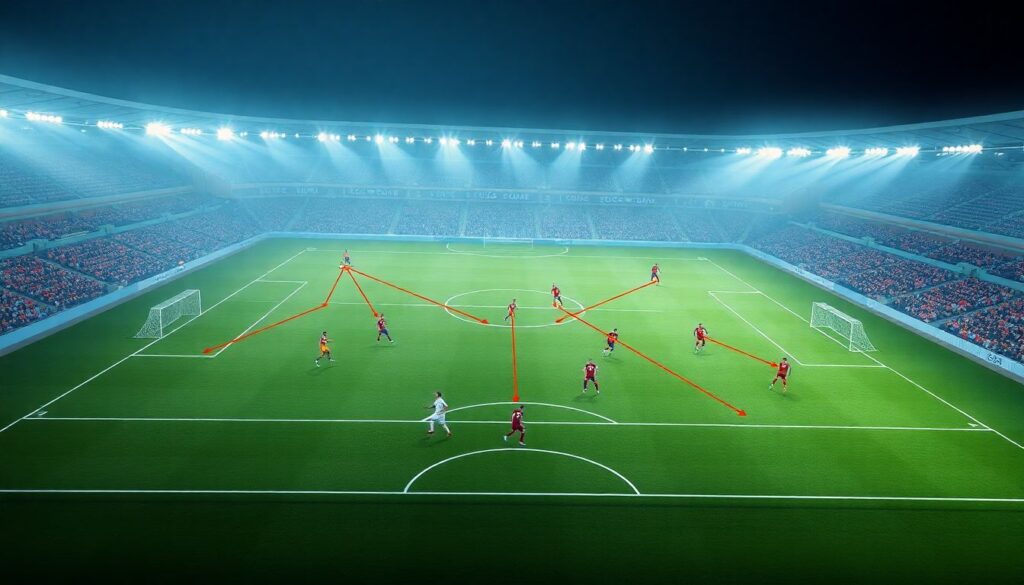
Looking ahead to 2026, several trends are already visible. First, “positionless” roles at set pieces: centre‑backs taking wide starting positions, wingers attacking central spaces, and defensive midfielders becoming primary screeners. Both Turkish and European teams are gradually abandoning rigid positional thinking at dead balls in favor of role‑based assignments like “blocker,” “decoy,” or “zone attacker.” Second, throw‑ins are becoming a serious attacking phase. Following pioneers in northern Europe, more clubs are hiring consultants to turn simple throw‑ins into structured possession launches or long‑throw chaos weapons, which fits especially well with the physical profiles common in the Turkish league. Third, we’ll see more automated opponent scouting: AI systems flagging recurrent weaknesses (e.g., poor far‑post protection) and suggesting tailored routines days after fixtures are announced. Finally, youth academies will raise the baseline, with U13–U14 teams already fluent in set‑piece concepts, making future generations much harder to surprise.
The teams that thrive in this environment will be those that treat continuous set‑piece improvement as a long‑term project, not a quick fix.
What this means for your team right now
You don’t have to wait until 2026 to benefit from these ideas. Start where you are: select a small number of routines, teach the principles behind them, use whatever tech you can access to review and refine, and keep things brutally simple for your players on match day. Whether you coach a Turkish regional side or a European academy team, consistent, focused work on set pieces will almost certainly deliver “cheap” goals and crucial points.
In the modern game, mastering dead balls isn’t an optional extra; it’s one of the clearest paths to punching above your weight.