Video Assistant Referee (VAR) has structurally changed the Turkish Süper Lig by adding a parallel, camera-based decision layer on key incidents, altering penalty frequency, offside calls, card management, and stoppage patterns. For clubs, analysts, and bettors, sustainable edge comes from disciplined super lig var analysis and integrating VAR-specific features into existing performance and risk models.
Summary of VAR’s Impact on the Süper Lig
- VAR restricts reviewable events to goals, penalties, direct reds, and mistaken identity, but its presence influences many non-reviewed actions.
- Referees manage risk differently, especially in the box and on potential red-card challenges.
- Match flow changes: more stoppages, higher psychological volatility after reviews.
- Teams adapt pressing, defensive lines, and build-up to offside and penalty interpretation under VAR.
- Public debate around turkish super lig var decisions often misunderstands the protocol and the data behind interventions.
- Clubs using structured data driven football analysis turkey gain an advantage in preparation, scouting, and communication with players.
How VAR Was Implemented in the Süper Lig
In the Süper Lig, VAR is defined as a support system for the on-field referee, not a replacement. It uses multiple broadcast-quality camera feeds in a central room, staffed by a VAR, an assistant VAR, and replay operators who work in real time during every match.
The system is constrained by protocol: it can intervene only on four categories of incidents-goals, penalty decisions, direct red cards, and mistaken identity. Within those, the VAR may recommend an on-field review (OFR) when there is a clear and obvious error or a serious missed incident. The referee always keeps final authority.
Operationally, the Süper Lig implementation mirrors international standards, but local factors matter: stadium infrastructure, camera placement, referee training, and media scrutiny. For any serious super lig var analysis, these contextual variables are as important as the incident logs themselves.
- Define your analysis scope strictly around the four VAR categories plus secondary effects (e.g., booking management).
- Track each intervention with timestamps, incident type, and review outcome in your data model.
- Document stadium-specific constraints that may affect camera coverage and incident detection.
Changes in Refereeing Decisions: Before vs After VAR
From a process perspective, VAR transforms how referees manage uncertainty and risk rather than simply “fixing mistakes”. The following mechanics describe the main before/after shifts that analysts should encode when building models on var statistics super lig data.
- Risk distribution on penalties: Pre-VAR, referees either whistled or not with limited post-hoc correction. With VAR, marginal incidents tend to be left to continue, with a higher willingness to correct via OFR when replay evidence is strong.
- Offside enforcement: Assistant referees are instructed to delay flags in close attacking situations. This changes the sequence of play (shots taken under delayed offside) and creates additional review events for tight calls.
- Card calibration: With replay support, referees may initially show a yellow in borderline situations, knowing an upgrade to red is possible after review. Conversely, some reds are downgraded when video shows a lower level of force or contact.
- Advantage and continuation: More advantages are allowed in attacking phases because VAR can retrospectively validate or adjust outcomes (e.g., bring back a penalty if no goal results).
- Average review time and added time: Each OFR introduces a stoppage; cumulative review time is reflected in extra minutes. This affects fatigue modeling, substitution timing, and late-goal probabilities.
- Psychological framing: Players and coaches adapt protest behavior, often targeting the idea of VAR rather than the referee, which can influence card dynamics and pressure on future decisions.
- Tag incidents as “field decision changed by VAR”, “confirmed by VAR”, or “checked silently, no review” for richer labeling.
- Model delayed offside and penalty outcomes separately from standard shots and fouls.
- Include review duration and sequence position (early/late in match) as explicit features in time-based analyses.
Statistical Shifts in Key Match Events
VAR’s measurable impact is clearest in specific event clusters: penalties, offsides, goal validity, and red cards. While exact figures fluctuate by season, tracking trends in these metrics allows more precise super lig var analysis over multiple years.
For turkish super lig var decisions, you should systematically monitor:
- Penalty incidence and conversion: Capture how often penalties are awarded via VAR intervention versus on-field; separate converted, saved, and missed. Build per-season penalty rate metrics (per match, per shot in the box, per possession in the box).
- Offside overturns: Record goals initially allowed but disallowed for offside after review, and vice versa. Model these as a separate pipeline because they rarely appear in pre-VAR datasets.
- Goal validity checks: Many goals stand after a quick silent check. Tag goals as “checked by VAR” even when no OFR occurs; this helps quantify how often potential fouls or offsides are screened.
- Red card corrections: Track yellows upgraded to red, reds downgraded, and missed violent conduct identified by VAR. This directly affects models of 10v11 or 9v11 phases.
- Review timing and match state: Connect every VAR review with scoreline, minute, and expected goals (xG) at the time. This reveals whether VAR tends to lock in leads or open games up.
- Spatial and body-contact patterns: Use event-location data to see if defenders adjust body use in the box (e.g., hands, grappling) due to higher detection probability under VAR.
For visualization, line charts capture longitudinal trends in penalty and red-card rates; stacked bar charts work for composition of VAR vs non-VAR decisions; scatter plots of review minute vs xG swing highlight high-impact interventions.
- Maintain a dedicated VAR event table with linkable IDs to base match events.
- Differentiate between “created by VAR” events (e.g., penalty awarded) and “annulled by VAR” events (e.g., goal cancelled).
- Experiment with xG swing as a standard metric to quantify the impact of each review on match outcome probabilities.
Team and Tactical Responses to VAR
Teams adapt to VAR implicitly through coaching, scouting, and in-game behavior. These adaptations can be profiled analytically using the same tools that football data analytics services apply in other competitions, but tailored to the Süper Lig’s stylistic and refereeing specifics.
Advantages Gained Through Tactical Adaptation
- Penalty-oriented attacking patterns: Some sides structure wide and central overloads to maximize legitimate contact in the box, increasing their likelihood of VAR-supported penalties.
- Disciplined defensive body use: Coaches reduce risky hand contact and late tackles inside the area, focusing on body positioning to survive slow-motion replay scrutiny.
- Offside line optimization: High lines are trained to step together, accepting occasional VAR-offside cancellations to compress space and create transition chances.
- Communication with referees: Captains and experienced players adapt protests into targeted, procedural language (e.g., asking if an incident was checked) to avoid cards.
- Scenario-specific training: Teams rehearse how to react during OFR breaks (tactical huddles, emotion control, set-play planning) to exploit the pause.
Structural and Analytical Limitations
- Incomplete transparency: Detailed communication between VAR and referee is not always public, limiting modeling of decision pathways.
- Sample-size noise: Penalties and reds are relatively rare events; trends over a single season may be misleading without multi-season aggregation.
- Referee-specific variance: Some referees use VAR more aggressively; if you ignore referee identity, your models may overgeneralize.
- Data collection gaps: Public datasets often lack full review-time stamps, non-reviewed checks, or precise camera angles.
- Behavioral feedback loops: Once teams adapt to perceived thresholds, the thresholds may drift, complicating causal interpretation.
- Profile each team’s VAR-related metrics (penalties for/against, offside cancellations) over multiple seasons before drawing tactical conclusions.
- Include referee IDs and historical intervention tendencies as model features when possible.
- Integrate VAR-focused coaching notes with quantitative data to avoid purely numerical misinterpretation.
Controversies, Appeals and Regulatory Adjustments
VAR has not eliminated controversy in the Süper Lig; it has re-framed it. Public debate often focuses on anecdotal errors rather than structured var statistics super lig, which can distort club and fan expectations about what VAR can realistically achieve.
- Myth: VAR reviews every potential mistake. In reality, VAR only intervenes on clearly defined categories and only for clear and obvious errors. Many subjective fouls remain in the referee’s domain.
- Myth: Long reviews mean better accuracy. Excessive review time may signal poor camera angles or indecision; beyond a point, marginal benefit to accuracy diminishes while match disruption grows.
- Myth: VAR is biased towards big clubs. Without controlling for attacking volume, possession, and box entries, raw counts of interventions can be misleading. Proper data driven football analysis turkey adjusts for exposure.
- Myth: Appeals can overturn any VAR-backed decision. Post-match disciplinary committees have limited scope; they typically deal with sanctions, not match results, and rarely re-open VAR-reviewed incidents.
- Protocol drift and updates: Over time, the federation refines guidelines (e.g., handball interpretation, offside tolerance). Analysts must version-control their models to reflect rule changes.
- Log rule and protocol changes by season and round to align them with your data timeline.
- Distinguish between perception-based controversies and protocol-based errors when labeling incidents.
- Avoid club-based bias in your datasets by normalizing incident rates to relevant exposure metrics (attacks, entries, duels).
Predictive Models for VAR’s Long-term League Effects
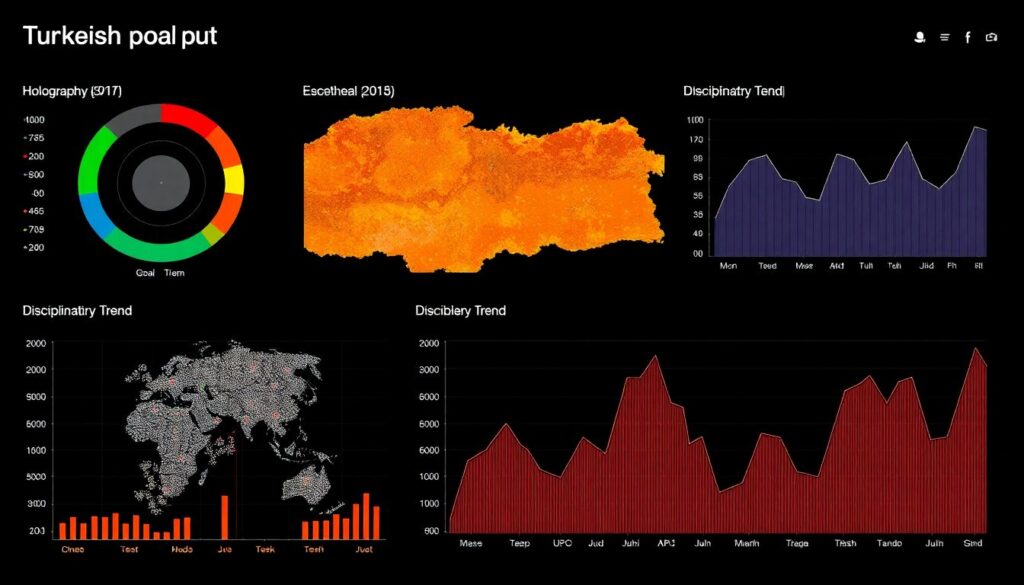
To understand how VAR shapes the Süper Lig over multiple seasons, you can build predictive models around outcomes such as league parity, goal distribution, and disciplinary trends. These models treat VAR not only as an event generator but also as a modifier of team and referee behavior.
A basic modeling pipeline might:
- Ingest historical event data with and without VAR, harmonized across seasons.
- Engineer features for each match: VAR penalties, offside cancellations, red-card corrections, total review time, xG swing from VAR incidents.
- Estimate impact on outcome probabilities (home win/draw/away win) via logistic or multinomial models, including interaction terms with team style and referee profile.
- Project future distributions of VAR incidents given tactical and regulatory trends (e.g., more conservative defending in the box).
A simplified pseudocode sketch for a match-level outcome model:
for match in super_lig_matches:
    features = {
        "xg_home": match.xg_home,
        "xg_away": match.xg_away,
        "var_penalties_home": match.var_penalties_home,
        "var_penalties_away": match.var_penalties_away,
        "var_xg_swing": match.var_xg_swing,
        "total_review_time": match.total_review_time,
        "referee_id": match.referee_id
    }
    probabilities = outcome_model.predict_proba(features)
Clubs and betting operators that build such models in-house essentially provide their own football data analytics services, tuned to local league specifics rather than generic global assumptions.
- Keep VAR-related features modular so they can be added or removed as protocols evolve.
- Test model stability across multiple seasons to check whether VAR behavior is converging or still volatile.
- Use scenario simulations (e.g., “no VAR penalties” or “reduced review times”) to communicate impact to non-technical staff.
Quick Practical Tips for Working with VAR Data in the Süper Lig
- Separate VAR events into their own table, linked by match and incident IDs, instead of mixing them with base events.
- Always annotate rule and interpretation changes by date; many apparent trends are driven by protocol updates.
- When possible, cross-check public incident logs with video to refine labels (e.g., contact intensity, location).
- Use simple visuals first (line and bar charts) to validate data quality before building complex models.
- Document assumptions about what is or is not reviewable to avoid misclassifying “missed” interventions.
Self-checklist for Applying VAR Insights in the Süper Lig
- Have you clearly distinguished between on-field and VAR-modified decisions in your dataset?
- Do your models explicitly incorporate review timing, incident type, and xG swing as features?
- Are protocol changes and referee-specific patterns accounted for in longitudinal comparisons?
- Have you validated tactical conclusions against multi-season, team-level VAR profiles?
- Can you explain your VAR metrics and visuals in simple terms to coaches and decision-makers?
Practical Clarifications on VAR Use in the Süper Lig
Which incidents can the VAR actually review in the Süper Lig?
VAR can intervene only in four areas: goals, penalty decisions, direct red cards, and mistaken identity. All other fouls and yellow-card incidents remain primarily under the on-field referee’s discretion, though they may receive a silent check without a formal review.
Does VAR check every goal and penalty, even without an on-field review?
Yes, every goal and penalty decision is automatically checked by VAR. However, only incidents with potential clear and obvious errors or serious missed events trigger an on-field review where the referee goes to the monitor.
Why do some similar-looking handball situations get different VAR outcomes?
Handball interpretation depends on factors like arm position, distance, deflection, and whether the arm makes the body unnaturally bigger. Small differences in these parameters can lead to different decisions, especially when protocols or guidelines shift between seasons.
How does VAR affect added time at the end of matches?
Time spent on VAR checks and on-field reviews is supposed to be included in added time. Longer or more frequent reviews typically increase stoppage minutes, which can influence fatigue levels and late-goal probabilities.
Can clubs appeal VAR-backed red cards or penalties after the match?
Clubs can appeal disciplinary sanctions, such as the length of a suspension, but match results almost never change. Committees are generally reluctant to re-open VAR-reviewed incidents unless there is an exceptional procedural issue.
Do all Süper Lig stadiums have the same VAR camera setup?
The federation aims for standardized coverage, but small differences can exist due to stadium architecture and camera placement. These variations occasionally affect the clarity of certain angles, especially for very tight offside or contact decisions.
Is it possible to predict VAR interventions before a match?
You cannot predict exact incidents, but by analyzing team styles, referee tendencies, and historical VAR data, you can estimate higher or lower probabilities of VAR-related penalties, offsides, and card corrections in a given fixture.