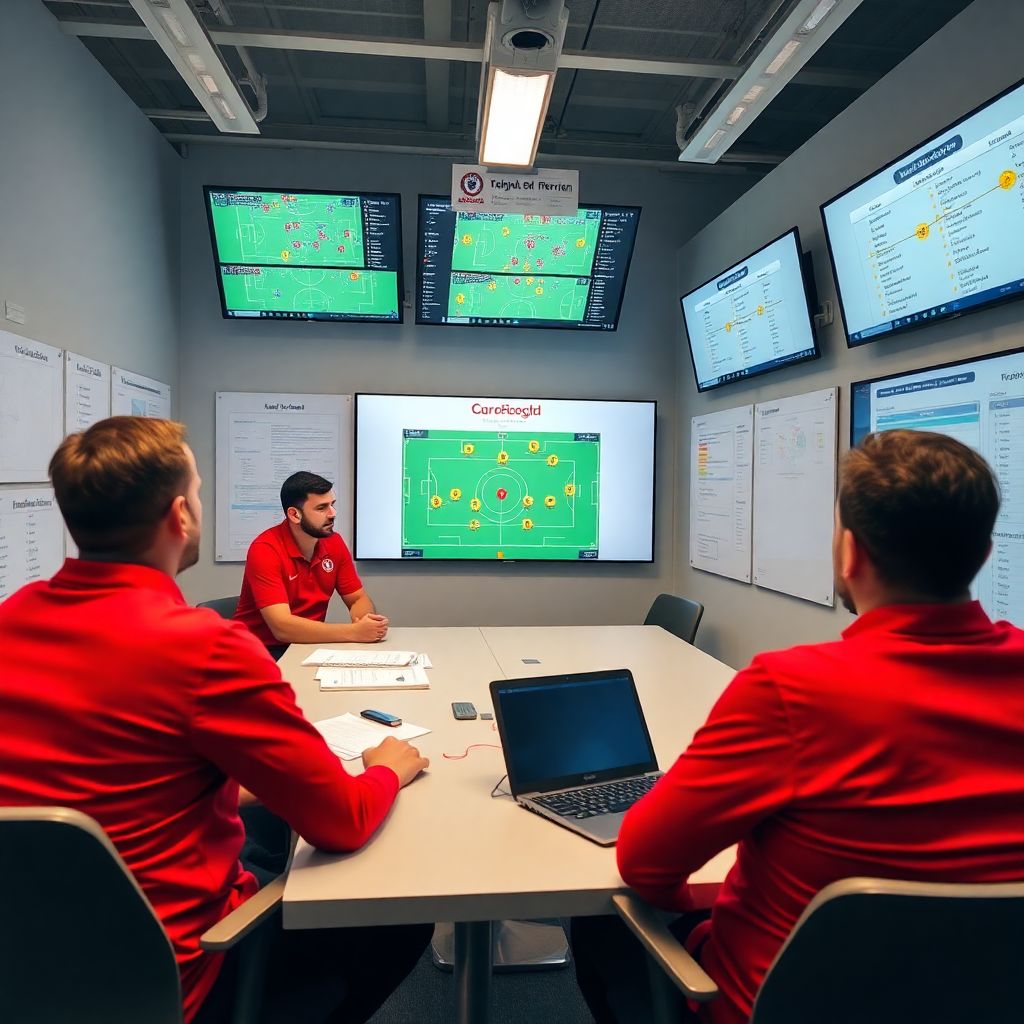
Turkish teams preparing for Champions League and Europa League nights need a clear workflow: opponent scouting three weeks out, a tailored training microcycle, formation choices aligned with player profiles, precise pressing and transition rules, ruthless set-piece detail, and strict logistics and recovery routines that fit the Turkish Super Lig calendar and travel demands.
Pre-match Tactical Summary for European Nights
- Start detailed opponent scouting at least two league games before the European fixture and update after every new match.
- Design a seven‑day microcycle balancing high-intensity work with tactical shape and set-piece rehearsal.
- Choose between 4‑2‑3‑1, 3‑5‑2 or hybrid systems based on your own strengths before reacting to the opponent.
- Define pressing heights, compactness rules and transition roles differently for home and away European fixtures.
- Prepare a limited, well-practised set-piece menu with clear markers and responsibilities for every player.
- Synchronise travel, sleep, nutrition and rotation with both European and Turkish Super Lig schedules to protect freshness.
Scouting Opponents: Data Sources, Prioritised Traits and Scouting Timelines
This structured approach suits staff in Turkish Super Lig clubs who already collect match video and basic physical data. It is less suitable for amateur setups without consistent video or GPS access, or for youth teams whose weekly variability is too high for such fine-tuned European-level planning.
Key data sources for European scouting:
- Recent league and European matches (minimum last 4-5 games, home and away balance).
- Team tactical reports: formation patterns, build-up zones, pressing schemes, set-piece routines.
- Individual profiles: key playmaker tendencies, pressing leaders, aerial threats, 1v1 defenders.
- Physical and tempo indicators: pressing duration, sprint density, late-game intensity changes.
- Contextual info: travel schedule, recent injuries, suspensions, rotation habits.
Prioritise traits that directly affect your European plan:
- How they build from the back under pressure and their main escape routes.
- Where they deliberately leave space and which zones they overprotect.
- Set-piece patterns, especially first and last 10 minutes of each half.
- Transitions: how many players they commit ahead of the ball, counter-press habits.
Recommended scouting timeline:
- Minus 21-14 days: broad structural report, first live or full-match video observation.
- Minus 10-7 days: updated analysis with focus on pressing, set-pieces, transitional behaviour.
- Minus 5-3 days: final “game plan” edit with clips for player meetings and unit briefings.
- Minus 2-1 days: refine details only if new, reliable information appears (injuries, suspensions, weather).
Clubs arranging football training camps in Turkey for elite teams often use those camps to rehearse this full scouting workflow with staff and players, simulating Champions League or Europa League weeks.
Training Microcycles: Integrating High-Intensity Work, Shape Rehearsals and Set-Piece Sessions
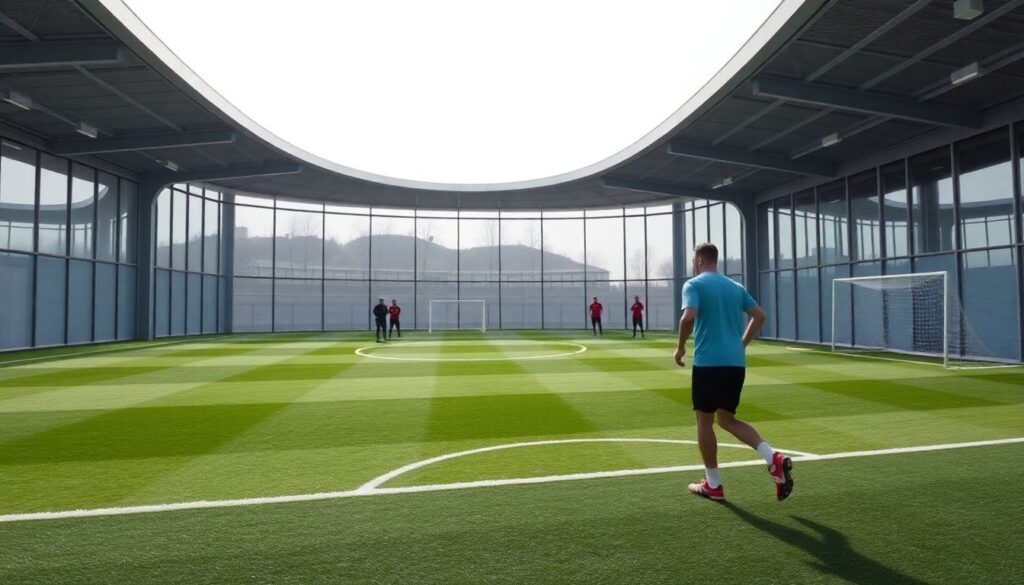
To implement a European-level week in Turkey, you need at minimum:
- Reliable pitch access with consistent dimensions (match-like width and length).
- GPS or simple running-load tracking, plus heart-rate monitoring or RPE scales.
- Video capture on the training pitch for shape and set-piece review.
- Dedicated analyst or assistant coach responsible for turning scouting into exercises.
Typical seven-day microcycle around a European night, aligned with domestic fixtures:
- Matchday +1: Recovery (low-intensity aerobic, mobility, contrast baths; short video debrief).
- Matchday +2: Strength and high-intensity intervals for non-starters; extended recovery and corrective work for starters.
- Matchday -3: Main intensity day – small-sided games, pressing drills, position-specific duels.
- Matchday -2: Tactical shape – 11v11 rehearsal, build-up patterns, pressing triggers, transition waves.
- Matchday -1: Set-piece focus – attacking and defensive routines at match stadium if possible.
- Matchday: Activation, short rondos, speed primes, mental refresh; no heavy tactical changes.
For Istanbul-based clubs, proximity to major venues and the availability of the best hotels near Istanbul stadiums for European football nights make it easier to keep routines stable, even when stadium change or pitch sharing is required.
Formation Choices: How Turkish Coaches Decide Between 4-2-3-1, 3-5-2 and Hybrid Systems
-
Audit your squad profiles before looking at the opponent
List your best eleven and their natural roles. Decide how many natural centre-backs, holding midfielders and high-intensity wingers you truly trust at European level.
- If you lack wide runners, 3‑5‑2 may not stretch opponents enough.
- If you lack ball-playing centre-backs, avoid back-three build-up from deep.
-
Match your base formation to your best players’ strengths
For most Turkish rosters, 4‑2‑3‑1 is the default because it suits a classic number 10 and strong wingers. Use 3‑5‑2 if your strikers combine well and your wing-backs can run all night.
- 4‑2‑3‑1: best when you have one top creator and two dynamic wide forwards.
- 3‑5‑2: best when your centre-backs defend big spaces and wing-backs are elite athletes.
- Hybrid 4‑3‑3/4‑4‑2: useful when your “10” can also form a second striker in pressing.
-
Overlay opponent weaknesses onto your chosen structure
Once your base is set, adjust to target specific vulnerabilities from scouting: weak full-backs, slow pivots, or poor aerial defending.
- Exploit weak full-backs by fielding your best 1v1 winger on that side.
- Exploit slow pivots by pressing with two forwards (4‑4‑2 out of 4‑2‑3‑1).
- Exploit aerial issues by using an extra tall midfielder or striker.
-
Define in-possession and out-of-possession shapes
Make the distinction explicit in your meetings: for example, 4‑2‑3‑1 building into a 3‑2‑5 when full-back inverts, or 3‑5‑2 defending as 5‑3‑2 in low block.
- Clarify who steps into midfield when building and who drops into the line when defending.
- Show two or three short clips for each transition of shape.
-
Rehearse the formation under match-like pressure
Use 11v11 on a slightly narrowed pitch to force compactness, then full-width to test lateral shifting. Emphasise communication and distances between lines.
- Stop-and-correct only key issues: distances, cover shadows, passing lanes.
- Record sessions and review 5-10 clips with players the next morning.
-
Lock the game plan and share clear, simple rules
At least 24 hours before kick-off, confirm the starting formation and no more than three “if-then” scenario changes (for example, chasing the game or protecting a lead).
- Write down simple triggers: goal down, opponent changes system, fatigue patterns.
- Avoid wholesale formation changes without prior training reps.
Fast-track: Быстрый режим for matchday formation decisions
- Pick the system that fits your best eleven, not the opponent’s shape.
- Define one attacking and one defensive variant of that system, with clear roles.
- Prepare maximum three in-game adjustments and rehearse them once in 11v11.
- Before kick-off, repeat the three most important rules per line: back line, midfield, front.
Pressing, Compactness and Transition: Defensive Plans for Home and Away European Fixtures
Use this checklist to verify if your defensive plan is match-ready:
- You have agreed pressing heights for home (often higher, crowd-driven) and away (often more controlled) games.
- Press triggers are clear: backward passes to centre-back, slow lateral passes, poor first touches.
- Every player knows which opponent to close on those triggers in your main structure.
- Distances between lines are set and rehearsed (for example, back-to-midfield line, midfield-to-front line).
- Wide pressing traps are defined: when to show inside, when to lock outside near the touchline.
- Transition defence rules exist: two or three “rest defence” players are always behind the ball when you attack.
- Counter-attack patterns are trained: first pass options, support lanes, and maximum number of players joining.
- Your goalkeeper’s role is specified: starting position for sweeper actions and long distribution targets.
- You have scenario mini-plans: leading away from home, chasing a deficit at home, and playing with ten men.
- Post-match metrics are defined: number of successful presses, transitions leading to shots, and big chances conceded from counters.
Set-Piece Arsenal: Offensive Routines, Defensive Zonal/Hybrid Schemes and Matchday Markers
Common mistakes that reduce the impact of set-pieces in European nights:
- Having too many attacking routines instead of 3-5 well-mastered patterns.
- Changing corner-taker or delivery type late without prior rehearsal.
- Ignoring opponent-specific blocking and screening habits seen in scouting.
- Mixing pure man-marking with vague “zonal” instructions so players hesitate.
- Assigning weak or reluctant headers to key zones at defensive corners.
- Forgetting to plan for second balls: edge-of-box roles and counter-press structure.
- Failing to coordinate goalkeeper decisions on high lines and punch/catch preferences.
- Not rehearsing added-time set-pieces under time pressure and crowd noise.
- Skipping video feedback on set-piece actions because “they are simple”.
- Underusing analysts for signal systems, markers, and opponent-specific matchday markers.
Logistics and Recovery: Travel, Sleep, Nutrition and Rotation Strategies to Maintain Edge
Alternative approaches to logistics and recovery depend on club budget, schedule and competition level:
- High-budget, full-service model – Use premium accommodation and coordinated travel, including options similar to champions league hospitality packages in Turkey for visiting delegations. Suitable for top Turkish Super Lig clubs regularly in the Champions League group stage.
- Compact, cost-conscious model – Shorter trips, simple hotels, and strict sleep and nutrition routines controlled internally. Best for Europa League qualifiers or clubs with limited budgets needing to prioritise player freshness over luxury.
- Camp-based preparation model – Pre-season or in-season mini-camps, similar to football training camps in Turkey for elite teams, to rehearse double-game weeks, recovery blocks and travel patterns before real European ties start.
- Home-base stability model – For Istanbul clubs, keep players in a familiar environment and treat European home games almost like domestic matches, leveraging local knowledge of venues, traffic, and the best hotels near Istanbul stadiums for European football nights when a residential stay is still needed.
From a fan-experience angle, staff should also understand the impact of crowd energy and access, including how turkish super lig tickets for champions league matches are distributed and how demand spikes when supporters aim to buy tickets Galatasaray Champions League home games, as this atmosphere can significantly affect tactical execution.
Typical Tactical Dilemmas and Practical Solutions for Coaches
How early should I lock my formation for a European match?
Lock your base structure at least 72 hours before kick-off and avoid last-minute changes unless injuries force them. Use the final 48 hours to adjust only fine details: pressing height, set-piece roles, or one positional tweak.
How do I balance pressing aggressively with avoiding fatigue in tight schedules?
Use high pressing in short, pre-defined waves with clear triggers and recovery phases. In Turkish Super Lig weeks with congested fixtures, shorten pressing windows and rely more on a mid-block away from home.
What is the best way to prepare players mentally for intense away atmospheres?
Show short video clips of similar atmospheres, rehearse communication solutions (hand signals, simple code words), and highlight controllable behaviours. Keep messages consistent and avoid overloading players with negative scenarios.
How many set-piece routines should I use in one European game?
Prefer a small, sharp menu: three or four attacking corner patterns and one or two free-kick variations from each major zone. Rotate between them based on opponent reaction rather than using everything you prepared.
How do I manage rotation without destroying tactical cohesion?
Rotate by lines and profiles, not randomly by names. Keep at least two players per line who understand all rules and can guide rotated teammates, and rehearse “backup elevens” in training with the same tactical demands.
Should I copy a big European club’s pressing model?
Borrow ideas, not full systems. Start with one or two simple pressing triggers that match your players’ physical level and game intelligence, then layer additional complexity across the season rather than overnight.
How do I handle a European game right after a crucial league derby?
Plan backwards: design the derby microcycle knowing the European match is coming. Use aggressive rotation in lower-risk league fixtures earlier in the month to protect core players for both the derby and Europe.