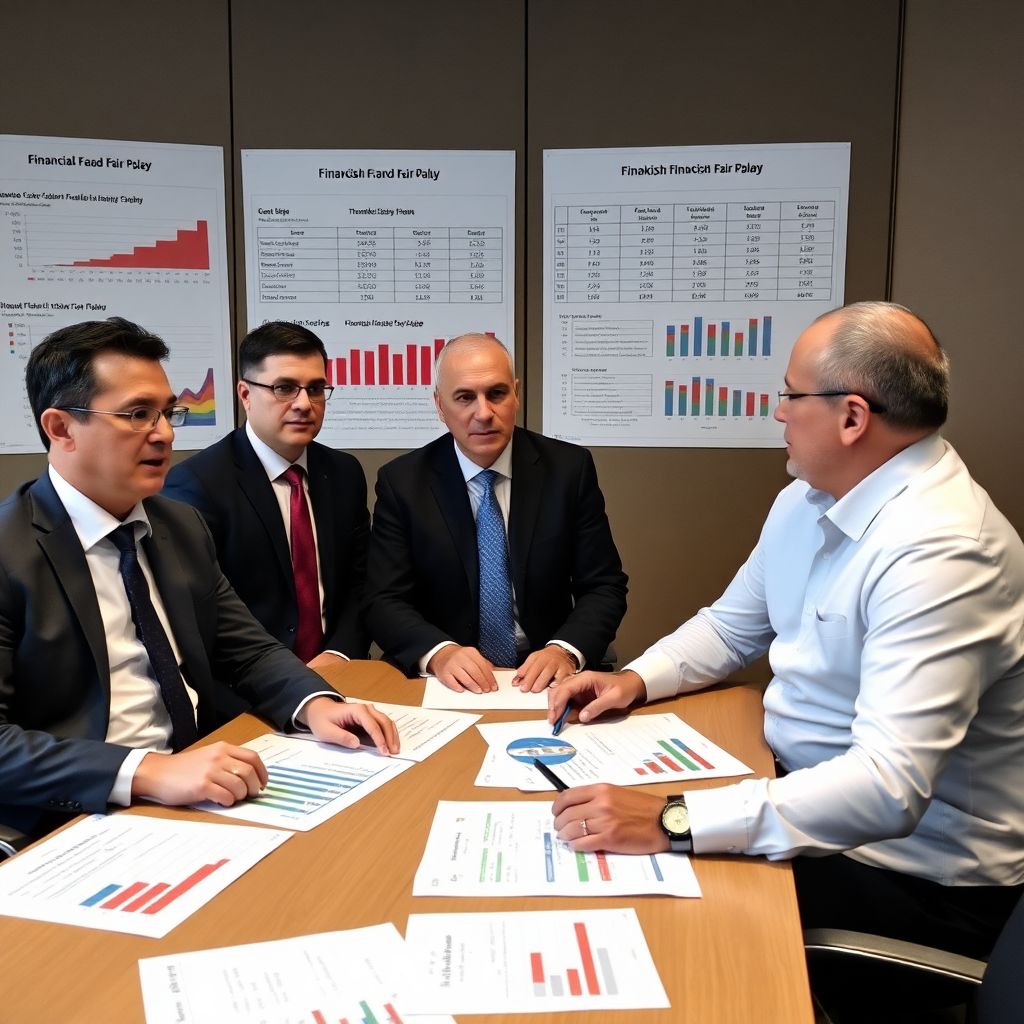
Financial Fair Play and broadcast deals will shape how Turkish clubs spend, compete, and survive over the next decade. To protect the Süper Lig economy, clubs must budget from stable TV, sponsorship, and commercial revenue, then build transfer and wage plans backward from those limits, supported by realistic debt management and transparent governance.
Essential rules shaping Süper Lig club finances
- Always set your squad budget from verified revenues first; never from sporting ambition alone.
- Treat UEFA and TFF Financial Fair Play as hard constraints, not negotiation tools.
- Use multi-year TV contracts as the backbone of long-term cash-flow planning.
- Diversify away from pure broadcasting dependence using sponsorship and matchday growth.
- Separate transfer spending and wage commitments into capped, pre-approved annual envelopes.
- Stress-test budgets for relegation, missed European qualification, and currency volatility.
- Align agents, coaches, and boards with written financial policies tied to FFP compliance.
How Financial Fair Play determines club budgets and transfers
Understanding how Financial Fair Play affects Turkish clubs is essential before signing contracts, borrowing, or starting new projects. FFP suits clubs ready to work with audited accounts, transparent ownership, and realistic sporting targets. It is risky for boards expecting constant bailouts, opaque related-party deals, or speculative short-term gambling on Champions League income.
FFP frameworks used in Turkey and Europe typically require that football-related losses stay within defined limits over a multi-year period and that overdue payables to clubs, players, and tax authorities are tightly controlled. In practice, this means every Süper Lig club must translate regulatory texts into three internal tools:
- Annual break-even budget – forecast of all reliable revenues versus controllable expenses over at least three seasons.
- Transfer and wage envelope – a fixed cap per season for transfer fees, agent commissions, and player salaries.
- Debt and cash policy – rules on borrowing, refinancing, and repayment, checked against expected broadcasting and sponsorship inflows.
FFP-style control is suitable when:
- Your club can close each season with only minor, explainable losses.
- Owners accept that UEFA/TFF sanctions on squad size, transfers, or European participation are real threats.
- There is at least basic financial staff capacity: accounting, legal, and treasury functions.
It is not advisable to rely on FFP waivers or short-term exceptions when:
- Your wage bill already dominates total revenues and you expect to cover gaps with player sales that are not guaranteed.
- Cash flows from broadcast contracts, such as in Süper Lig TV rights deals 2024 and beyond, are still uncertain or under legal dispute.
- The club regularly delays payments to players, staff, or tax authorities, risking immediate disciplinary action.
For transfers, FFP translates into practical rules: amortise transfer fees over contract length; avoid back-loaded contracts that explode costs in later seasons; and include relegation or non-qualification clauses that automatically reduce wages and bonuses if income falls.
Broadcast rights: current market structure and revenue streams

Süper Lig TV rights deals 2024 illustrate how dependent Turkish clubs remain on centralised broadcasting income, both domestic and international. Clubs and league authorities must understand contract structure, legal risks, and collection mechanics before promising any of this income to banks, players, or agents.
To plan safely around the Süper Lig broadcasting rights price and related income, clubs and the league need access to:
- Signed master agreements with broadcasters and streaming platforms, including minimum guarantees and revenue-sharing formulas.
- Payment schedules showing when instalments fall due during the season.
- Clear allocation rules from the league: fixed share, merit-based share, and commercial performance components.
- Historical collection rates and any past disputes, discounts, or delays between league and broadcasters.
- Currency denomination of contracts, and any hedging or indexation clauses.
Besides central broadcasting, each club must map its additional revenue pillars:
- Süper Lig sponsorship and commercial revenue – shirt sponsors, sleeve partners, stadium naming, official suppliers, and digital partnerships.
- Matchday revenues – ticketing, hospitality, and local catering contracts.
- Player trading – net income from sales minus purchases, smoothed across years.
- Other media rights – international tours, friendlies, and archival content licensing.
Executives considering investing in Turkish football clubs must demand a transparent breakdown showing what portion of total revenues comes from each of these pillars and how sensitive each stream is to league position, European qualification, and macroeconomic shocks.
| Broadcast model | Core features | Likely revenue outcome | Risk profile for Süper Lig clubs |
|---|---|---|---|
| Single domestic TV deal | One main broadcaster, long-term contract, centralised negotiations by league. | Stable but limited growth; predictable cash flows over contract term. | Low contract risk, high dependency on one partner and its financial health. |
| Split-platform hybrid | Rights divided between satellite, digital streaming, and possibly FTA highlights. | Potentially higher total rights value if platforms compete for content. | Moderate complexity; more negotiation work but diversification of counterparties. |
| Club-by-club deals | Individual clubs sell their own rights, possibly with league-wide minimum standards. | Big clubs may boost income; smaller clubs risk flat or lower offers. | High inequality, risk of fragmented scheduling and weaker collective bargaining. |
| Central deal plus club add-ons | League sells core rights; clubs sell non-core content such as behind-the-scenes or friendlies. | Balanced growth; central stability with upside from club-level innovation. | Medium complexity; requires clear definitions and digital capabilities at club level. |
Tactics for negotiating and structuring TV and streaming deals
Negotiating TV and streaming contracts is where the Süper Lig broadcasting rights price, contract duration, and risk sharing are all decided. A disciplined process protects club finances and reduces surprises for both domestic and foreign partners.
- Define non-negotiable financial and regulatory limits – Before any meeting, agree on minimum acceptable total value, maximum contract duration, and mandatory FFP-compatible payment timings.
- Ensure instalments match major cost peaks: wage payments, tax dates, and European registration deadlines.
- Avoid structures where most money arrives in later years with no protection for early investment.
- Map your content and rights inventory – List all assets you can legally sell and the boundaries set by league and federation rules.
- Live matches, delayed matches, and highlights packages.
- Local versus international feeds and language versions.
- Non-live content: archives, documentaries, academy coverage.
- Segment potential partners and their priorities – Satellite providers, telecoms, global OTT platforms, and local streamers all value content differently.
- Prepare separate pitch decks tailored to each partner type.
- Highlight metrics that matter to them: subscriber growth, churn reduction, engagement.
- Build a structured offer and counter-offer ladder – For each negotiation, define a sequence of price and scope combinations you are ready to propose.
- Start with ideal package: strong minimum guarantees plus upside share.
- Prepare fallback options: shorter term, narrower exclusivity, or more flexible sublicensing.
- Balance fixed guarantees with performance-based components – A safe mix blends stability with growth incentives.
- Guarantee sufficient fixed income to cover baseline squad and operations.
- Add variable elements linked to subscribers, ratings, or digital views, using transparent formulas.
- Control legal, regulatory, and currency risk – Contract text must protect clubs from shocks beyond sporting performance.
- Clarify remedies for late payments and dispute resolution routes.
- Use currency clauses and indexation to reduce inflation and FX risk where possible.
- Integrate broadcasting with sponsorship and matchday strategy – TV visibility drives Süper Lig sponsorship and commercial revenue.
- Include co-marketing obligations for broadcasters that boost sponsor exposure.
- Align kick-off times, promotional clips, and social media with club partners.
- Test financial impact before signing – Run conservative and adverse scenarios through your budget.
- Check whether club finances still comply with FFP if bonuses are not achieved.
- Review implications for debt covenants and existing loans.
Fast-track mode for executives on media deal decisions
- Confirm minimum safe annual income you need from broadcasting to stay FFP-compliant.
- Shortlist partners who can reliably pay and support long-term brand growth.
- Choose the shortest contract that still delivers your minimum target at acceptable risk.
- Demand clear payment schedules and default penalties before approving any final deal.
Distribution models: equality, merit, and incentives for competitiveness
How broadcasting money is shared across clubs directly affects competitive balance, relegation risk, and long-term league value. Use the following checklist to review whether your chosen distribution model is sustainable.
- Is there a guaranteed fixed amount for each club that covers basic operational costs?
- Does the merit-based portion (linked to league position) avoid extreme gaps between top and bottom clubs?
- Are TV-related bonuses for live appearances or “big games” limited so mid-table clubs still benefit?
- Does the system include development incentives for academies, local player usage, or infrastructure investments?
- Is there a relegation parachute model to soften the revenue shock and reduce bankruptcy risk?
- Are European qualification bonuses sized so missing out does not automatically cause FFP breaches?
- Can smaller clubs realistically plan multi-year budgets with the information they receive from the league?
- Are distribution rules transparent, published, and stable enough for banks and investors to trust?
- Does the balance between equality and merit keep the title race open while protecting overall league quality?
- Have fan, broadcaster, and sponsor perspectives been considered when designing the model?
Immediate fiscal measures to prevent insolvency and ensure compliance
When liquidity tightens, clubs often react with short-term fixes that create bigger problems later. Avoid the following frequent errors and replace them with safer alternatives.
- Relying on future TV income advances without checking impact on next season’s cash flow and FFP calculations.
- Issuing new short-term, high-interest loans secured on broadcasting or ticket revenue without a repayment plan.
- Extending expensive player contracts to “defer” wages instead of renegotiating or transferring the player.
- Selling key assets at fire-sale prices to plug immediate gaps without evaluating sporting and financial consequences.
- Ignoring tax and social security arrears, which often trigger faster sanctions than football debts.
- Failing to communicate with players and staff about temporary measures, increasing the risk of contract disputes.
- Underestimating currency risk on foreign-denominated wages and transfer fees.
- Delaying independent audits or financial reviews until after UEFA or TFF investigations begin.
- Over-projecting income from player sales that have no concrete offers yet.
- Cutting investment in medical, academy, or scouting areas that protect long-term asset values.
Strategic levers for sustainable long‑term growth of the Süper Lig economy
Beyond emergency actions, the Süper Lig needs structural strategies that align club finances, competitive balance, and international positioning. The options below offer different pathways, often used in combination.
- Strengthened central commercial and media platform – Develop league-level digital products, data services, and international packages while maintaining a robust core TV deal. Suitable when clubs individually lack technology and global sales capabilities.
- Controlled club-level media and sponsorship innovation – Allow clubs to monetise non-core content and bespoke partnerships under clear league guidelines. Works best for brands with large fanbases or strong local sponsors, while still protecting collective value.
- Governance and licensing reform tied to FFP – Tighten club licensing, including ownership tests, debt caps, and mandatory transparency. Appropriate when the league wants to reduce insolvency risk and make investing in Turkish football clubs more attractive for long-term investors.
- Integrated talent and export strategy – Position the Süper Lig as a key development and showcase league, linking academy rules, foreign-player limits, and scouting networks to sustainable player trading models aligned with FFP.
Concise practical clarifications on policy and execution
How should a Süper Lig club set its maximum wage bill under FFP?
Start from conservative, recurring revenues: confirmed TV, sponsorship, and matchday income. Deduct non-squad operating costs and planned debt service. The remaining amount is your wage envelope, which should then be reduced further to leave a safety buffer for bad seasons and unforeseen expenses.
What is a safe contract length for broadcasting deals in Turkey?
Contracts should be long enough to provide planning stability but short enough to adjust to market changes. In a volatile environment, shorter cycles with extension options tied to performance and regulatory stability are often safer than very long fixed terms.
Can a club fix FFP problems only by selling players?
Player sales help only if they are part of a wider plan that also controls wages, overheads, and debt. Over-reliance on transfer income creates volatility and can backfire if the market weakens or key players suffer injuries.
When is it sensible to use future TV income as loan collateral?
Using TV income as collateral is sensible only when the club has a clear repayment schedule, modest borrowing relative to expected inflows, and no other major claims on the same revenue. Always consider how this affects future flexibility and FFP metrics.
How can smaller clubs improve their share of commercial revenue?
Smaller clubs can focus on local sponsors, community engagement, and digital content targeted at niche audiences. By packaging these assets professionally and presenting solid audience data, they become more attractive even without the biggest TV exposure.
What should foreign investors examine first before entering a Turkish club?

They should review audited financials, existing debt structures, FFP status, and detailed contracts for broadcasting, sponsorship, and stadium use. Understanding local legal frameworks and federation regulations is essential before committing any significant funds.
Is a club-by-club media rights model realistic for the Süper Lig?
It is technically possible but carries high risks of inequality and fragmentation. For now, a centralised or hybrid system with controlled club add-ons is usually more compatible with financial stability and competitive balance goals.