
If you ask Turkish fans what makes a “10 numara” special, they won’t start with data or GPS metrics; they’ll talk about swagger, street‑football instincts, and the courage to try the impossible in tight spaces. Building the perfect Turkish number 10 in 2026 means blending that traditional flair with brutally modern preparation. It’s no longer enough to have one magic foot and a good highlight reel. The role now sits at the intersection of micro‑skill work, tactical intelligence, and mental robustness, all shaped by technology that can either sharpen or sterilize a playmaker, depending on how you use it.
Technical DNA: Between Street Football and Lab Precision
For a Turkish number 10, touch is still the entry ticket. But the way we build that touch has evolved from endless cage games to hyper‑targeted drills. Smart coaches combine old‑school rondos and 3v3 chaos with sensor‑based balls and high‑speed cameras, turning every first touch, disguise, and chop into measurable data. The trick is not to suffocate creativity. Over‑structured individual technical skills training for playmakers can produce clean mechanics but robotic decisions. The sweet spot is “guided chaos”: sessions where the player must solve random problems at high tempo, while the tech quietly collects data in the background instead of dictating every movement.
Comparing Training Approaches: Academy, Street, and Hybrid Models
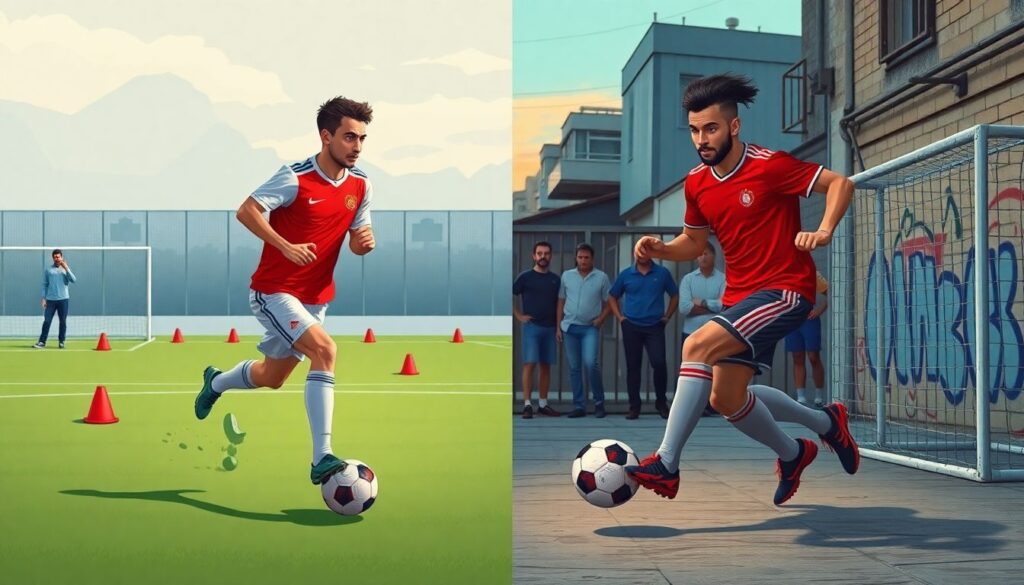
If we compare classic academy methods to informal street‑heavy development, each has clear trade‑offs for Turkish attacking midfielders. Pure academy products often excel in pressing triggers, passing angles, and rhythm, but may lack the audacity to dribble in crowded central zones. Pure street players tend to have outrageous first touches and fakes, yet they struggle to read complex pressing schemes. Hybrid academies now build football training programs for attacking midfielders that force them to shuttle between structured tactical sessions on big pitches and small‑sided games on rough surfaces. The most promising Turkish 10s are coming from clubs that schedule “uncoached” play blocks, where staff watch but barely intervene, then use the video afterward to design more specific technical interventions.
Tactical Intelligence: Orchestrator vs System Player
Modern coaches disagree on what the number 10 should be in 2026. Some see him as a high‑volume orchestrator constantly dropping between lines, others as a narrow winger arriving inside. That’s why tactical analysis coaching for advanced midfielders has become almost position‑specific. One camp pushes heavy pattern repetition—third‑man runs, automatic rotations, strict rest‑defence positions. The upside is reliability; the downside is predictability, especially against deep Turkish league blocks that have seen every pattern. The other camp leans toward principles: teaching the 10 to recognize space, weak defenders, and pressing angles, then letting him improvise patterns on the fly. The elite solution is not either‑or; it’s training fixed patterns as a “default language” and principles as the freedom to deviate when the game demands a different script.
Tech in Tactical Training: Pros, Cons, and Creative Uses
By 2026, AI‑driven video platforms can tag every line‑breaking pass, half‑turn, and receiving angle for a number 10, compiling heat maps and pressure profiles in seconds. The upside is massive: you can show a Turkish playmaker how his body orientation under pressure compares to the best in Europe, literally frame by frame. Wearables track his intensity in the pockets and how often he offers a passing lane. But there’s a risk of overfeeding him information, turning a natural feel player into someone who waits for instructions. Non‑standard use of tech means giving players editing rights: let the 10 build his own “best decisions” playlist, annotate it in his own words, and then contrast it with coach feedback. This keeps ownership with the player rather than the algorithm.
Mental Edge: From Volatile Genius to Reliable Match‑Winner
Turkey has never lacked emotionally charged talents, but the ideal 10 in 2026 has to transform that volatility into repeatable impact. Mental performance coaching for elite football players has moved beyond generic motivation talks into skill acquisition: self‑regulation, attentional control, and quick emotional reset after mistakes. One unconventional solution is using VR match simulations not just for tactical repetition, but for stress inoculation—replaying hostile away crowds, late‑game scenarios, or referee mistakes, and training the 10 to respond with productive actions, not theatrics. The danger is turning emotions down too low; a neutered playmaker loses the edge that drives risk‑taking. The goal is not calmness for its own sake, but “aggressive composure”: high arousal, clean decisions.
Online Learning and Remote Coaching: Boon or Distraction?
A lot of young Turkish 10s now supplement club work with digital education. The best online soccer coaching course for number 10 role can offer elite tactical content that many domestic academies still lack, especially around pressing resistance and half‑space exploitation. Remote one‑to‑one breakdowns, screen‑shared over match clips, allow deep learning without heavy travel. However, endless online content can become a rabbit hole of generic advice and highlight‑reel illusions. The deciding factor is curation: a small stack of trusted online mentors, clear learning goals, and strict time limits. For a 17‑year‑old, thirty minutes of focused online review after games can be golden; three hours of scrolling “skills tutorials” is pure noise.
Current Trends 2026: Positionless Midfielders and Data‑Aware Playmakers
Tactically, 2026 is pushing the Turkish number 10 toward a more positionless profile. Coaches expect him to defend like an 8, counterpress like a 9, and create like a classic 10. That’s why many academies are merging roles, designing football training not just for specialists but for multi‑phase creators. Data has also changed how scouts judge the role: instead of only counting key passes, they track how often the 10 receives on the half‑turn under pressure, how his actions translate into expected threat, and how he manipulates defenders off the ball. The smart number 10 learns this language just enough to understand why coaches value certain decisions, without trying to “play for the data”.
Choosing the Right Development Path: Practical Recommendations
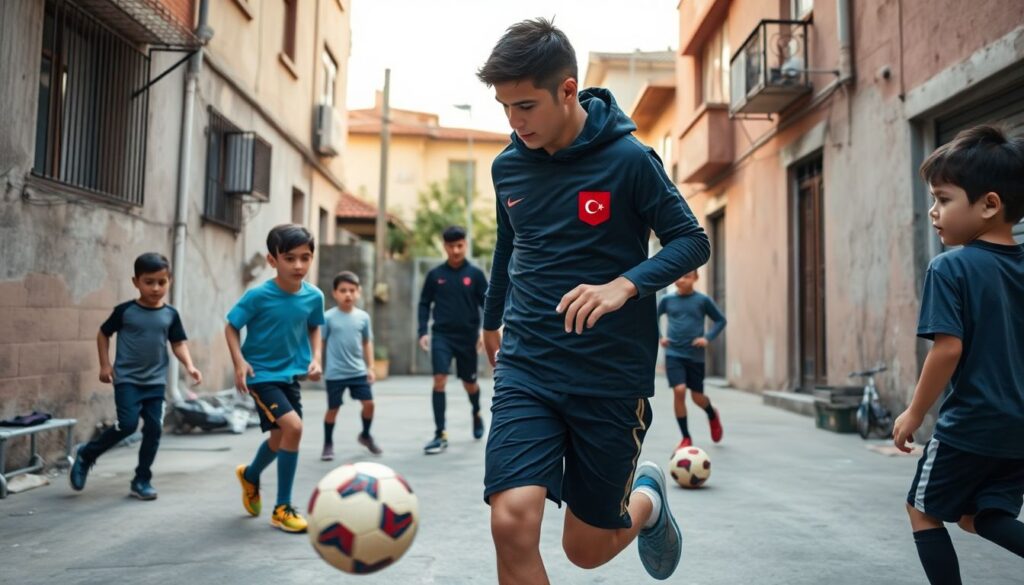
For a young Turkish playmaker and his family, the question is how to mix all these options without losing identity. A useful rule: technical creativity comes first, then tactical structure, then mental refinement. Start with lots of unstructured small‑sided games and challenging street‑style environments, supported by light individual technical skills training for playmakers that emphasize both feet, first‑touch variations, and disguise. Around 15–16, increase exposure to system work, video, and role‑specific scenarios. Layer in online resources carefully—one specialised mentor, one or two quality football training programs for attacking midfielders, and limited but regular tactical video reviews. The aim is to come out at 20 as a player who still dares, but knows exactly when and where to take that risk.
Non‑Standard Ideas to Build a Truly Unique Turkish 10
To go beyond cookie‑cutter development, coaches in Turkey can experiment with cross‑sport and cross‑discipline influences. Futsal blocks for tighter manipulation, handball concepts for reading overloads, even improv theatre exercises to improve body language and deception in feints. Another underused tool is peer‑to‑peer coaching: let the emerging 10 run a mini‑session for younger players, explaining how he sees pockets of space—teaching often clarifies his own decision trees. Finally, integrate low‑tech creativity challenges alongside all the high‑tech—sessions where you hide GPS screens, ban coaching cues for ten minutes, and simply tell the 10: “Find five new ways to receive between lines today, and we’ll review them on video after.” That balance of freedom and reflection is where the perfect Turkish number 10 is most likely to emerge.