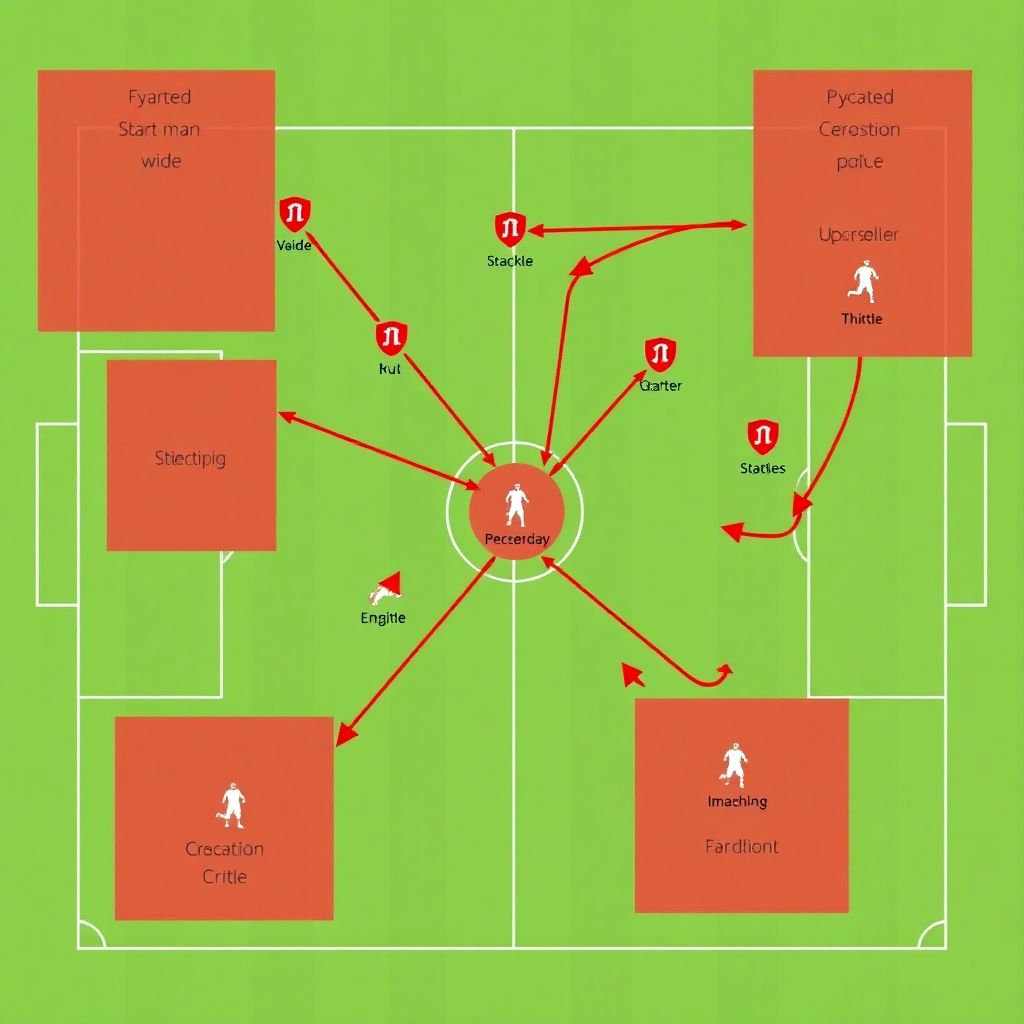
Context: What Makes the Modern No.10 Different?
The classic No.10 you grew up watching – strolling between the lines, waiting for the ball, doing magic – is almost extinct at top level. Today’s playmaker is a hybrid: part 8, part winger, part presser, part game-designer. In the Super Lig this evolution is obvious: creative tens still exist, but they now survive only if they can sprint back in rest-defence, attack the half-spaces, and trigger counterpressing. In Europe the trend is even harsher; coaches replace a traditional enganche with an extra runner or false winger. So “building the perfect No.10” is less about polishing flair and more about engineering a decision‑making machine that keeps tempo, manipulates defensive blocks, and still fits into a high-intensity pressing framework without becoming a defensive liability in transition.
Modern football tactics analysis Super Lig environments show that the central zone is too congested for a lazy creator who stands still. Teams compress vertically, double in the pocket, and hunt turnovers. This means your No.10 must understand not just where to receive, but when to vacate space entirely to drag markers away and open lanes for others. The job description now includes: timing third‑man runs, recognising when to pin the pivot, and reading backward pressing cues. The “perfect” No.10 is less a luxury and more a control interface: if he misreads one trigger, your entire attacking structure loses rhythm. That’s why you should treat him as a systems component, not a free artist, even if you still give him micro-freedoms in the final third.
Necessary Tools: Data, Surfaces, and People
Before you think about magic passes, you need the right tools. For a start, obtain at least semi‑detailed event or tracking data for your league or opponent pool; even an affordable tactical analysis subscription European football platform is enough to visualise where your No.10 actually receives, not where you imagine he is. Combine that with a simple video tagging workflow: tag sequences where your playmaker touches the ball under pressure, between lines, and in transition. This lets you move beyond vague impressions and quantify things like “progressive receptions per 90 in the right half-space” or “press resistance success rate.” Hardware-wise, a GPS or tracking vest is ideal, but even consistent smartphone filming from a high vantage point can give you usable positional footage for post-session review.
The second layer of tools is your staff and “surfaces.” You want at least one assistant who thinks in micro‑structures, not just drills. This person helps adjust pitch shapes: narrow half-pitches to exaggerate central congestion, offset mini‑goals to simulate diagonal passing lanes, and use overload zones painted or coned in the half-spaces. For cognitive load, introduce constraints like coloured bibs meaning different pressing triggers. Finally, don’t underestimate digital tools: simple cloud folders with clipped videos, text annotations, and voice notes can act as your own mini football coaching course attacking midfielders, tailored to your tactical model rather than some generic one-size-fits-all curriculum.
Step-by-Step Process: Building the Perfect No.10
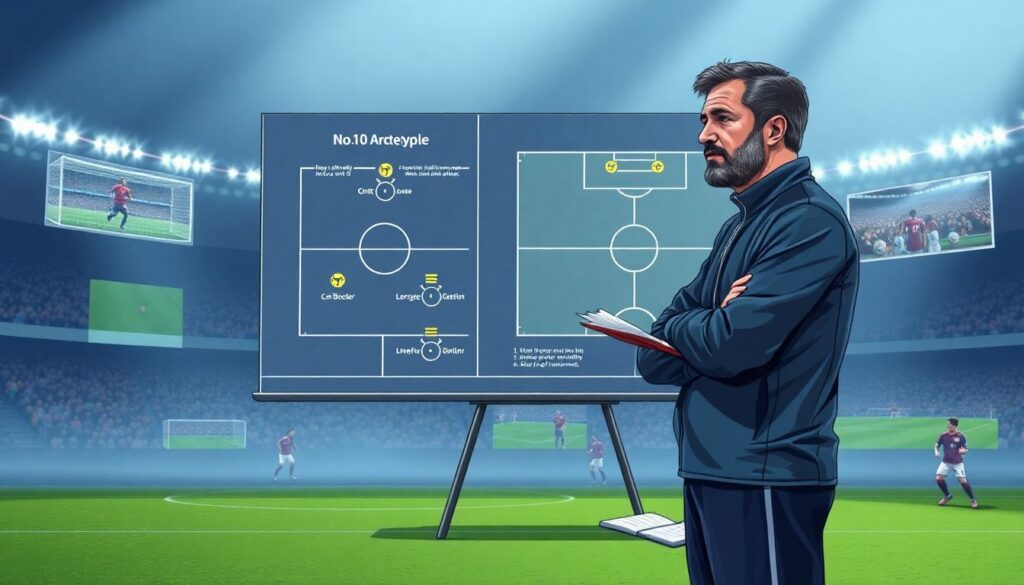
Step one is profiling, and here most coaches are too romantic. Forget “he has good vision”; define your No.10 by archetype: connector (like a deeper 8), line‑breaker (vertical runner), or conductor (tempo-setter). Watch 3–5 full matches of your player, not highlights, and log by hand: where he first touches after regain, where he looks before receiving, how often he scans blindside centre-backs. This manual audit is more valuable than any automated metric at the start. Next, map his strengths to specific game phases: build‑up, consolidation, final third, and defensive transition. If he only comes alive in the final third, your structure must protect him earlier; if he’s strong in build‑up but poor under high pressure near the box, you adjust his reception zones accordingly.
Once your profile is clear, you design no 10 playmaker training drills that mirror your tactical problems, not random YouTube exercises. For example, if your Super Lig opponents use aggressive double pivot screens, run 5v5+2 neutrals with a boxed central zone the No.10 can only enter after a wide bounce pass, teaching him to time arrivals instead of standing marked. In European away games, where pressing is more coordinated, design constrained rondos where he must turn under contact and play the third man within two touches. Progressively layer complexity: start unopposed patterns to engrain automatisms, then add guided defenders, then full chaos with specific scoring conditions. Always finish with a short video debrief so the player links what he felt on the pitch to what you see structurally.
Tactical Roles of the No.10 in the Super Lig
In the Super Lig, game rhythm is often more broken and transitional than in many top European leagues, and this changes the No.10’s tactical profile. He becomes a “transition playmaker” as much as a positional one. That means he must excel at the first two seconds after regain: choosing whether to immediately attack depth with a vertical pass or to secure possession and wait for numbers. Structurally, you can use him as a wide‑starting No.10 who drifts inside late, exploiting full-backs that are more aggressive and sometimes undisciplined in rest-defence. By starting from the wing and attacking the half-space on the blindside of the opposition pivot, he avoids the densest part of the block, gets more forward-facing receptions, and can attack the box as a second striker on cutbacks.
A practical, slightly unconventional tweak in this league context is to treat your No.10 as a “pressing decoy.” In certain pressing schemes he initially pretends to close the centre-back, then deliberately leaves a tempting passing lane open into the opposing 6. As soon as the pass is played, a deeper midfielder steps in from the blindside while your No.10 turns into the immediate forward passing option after regain. This structural trap plays to the high‑energy but sometimes chaotic pressing in the division. To stabilise this behaviour, your advanced playmaker role online coaching materials should include clear video clips where the No.10 sees both his fake press and his next attacking run in the same camera frame, so he understands that defence and attack here are a single continuous action, not two unrelated tasks.
Comparing European Contexts and Hidden Micro-Roles
In European competitions the No.10 faces more controlled blocks, cleaner rest-defence, and better-coached pivots. As a result, his primary weapon isn’t the killer pass but the manipulation of cover shadows. Since central lanes are deliberately screened, your playmaker must constantly check shoulders to position himself just outside the pivot’s shadow, offering a diagonal lane that breaks both midfield and defensive lines. An underused micro-role is the “gravity carrier”: a No.10 who drives with the ball not to beat his man, but to pull the nearest centre-back slightly out, creating a tiny but exploitable channel for a wide forward’s blindside run. This is especially potent against back fours that are drilled to hold the line but still struggle with ball‑oriented shifting under high speed.
Another hidden task in Europe is tempo sabotage. When your team is under heavy pressure, the No.10 can deliberately slow the game by dropping alongside the 6, inviting the opposition’s 8 to jump, then recycling out to the far full-back, effectively stretching their midfield and breaking their pressing rhythm. A good tactical analysis subscription European football platform will show you these patterns with freeze‑frames, but the key is to design micro-routines: pre-agreed cues where the No.10 and 6 swap lines or overload one half-space to escape a press. Compared to the Super Lig, where individual duels often dominate, European contexts reward these subtle positional rotations. Your job in training is to hard‑code them into the player’s decision tree so he doesn’t need verbal cues mid‑game.
Troubleshooting: When Your No.10 Disappears
Every coach knows the feeling: big game, strong opponent, and your supposed star is invisible for 60 minutes. The lazy explanation is “he lacked personality,” but usually it’s structural. First, check his starting line in possession; if he’s too high, he’s swallowed by the centre-backs; too low, and he clogs your 6’s lane. A simple fix is to give him a dynamic reference instead of a static zone: “always one line above the ball, between full-back and centre-back on the far side.” Then, in training, freeze play and literally walk him into that line until he can find it instinctively. If defenders still follow tightly, introduce decoy runs: your 9 drops into the pocket while the No.10 spins beyond, inverting their classical roles to shake off markers.
Another frequent issue is that your playmaker looks great in rondos but panics or plays backwards under real match pressure. That’s usually a perception and scanning problem, not a technique issue. Integrate constraints where the No.10 must check both shoulders before the ball is played to him, with assistants calling out colours or numbers behind him that he must shout out as proof of scanning. If he chronically loses the ball facing his own goal, reorient him: design drills where he’s only allowed to receive side‑on or already half-turned, banning flat back-to-goal receptions until his body orientation improves. Treat this like debugging code: instead of blaming the system, isolate the bug in one phase (reception angle, timing, or next-action options) and rebuild that module.
Unconventional and Future-Facing Solutions
If you really want to build the perfect No.10 instead of a conventional one, you have to think beyond positions and start thinking in roles that change with the ball’s location. One radical but effective idea is the “rotating 10”: three players (two 8s and a winger) share the job of occupying the classic No.10 pocket, each entering only from a different direction. The opposition’s pivot can’t mark a ghost that constantly changes body profile and corridor of arrival. Practically, you drill it with structured patterns where only one of them is allowed to enter the central pocket at any time, the others staying in wide or deeper channels to maintain balance. Over time, the shirt number becomes symbolic; what matters is that you always have a functional 10 somewhere, even if it’s your full-back stepping in.
Another nonstandard solution is to use a defender as a part-time playmaker. In settled possession your nominal No.10 drifts wide to pin a full-back, while an outside centre-back or inverted full-back attacks the central pocket with the ball, effectively becoming the “true” playmaker. This breaks opponent matchups because few teams assign a marker to a centre-back entering the 10 space. To implement it, you need positionless education: your 10 studies centre-back build-up patterns, and your defender studies classic playmaker behaviours. Supplement this with an internal mini football coaching course attacking midfielders, where you teach all advanced players – and at least one defender – how to read between-the-lines pockets. Over time, your team stops depending on a single genius; instead, you create a shared playmaking ecosystem in which the No.10 is both a role and a moving reference point, adaptable to any league, whether the chaotic tempo of the Super Lig or the hyper-structured demands of elite European competitions.