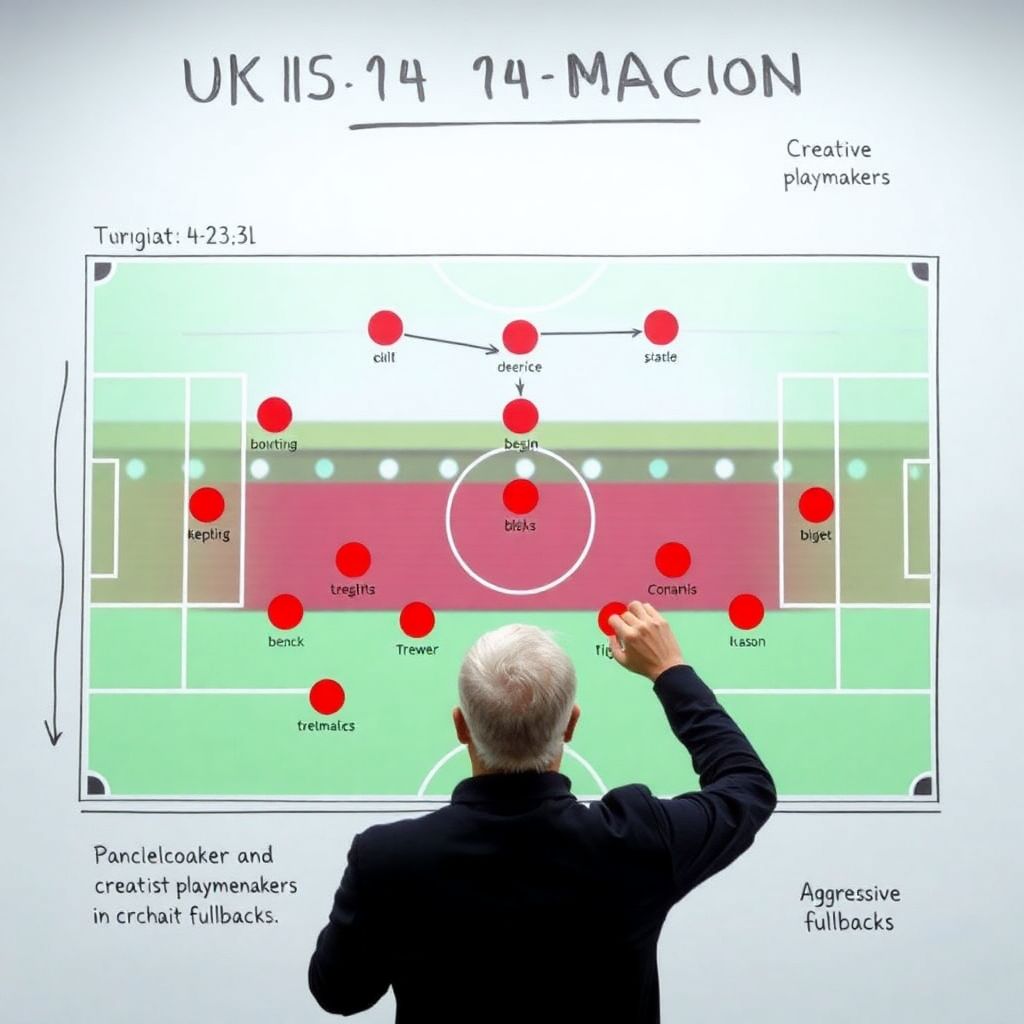
The 4-2-3-1 is popular in Turkish football because it balances creativity with defensive stability, fits local player profiles (technical No.10s, aggressive fullbacks), and adapts to both big-club dominance and underdog strategies. With smart tweaks, it also works for clubs with limited budgets, staff and basic data resources.
Why the 4-2-3-1 Suits Turkish Football: Essential Advantages
- Matches the league’s strength in creative No.10s and dribbling wide players.
- Allows big clubs to dominate the ball while staying safe in transitions.
- Helps mid‑table teams press high without breaking their defensive shape.
- Flexible: can shift to 4-4-1-1, 4-4-2 or 4-3-3 with minimal role changes.
- Works even with limited resources: clear roles, easy to coach, video-based learning friendly.
- Fits European competitions: compact 4-5-1 block off the ball, 4-2-3-1 when attacking.
Myths About the 4-2-3-1 in Turkey – What’s Wrong and What’s True
In many 4-2-3-1 formation analysis Turkish football discussions, the system is either over‑praised as a magic solution or blamed for every structural problem. In reality, 4-2-3-1 is only a framework: its success depends on distances, roles and match plans, not on the shape printed on paper.
Myth 1: “4-2-3-1 is too attacking for Anatolian away matches.” This is wrong when the double pivot stays compact and the wingers track back. In practice, a 4-2-3-1 without the ball often looks like a conservative 4-4-1-1 or 4-5-1, which is perfectly suitable for underdogs.
Myth 2: “You must have a world‑class No.10 or the system dies.” Turkish Super Lig history shows that functional No.10s who press, link and make basic final passes can be more valuable than luxury playmakers who don’t run. The structure can create chances through overlaps and half‑space runs even without a classic star 10.
Myth 3: “Small clubs can’t play it without advanced analytics.” While elite teams now use football analytics software for 4-2-3-1 formation optimization, resource‑limited sides can still use the shape effectively with simple video feedback, clear rules (e.g. “fullback overlaps only when ball‑far pivot holds”) and basic GPS or running data.
Myth 4: “4-2-3-1 always isolates the striker.” Isolation happens when the line of three and the double pivot stay too far apart. When the No.10 plays on the striker’s line in attacks and the near‑side winger moves inside, the forward gains close support and high-quality combination options.
How the System Spread in the Süper Lig: Key Moments and Coaches
- European influence on big clubs: As Galatasaray, Fenerbahçe and Beşiktaş faced 4-2-3-1 opponents in Europe, local coaches imported the structure to control games while protecting centre‑backs against counter‑attacks.
- Rise of pressing football: Press‑oriented coaches needed a base shape where two pivots could protect the middle while wide players jumped to fullbacks; 4-2-3-1 gave that balance better than a flat 4-4-2.
- Player market trends: Turkey’s talent pipeline and foreign market favoured creative No.10s, inside‑forward wingers and modern fullbacks, making the best 4-2-3-1 tactics for Turkish Super Lig teams natural choices for top and mid‑table sides.
- Coaching education shift: Modern football coaching courses Turkey 4-2-3-1 system modules present it as a default “reference structure” to teach pressing triggers, half‑space occupation and rest‑defence, accelerating its adoption in academies and senior squads.
- Analytics and consultancy: As professional tactical analysis services Turkish football clubs began to offer opposition reports and custom game plans, 4-2-3-1 provided a flexible platform that could be tilted more attacking or defensive without changing the base training structure.
- Domestic vs European demands: Clubs needed a system that could stretch low domestic blocks yet remain compact against stronger European opponents; 4-2-3-1 gave that dual identity with minor tweaks.
Skeleton of the System: Defensive Double Pivot and Attacking Three
The “4-2” and the “3-1” are two connected units, not separate departments. Their interaction defines whether the team is compact or stretched, predictable or multi‑layered.
- Defensive double pivot as screen and outlet: Out of possession, the two midfielders protect the central corridor and block passes into the opposition No.10. In possession, one offers a short outlet for centre‑backs while the other positions between lines, ready to break pressure.
- Attacking three as flexible line: Rather than staying flat, the wingers and No.10 adjust heights. Ball‑near winger can drop to help build up; ball‑far winger and No.10 attack spaces between fullback and centre‑back, giving depth and diagonal options.
- Lone striker as reference point: The No.9 pins centre‑backs, makes runs behind and lays off vertical passes. In Turkish contexts, many strikers are powerful but not extremely mobile; the structure must bring runners close to them for combinations.
- Rest-defence built from the “2”: When the team attacks, usually one pivot stays close to the centre‑backs, creating a triangle that can defend counters. This is crucial for Süper Lig teams, where transition goals are frequent.
- Automatic shape‑shifting: With basic rules, 4-2-3-1 easily transforms into 4-3-3 (one pivot pushes higher), 4-4-2 (No.10 joins the striker) or 4-5-1 (wingers drop), which is ideal for coaches who must keep training time short.
- Alternative for limited squads: For lower‑budget teams lacking a natural No.10, a 4-4-2 with one drifting second striker can replicate many 4-2-3-1 patterns while using more generic forwards instead of a specialist creator.
In-Game Mechanics: Build-Up, Transitions and Press Patterns
Understanding daily mechanics turns a generic 4-2-3-1 into a system adapted to Turkish realities: noisy stadiums, emotional momentum swings and opponents who counter quickly.
Offensive and Structural Benefits
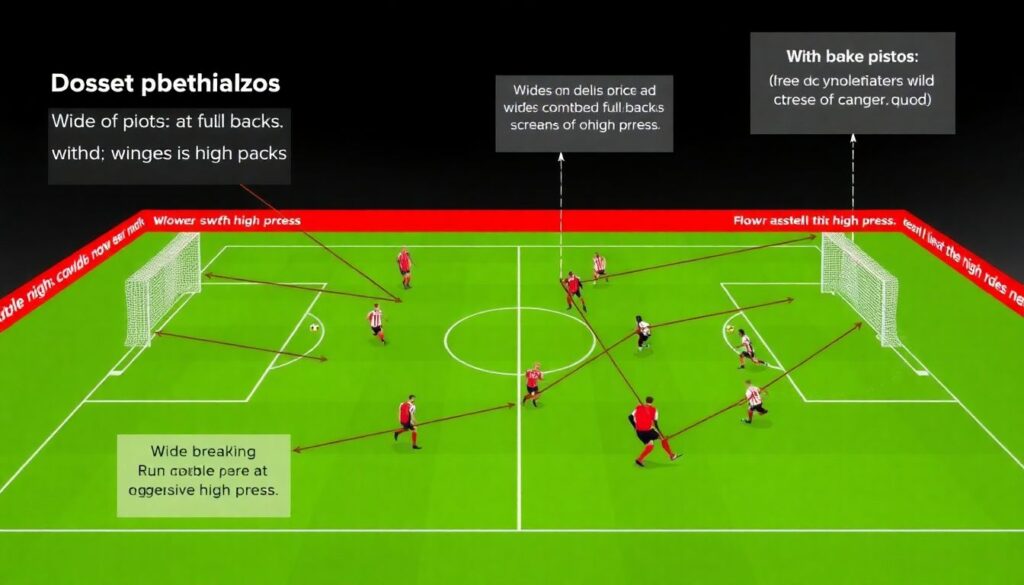
- Controlled build-up: Two pivots offer stable passing lanes to escape pressure, which is vital against aggressive home presses in the Süper Lig.
- Strong wide overloads: With fullbacks, wingers and No.10 sliding toward the ball, the team can create 3v2 or 4v3s on the flank to unlock low blocks.
- Clear counter-attacking routes: Ball‑winning pivot can instantly find the No.10 or inside‑moving winger, who then releases the striker behind the opposition back line.
- Flexible pressing heights: The striker and No.10 can trigger high press, while pivots decide whether the block stays mid or high according to physical condition and match context.
- Role clarity for semi‑pro/amateur squads: For teams with limited training time or staff, role labels (“holder pivot”, “runner pivot”, “inside winger”) make match plans easier to understand and execute.
Constraints and Vulnerabilities to Manage
- Fullback exposure: If wingers do not track back, opposition wingers can isolate your fullbacks 1v1, a frequent problem against top domestic sides.
- Central overloads against the pivot pair: Teams using three central midfielders can outnumber the double pivot, forcing one winger or the No.10 to defend inside.
- Striker isolation: Long balls to a lone forward without close support often result in turnovers; this is magnified when playing away on difficult pitches.
- High physical demands on No.10: The playmaker must press the opposition pivot and still arrive in the box; without good fitness, the pressing line breaks easily.
- Dependence on automatic movements: If spacing rules are unclear, lines disconnect: the “3” stay high, the “2” stay deep and the team becomes vulnerable between lines.
- Alternative for limited rosters: When you lack running power in wide areas, a 4-1-4-1 may offer more central coverage and simpler wing responsibilities than an aggressive 4-2-3-1.
Player Archetypes in Turkish Context: Fullbacks, No.10s and Lone Strikers
Labeling roles correctly prevents common misfits that coaches in Turkey face when they try to copy European 4-2-3-1 models without adapting to their squad.
- Myth: Any attacking fullback can play high and wide all game. Many Turkish fullbacks are strong going forward but limited in recovery runs. Coaches should stagger one attacking and one conservative fullback rather than sending both at once.
- Myth: The No.10 is exempt from defensive work. In modern 4-2-3-1, the No.10 is the first defender on opposition pivots. Selecting a slow, non‑pressing playmaker invites easy build-up through your centre.
- Myth: The striker must always be tall and physical. A mobile, pressing No.9 who attacks channels can be more effective than a classic target man, especially for mid‑table teams trying to counter from deeper blocks.
- Misuse of winger profiles: Coaches often put their best dribbler wide on the “wrong” side. Inside‑forwards (right footer on left) suit cutting in and shooting; classic wingers suit going down the line and crossing early.
- Ignoring budget realities: Lower‑resource squads may not find a complete box‑to‑box pivot. Splitting duties (one pure holder, one simple runner) is more realistic than chasing a single perfect all‑rounder.
- Underestimating communication: Without assistant analysts or sophisticated software, verbal cues between pivots and centre‑backs (for squeeze, drop, shift) become critical for keeping compactness.
Tactical Tweaks for Domestic League vs. European Competition
Clubs that compete both in the Süper Lig and Europe must treat the 4-2-3-1 as a flexible platform rather than a fixed identity. Below is a compact “if‑this‑then‑that” guideline, usable even by staffs without big data departments.
Domestic Süper Lig Match: Proactive 4-2-3-1
- Default block: Mid‑to‑high block, No.10 presses opposition pivot, striker screens centre‑backs.
- Fullbacks: At home vs weaker sides, allow both fullbacks to advance but insist that the ball‑far pivot stays close to centre‑backs.
- Wingers: Inside‑forward on one flank to attack half‑spaces; classic winger on the other to stretch and cross early.
- Pivot behaviour: Holder stays behind the ball; runner joins the attacking line to create a temporary 4‑1‑4‑1 in long possessions.
- Low-resource tweak: If you lack detailed opposition analysis, use simple pressing triggers: backward pass to centre‑back = whole front four jump.
European Night: Compact 4-5-1 From 4-2-3-1
- Default block: Medium or low block, wingers drop to the midfield line, creating a 4‑5‑1 without the ball.
- No.10 role: Closer to striker in possession, but in defence he drops beside the pivots to block central lanes against technically superior opponents.
- Fullbacks: Only ball‑near fullback joins the attack; ball‑far fullback stays narrow to protect the box and back post.
- Transitions: First pass after winning the ball goes to nearest pivot or No.10, second pass into channels for striker or in‑running winger.
- Alternative for limited squads: When facing very strong European sides, you can start in a 4-1-4-1 (extra midfielder instead of No.10) and switch to 4-2-3-1 by pushing one No.8 up once you are more comfortable.
Even for smaller clubs, blending simple video clips, low‑cost football analytics software for 4-2-3-1 formation review and concise match rules can create a robust, modern game model without needing a large backroom staff.
Concrete Answers Coaches and Analysts Want to Know
Is 4-2-3-1 the best system for every Turkish Super Lig club?
No. It is the most common reference system, but fit depends on your players. Teams with strong wingers and a responsible No.10 benefit most; squads built around two pure strikers might prefer a 4-4-2 or 3-5-2.
How should a low-budget team train 4-2-3-1 with limited staff and facilities?
Focus on distances between lines, clear rules for pivots and winger tracking. Use small‑sided games (7v7, 8v8) with zones mimicking your shape, and rely on simple video clips instead of complex data reports.
What is the main difference between 4-2-3-1 and 4-1-4-1 in practice?
In 4-2-3-1, you have two players close to the defence, which helps build-up and protects against counters. In 4-1-4-1, you gain one extra man higher up but put more defensive responsibility on a single holding midfielder.
How can I avoid my lone striker becoming isolated?
Ask the No.10 to run beyond the striker in attacks, encourage ball‑near winger to move inside and instruct at least one pivot to push up in sustained attacks. Avoid constant long balls unless your game model is built around second balls.
Do I need advanced analytics to coach a good 4-2-3-1?
No. Analytics help, but not having them is not a barrier. Prioritise clear principles, match video, and a few basic metrics like final‑third entries and shots after regains. Add professional tactical analysis services later if the budget allows.
When is it better to switch from 4-2-3-1 to another shape?
If opponents regularly overload your double pivot, you lack a functional No.10, or your best players are twin strikers, consider 4-3-3, 4-1-4-1 or 4-4-2. The key is aligning your structure with your strongest profiles.
What should I look for in football coaching courses about the 4-2-3-1?
Choose football coaching courses Turkey 4-2-3-1 system modules that emphasise pressing, rest‑defence and role adaptation, not just static diagrams. Courses should include video case studies from the Süper Lig, not only foreign leagues.