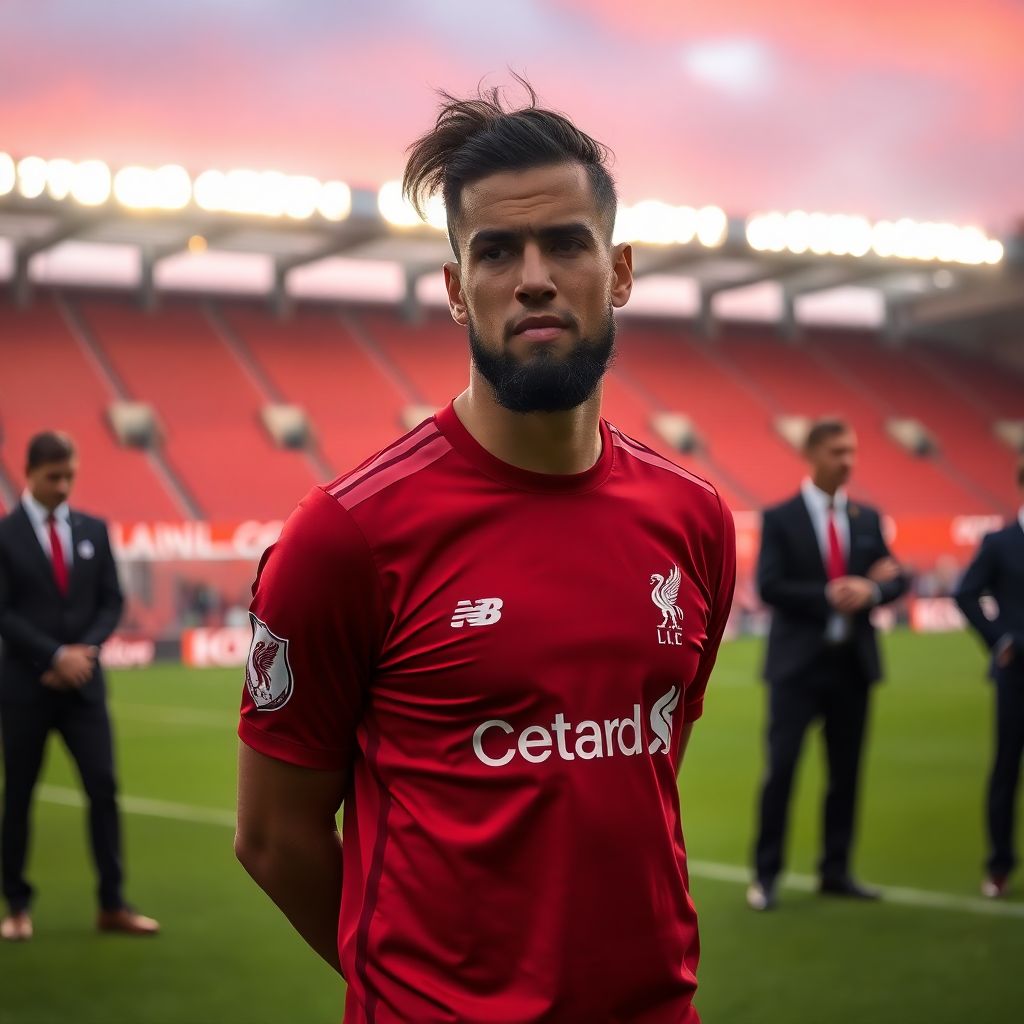
Liverpool ready to weigh up Virgil van Dijk offers this summer
Liverpool are no longer ruling out the possibility of parting ways with Virgil van Dijk, with serious bids for the club captain set to be considered during the current transfer window. At 34, the Dutch centre-back is approaching the final phase of his career, and for the first time since his arrival, Anfield decision-makers are prepared to listen rather than immediately shut the door on potential suitors.
Several clubs across Europe have already been alerted to this shift. AC Milan, Fenerbahce and Galatasaray are all monitoring the situation closely, encouraged by signs that Liverpool no longer view van Dijk as completely indispensable. While no formal agreement is in place, the stance from Merseyside is clear: convincing financial proposals will be assessed on their merits.
Van Dijk’s status at Liverpool is deeply entrenched. Signed from Southampton in January 2018 for £75 million – a then world-record fee for a defender – he transformed the team almost overnight. His arrival anchored a defence that went on to underpin Champions League and Premier League triumphs, and he quickly cemented a reputation as one of the finest centre-backs of his generation.
Over more than eight and a half years at Anfield, van Dijk has made in excess of 350 appearances in all competitions, contributing 36 goals and 16 assists from the back. Beyond the numbers, he has been the commanding presence around which multiple defensive partnerships were built, thriving alongside different partners and maintaining elite standards at the highest level of European football.
In recent seasons, his influence has extended beyond the pitch. Following Jordan Henderson’s departure, van Dijk took over the armband and became the formal leader of the dressing room. His authority, calmness in pressure moments, and ability to organize those around him have been central to Liverpool’s identity. Yet, despite that status, the club now finds itself at a crossroads regarding his long‑term role.
The catalyst for this reassessment has been a combination of advancing age and a campaign that fell short of expectations. While van Dijk remains a top-level defender, there has been a noticeable dip from his absolute peak, prompting internal discussions over how and when to transition the back line to a younger core. With only so many high-value years left on his contract, Liverpool’s hierarchy must balance sentiment with strategy.
Fenerbahce’s ongoing interest in van Dijk is particularly intriguing given the state of their defence. The Turkish giants have already reportedly struck a deal to bring in Nathan Ake from Manchester City, a move that significantly strengthens their central defensive options. With Ake expected to line up next to captain Milan Skriniar, Fenerbahce will have two high-profile centre-backs at the heart of their back line, in addition to a sizeable group of other central defenders already in the squad.
On that basis, another major acquisition in the same area might seem excessive. However, targeting van Dijk would signal a clear intention: to dominate domestically and raise their ambitions in European competitions. His experience in Premier League and Champions League battles could be viewed not simply as another body in defence, but as a leader around whom the entire team’s mentality can be raised. The challenge for Fenerbahce would be justifying the financial outlay and finding a role that suits all of their existing options.
For Galatasaray, the links are far more straightforward. In Okan Buruk’s team, Davinson Sánchez is the only consistently dependable option in central defence. The coach has been seeking a partner who can stabilize the back line and allow the team to push higher up the pitch without constantly worrying about exposure in transition. Van Dijk, even at 34, fits that brief better than most.
Although he would not represent a long-term project, the Dutchman would be an ideal short- to medium-term solution. His aerial dominance, positional sense and leadership could immediately raise the standard of Galatasaray’s defensive unit. For a club aiming to regularly reach the knockout stages of European competitions, the presence of an experienced, world-class centre-back could be transformative on and off the field, especially for younger defenders learning from him.
AC Milan’s interest, meanwhile, is shaped by uncertainty around their current personnel. Fikayo Tomori, long considered a central pillar of their defence, is reportedly facing an unclear future at San Siro, with a summer exit increasingly plausible. Should Tomori depart, Milan will require a central defender with both the technical ability to build from the back and the authority to marshal the line in high-pressure Serie A and European fixtures.
Van Dijk ticks many of those boxes. Comfortable in possession, adept at playing progressive passes and switching the point of attack, he would fit Milan’s preference for defenders who can initiate moves rather than simply clear their lines. His experience at the highest levels could also be invaluable for a relatively young squad trying to re-establish itself among Europe’s elite. The key question would be whether Milan view a 34‑year‑old as a bridge to a new era or simply a short-term patch.
Regardless of where van Dijk ends up, Liverpool’s need to reshape their defensive options is unavoidable. Ibrahima Konaté’s departure on a free transfer has already depleted Andoni Iraola’s resources at the back. With van Dijk in the latter stages of his career and some evidence of diminishing physical attributes, the new manager cannot head into a long season relying on a shrinking core of ageing or injury-prone centre-backs.
A fresh signing in central defence is therefore not just desirable but essential. Liverpool require at least one high-level defender entering or in the midst of their prime years, capable of starting immediately but also growing into a leadership role over time. Ideally, this player would be comfortable in a high defensive line, quick over the ground, strong in duels and confident with the ball to maintain the club’s front-foot style.
Financially, a sale of van Dijk could accelerate this rebuild. While the fee will naturally be lower than his original £75 million transfer due to age and contract status, Liverpool could still command a respectable sum from clubs willing to pay for proven experience. Combined with freed-up wages, that money could be redirected towards a younger, long-term defensive cornerstone and potentially additional reinforcements in other areas of the squad.
From a sporting perspective, the dilemma is far more emotional. Van Dijk is not just another senior player; he is a symbol of Liverpool’s recent golden era. Supporting fans associate him with iconic nights in Europe, title-winning consistency and a sense of security at the back that had been missing for years. Moving on from such a figure carries a risk of backlash if results dip or if his replacement fails to match the required standard.
The timing of any departure is therefore critical. One approach would be to keep van Dijk as part of a gradual handover, allowing him to mentor a new signing for a season before stepping aside or leaving on a free. Another, more ruthless strategy would involve selling him now while there is still strong interest, giving Iraola maximum flexibility in reshaping the squad immediately. Each path has consequences for squad harmony, finances and on-field performance.
For van Dijk himself, the decision is equally complex. Remaining at Liverpool would allow him to close out his peak years at a club where he has legendary status and the captaincy. Yet a new challenge in a different league – whether in Italy’s more tactical Serie A or the passionate, intense environment of Turkish football – could reinvigorate him and offer a fresh chapter before retirement. His own ambitions, particularly regarding European competition and international considerations, will play a vital role.
There is also the question of how quickly Liverpool want to shift their defensive identity. With van Dijk at the heart of the back line, the team’s style has been built around his reading of the game and aerial dominance. Moving on from him would require not just a new player, but potentially subtle tweaks to the defensive structure: spacing between the lines, pressing triggers, and how high the team is comfortable holding its line without his unique blend of anticipation and recovery ability.
In the broader context of Liverpool’s evolution, the potential sale of van Dijk would symbolize a transition from one era to the next. The club has already seen the departures of key figures from the title-winning side, and every big exit chips away at the old guard. How successfully Liverpool manage this particular turning point could influence their competitiveness at the top of the Premier League and in Europe over the next three to five seasons.
For now, all eyes are on the offers that may arrive and the stance both club and player ultimately adopt. What is already clear is that Virgil van Dijk, once untouchable at Anfield, is now at the centre of one of the most important decisions of Liverpool’s modern history – a choice that will shape not only his legacy, but the direction of the club he helped return to the summit of the game.