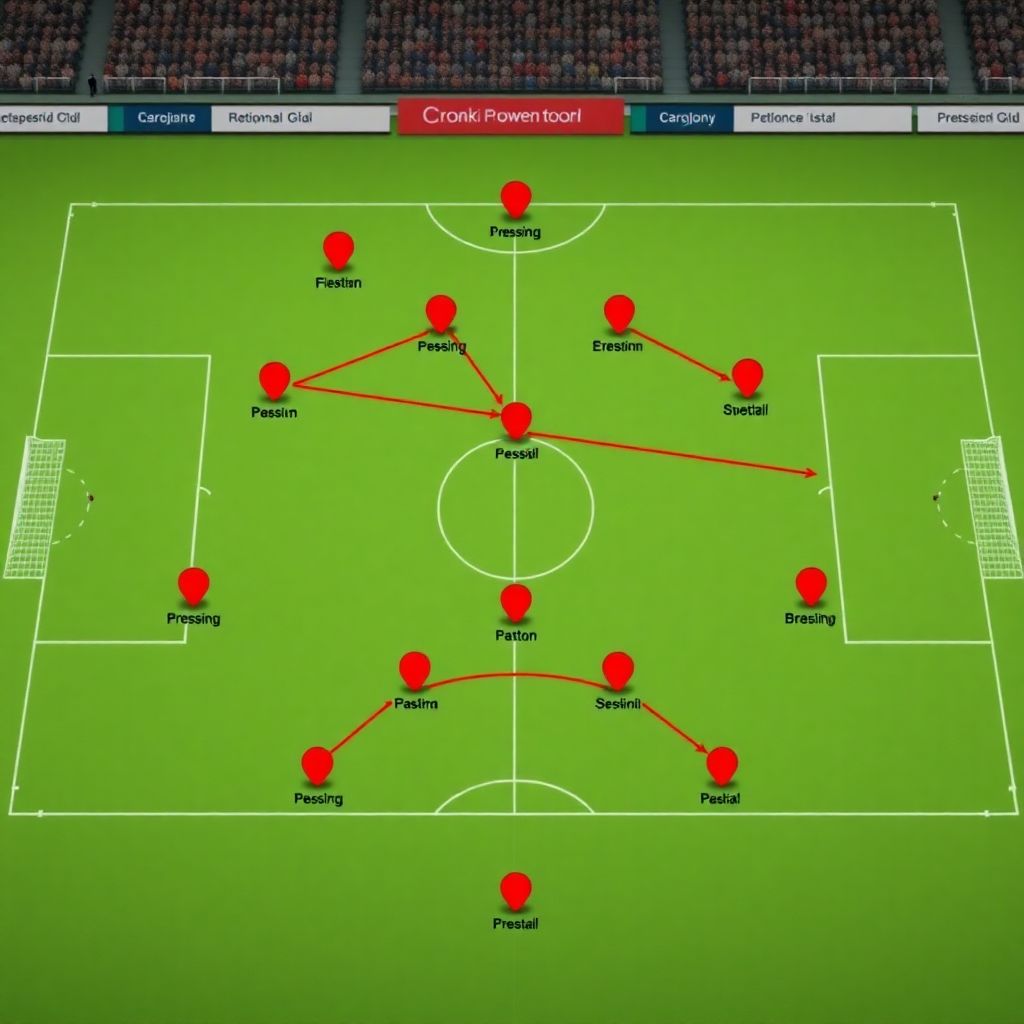
To help the Turkish national team compete with Europe’s elite, build a compact, flexible 4-3-3 / 4-2-3-1, coordinate an aggressive yet intelligent press, and maximise transitions. Prioritise clear roles, repeatable automatisms, and safe, structured training progressions over improvisation. This tactical blueprint suits Turkey’s technical, mobile player profile.
Tactical Summary for Rapid Implementation
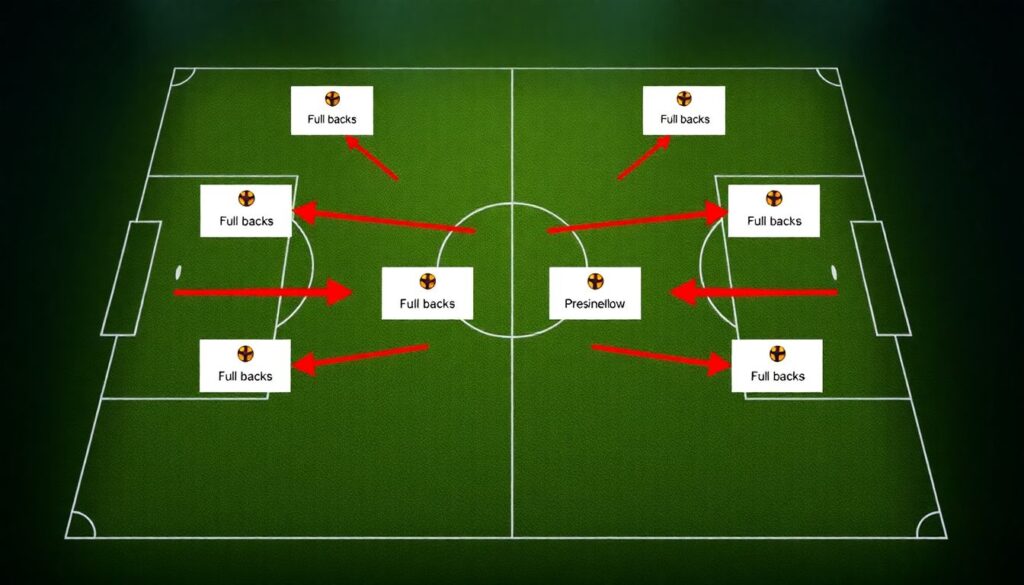
- Adopt a compact 4-3-3 that can drop into a 4-4-2 mid-block, with clear pressing triggers and distance rules between lines.
- Use asymmetric full-back roles: one more conservative, one more attacking, always protected by the nearest midfielder.
- Build midfield around one holding protector, one box-to-box runner, and one creative connector to stabilise possession.
- Create 3-4 simple attacking patterns (wide overloads, inside runs, third-man combinations, set-piece routines) and automate them in training.
- Make counter-pressing a non‑negotiable: lose the ball, closest three players hunt, the rest close central lanes and depth.
- Rotate the squad by role profiles, not by names, and adapt match plans specifically to the best tactics against top European football teams.
Modernising Defensive Shape and Pressing Triggers
This model targets coaches and analysts working on a realistic turkey national football team tactical breakdown who want to close the gap to Europe’s best without copying them blindly. It is suitable for professional and high-level youth teams with basic fitness and tactical understanding, common in the Turkish national pool.
A modern defensive base for how Turkey can compete with Europe elite football teams starts from a flexible structure, not a fixed formation. The reference shape can be:
- 4-3-3 high press that can drop into 4-1-4-1 in a mid-block.
- 4-2-3-1 that flattens into a 4-4-2 when the 10 jumps alongside the striker.
Key non‑negotiables for shape:
- Vertical compactness – Keep 25-30 metres (rough guideline, not a strict number) between the deepest defender and the most advanced forward in settled defence.
- Horizontal compactness – The back four should squeeze the field to roughly the width of the penalty box when defending centrally.
- Staggered midfield – One clear holding midfielder screening the centre backs, with the others slightly higher but close enough to press together.
Pressing triggers to coach with video and small-sided games:
- Backward pass to centre-back – Striker curves run to block central pass, nearest winger jumps to full-back, 8 pushes up to close pivot.
- Slow lateral pass across back line – Ball-near winger presses, full-back steps tight to oppose winger, holding midfielder shifts across to protect channel.
- Heavy first touch toward own goal – Nearest player sprints to engage, second defender covers inside, third secures depth behind.
Simple schematic reference for staff briefings: “Default mid-block in 4-4-2, wingers narrow, 10 joins striker, pivot shields, full-backs only jump on clear trigger.” This gives a common language when doing turkish national team tactics analysis, clips, and pitch corrections.
When not to use an aggressive modern press:
- Severe fitness disadvantage or tight schedule with poor recovery between games.
- Back line lacks pace; space behind becomes unmanageable against elite counter-attacks.
- Squad has minimal time together (short camp) and cannot rehearse pressing distances safely.
Optimising Full-Backs and Wide Midfield Partnerships
This area is decisive in any turkish national team euro 2024 tactical preview because the full-backs and wingers carry a lot of the creative load. To optimise them, you need clear role definitions, simple reference points, and repeatable movements, rather than asking players to improvise down the line.
Core requirements before you implement wide partnerships:
- Role clarity documents
- One-page description for each wide role: attacking full-back, defensive full-back, inverted winger, touchline winger, half-space 10.
- Include positioning in each phase: build-up, consolidation, final third, defensive block, transition.
- Video library of 3-4 role models
- Clips of European teams whose profiles match your full-backs and wingers (for example, one attack-minded side, one more conservative).
- Focus on distances between full-back and winger, not just individual actions.
- Pitch markings and safe training design
- Mark wide corridors and half-spaces with flat cones to give visual cues; avoid obstacles that cause collisions.
- Use constrained zones to guide players into correct lanes without needing constant verbal correction.
- Language for combinations
- Name core movements: overlap, underlap, bounce and go, third-man run, decoy run.
- Ensure all staff and players use the same terms to reduce confusion under pressure.
Basic pattern example to drill on both flanks:
- Full-back starts slightly deeper and narrower than the winger.
- Winger receives to feet in the half-space, facing infield.
- Full-back overlaps at controlled speed; the 8 runs into the vacated half-space as a third man.
Safety and load management:
- Limit high-speed overlaps to short blocks within training; progress volume gradually across the camp.
- Use smaller areas and 5v5+2 games to simulate wide patterns without constant 40-50 metre sprints.
When the opposition full-backs are very offensive, the best tactics against top European football teams include using Turkish wide players to attack the spaces they leave rather than engaging in pure 1v1 duels. That requires full-back-winger pairs to coordinate one staying and one running deep on each action.
Midfield Control: Balancing Creativity and Protection
The midfield structure is the centre of any turkey national football team tactical breakdown. For Turkey’s profile, the aim is to create a triangle that can protect transitions while still feeding technically gifted attackers between the lines.
- Define the holding midfielder as the reference point
Assign one player who stays central between the centre-backs out of possession and rarely presses beyond the ball.- In build-up, he drops between or alongside centre-backs.
- In defence, he screens passes into the 10 and striker.
- In transition, he delays counters rather than diving in.
- Pair complementary interiors
Choose one more physical box-to-box interior and one more creative connector.- Box-to-box: presses high on triggers, supports both boxes.
- Connector: receives between lines, links wide players and striker.
- Set clear height lines for each midfielder
Avoid all three on the same horizontal line.- Holding: deepest, rarely beyond the centre circle in settled defence.
- Box-to-box: second line, can jump to press centre-back or pivot.
- Connector: highest, often between opposition lines.
- Build simple possession patterns
Introduce 2-3 base patterns in training that repeat during games.- Pattern 1: Centre-back to holding, bounce to full-back, inside to connector, then to winger or striker.
- Pattern 2: Holding switches play after two short passes to move the block before breaking lines.
- Install defensive rest positions
Rest defence means positioning to stop counters when attacking.- Holding midfielder stays behind the ball whenever a full-back overlaps.
- Far-side interior tucks inside rather than bombing forward.
- Centre-backs maintain a slight stagger to deal with long balls.
- Use constraints for safe and clear training
Organise 7v7+3 or 8v8+2 possession games.- Condition: goal only counts if all three midfielders have touched the ball in build-up.
- Condition: holding midfielder must stay in central zone, preventing chaotic movements.
Fast-Track Mode for Midfield Implementation
- Pick one clear holding midfielder and instruct him to stay central, rarely leaving the spine.
- Assign one runner and one creator, making sure they are always on different height lines.
- Drill a single simple pattern in training until it becomes automatic under moderate pressure.
- In video meetings, highlight only one offensive and one defensive behaviour per midfielder to avoid overload.
Attacking Patterns: Fluidity, Verticality and Set-Piece Design
To translate control into goals in turkish national team tactics analysis, you need a small menu of attacking patterns that suit the players and can stand up against the compact blocks of top European nations. Use this checklist to verify that your attacking work is effective and safe to rehearse.
- Wide overloads: On both flanks, you can consistently create 3v2s (full-back, winger, interior versus full-back and winger) without leaving the holding midfielder exposed.
- Half-space occupation: In most possessions, at least one player receives between lines in the half-space, facing the opponent goal.
- Third-man runs: The striker frequently releases wide or drops, allowing an interior or winger to run beyond him into gaps.
- Crossing zones: Crosses mostly come from the edge of the box or cut-back line, not from deep, hopeful positions.
- Penalty box occupation: When the ball goes wide, at least three players attack the box (near post, far post, edge) with one securing rest defence.
- Set-piece variety: You have at least one inswing and one outswing routine from each side, plus one short option with a clear signal.
- Protection against counters: On corners and attacking free-kicks, two players plus the holding midfielder form a triangle behind the ball.
- Connection with transitions: After winning the ball, the team can recognise when to use direct vertical passes to the striker versus when to secure with a short pass.
- Workload balance: Attacking patterns are trained in short, high-quality blocks with adequate recovery to avoid fatigue-related injuries.
During any turkish national team euro 2024 tactical preview, staff should test these criteria with match clips: if the checklist fails in big phases of the game, simplify patterns instead of adding new ones.
Transition Moments: Counter-Press and Quick Breaks
The gap between Turkey and the top European teams is often largest in transition. Bridging it is less about complex theory and more about clear, rehearsed habits that are safe and repeatable. Below are frequent mistakes to avoid when designing transition behaviour.
- Expecting everyone to counter-press always
- Coaches sometimes demand all 10 outfield players sprint to the ball after loss. This creates chaos and exposes the back line.
- No fixed counter-pressing ring
- Failing to define the first three or four players responsible for hunting the ball, leading to hesitation and late pressure.
- Over-committing full-backs
- Allowing both full-backs to attack simultaneously without a clear rest defence structure, which top opponents punish with direct balls wide.
- Vertical passes without support
- Hitting long balls to the striker in transition without runners around him, resulting in immediate loss and another wave of pressure.
- Unclear communication on “press or drop”
- Players do not know the cue for switching from counter-press to recovery run, so half the team presses and half drops.
- No dedicated training for the second ball
- Ignoring rehearsed reactions to knockdowns and clearances from long balls, an area where best tactics against top European football teams are very deliberate.
- Unsafe training volumes
- Overloading high-intensity transition drills without adequate rest, inviting muscle injuries and poor decision-making through fatigue.
Safer alternatives include short, constrained games (for example, 6v6+2) where transitions repeat often but over limited distances, allowing coaching on behaviour without excessive physical risk.
Squad Composition, Roles and Matchday Management
Different match plans can help how Turkey can compete with Europe elite football teams, depending on opponent style and available players. Below are alternative approaches and when they are appropriate, each still anchored in clear roles and safe, realistic training loads.
- Control-oriented 4-3-3 with inverted wingers
Suits games where Turkey expects more of the ball or wants to slow tempo.- Use technical wingers coming inside, supported by overlapping full-backs.
- Midfield triangle focused on circulation and pressing resistance.
- Best when the opposition is not extremely fast in transition.
- Transition-focused 4-2-3-1 with direct winger threats
Favour this against stronger European sides who push full-backs high.- Double pivot for stability, allowing the 10 and wide players to counter quickly.
- Fast wingers positioned high and wide to attack space after regain.
- Useful when defending deeper and relying on quick breaks.
- Back-five flexibility (3-4-2-1)
Consider this when centre-back depth is strong and full-backs are dynamic.- Wing-backs give width; two 10s operate between lines.
- Offers additional stability against top strikers at major tournaments.
- Requires time in camp to coach line coordination; do not implement last minute.
- Role-based rotation strategy
Instead of rotating randomly, define two players per role profile.- For each position (for example, holding midfielder, attacking full-back), identify starter and backup with similar skills.
- Rotate by role, keeping tactical structure consistent even when the names change.
- Decreases confusion for players and simplifies matchday coaching.
This structured approach to squad management underpins any serious turkey national football team tactical breakdown and helps carry ideas from a single match into a consistent tournament identity.
Practical Answers on Implementing the Plan
How many core tactical ideas can players realistically absorb per camp?
Focus on one main idea per phase of play: defensive block, pressing, possession, and transitions. Within each camp, prioritise depth and clarity on these four over adding new layers that players cannot rehearse enough.
How should video analysis support the on-pitch work for the Turkish team?
Use short, focused clips of 10-20 seconds showing only one behaviour per video. Link each clip directly to training drills so players see immediate practical relevance, especially when discussing turkish national team tactics analysis before or after sessions.
What is the safest way to introduce a new pressing system mid-season?
Start in small areas with 4v4 or 5v5 games to teach angles and triggers, then scale to larger formats. Avoid implementing a full-pitch high press in a competitive match until players demonstrate compactness and timing in training.
How can Turkey attack elite teams without exposing the back line?
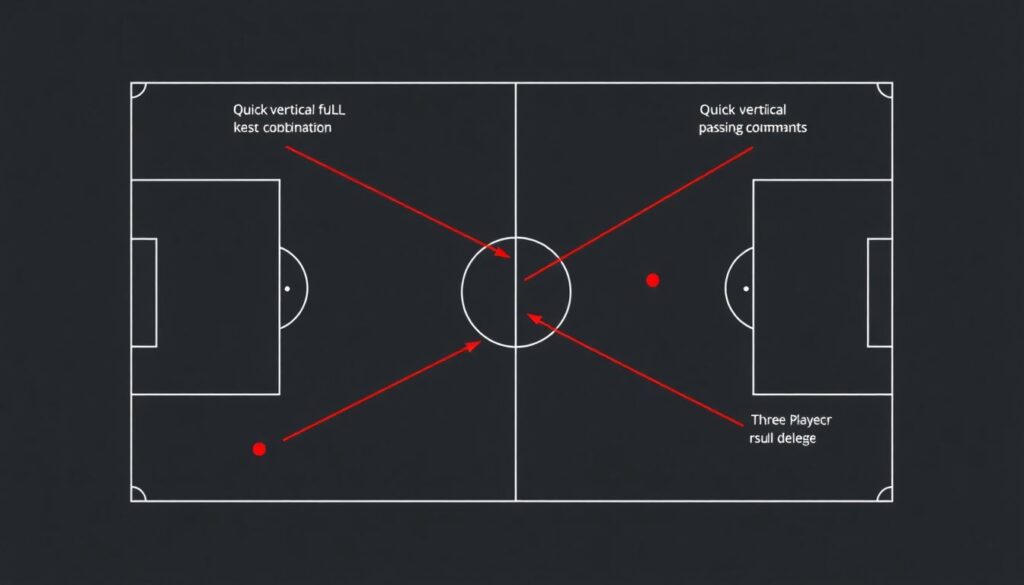
Use asymmetry: one full-back attacks while the other stays, supported by the holding midfielder. Emphasise quick, vertical combinations rather than long dribbles, and ensure at least three players form rest defence whenever the ball is in the final third.
Which metrics should staff track to judge if the plan works?
Monitor shots conceded from counters, number of high regains, box entries, and set-piece efficiency. Combine these with subjective staff ratings on compactness and communication, rather than relying only on result-based judgments.
How often should set-piece routines be refreshed?
Keep a small core of routines all season and adjust details every few matches. Refresh one attacking and one defensive routine per international window so players maintain familiarity while staying unpredictable for analysis staff of opponents.
Is it necessary to change formation for every top European opponent?
Not necessarily. Maintain a stable base formation and adjust roles and pressing heights instead. Change system only when there is a clear matchup advantage and enough training time to teach new behaviours safely.