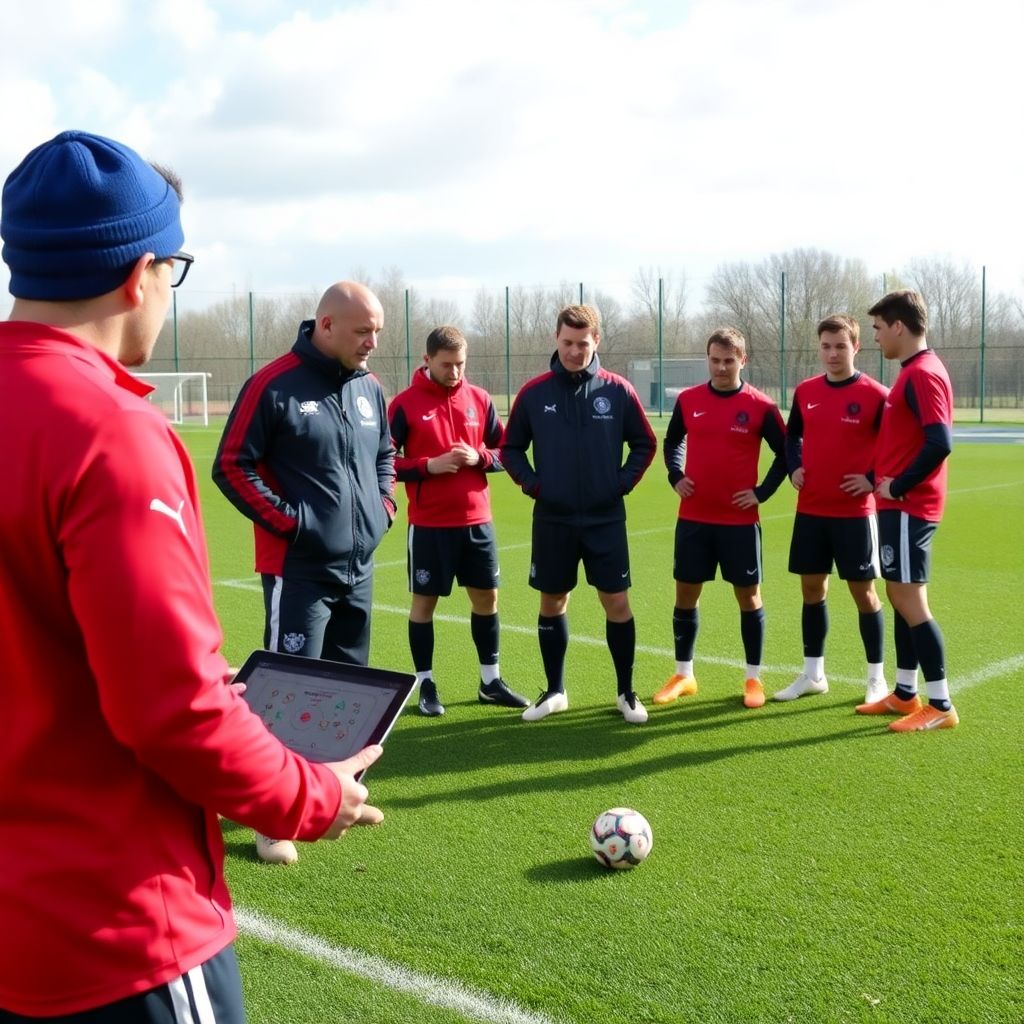
To give Süper Lig clubs an edge from dead balls, combine simple video and data review with clearly defined roles, repetition-based routines and match-day adaptation rules. Start small: analyse a few recent games, build 3-5 high-quality patterns, then refine them using training footage, basic analytics and honest player feedback.
Essential Principles of Set-Piece Mastery
- Limit your focus to a small, repeatable set of routines instead of trying dozens that players cannot remember.
- Base every decision on simple metrics: conversion rate, shots created and quality of chance, not subjective impressions.
- Design roles around player strengths, body types and habits rather than forcing everyone into generic positions.
- Use video clips and a clear tactical set piece playbook for professional teams so players can visualise patterns quickly.
- Prepare at least one safe routine and one aggressive routine against each opponent’s main defensive shape.
- Integrate set pieces into normal weekly planning instead of treating them as an afterthought at the end of sessions.
- Review, adjust and retire routines regularly using simple, repeatable review meetings with staff and leaders.
Analyzing Süper Lig Set-Piece Trends and Opponent Weaknesses
This approach suits Süper Lig clubs that already record matches and have at least one staff member able to tag clips. It is effective for teams with consistent starting elevens and stable staff. It is less useful if your squad changes weekly or you lack even basic video access.
Focus your analysis on three core questions:
- How dangerous are our own set pieces? Track how many shots and clear chances you generate from corners, wide free kicks and central free kicks. You do not need complex models; simple counts per match already highlight trends.
- Where do we concede from? Note the zones and situations where you concede shots or goals from set pieces: near-post flicks, far-post overloads, cut-backs from short corners, second balls, etc. This shows which patterns to train against.
- What are opponent habits? For each upcoming opponent, watch their last 3-5 matches focusing only on dead balls. Note delivery side, typical targets, screens and blocks, and whether they prefer inswingers or outswingers.
To speed this up, many staff use football analytics software for set pieces that tags deliveries, outcomes and positions automatically. If your budget is smaller, basic manual tagging on a laptop with simple drawing tools still works, especially when combined with short, focused video meetings with players.
Some clubs in Türkiye work with data driven set piece analysis services that send pre-processed reports: opponent routines, main threats and recommended adjustments. If you use external help, ensure the output is simple: no more than a few pages and a handful of clips that you can turn into clear training content.
Designing Repetition-Based Routines for Consistency
Before designing routines, clarify limitations: limited training time, possible injuries, and varying pitch conditions across Süper Lig and 1. Lig stadiums. Well-designed soccer set piece training programs for clubs must function even when squad rotation or weather reduces training quality.
Minimum requirements to build repetition-based routines:
- Video access: Match footage plus the ability to record at least one training session per week focused on set pieces.
- Simple tagging method: Either a basic spreadsheet, whiteboard or lightweight software to log who took the delivery, target zone and outcome.
- Clear naming system: Short code names or numbers for each routine so players remember them under pressure.
- Staff coordination: One assistant in charge of planning, another responsible for timing and organisation during training.
- Time block: At least one consistent slot each week (even 15-20 minutes) dedicated purely to dead balls.
If you are new to this, take inspiration from set piece coaching courses online, but adapt material to your players and league realities. Build a simple tactical set piece playbook for professional teams that fits your club’s age profile, aerial strength and fitness level, rather than copying European giants blindly.
Optimizing Player Roles, Body Types and Skill Profiles
Before the step‑by‑step process, keep in mind key risks and safe‑guards:
- Avoid assigning risky blocking or screening roles to players with poor discipline; it increases the chance of fouls and cards.
- Do not overload fragile or frequently injured players with heavy contact roles in crowded zones.
- Always maintain at least two fast players outside the box to defend counters; never sacrifice transition defence for one more attacker.
- Introduce new roles gradually; changing everything at once confuses players and leads to marking errors.
- Review responsibilities clearly with goalkeepers and captains to prevent miscommunication when adjusting during matches.
-
Map current strengths and limitations
List your main squad and classify each player by aerial ability, speed, aggression, delivery quality and decision-making. Use simple categories (strong / average / weak) rather than complex scoring.
- Identify your best two aerial threats (centre-backs, target forwards).
- Spot your most reliable dead-ball takers by consistency, not occasional highlights.
- Note players uncomfortable in tight contact to avoid giving them wrestling roles.
-
Define primary and secondary roles
For each player, assign a primary set-piece role (e.g., main blocker, near-post runner, zonal marker) and a secondary one if substitutions or injuries change line-ups. Keep descriptions short and concrete.
- Primary roles should align with body type: tall, strong players in central aerial duels; quick, agile players at edge of box.
- Secondary roles help maintain structure when you change system mid-game.
-
Build role clusters around key targets
Design each attacking routine around one or two main finishers, then build supportive movements around them: screeners, decoy runners, second-ball hunters.
- Place your best header against the opponent’s weakest aerial defender, not their strongest.
- Use a strong, disciplined player as a fixed screener to block runs legally.
-
Integrate goalkeeper preferences and communication
On defensive set pieces, align marking scheme with your goalkeeper’s style (aggressive off the line or line-holding). This reduces hesitation when the ball is delivered.
- Agree clear commands for claiming crosses and line depth.
- Highlight zones where the goalkeeper does not want extra bodies.
-
Test and adjust roles in low-pressure scenarios
First, test new roles in unopposed and semi-opposed drills. Only then move to fully contested, match-like scenarios to avoid chaotic sessions and injuries.
- Use video to confirm whether players naturally execute their roles or need simplification.
- Remove any role that consistently causes confusion, even if the idea looks interesting on paper.
Data-Driven Delivery: Types of Crosses, Corners and Dead-Ball Trajectories
Use this checklist to verify whether your deliveries are truly data-informed and effective:
- You track basic outcomes for every routine: shot, no shot, clearance, second-ball chance or turnover.
- Your main taker practices the same delivery zones used in matches, not random crosses from comfortable spots.
- You have tested both inswinging and outswinging deliveries from each side and know which fits your squad better.
- Free-kick shooters work on a limited set of trajectories (over wall, under wall, across goal) with clear tactical uses.
- You review clips monthly to confirm that match deliveries match the patterns you designed in training.
- Weather and pitch conditions are considered in your plans; on poor surfaces you prefer simpler, flatter deliveries.
- At least one routine aims for a cut-back or ground cross for technical players, not only high aerial duels.
- Delivery responsibility is clearly assigned; players are not improvising or debating who will take the kick in the moment.
- You adapt routine choice to referee standards; if physical battles are being whistled tightly, you reduce heavy-contact patterns.
- New ideas are introduced in training and analysed before appearing in competitive matches.
Training Drills That Transfer Under Match Pressure
When building drills that should work under pressure, these errors are common and avoidable:
- Spending nearly all time on unopposed rehearsals, so players never experience realistic contact or time pressure.
- Changing routines too often, preventing players from building automatic habits and confidence in core patterns.
- Running long, tiring blocks of corners at the end of sessions when players are exhausted and focus is low.
- Ignoring the transition phase; not training reactions to counter-attacks after losing the first or second ball.
- Using the same defenders every time, which allows attackers to “solve” a familiar pattern that will not appear on match day.
- Failing to film and review at least part of the drill, losing valuable learning moments and honest feedback loops.
- Letting intensity drop because coaches are focused on diagrams rather than enforcing run speed, timing and aggression.
- Over-complicating communication with long code names instead of simple signals that everyone remembers easily.
- Not linking drills to upcoming opponents, so players do not understand the purpose and stay mentally passive.
- Ignoring bench players; substitutes must know routines in case of late-game set-piece opportunities.
In-Game Adaptation: Tactical Triggers and Opponent-Specific Plans
On match day, full system changes are rare; instead, use clear alternatives that are easy to trigger:
- Conservative safety-first mode: Use when protecting a narrow lead or facing strong counter-attacking opponents. Keep more players back, simplify deliveries and reduce complex blocks that risk fouls.
- Aggressive comeback mode: Switch to this when chasing a result late. Send an extra centre-back forward, target deeper zones and emphasise second-ball shots around the box.
- Opponent-weakness exploitation mode: If analysis shows they struggle at the near post or with screens on the goalkeeper, temporarily overuse the most effective pattern until they adjust.
- Weather and referee adaptation mode: On slippery pitches or when referees whistle heavily, remove high-contact routines and favour shorter, quick restarts with simple movements.
These alternatives should be part of your tactical set piece playbook for professional teams, rehearsed during the week, not invented spontaneously on the touchline.
Practical Concerns Coaches Often Face
How many routines should a Süper Lig club use at once?
For most squads, a small set of well-practised routines works better than a big playbook. Focus on a few corner patterns, one or two wide free-kick options and a couple of short routines that everyone remembers under pressure.
Can smaller clubs benefit without advanced analytics tools?
Yes. Even without football analytics software for set pieces, you can log outcomes in a simple spreadsheet and cut basic video clips. The key is consistent review: short meetings with players to show what works and what needs changing.
How do we integrate external analysis or consultants safely?
If you use data driven set piece analysis services, filter their suggestions through your context, budget and player profiles. Implement only ideas that fit your training time and that you can explain clearly in the dressing room.
What is the best way to introduce a new routine mid-season?
Start with whiteboard or video explanation, then walk-through speed, then half-intensity and only then full match speed. Avoid adding more than one entirely new attacking and one defensive routine per week to prevent confusion.
How can youth or reserve teams use these methods?
Youth and reserve squads can run simpler versions of soccer set piece training programs for clubs, focusing on clear roles and basic zoning. Keep communication and code names very simple and prioritise safe, repeatable habits over complex choreography.
Are online courses useful for staff development?

Set piece coaching courses online are useful for staff who need structure and examples, especially in smaller Süper Lig clubs. Always translate course ideas into your own terminology and test them carefully in training before match use.
How do we avoid overloading players with information?
Limit information to 2-3 key points per phase: their main role, the main target area and the fallback option. Use the same language, gestures and routine names every week so that communication stays automatic.